




Brass Mounted Pier Cabinet
A brass mounted pier cabinet brings refined display space to a drawing room, offering glass doors and polished metal mounts for precious porcelain and curios.
Brass Mounted Pier Cabinet
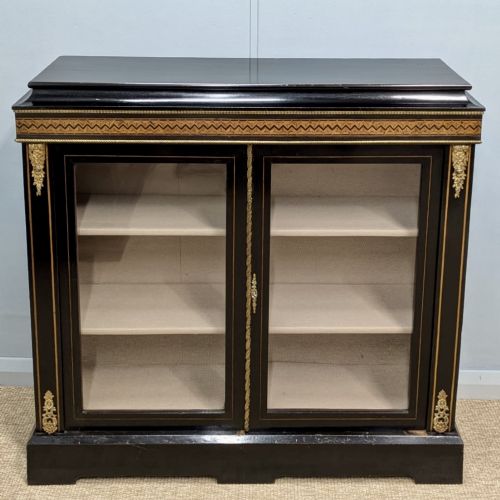
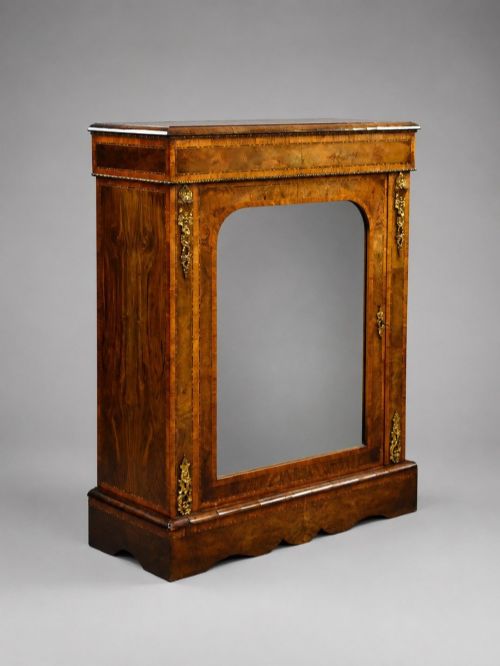
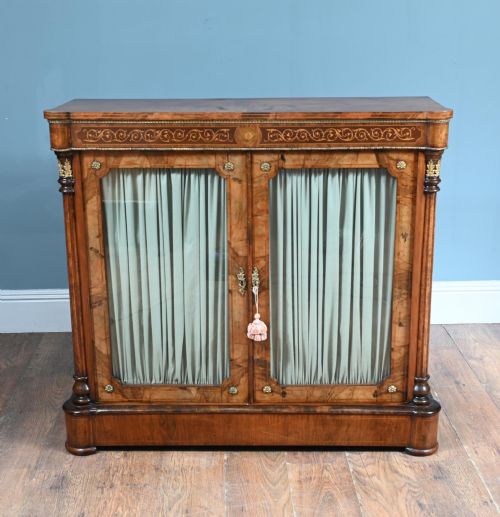
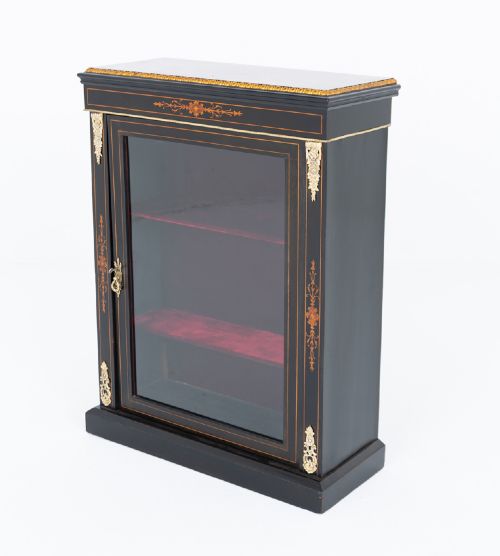
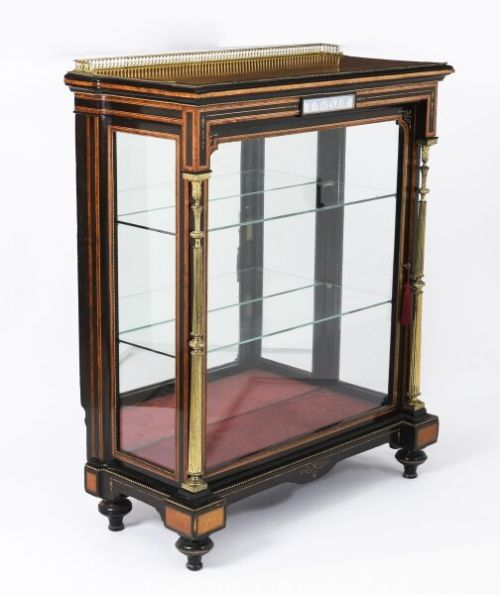
A brass mounted pier cabinet is a low display piece designed originally to stand against the wall between windows, making clever use of narrow architectural spaces. The version most commonly met on this page is a Victorian or nineteenth century design, frequently surfaced in figured walnut or ebonised wood with glazed doors.
Makers and cabinet makers of the nineteenth century built these display cabinets in various styles including French Napoleon III, Louis XVI revival, and Regency. They serve primarily as enclosed vitrines to protect delicate collections while adding architectural elegance to a room.
The form encompasses side cabinets and chiffoniers alongside dedicated pier cabinets, all sharing the characteristic glazed frontage and polished metal enrichment. Buyers look for these pieces to anchor a formal interior while providing practical shelving for books or ceramics.
Materials and construction methods
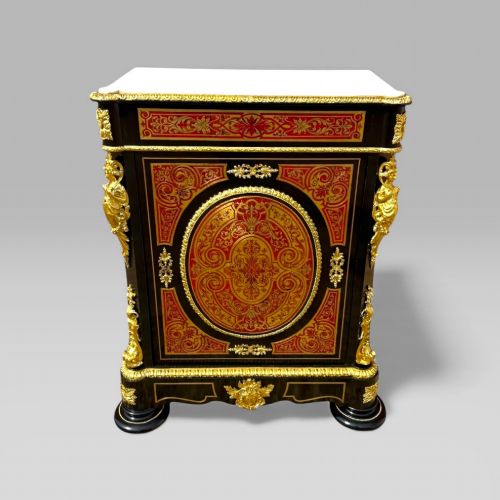
Cabinet makers of the period constructed carcasses from timbers such as walnut, rosewood, and amboyna, often applying ebonised finishes to achieve a dramatic dark surface. Panels of tortoiseshell and marquetry inlay frequently embellish the doors, creating rich textural contrast.
Metalwork played a defining structural and decorative role, with cast brass, ormolu, and gilt-metal mounts framing the glazed doors and corners. Marble tops also appear across the selection, adding a cool, solid horizontal surface above the wooden cabinetry.
Brass Mounted Pier Cabinet Retail Price Guide 2026
Typical asking prices for brass mounted pier cabinet among the pieces listed under this phrase on Sellingantiques today, from the lower quarter to the upper quarter. They describe what is for sale here now, not the wider market.
Some cabinets hide precious Sevres porcelain plaques right in the wooden door, turning furniture into a picture frame.
Distinctions in quality
The division between standard production and the top of the range rests on the crispness of the cast brass mounts and the complexity of the inlay. Finer examples incorporate intricate Boullework involving brass and tortoiseshell, or hand-painted porcelain plaques set directly into the timber frame.
Timber selection dictates much of the character, with highly figured burr walnut and matched veneers showing superior cabinet work compared to plain secondary woods. The precision of the door fit and the quality of the original glass panels further separate everyday pieces from exceptional ones.
Louis Constantin Le Gaigneur
The Brass Mounted Pier Cabinet Glossary
- Pier cabinet
- A narrow display cabinet designed to fit the wall space between windows. These pieces traditionally feature single or double glass doors for showcasing porcelain.
- Ormolu
- Gilded bronze used for decorative mounts and edgings on furniture. This technique imparts a rich metallic lustre that highlights the cabinet's architectural lines.
- Boulle
- An elaborate form of marquetry using brass and tortoiseshell inlay developed in France. The technique creates intricate metallic patterns against a dark ground.
- Ebonised
- Wood treated to imitate ebony through staining or painting. This finish provides a sleek, uniform dark surface popular in nineteenth century revival furniture.
- Marquetry
- Decorative veneer patterns formed by fitting together small pieces of wood, metal, or shell. Craftsmen apply these designs to cabinet doors and friezes.
Brass Mounted Pier Cabinet: Frequently Asked Questions
What is a pier cabinet used for?
A pier cabinet provides enclosed display space for delicate collectibles, porcelain, and treasured books. The glass door protects objects from dust while keeping them visible in a principal room.
Historically placed against the wall between windows, these cabinets make efficient use of narrow architectural spaces without blocking light.
How do I date a brass mounted pier cabinet?
Dating relies on identifying timber choices, decorative styles, and construction methods characteristic of the nineteenth century. Victorian examples often feature figured walnut or ebonised finishes with machine-cut brass mounts.
Earlier Regency pieces show different proportions and inlay styles, while Napoleon III and Boulle revival items display distinct French influence.
Are these cabinets suitable for modern homes?
These cabinets suit modern interiors by offering vertical storage and display that occupies minimal floor space. Their glazed fronts make them ideal for exhibiting contemporary collections or glassware.
The rich tones of walnut, ebonised wood, and polished brass integrate easily into traditional and contemporary colour schemes alike.