
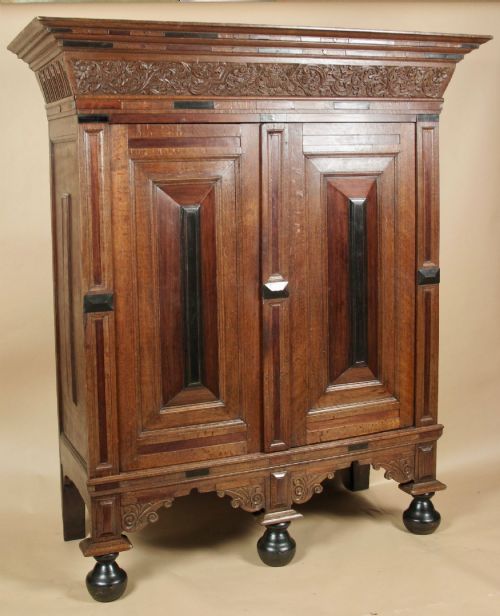


Ebonised Display Cupboard
An ebonised display cupboard brings dark timber and glass together to showcase treasured objects with dramatic contrast.
Ebonised Display Cupboard
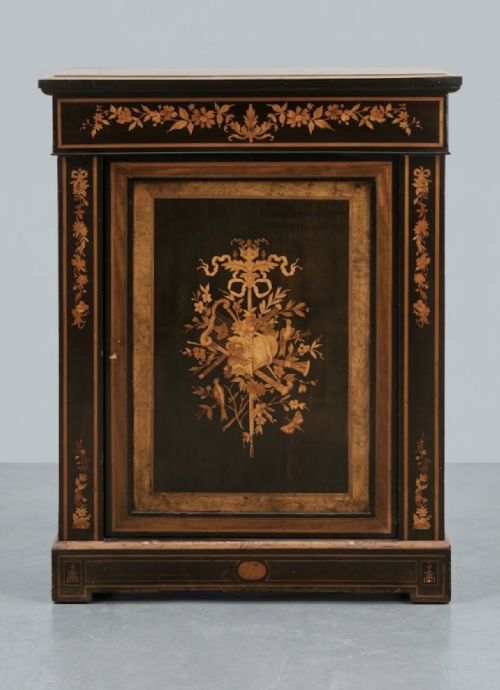
An ebonised display cupboard is a cabinet designed for showing porcelain, glassware and small collections behind glazed doors. When you search for an ebonised display cupboard, you encounter diverse forms ranging from Victorian pier cabinets to French Napoleon III furniture and Dutch baroque pieces.
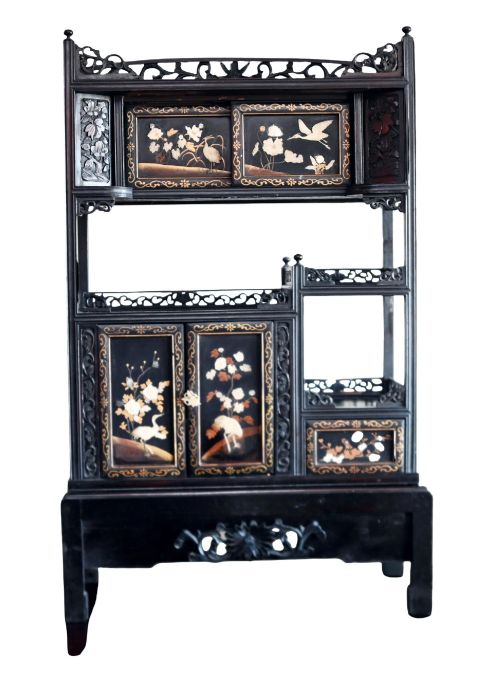
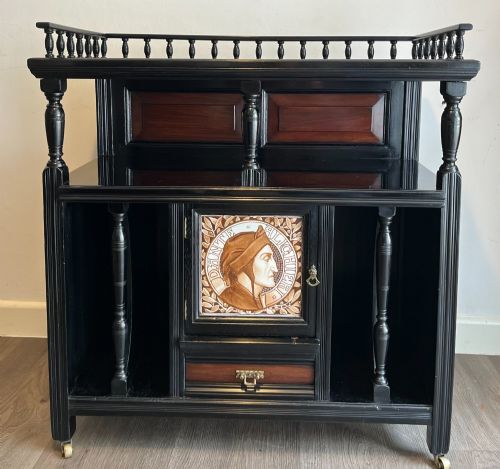
The selection on this page spans the nineteenth century up to the early twentieth century, taking in Aesthetic Movement designs and Japanese Taisho era shodanas alongside classical European styles. Most examples date from the Victorian era and utilise glass panels to protect the contents while offering clear visibility from the room.
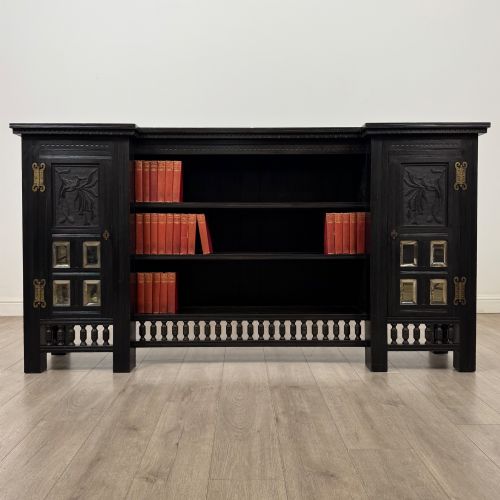
Formats include tall side cabinets, wall-mounted cupboards, music cabinets and matching pairs of pier cabinets designed to flank a fireplace or window. These pieces served as formal reception room furniture intended to display the owner's taste and cultivated collections.
Materials and construction
Makers achieved the characteristic dark finish by staining wood to imitate ebony, often combining ebonised timber with contrasting veneers such as amboyna, burr walnut, rosewood and tortoiseshell. Solid carcasses provided structural stability for heavy glass doors and internal shelving.
Decoration relied heavily on cast ormolu and gilt-metal mounts, brass inlay work in the Boulle technique, and hand-painted porcelain plaques set directly into the timber frame. Carved wooden details and tortoiseshell panels added texture and visual depth to the flat black surfaces.
Listings feature items from the seventeenth century through to the 1920s, with a strong concentration of Victorian pieces incorporating brass, ormolu and porcelain.
Factors determining quality
The distinction between standard domestic furniture and exhibition quality pieces lies in the precision of the brass inlay, the crispness of the ormolu mounts, and the integration of decorative elements like Sevres style porcelain plaques. Superior cabinets display meticulous hand-finishing in the timber preparation and joinery.
The quality of the glass, the weight of the bronze or gilt-metal mounts, and the complexity of the contrasting veneers signal the workshop's ambition. Matched pairs and pieces retaining their original fitted interiors command particular attention from collectors.
The Ebonised Display Cupboard Glossary
- Ebonised
- Wood treated with a dark stain or finish to replicate the appearance of solid ebony. This technique gained immense popularity during the Victorian period.
- Ormolu
- Gilt bronze mounts applied to furniture for decorative effect. These metal ornaments are cast and chased before being gilded.
- Pier Cabinet
- A narrow cabinet designed to fit against the wall space between windows. These pieces often feature glass doors and velvet-lined interiors.
- Sevres Style
- Porcelain plaques decorated with hand-painted scenes or monograms, framed within the wooden body of the cabinet. They imitate the output of the French royal porcelain manufactory.
Ebonised Display Cupboard: Frequently Asked Questions
What is an ebonised display cupboard?
An ebonised display cupboard is a glass-fronted cabinet finished in a dark, ebony-imitating stain used primarily for showing off ceramics and ornaments.
These pieces emerged in various forms across the nineteenth century, including French pier cabinets and English reception hall furniture.
How do I identify a Victorian ebonised cabinet?
Victorian ebonised cabinets typically feature dark stained wood surfaces combined with gilt-metal mounts, glass panel doors, and occasionally inlaid brass or porcelain plaques.
Examining the construction methods, backboards, and interior shelving helps confirm the nineteenth-century origin.
Where should I place a pier cabinet?
Pier cabinets were originally designed to stand in the narrow wall space between two windows, making the most of available natural light.
In modern rooms, they work well against plain walls where their dark timber and glass panels can serve as a focal point.
What is Boullework on these cabinets?
Boullework is a precise marquetry technique involving cut brass and tortoiseshell fitted together to create intricate decorative patterns across the cabinet front.
This technique appears frequently on nineteenth-century French and Victorian side cabinets.