Loveday Antiques has dated this Japanese Edo Lacquer Cabinet to the 17th Century.
Japanese circa 1690
Provenance
A private Scottish collection
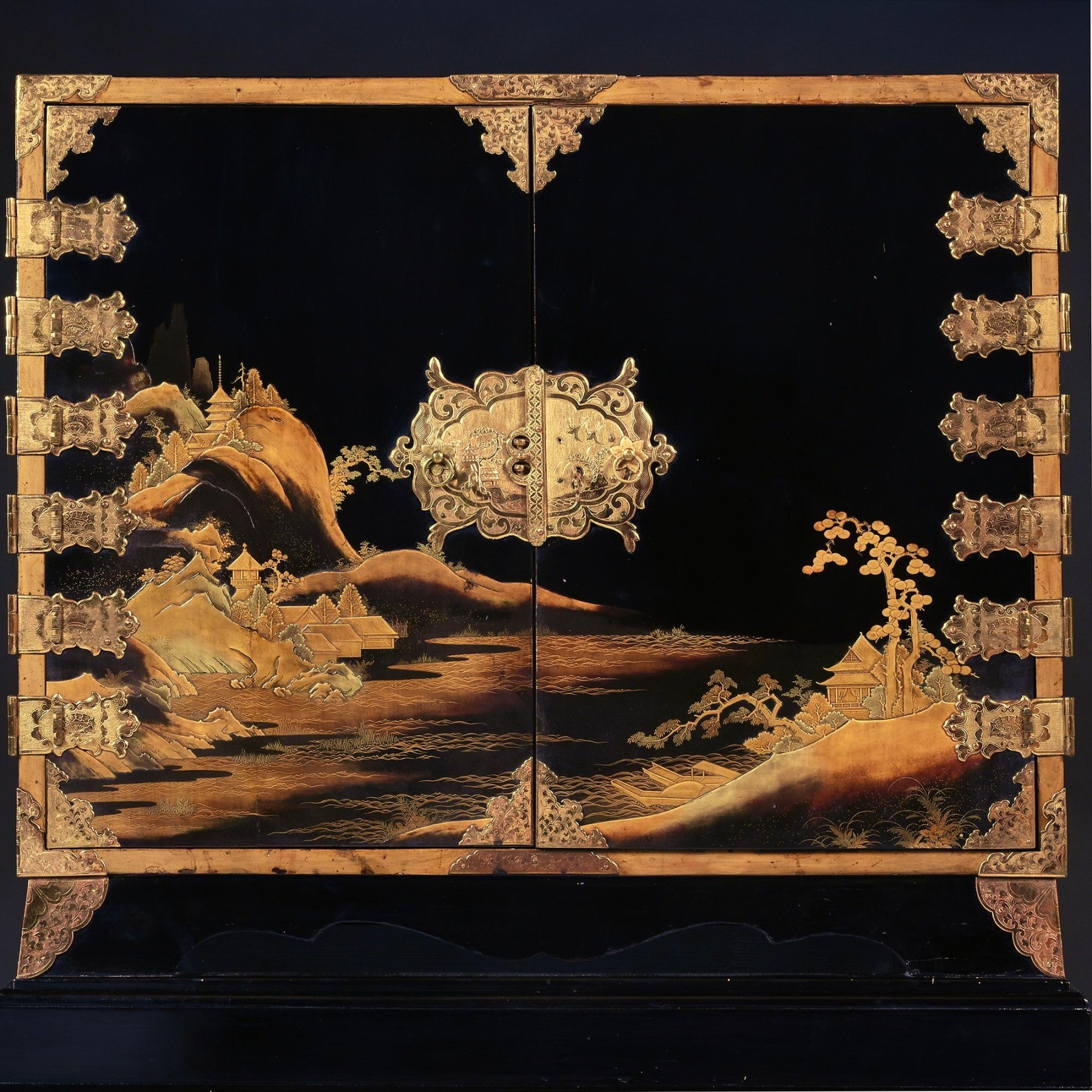
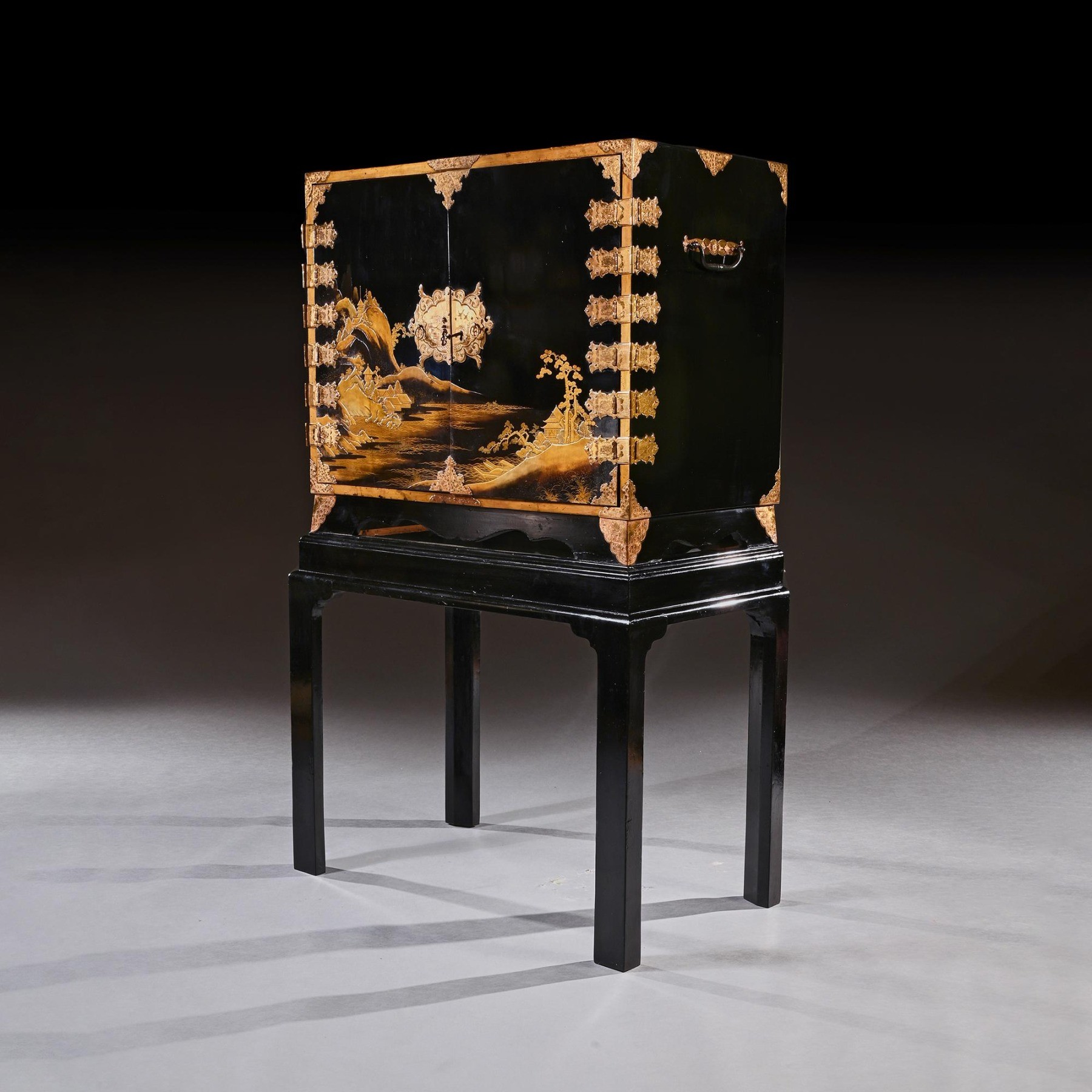
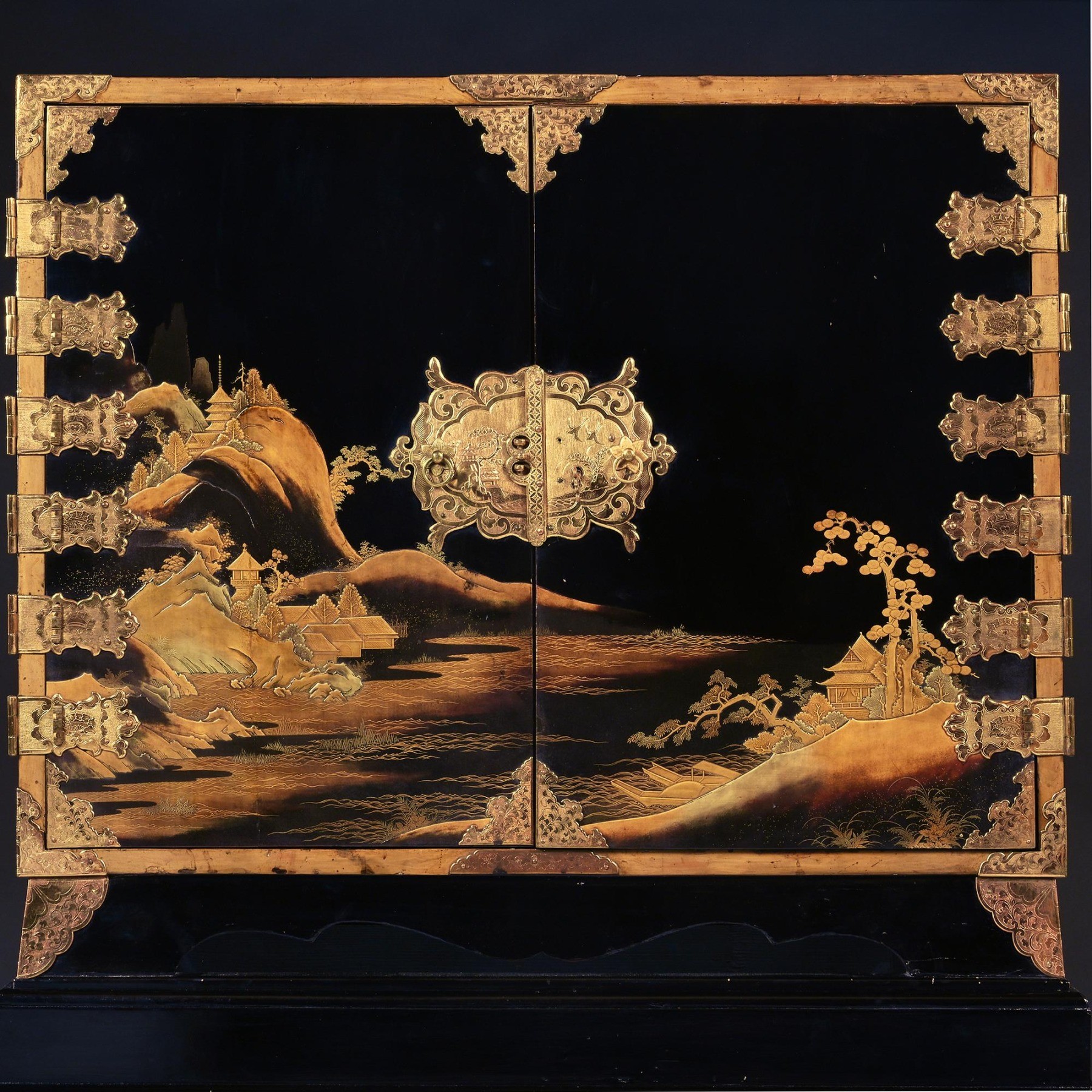
This outstanding cabinet is a fascinating fusion of east and west. The cabinet itself would have been made in Japan, c.1690, and is decorated to the outside with hiramaki-e lacquer. This technique involves the use of sprinkled gold powder which adheres to the lacquer surface.
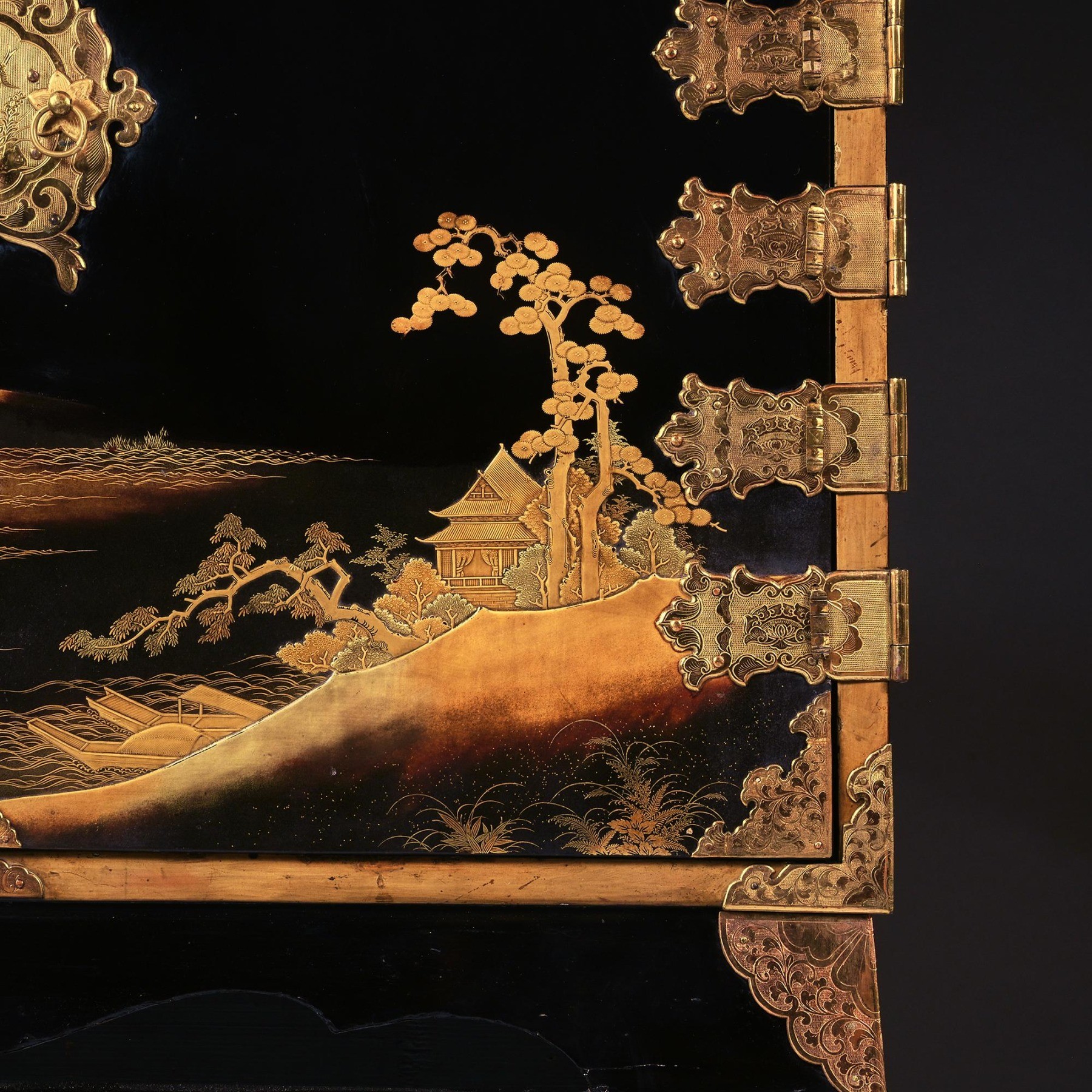
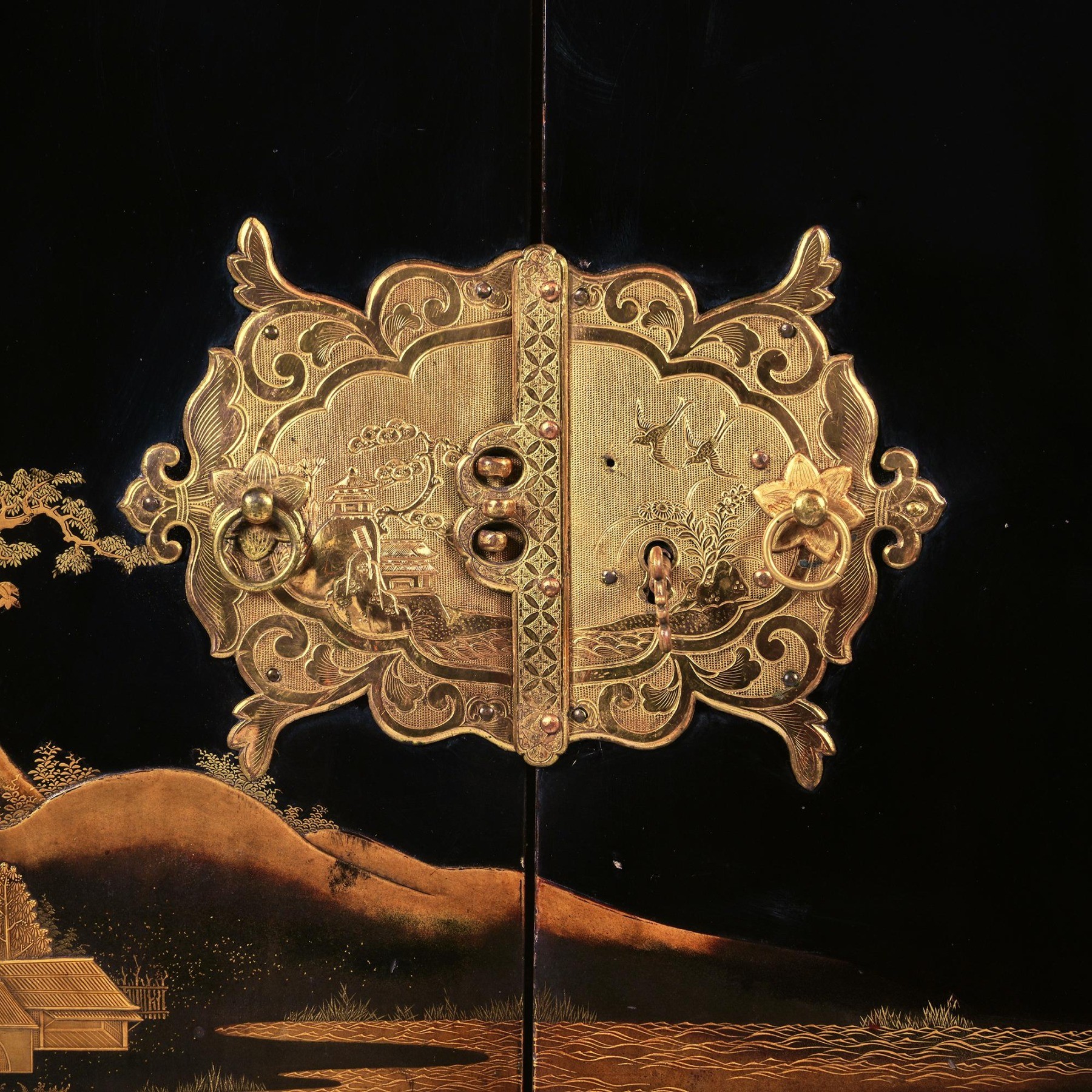
The taste of the Japanese workshops in this period was often for quite restrained pieces with plenty of the black background visible, unlike some of the busier Chinese lacquer or European japanned examples produced around the same time. The Japanese makers seemed content to rely on the outstanding quality of the lacquer itself, regarded by most experts as the finest lacquer ever produced, and did not see the need to cover every surface believing that less was more in this respect. The lacquer here is used to produce a mountainous scene with temples on the bank of a river, the other side of the river with more temples and a contrasting flatter and forested landscape. The fine perspective achieved is the result of the clever use of raised and flatter areas in the lacquer itself in combination with the drawing of the design itself.
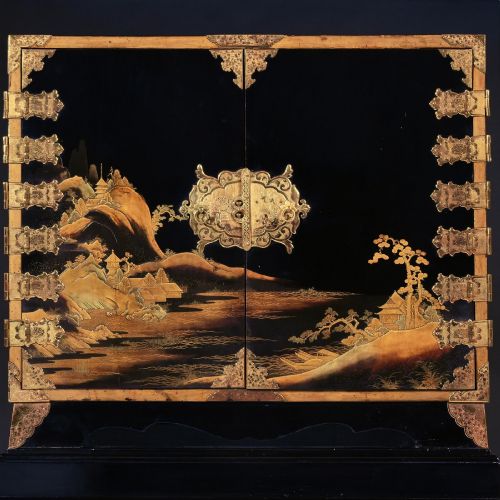
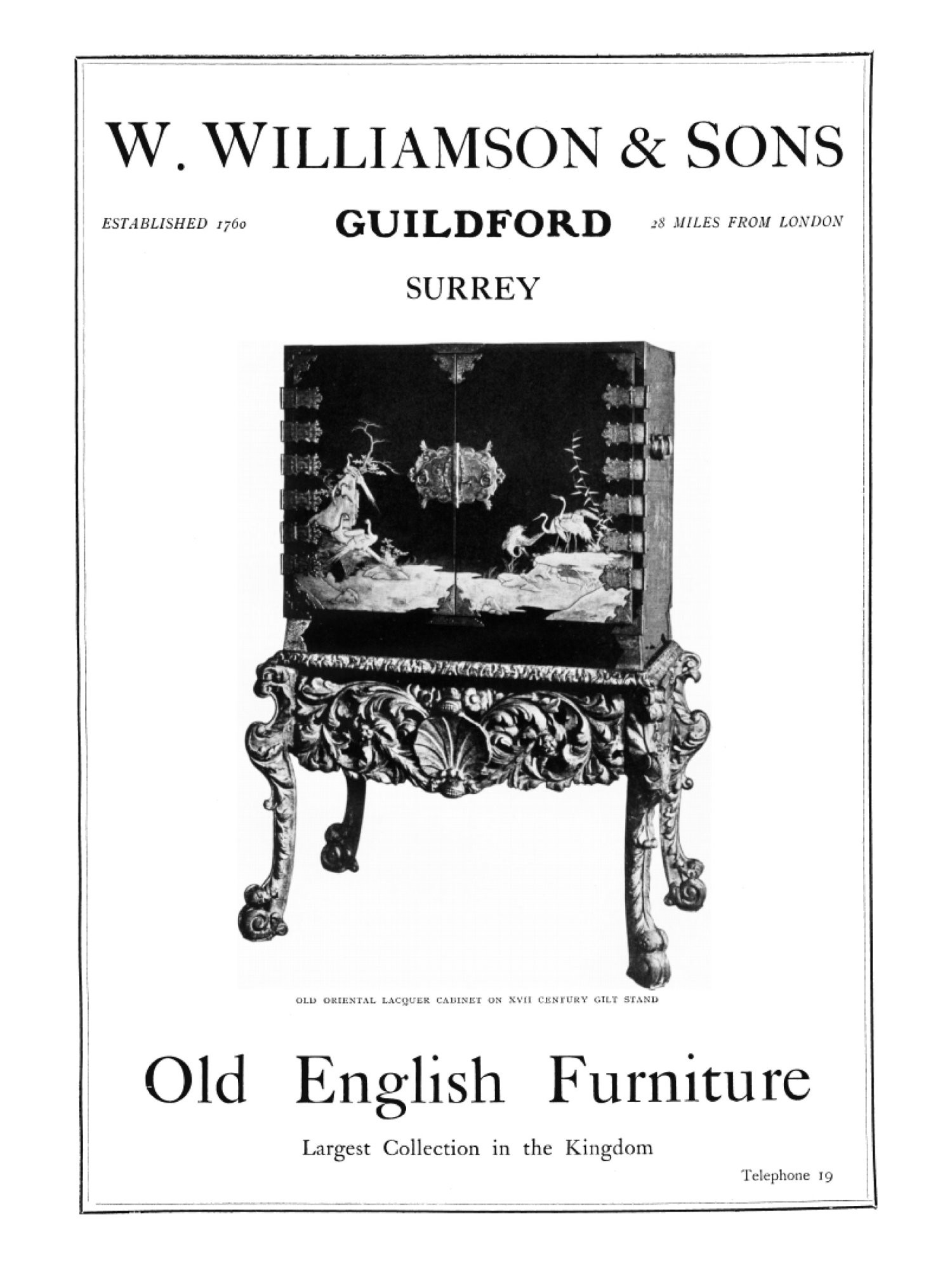
Another remarkable aspect of this piece is the fine metalware throughout, but particularly the lockplate / hasp, hinges and foot mounts to the front. This is all beautifully cast and engraved contrasting against the black background. Interestingly another cabinet on stand with near identical metalwork was advertised in the Burlington Magazine, November 1913, with the dealer W. Williamson and Sons of Guildford. The lacquer on that piece is similarly refined and it seems likely that both pieces came from the same workshop.
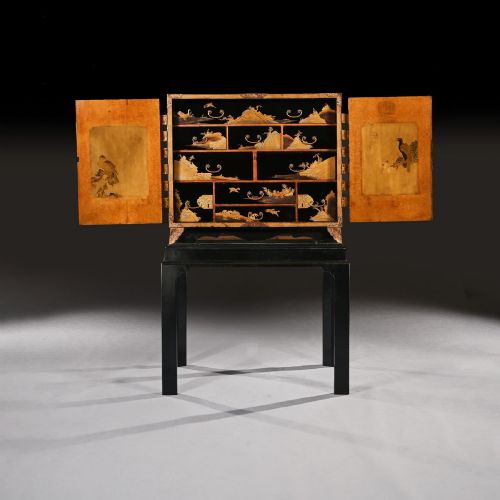
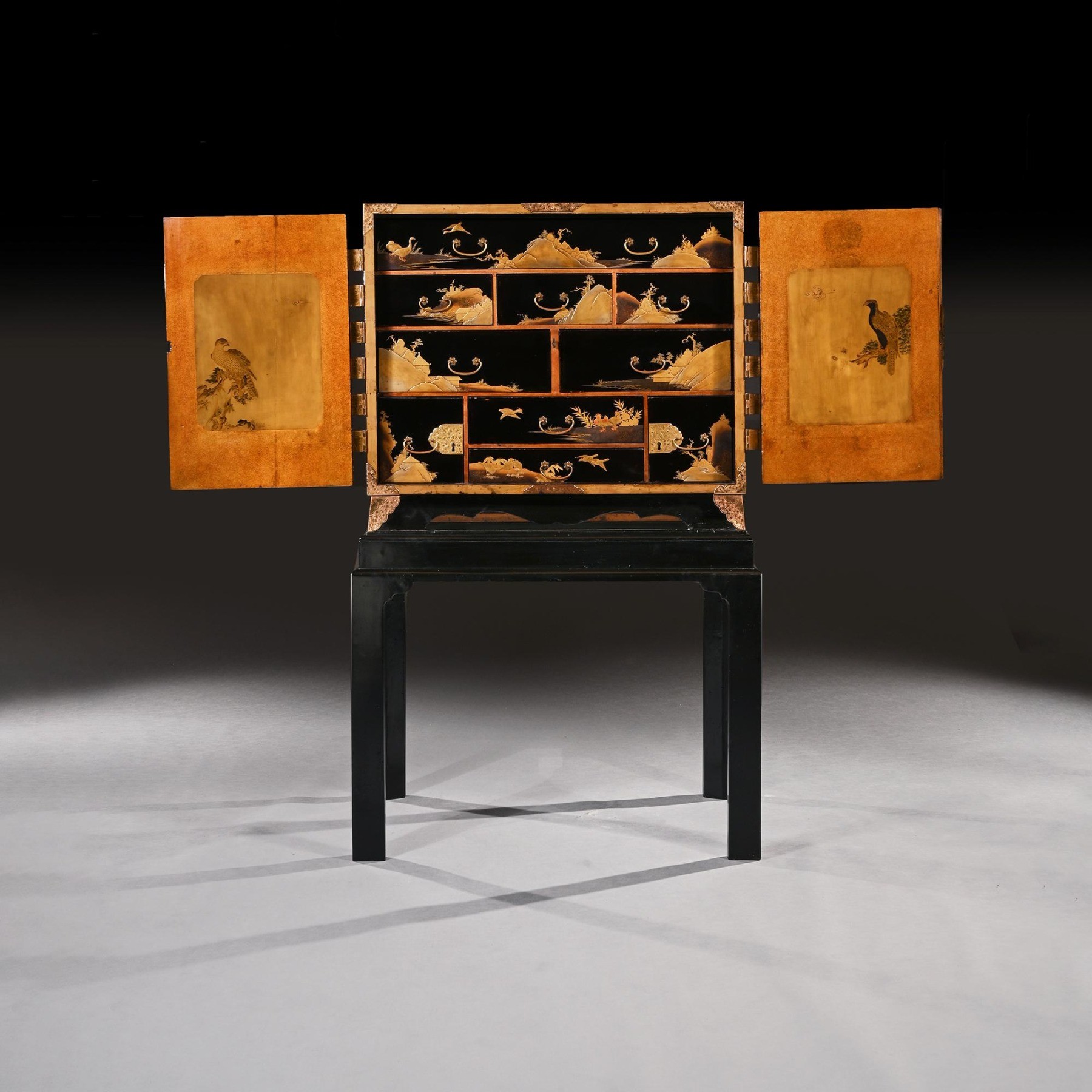
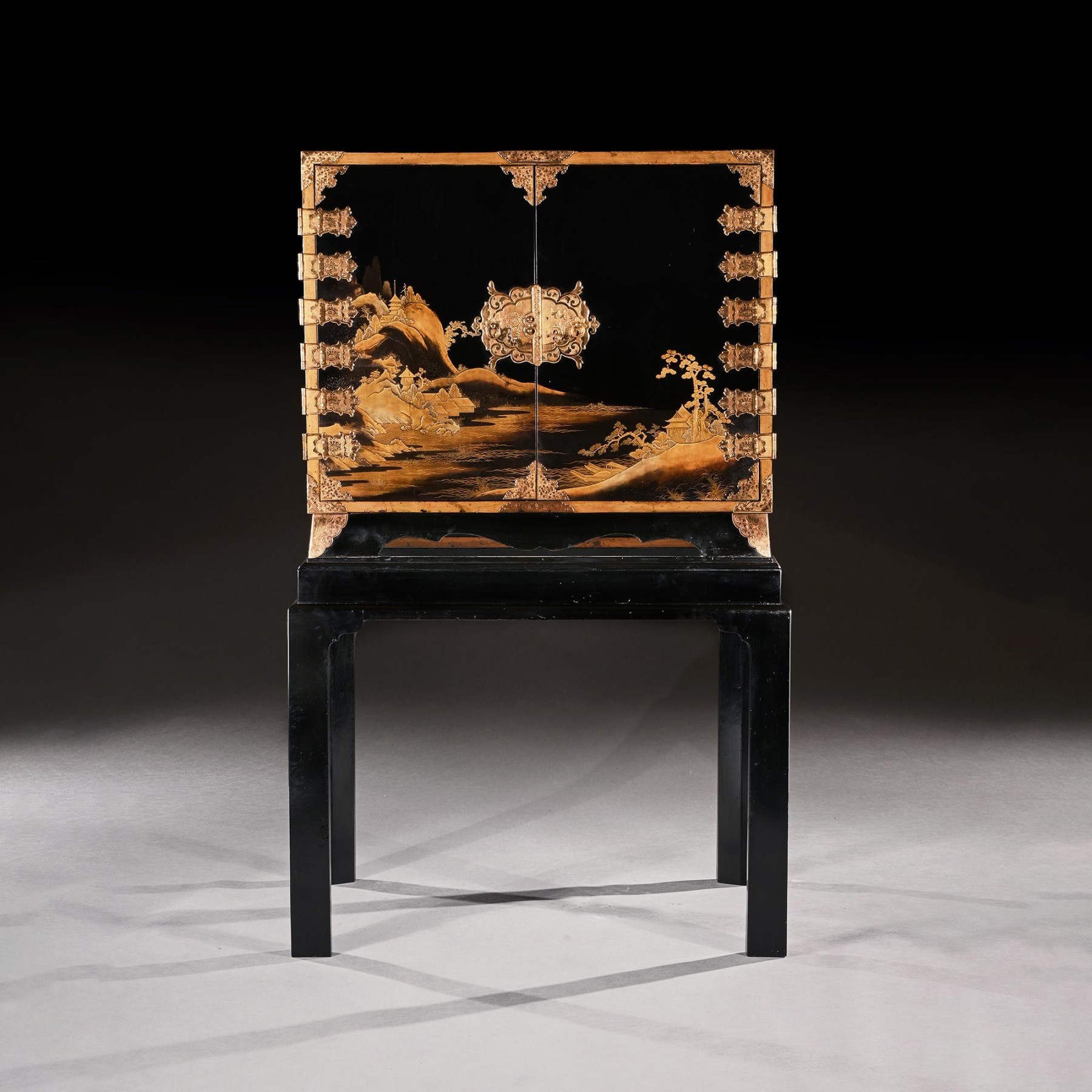
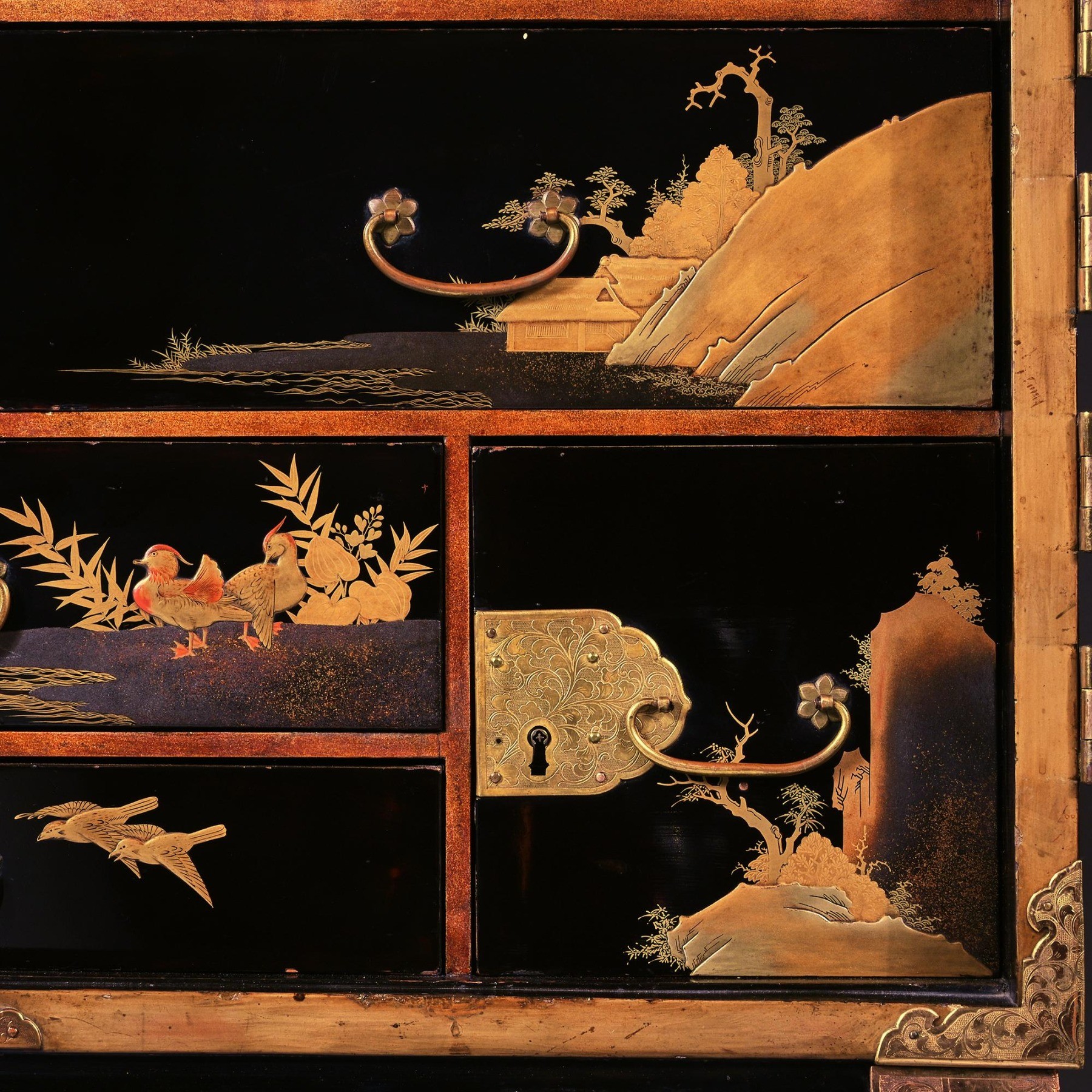
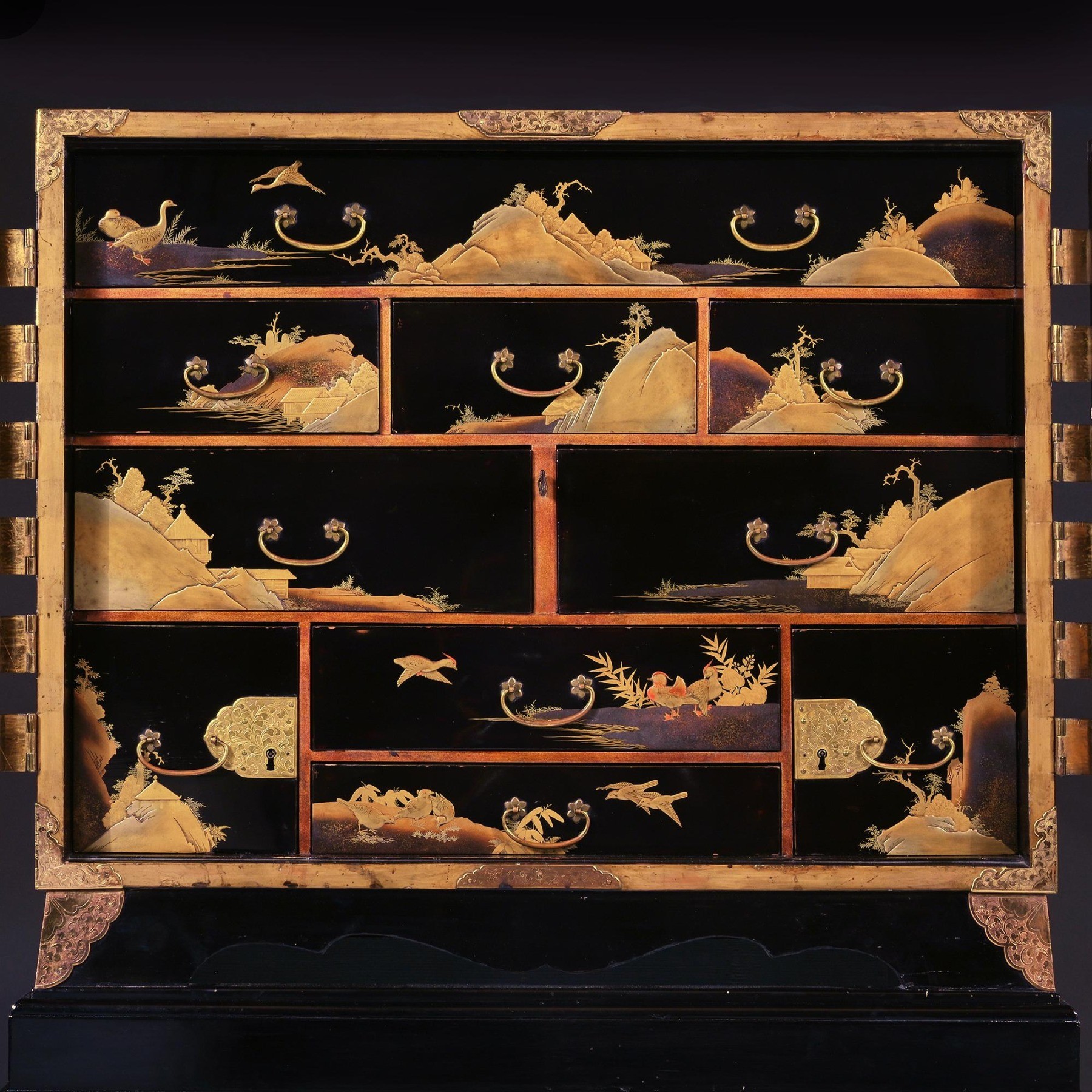
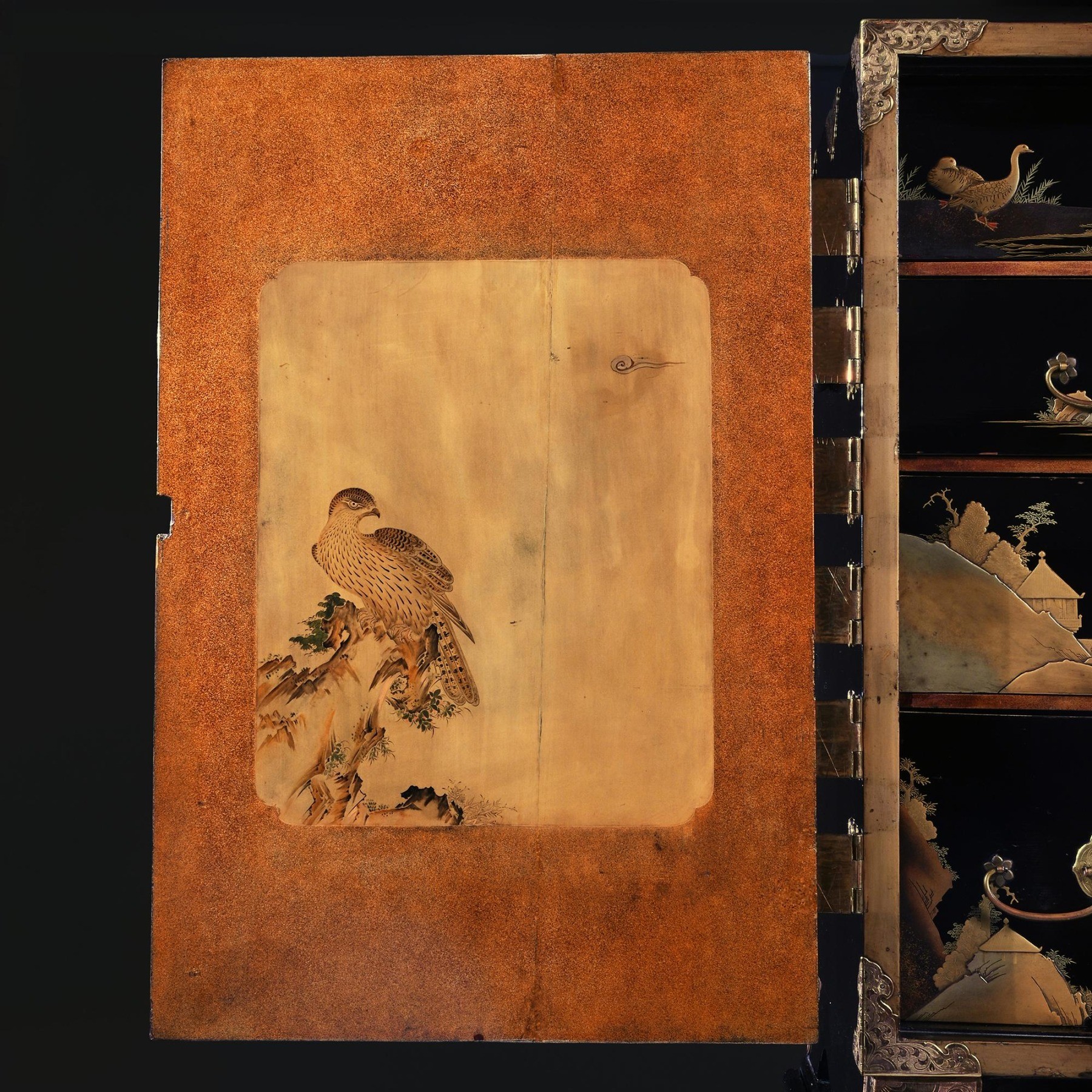
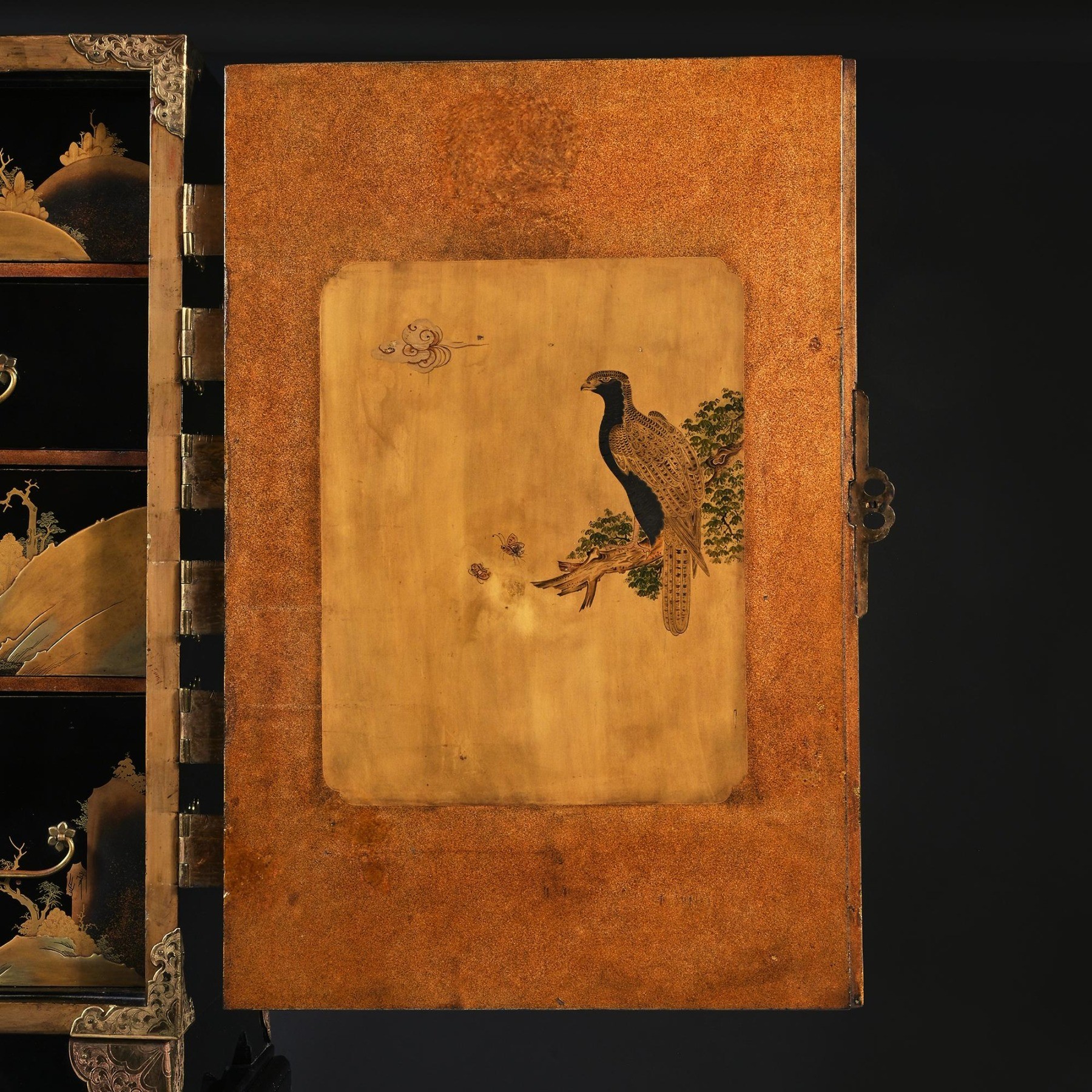
The European influence in our piece can be seen in the late 18th Century black Japanned stand which is designed in "the Modern" Chinese fashion popularised by Thomas Chippendale's, Gentleman and Cabinet-Maker's Director, 1754. The Japanning to the inside doors consists of two panels with birds of prey perched on branches in colours set against a golden background. The cabinet has a recent Scottish provenance and so it is likely that the ebonised stand was made in Britain after Chippendales 'The Modern' Chinese fashion. Inside the cabinet there is a combination of more Japanese lacquer and lock plates and European drawer handles. Most of the lacquer drawer fronts incorporate mountainous scenes and birds in combination, with a few purely one or the other of the two subjects. Again the lacquer is in excellent condition and is of exceptional quality with multiple layers of relief used in one single scene in many cases.
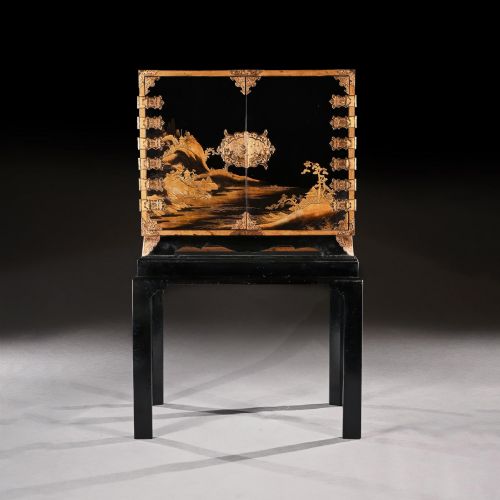
These early Japanese lacquer cabinets always have integral feet and were shipped to Europe without stands which were always manufactured for them when they arrived at their destination. Due to the Dutch control of the trade with Japan in the 17th century, purchases made by monarchs and leading connoisseurs throughout Europe would have been placed through agents in Amsterdam. Records survive relating to purchases of Japanese lacquer of this sort made by Louis XIII and Louis XIV and the high cost of shipping via another European country added to the luxurious nature of these pieces and the exclusivity attached to ownership of them. It also became increasingly clear to European connoisseurs that Japanese lacquer products were superior to their Chinese equivalents and, as such, the trade in Japanese lacquer became a highly profitable business for the Dutch VOC (East India Company) and the various allied businesses.
Loveday Antiques has dated this Japanese Edo Lacquer Cabinet to the 17th Century.
Specialist furniture dealers 18th-20th century
You can view the stock and full dealer information on the Loveday Antiques Profile Page
Loveday Antiques is a registered member of LAPADA BADA CINOA
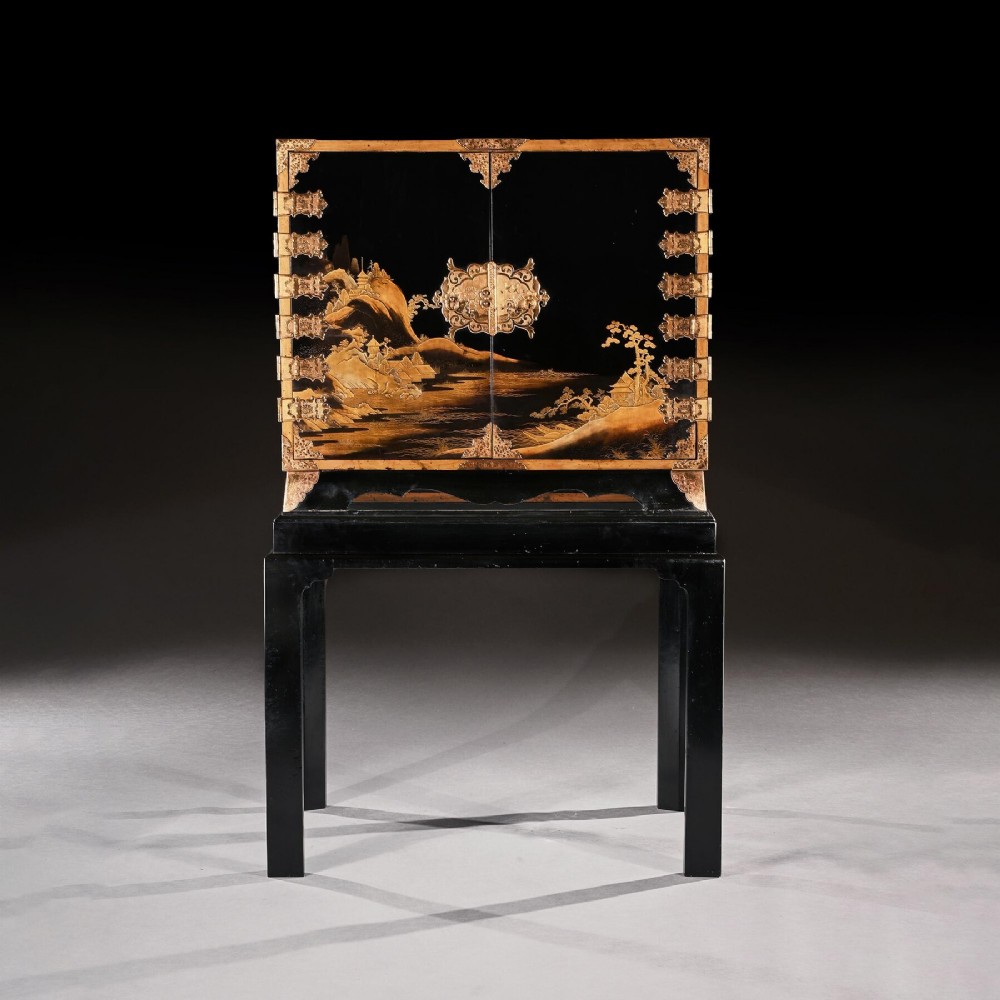
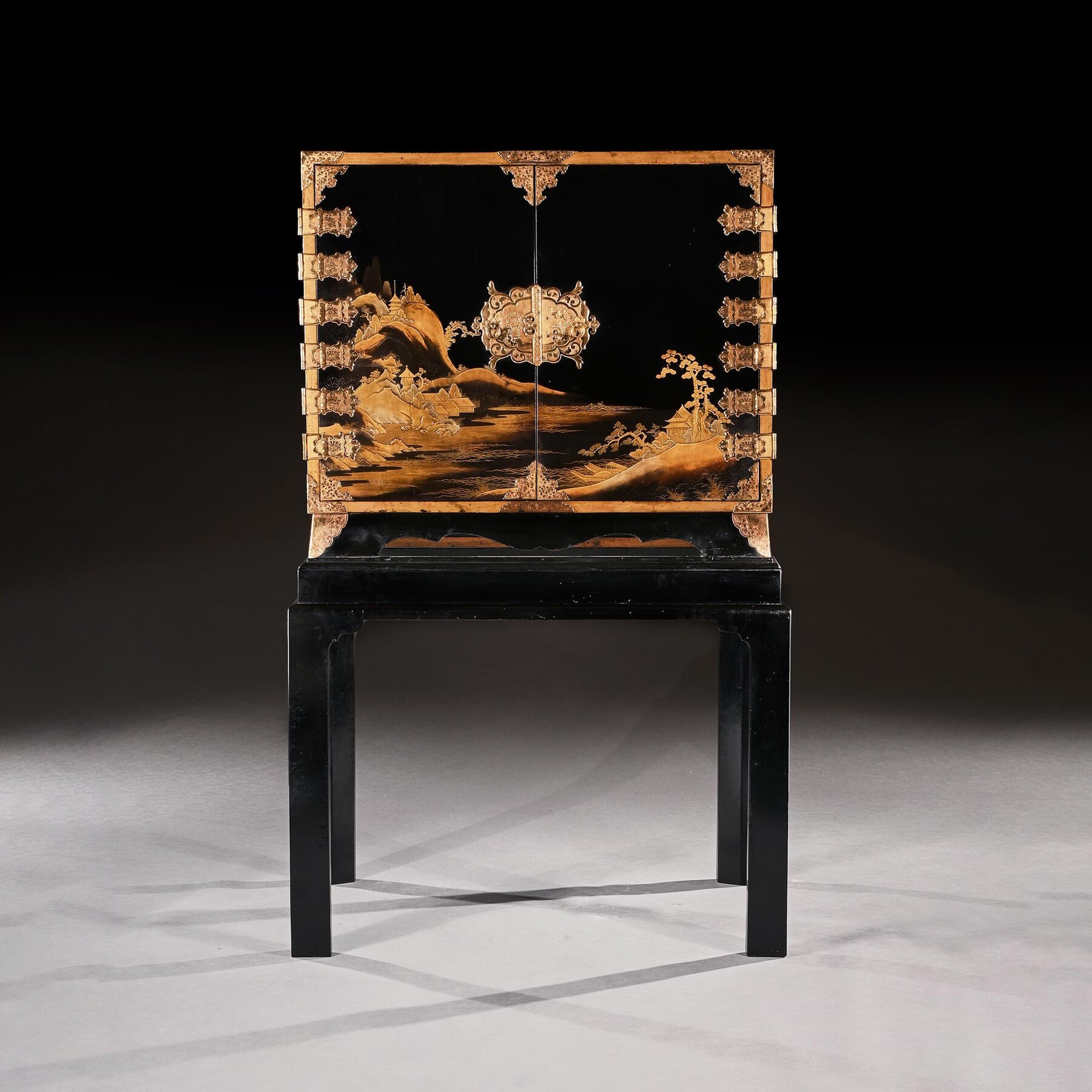
An Important Late 17th Century Japanese Lacquered Cabinet Edo Period on Stand