


Gilt Brass Mounted Cabinet
A gilt brass mounted cabinet brings together rich timbers and heavy cast metalwork, offering both display space and strong architectural presence.

Gilt Brass Mounted Cabinet
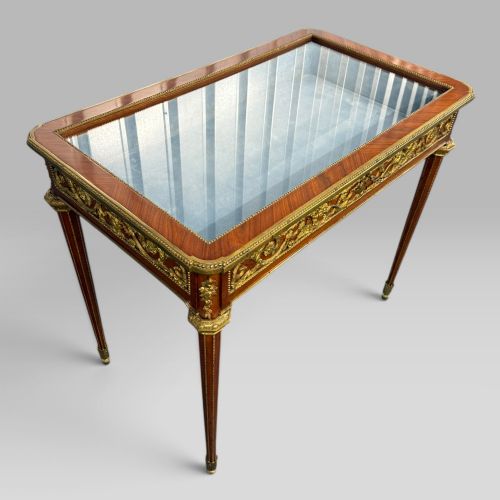
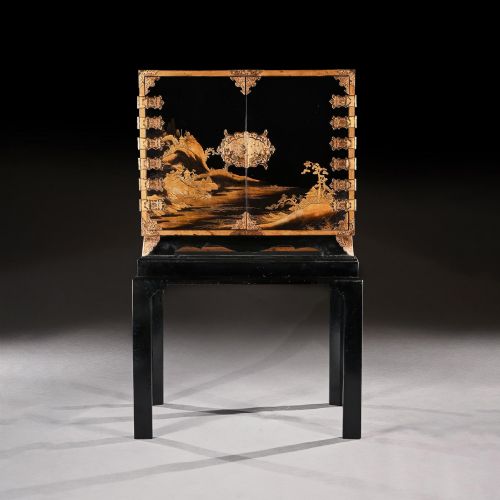
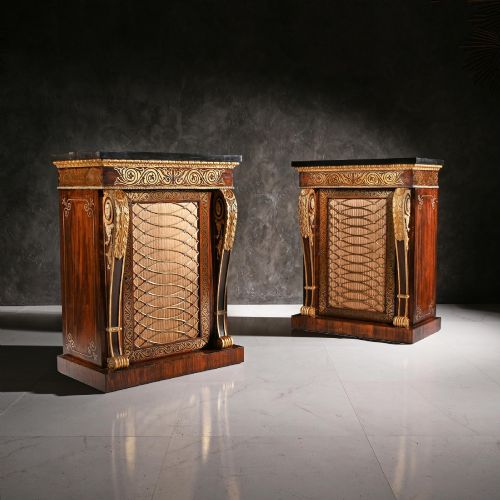
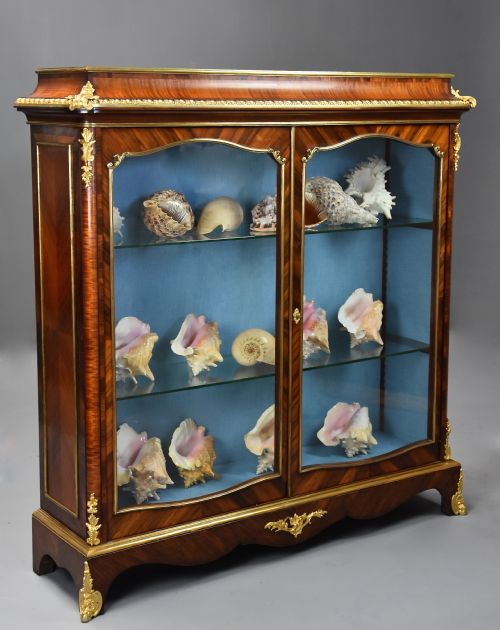
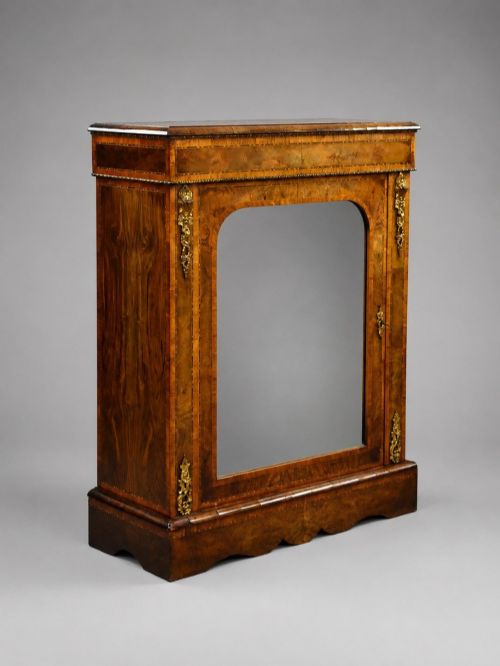
A gilt brass mounted cabinet combines timber construction with cast brass or ormolu mounts, taking forms such as pier cabinets, credenzas, commodes and display cabinets. These pieces emerge predominantly from nineteenth-century Victorian and French revival periods, alongside Regency and earlier seventeenth- and eighteenth-century examples.
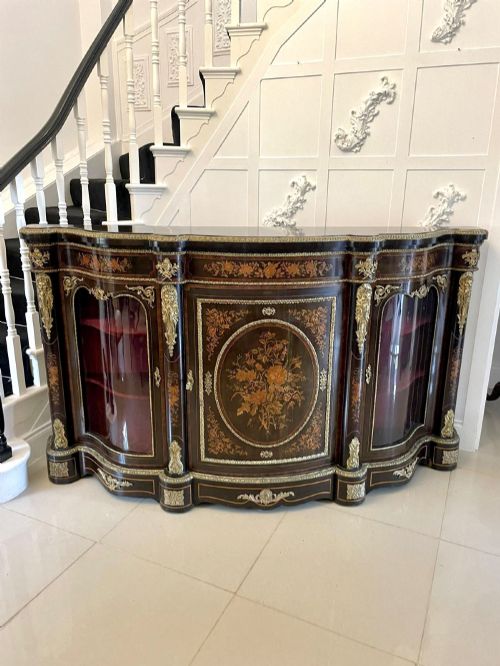
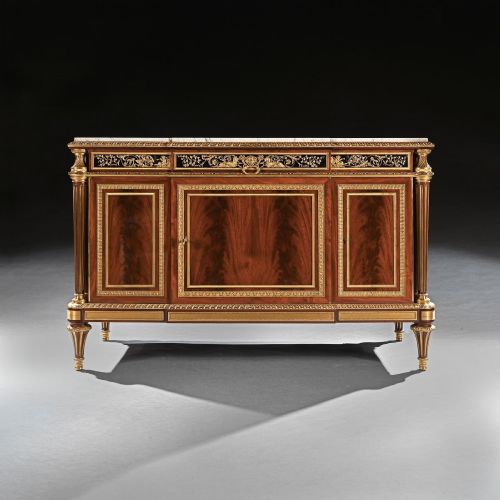
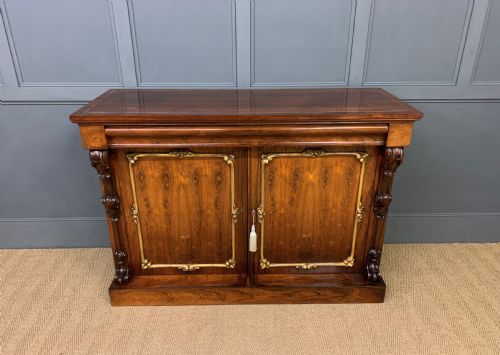
The version most commonly met on this page is the nineteenth-century French or English side or pier cabinet, often rendered in mahogany, rosewood, ebonised wood or walnut, and finished with gilt metal mounts and glass panels for display.
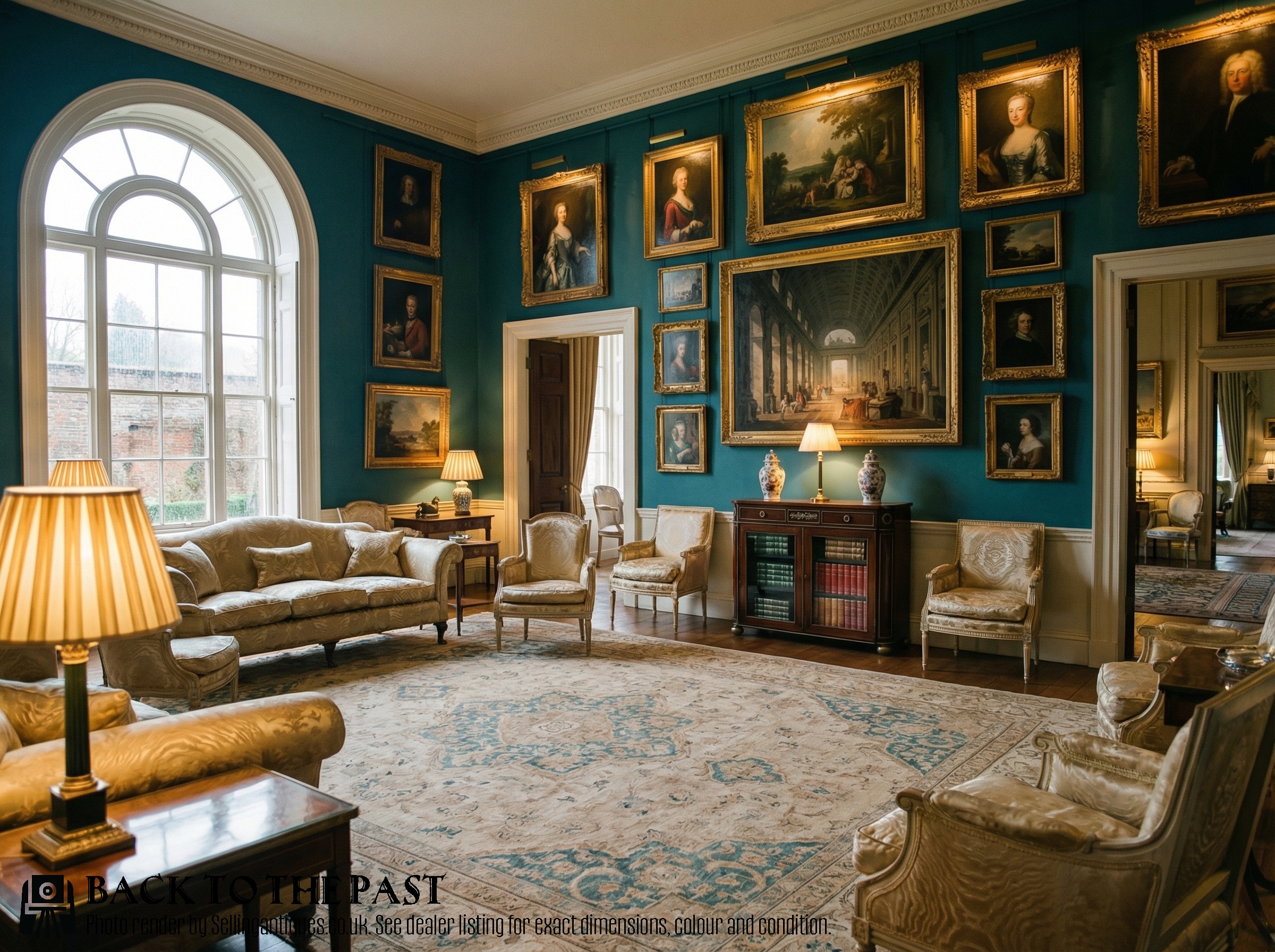
Materials and construction
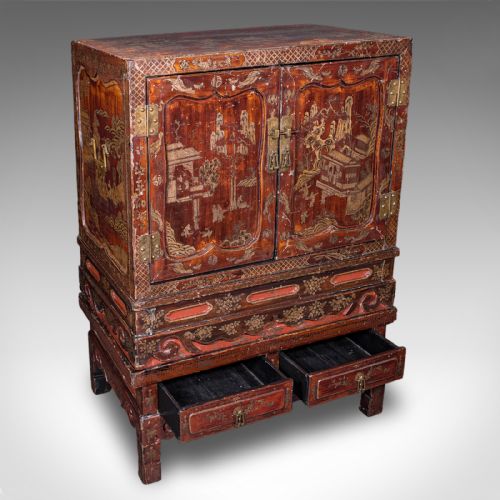
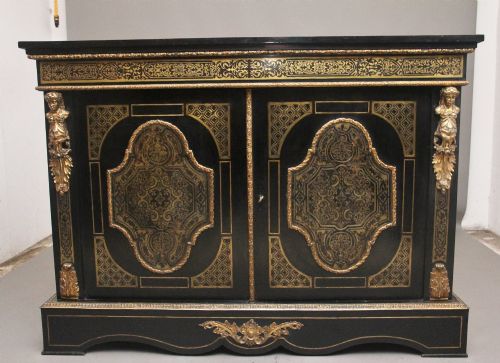
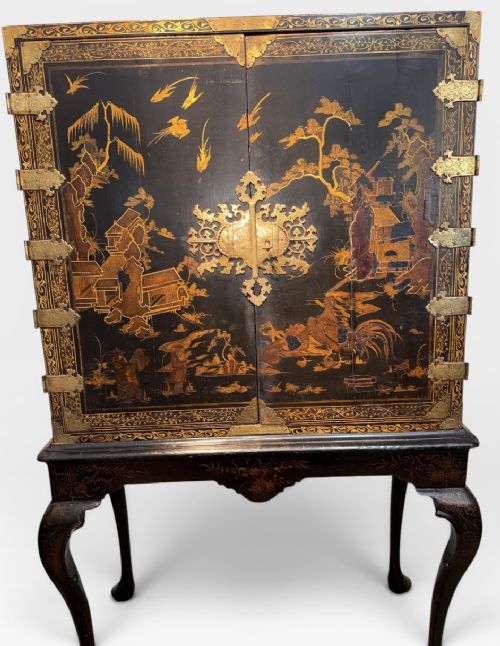
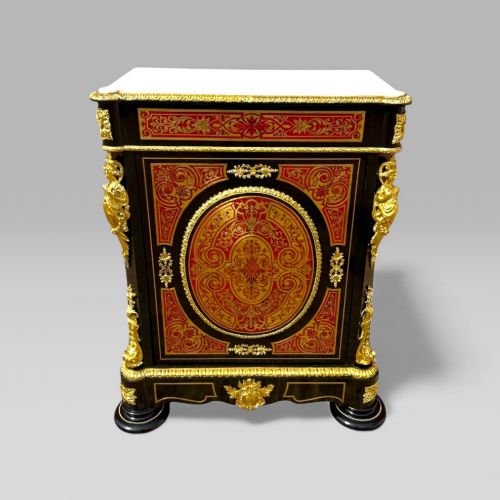
Cabinet makers constructed carcass frames from dense hardwoods like mahogany, walnut and rosewood, frequently applying veneers such as kingwood, amboyna, or tortoiseshell in boulle work. Ebonised finishes and japquered lacquer surfaces also appear across the selection.
Decorative elements rely heavily on cast ormolu and gilt brass mounts, applied to corners, borders and lockplates, alongside marquetry inlays, Sevres porcelain plaques and marble tops.
Gilt Brass Mounted Cabinet Retail Price Guide 2026
Typical asking prices for gilt brass mounted cabinet among the pieces listed under this phrase on Sellingantiques today, from the lower quarter to the upper quarter. They describe what is for sale here now, not the wider market.
Several cocktail cabinets on stands wait quietly to mix a dry martini.
The standard of execution
Quality rests in the crispness of the gilt brass or ormolu chasing and the precision of the timber veneers and marquetry inlay. Superior pieces show hand-finished mounts that sit flush against the wood and tight, clean joinery throughout the carcass and internal shelving.
The refinement of the secondary timbers, the weight and depth of the cast metal, and the balance of proportions between the timber body and the metal mounts separate ordinary utility pieces from works produced by leading nineteenth-century workshops.
François Linke·Henry Dasson·Louis Constantin Le Gaigneur·Paul Sormani·Gillows
The Gilt Brass Mounted Cabinet Glossary
- Ormolu
- Gilt bronze or brass mounts used extensively on fine furniture. The technique involves applying a gold amalgam to cast brass and firing it.
- Boulle
- A form of marquetry using brass and tortoiseshell inlaid in counter-changed patterns. It is named after the French cabinet maker André-Charles Boulle.
- Credenza
- A low cabinet or sideboard designed for display and storage, often featuring glass-fronted side doors and central cupboards.
- Pier cabinet
- A narrow cabinet designed to stand against the wall space between windows. These typically incorporate glass doors for displaying porcelain or books.
- Marquetry
- Decorative patterns formed by fitting together thin slices of various woods, veneers, and sometimes metals onto a carcass structure.
Gilt Brass Mounted Cabinet: Frequently Asked Questions
What is a gilt brass mounted cabinet?
A gilt brass mounted cabinet is a piece of storage or display furniture decorated with cast metal mounts finished in gold tone. These cabinets range from low side pieces to tall display vitrines.
They serve both decorative and practical functions, holding books, ceramics, or household items while adding strong architectural detail to a room.
Where were these cabinets placed?
These cabinets found places in nineteenth-century drawing rooms, libraries, and formal reception spaces. Narrow pier cabinets specifically suited the wall spaces between large windows.
Larger credenzas and bookcases stood against main walls, providing surfaces for decorative objects and lamps alongside enclosed storage.
How do I care for these materials?
Maintenance requires gentle dusting with a soft dry cloth and avoiding harsh chemical polishes that can damage delicate veneers and gilt metal surfaces. Keeping pieces away from direct sunlight and heat sources protects the timber and prevents veneer warping.
Marble tops benefit from immediate wiping of spills to prevent staining, while brass mounts should remain untouched by abrasive cleaners.
How do I tell the periods apart?
Period identification relies on observing timber choices, construction methods, and stylistic revival cues. Regency pieces often use rosewood with restrained brass inlay, while Victorian and Napoleon III examples frequently feature ebonised woods, boullework, and heavier ormolu casting.
Earlier seventeenth and eighteenth-century examples display distinct lacquer work and simpler carcass proportions compared to later revival pieces.