





Japanese Cabinet on Stand
A Japanese cabinet on stand combines intricate oriental lacquerwork with a raised timber base, bringing portable display storage to domestic interiors.
Japanese Cabinet on Stand
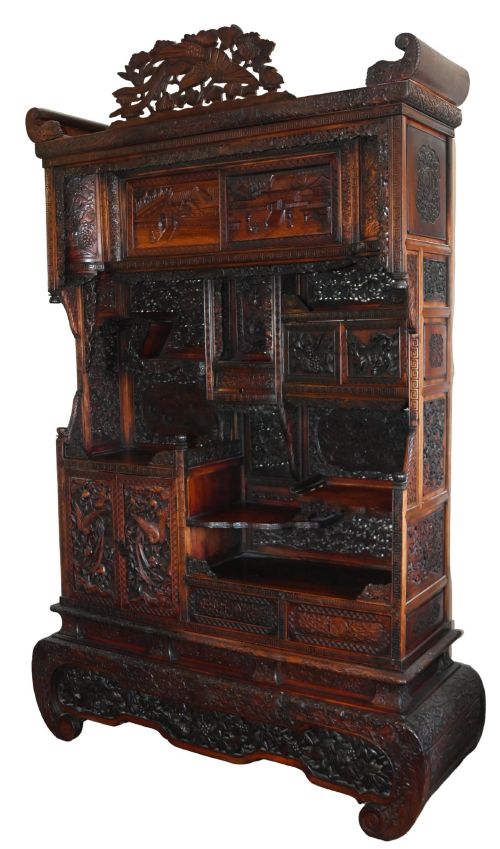
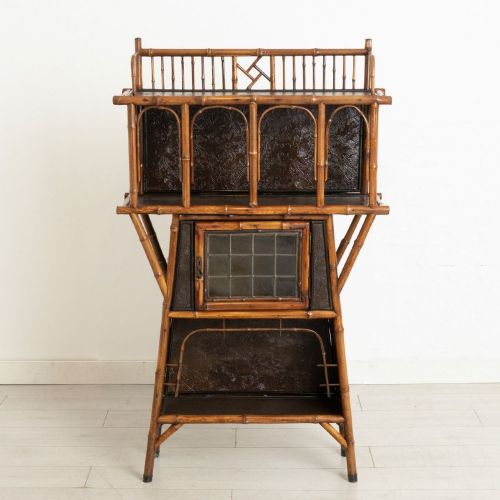
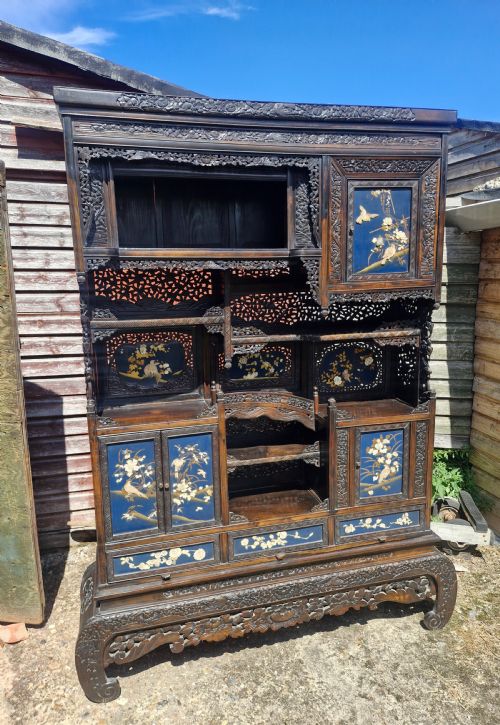
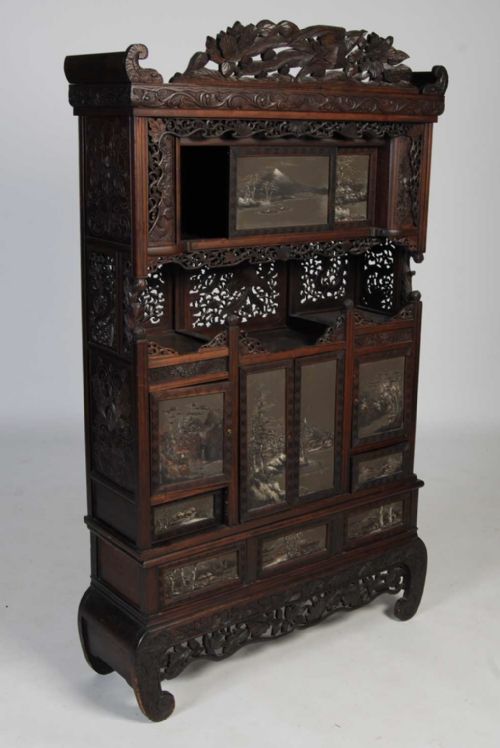
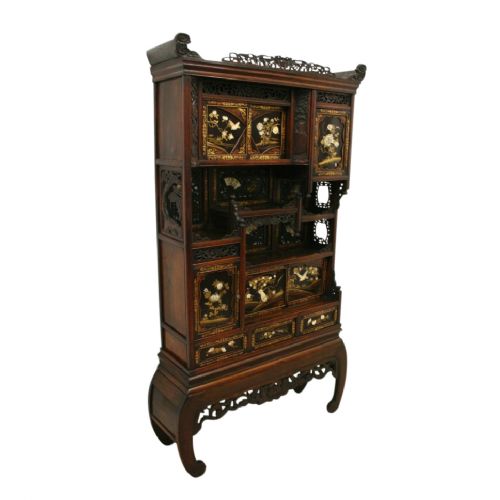
A Japanese cabinet on stand is a double-part form comprising a decorative box paired with a supporting base, originating from periods spanning the seventeenth century through to the early twentieth century. The primary forms seen here include traditional shodana display cabinets alongside European interpretations from the Aesthetic Movement and Edwardian eras.
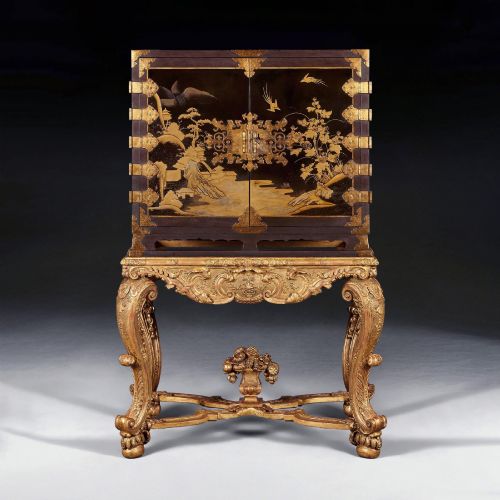
Buyers will encounter imported export pieces from the Meiji and Edo periods sitting alongside domestic British and French reinterpretations influenced by Japonisme and Chinoiserie. These range from substantial seventeenth-century lacquered storage boxes mounted on giltwood frames down to smaller occasional tables and tabletop cabinets.
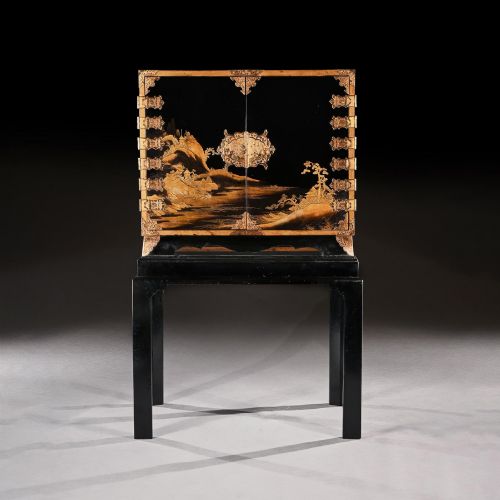
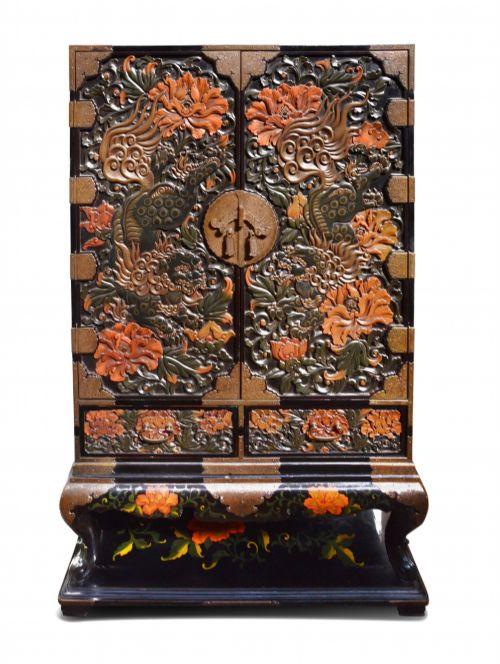
The lower supports vary considerably, appearing as carved wooden stands, ebonised mahogany frames, or elaborate giltwood structures tailored to European tastes. The upper sections maintain compartmented interiors designed for display, utilising shelves and small doors to house collections.
How they were made
The construction relies heavily on native and exotic hardwoods such as mahogany and ebonised timber, which form the structural carcasses for both the cabinets and their stands. Artisans applied traditional lacquer techniques over wooden cores, incorporating gold leaf, mother of pearl, and brass details to build up deep pictorial surfaces.
Surface ornamentation involved intricate carving, parquetry, and inlay work, particularly in Meiji period examples and later European interpretations. Stands were constructed using joinery appropriate to the period, whether through the heavy gilded carving seen in seventeenth-century French mounts or the cleaner lines of late nineteenth-century British workshop designs.
Japanese Cabinet on Stand Retail Price Guide 2026
Typical asking prices for japanese cabinet on stand among the pieces listed under this phrase on Sellingantiques today, from the lower quarter to the upper quarter. They describe what is for sale here now, not the wider market.
Current listings feature seventeenth-century lacquered cabinets on giltwood stands alongside late nineteenth-century bamboo and mahogany pieces.
What varies in quality
Quality rests upon the depth and execution of the surface decoration, distinguishing master lacquerwork and detailed Shibayama inlay from simpler painted or printed imitations. The integration between the upper cabinet and its stand dictates the success of the piece, separating unified historical pairs from later married components.
The refinement of the internal compartmentation and the crispness of the carved woodwork on both cabinet and frame reveal the tier of the workshop involved in production. Early seventeenth and eighteenth-century examples demonstrate superior material density and lacquer stability compared to later mass-produced export goods.
Leonard Wyburd·Gabriel Viardot·E W Godwin·Liberty and Co
The Japanese Cabinet on Stand Glossary
- Shodana
- A Japanese tiered display cabinet featuring staggered shelves and small cupboards designed for ornaments. These pieces typically sit upon integrated or separate wooden stands.
- Japonisme
- A late nineteenth-century Western artistic movement influenced by Japanese art and design. It manifested in European furniture through asymmetry, ebonised surfaces, and oriental motifs.
- Cinnabar
- A carved red lacquer technique built up in numerous layers before being deeply incised with figurative or floral designs. This material appears on select nineteenth-century cabinet doors.
- Chinoiserie
- European decorative style imitating Chinese and East Asian artistic traditions. It frequently appears on British and continental cabinets produced during the eighteenth and early twentieth centuries.
- Giltwood
- Wood that has been coated with gold leaf or gold paint. It appears primarily on European stands created to elevate imported Asian cabinets.
Japanese Cabinet on Stand: Frequently Asked Questions
What is a shodana cabinet?
A shodana is a traditional Japanese display cabinet characterised by irregular shelving, small sliding doors, and enclosed compartments. They were produced for domestic display and export during the Meiji and Taisho periods.
These cabinets frequently arrive mounted on wooden stands, adapting the portable Asian form into a permanent floor-standing furniture piece for Western drawing rooms.
How do I date a lacquer cabinet?
Dating relies on examining the construction timber of the carcass, the formulation of the lacquer, and the style of the supporting stand. Seventeenth and eighteenth-century examples display deep, stable lacquer and heavy regional joinery.
Later nineteenth-century pieces often incorporate machine-cut elements and reflect Aesthetic Movement or Meiji export production standards.
Are the stands original to the cabinets?
Many Asian export cabinets arrived in Europe without bases and were subsequently paired with locally made stands during the seventeenth and eighteenth centuries. European makers also built entire suites inspired by these imports.
Evaluating originality involves checking the alignment of weight marks, timber shrinkage patterns, and stylistic harmony between the upper box and the lower frame.
What is the difference between Chinoiserie and Japanese styles?
Chinoiserie represents European interpretations of Chinese motifs, typically rendered in raised japanning on European furniture forms. Japanese styles draw directly from Meiji or Edo period craftsmanship and indigenous design motifs.
Distinguishing between them requires looking at the specific iconography, such as Japanese mon crests versus generic European lacquer landscapes.