

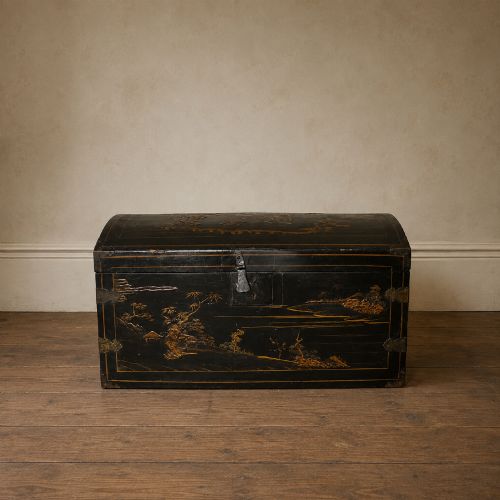

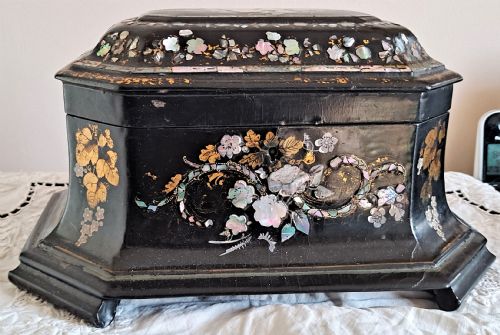


Gilt Lacquer Storage Chest
A gilt lacquer storage chest brings dramatic surface and deep storage together, drawing the eye while hiding household clutter.
Gilt Lacquer Storage Chest
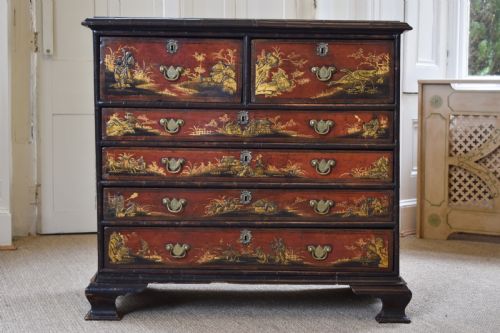
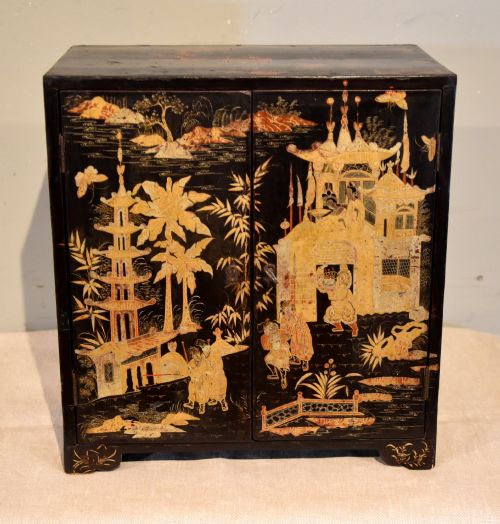
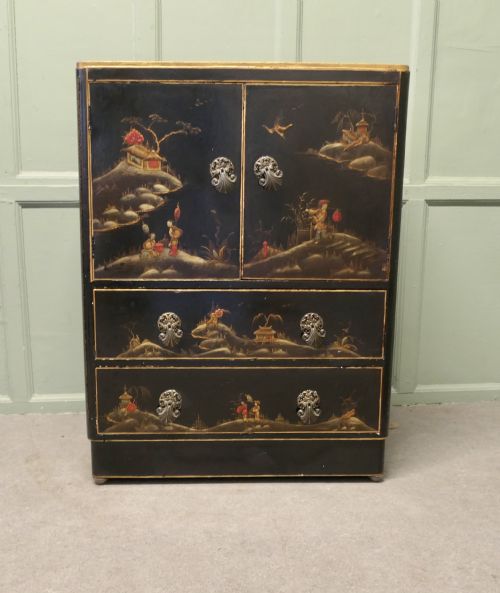
A gilt lacquer storage chest represents a fusion of utility and decorative craft, taking the form of trunks, coffers, cabinets, and blanket boxes. These vessels are designed to store belongings while adding a striking focal point to a room through intricate surface decoration.
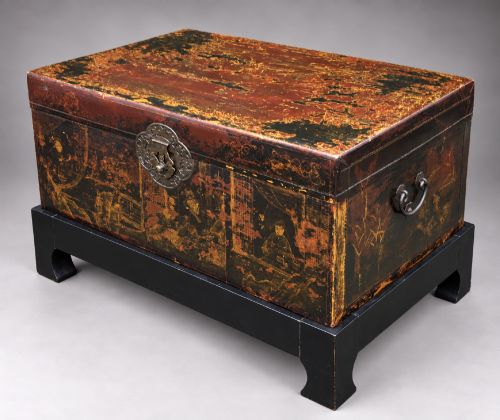
The pieces on this page span from the eighteenth century through the early twentieth century, showing global influences from Chinese export workshops to Anglo-Indian studios and Japanese Meiji production. Buyers will encounter both low-profile floor chests and elevated forms set upon dedicated wooden stands.
Forms vary from domed trunks and heavy coffers to refined tea caddies and tall cabinets on stands. The unifying element across these diverse objects is the application of dark lacquer grounds enriched with gold leaf or metallic highlights.
Materials and construction
Makers built these pieces primarily from wood and sturdy lacquered substrates, applying multiple layers of lacquer to form a hard, protective shell. Metal components such as brass handles, iron hinges, and keyplates provided structural reinforcement and functional contrast to the dark surfaces.
Gold leaf and gilt decoration were applied by hand to create elaborate pictorial scenes, figures, and botanical motifs. Artisans worked within specific regional traditions, from Chinese export workshops to Anglo-Indian and Japanese Meiji studios, adapting local timber to suit intricate lacquering techniques.
Gilt Lacquer Storage Chest Retail Price Guide 2026
Typical asking prices for gilt lacquer storage chest among the pieces listed under this phrase on Sellingantiques today, from the lower quarter to the upper quarter. They describe what is for sale here now, not the wider market.
Some trunks have travelled further than their owners ever did, carrying tea and silks across oceans before settling down as living room tables.
Evaluating quality and craftsmanship
Quality shows in the depth and precision of the lacquer surface, where layers have been built up, smoothed, and polished to a deep lustre. Superior pieces display crisp, hand-applied gilt work that retains sharp detail rather than fading into the dark ground.
The integrity of the underlying woodwork and the survival of original brass or iron mounts heavily influence the character of each piece. Finer examples maintain stable structural joins in the chest bodies and well-proportioned stands that complement the main storage compartment.
The Gilt Lacquer Storage Chest Glossary
- Lacquer
- A durable resin finish applied in multiple coats to wooden objects. It hardens into a smooth, protective coating that resists moisture and wear.
- Gilt
- A thin application of gold leaf or gold paint used to decorate surfaces. It highlights intricate designs against dark background materials.
- Chinoiserie
- European interpretations and adaptations of Chinese and East Asian artistic traditions. It appears frequently in decorative painting on furniture and chests.
- Coffer
- A large box or chest used for safekeeping valuables and textiles. These sturdy storage pieces often feature hinged lids and heavy mounts.
- Japanned
- European work imitating Japanese and Asian lacquer finishes. The technique involves varnishing and decorating wooden furniture with metallic powders.
Gilt Lacquer Storage Chest: Frequently Asked Questions
What is a gilt lacquer storage chest used for?
These pieces serve as functional storage vessels for blankets, textiles, and household items. Their decorative surfaces allow them to function as prominent display furniture within a room.
They combine the practical capacity of a traditional trunk with elaborate pictorial decoration that draws attention in an interior setting.
How do I date a lacquer chest?
Dating relies on examining the construction methods of the wooden carcass, the style of the brass or iron hardware, and the specific painting techniques used in the gilt decoration. Eighteenth-century pieces often show different joinery and artistic motifs compared to nineteenth-century export items or early twentieth-century examples.
Comparing the style of the Chinoiserie or regional ornamentation against known historical periods helps narrow down the decade of production.
Are these chests meant to be placed on stands?
Certain forms are built as standalone floor trunks, while others are specifically designed to sit on dedicated wooden stands. These stands elevate the storage compartment for easier access and alter the overall visual proportion of the piece.
Whether resting directly on the floor or elevated on a stand, each configuration reflects the original design intentions of its maker.
How do I care for a lacquer surface?
Maintenance requires keeping the piece away from direct sunlight and maintaining stable indoor humidity to protect the delicate lacquer and wood underneath. Dusting should be done gently with a soft, dry cloth without chemical polishes.
Avoiding abrasive cleaners ensures the gold leaf and polished finish remain intact over time.