


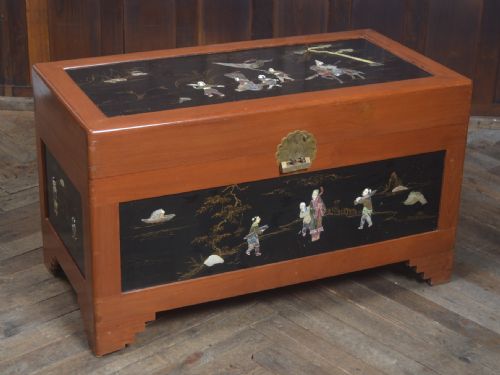


Black Lacquer Trunk
A black lacquer trunk brings deep, reflective surface and storied storage to a room, drawing the eye with gilt detail and dark polish.
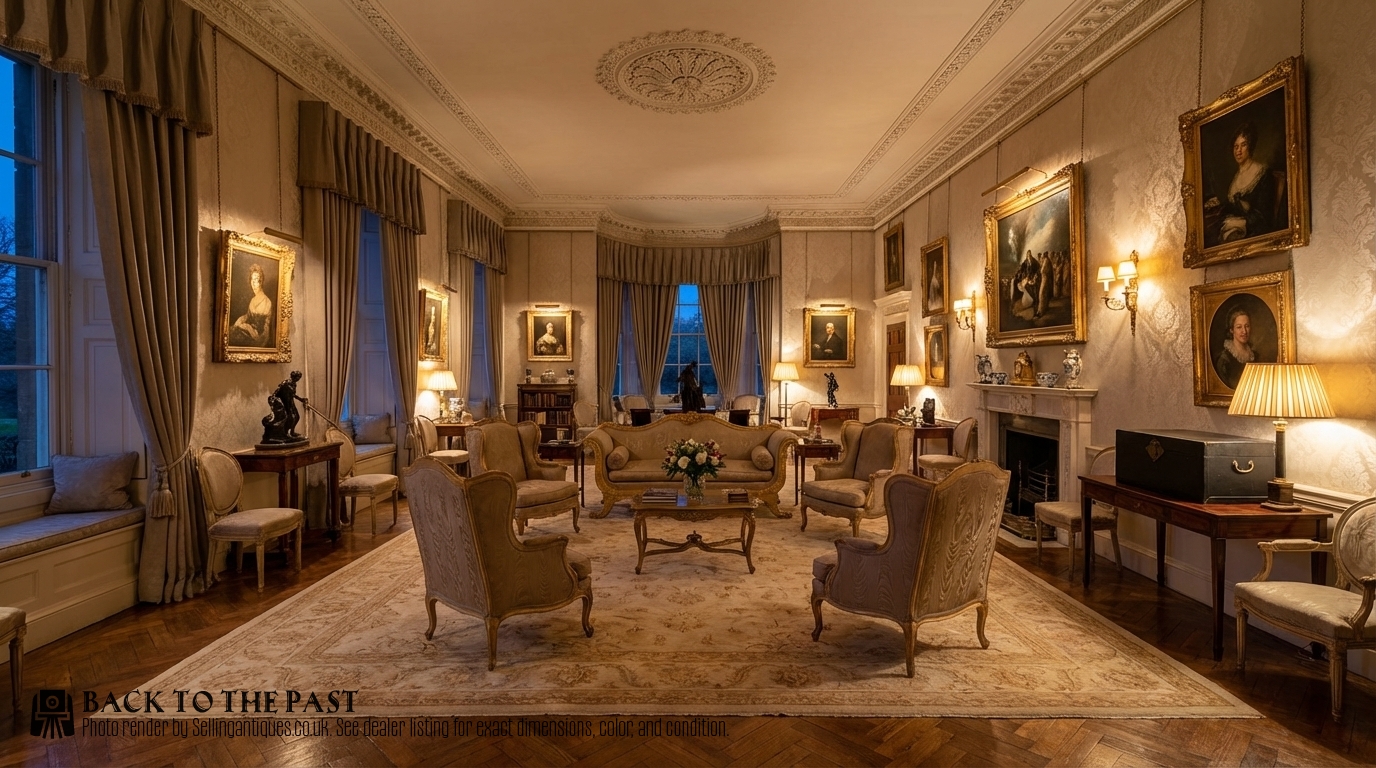
Black Lacquer Trunk
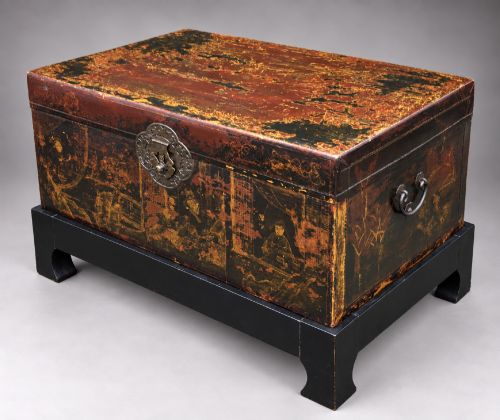
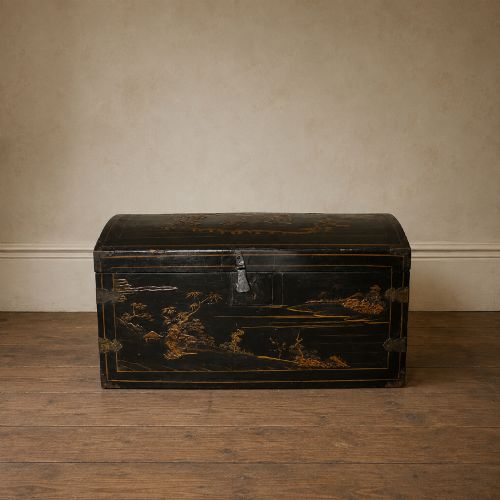
A black lacquer trunk provides robust storage while introducing a dramatic dark finish to an interior space. These pieces arrive in forms ranging from domed blanket chests to lidded coffers, often raised upon bespoke stands.
The versions most frequently met on this page date from the eighteenth, nineteenth, and early twentieth centuries, originating from Chinese export workshops or Anglo-Indian makers. They serve equally well as stationary coffee tables at the foot of a bed or as statement storage in a hallway.
Makers utilised various regional traditions, blending traditional Chinese motifs with European demand for Chinoiserie decoration. Buyers encounter both leather-covered shipping trunks and finely lacquered camphor wood boxes designed to protect textiles.
How they were made
The construction typically relies on a sturdy timber core, such as camphor wood, which naturally repels insects while providing a stable foundation for successive layers of resin and pigment. Artisans built these chests to endure long journeys by sea and land.
Surface decoration involved meticulous application of gold leaf, pigment, and gilt, building up intricate Chinoiserie scenes against the dark ground. Brass fittings, hinges, and corner plates reinforced the corners while adding a metallic contrast to the deep black finish.
Object forms include blanket boxes, domed chests, coffers, and centre chests fitted with multiple drawers.
What varies in quality
The distinction between ordinary and exceptional pieces lies in the crispness of the gilt decoration and the depth of the lacquer finish. Superior examples display finely rendered figurative scenes and botanical motifs that retain their metallic brilliance across the entire surface.
Structural integrity also separates the grades, particularly in the preservation of the original wooden core and the stability of the stand if present. Finer chests maintain smooth interior linings, often in camphor wood, alongside intact period brasswork.
The Black Lacquer Trunk Glossary
- Lacquer
- A durable resin finish applied in multiple layers to a wooden base to create a hard, glossy surface that resists moisture and wear. It forms the protective and decorative skin of the trunk.
- Chinoiserie
- European artistic interpretation of Chinese and East Asian artistic traditions, popular in furniture decoration. This style frequently populates the surface of these chests with pavilions and figures.
- Coffer
- A chest or box traditionally used for holding valuables, distinguished by a heavy lid and robust construction. These form a significant portion of the storage vessels found here.
- Camphor Wood
- An aromatic timber frequently used for the interior construction of storage trunks to protect stored garments. Its natural scent deters moths and other pests.
Black Lacquer Trunk: Frequently Asked Questions
How do I clean a black lacquer trunk?
Dust the surface gently with a soft, dry microfibre cloth to prevent scratching the delicate finish. Avoid using chemical sprays, abrasive cleaners, or excess water.
For stubborn marks, use a barely damp cloth followed immediately by a dry one. Preserving the original surface requires avoiding wax polishes containing silicone.
Can I use a trunk as a coffee table?
These chests offer a sturdy flat top that suits daily living when paired with appropriate coasters and trays. Their internal storage also helps conceal living room clutter while anchoring the seating area.
Ensure hot drinks and moisture do not make direct contact with the antique surface to protect the lacquer.
How do I date an antique lacquer trunk?
Dating relies on examining the construction methods, hinges, and the style of the gilt decoration applied to the exterior. Eighteenth-century examples often display simpler, hand-forged hardware and deeper patination.
Later nineteenth and early twentieth-century pieces incorporate machine-finished brasswork and brighter pigments characteristic of their respective decades.