
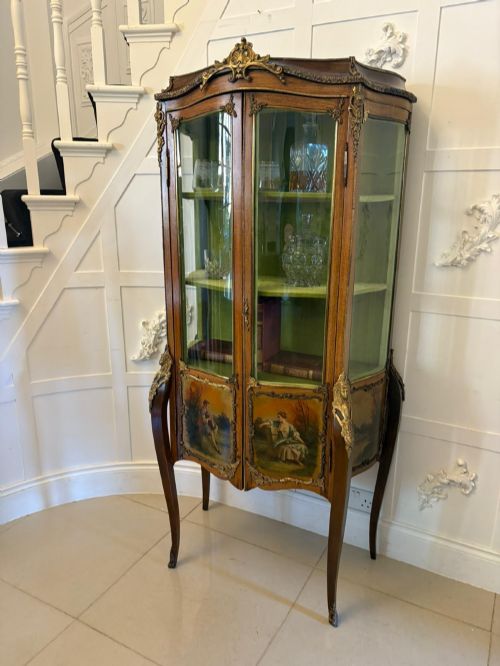
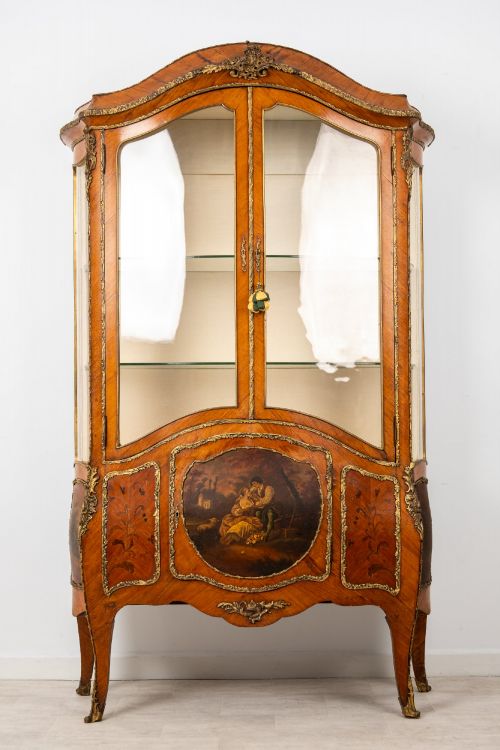


Painted Panel Display Cabinet
These painted panel display cabinet pieces bring together glazed vitrines and hand-painted artistry for showing treasured objects.
Painted Panel Display Cabinet
A painted panel display cabinet is typically a glass-fronted vitrine or side cabinet incorporating decorative painted sections within its framework.
Buyers meet pieces largely from the nineteenth century, including Victorian examples alongside French revival forms.
The objects serve to house collections behind glass while displaying artistic panels on doors or lower compartments.
Materials and construction methods
Frames rely on timbers such as kingwood, mahogany, satinwood, walnut, and rosewood, frequently shaped into serpentine or bombe profiles.
Decorative impact comes from painted panels executed in styles including Vernis Martin and majolica, complemented by glass and gilt bronze or ormolu mounts.
French revival styles dominate the selection, spanning Louis XV forms and Sheraton revival pieces.
Distinctions in quality
The calibre of the painted panels dictates much of the standing, separating hasty brushwork from refined pictorial scenes.
Chasing and weight of the ormolu or gilt bronze mounts, alongside the selection of cabinet timbers like figured kingwood, separate the finest examples from standard production.
The Painted Panel Display Cabinet Glossary
- Vernis Martin
- A type of simulated Japanese lacquer developed in France during the eighteenth century and emulated later.
- Vitrine
- A glass-fronted display cabinet designed for exhibiting ceramics, glass, or small ornaments.
- Ormolu
- Gilt bronze mounts applied to furniture to accent corners, feet, and frames.
- Demi-Lune
- A half-moon shape characteristic of certain side cabinets designed to sit flat against a wall.
- Majolica
- Opaque tin-glazed earthenware used for decorative panels set into furniture.
Painted Panel Display Cabinet: Frequently Asked Questions
How do I style a vitrine?
Vitrines suit drawing rooms or dining spaces where glazed doors protect collections from dust.
Interior lighting and thoughtful spacing between displayed items enhance the visual effect of the painted panels.
Are these cabinets French or English?
The evidence shows a strong French influence, particularly nineteenth-century revival pieces employing kingwood and ormolu.
English makers also produced painted panel bookcases and side cabinets during the Victorian and Edwardian periods.
What woods are used?
Cabinetmakers utilised kingwood, mahogany, satinwood, walnut, and rosewood for the structural carcasses.
These timbers were often combined with gilt bronze mounts and decorative ceramic or painted inserts.