




Louis XV Revival Vitrine
A louis xv revival vitrine is a showpiece cabinet designed to display porcelain and curiosities, bringing French Rococo elegance into a room.
Louis XV Revival Vitrine
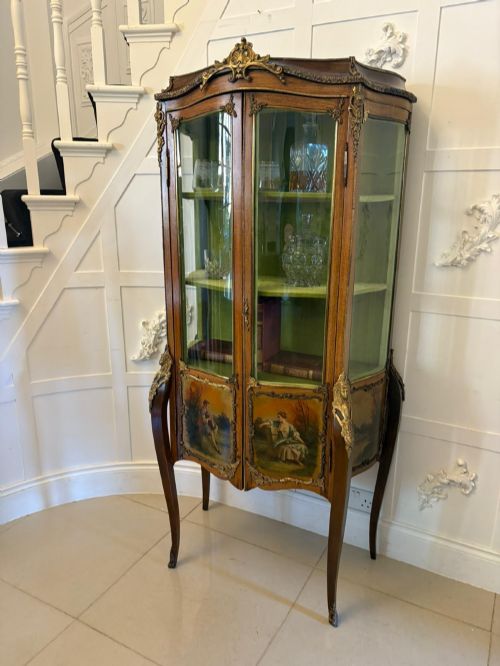
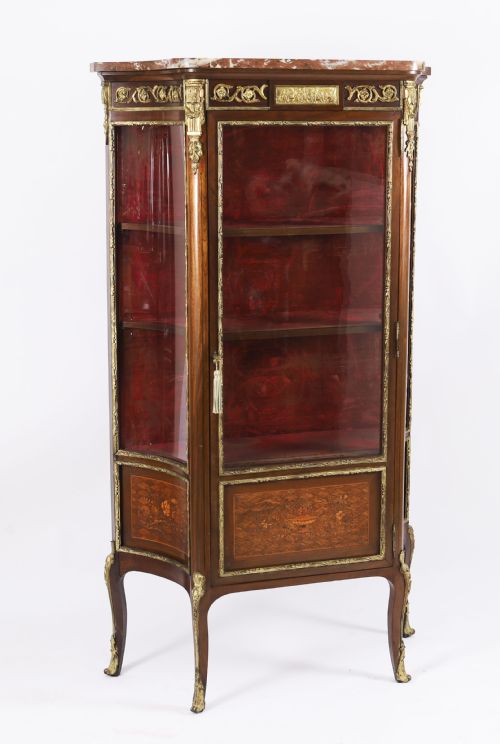
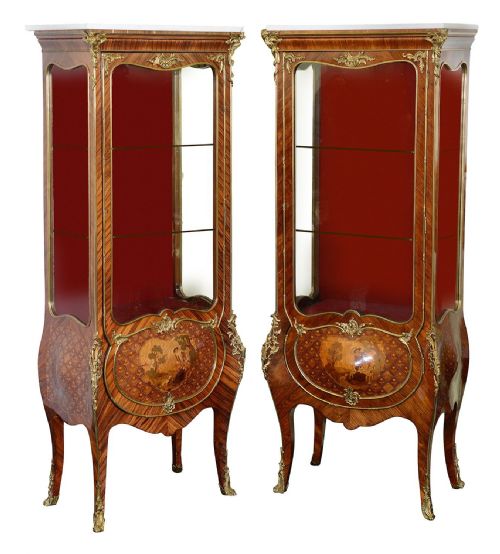
A louis xv revival vitrine is an elaborate display cabinet created to showcase precious objects behind glass panels. These pieces draw heavily on eighteenth-century French design, featuring curved lines and ornate mounts.
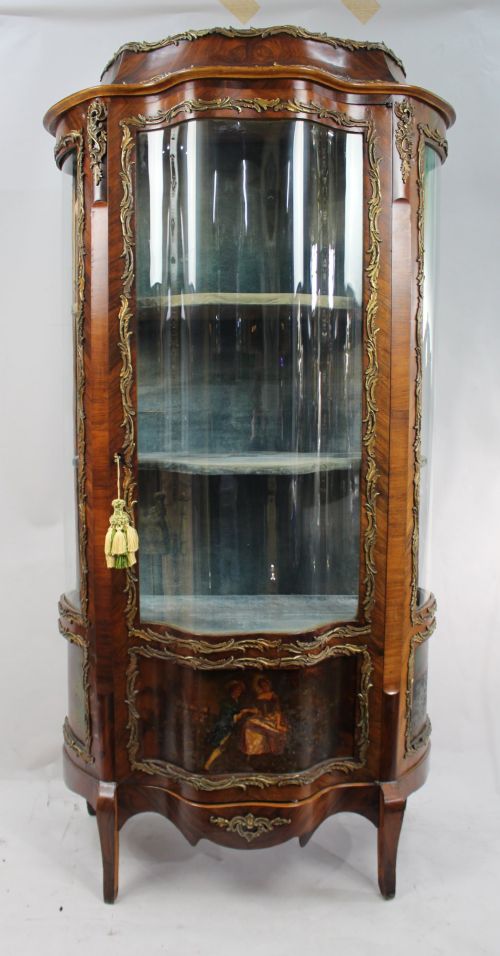
The versions most common on this page date from the nineteenth century and combine display cabinets with intricate woodwork. Makers often shaped these pieces with serpentine fronts and bombe profiles to mimic antique originals.
Most examples function as freestanding display cabinets or specialised display tables known as bijouterie cases. They serve to protect delicate collections while providing a grand decorative focal point for an interior.
Materials and technique
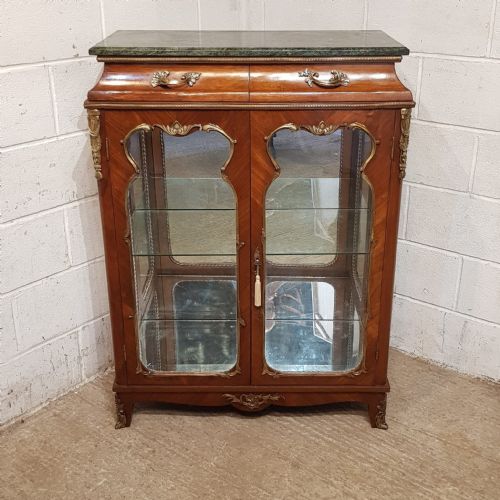
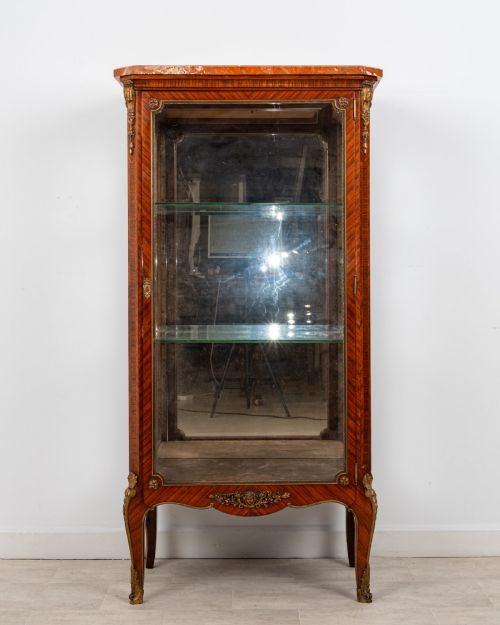
Cabinetmakers built the carcases of a louis xv revival vitrine using timbers such as kingwood and walnut, frequently arranged in parquetry or marquetry patterns. Artisans added shaped marble tops to the upper surfaces of select cabinets.
Gilt bronze and ormolu mounts trace the curved outlines and corners of the woodwork, accentuating the serpentine profiles. Hand-painted panels featuring Vernis Martin lacquer complete the decorative scheme on many doors and lower sections.
Listings span the nineteenth and early twentieth centuries, featuring materials such as kingwood, marble, glass, and Vernis Martin lacquer.
What varies in quality
The standard of a louis xv revival vitrine depends heavily on the precision of the cabinetwork and the crispness of the gilt bronze mounts. Master workshops employed heavy, finely chased ormolu rather than lightweight cast metal.
Painted panels executed in the Vernis Martin technique range from crude decorative additions to highly detailed pastoral scenes with depth and tonal variation. The integration of matched veneers and serpentine marble tops further separates standard production from exceptional pieces.
François Linke·G. Durand
The Louis XV Revival Vitrine Glossary
- Vitrine
- A glass-fronted display cabinet intended for the exhibition of porcelain and precious objects. These pieces often feature glazed sides to allow maximum light onto the items inside.
- Ormolu
- Gilded bronze used for decorative mounts and furniture trimming. Artisans cast and chased these metal elements to follow the flowing contours of the woodwork.
- Vernis Martin
- A simulated Japanese lacquer developed in France, known for its translucent resin layers and painted pastoral scenes. This finish appears frequently on cabinet doors and lower panels.
- Bombe
- A swollen or bulging convex shape used on the fronts and sides of furniture. This contour requires advanced carpentry to curve the wood smoothly.
- Parquetry
- Geometric patterns formed by fitting small pieces of veneer together across a surface. Cabinetmakers utilised contrasting timbers to create subtle tonal shifts.
Louis XV Revival Vitrine: Frequently Asked Questions
What is a louis xv revival vitrine used for?
These cabinets were originally manufactured to display porcelain, miniatures, and precious curiosities collected by wealthy households. The glass panels and internal shelving protected delicate items while keeping them fully visible.
Today, they serve the same purpose in a modern interior, functioning as statement furniture for collections of ceramics, glassware, or small antiques.
How do I identify a louis xv revival vitrine?
Look for characteristic French Rococo design elements, including serpentine or bombe fronts, cabriole legs, and asymmetrical scrollwork. The integration of curved glass and gilt bronze mounts is typical of the style.
Most examples seen here date from the nineteenth century rather than the original eighteenth-century period, reflecting a major revival of interest in French court aesthetics.
Where should I place a vitrine in a room?
These cabinets suit reception rooms, drawing rooms, or hallways where natural light can pass through the glazed panels. Placing them away from direct sunlight protects both the wooden veneers and any delicate items displayed inside.
Because many pieces feature finished sides and glazed panels on multiple elevations, they work well positioned where observers can walk around them.
What is the difference between a vitrine and a bijouterie table?
A vitrine is a vertical display cabinet featuring tall glass doors and multiple internal shelves for standing objects. A bijouterie table is a low display piece with a glazed top designed to exhibit flat items and jewellery at waist height.
Both types share the same French revival decorative vocabulary, including ormolu mounts and marquetry surfaces.