


Serpentine Front Vitrine
A serpentine front vitrine offers undulating glazed curves that catch the light and display prized porcelain or collectibles with undeniable grace.
Serpentine Front Vitrine
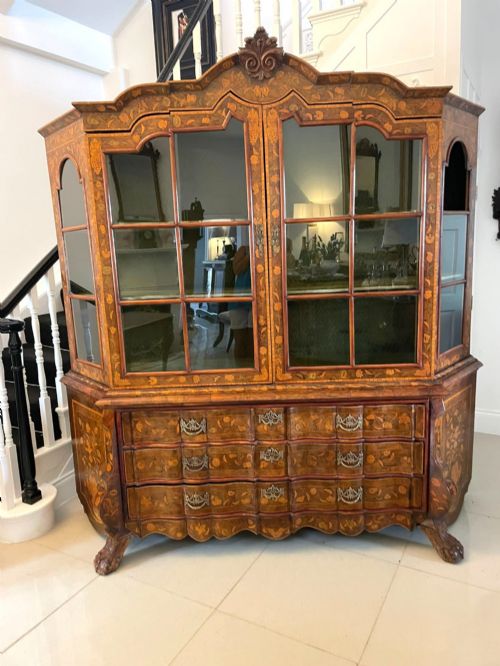
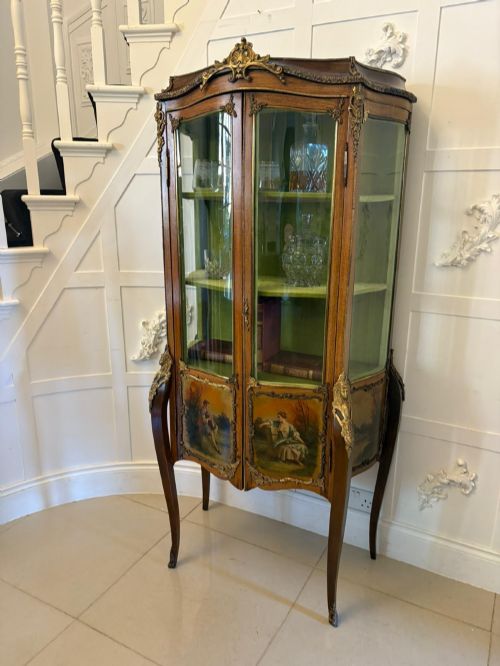
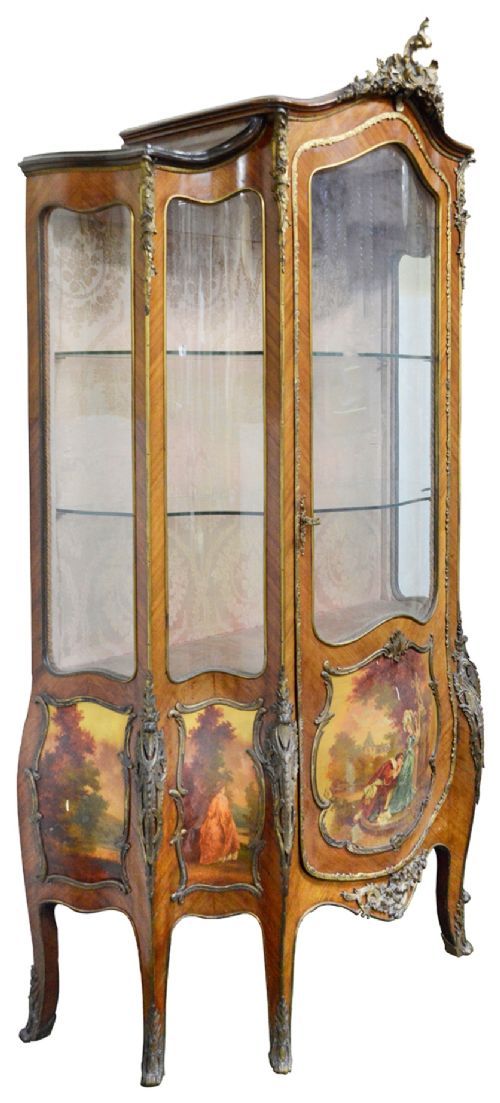
A serpentine front vitrine is a cabinet designed for display, defined by a distinct undulating curved front that swells and recedes across its width. These pieces primarily date from the nineteenth century, including Victorian and Edwardian periods, and take the form of display cabinets or corner cabinets.
Makers drew heavily on continental inspiration, producing works in French Rococo Revival, Louis XV Revival, and Sheraton Revival styles. French examples often feature rich marquetry and vernis martin panels, while English makers such as Edwards & Roberts concentrated on finely inlaid mahogany and satinwood.
Buyers choose these cabinets to bring movement and elegance to a room while securely housing collections behind glass panels. The serpentine shape breaks the rigid lines typical of standard rectangular furniture, adding a sophisticated focal point.
Evaluating quality and craftsmanship
Quality rests significantly on the precision of the timber work, particularly how cleanly the marquetry and inlay are executed across the complex curves of the serpentine front. Superior pieces display seamless joins and balanced composition in their decorative veneers.
The choice and execution of metal mounts also separate standard examples from finer ones, with chased ormolu and gilt bronze providing a sharper, more refined finish than simpler brass fittings. Cabinet makers of note invested greater detail in internal timber selection and overall proportions.
Some cabinets require a delicate touch and steady nerves just to polish the countless undulating curves without leaving a smudge.
Edwards and Roberts
The Serpentine Front Vitrine Glossary
- Serpentine
- A shape featuring a central convex curve flanked by two concave curves, creating an undulating silhouette. This contour requires advanced cabinet-making techniques to execute smoothly on a cabinet front.
- Ormolu
- Gilt bronze ornamentation applied to furniture for decorative effect. The technique involves treating brass or bronze with a gold amalgam.
- Marquetry
- Decorative patterns formed by fitting together thin slices of veneer onto a timber carcase. Craftsmen use various woods to produce elaborate floral or geometric designs.
- Vernis Martin
- A simulated Japanese lacquer technique developed in eighteenth-century France and revived later. It involves applying multiple layers of varnish to create translucent painted panels.
- Parquetry
- Geometric mosaic woodwork used for repeating patterns on floors or furniture surfaces. It differs from marquetry by relying on angular, repeating shapes rather than pictorial motifs.
Serpentine Front Vitrine: Frequently Asked Questions
What is a serpentine front vitrine?
A serpentine front vitrine is an enclosed glass display cabinet featuring a curved front with alternating convex and concave sections. These cabinets were designed to showcase porcelain and decorative objects while adding architectural movement to a room.
Most surviving examples date from the nineteenth and early twentieth centuries, drawing on French and English revival styles.
How do I date a vitrine?
Dating a vitrine involves examining the timber species, construction methods, and stylistic revival influences present in the piece. Nineteenth-century examples often incorporate mahogany or kingwood with hand-cut veneers and distinct period revival motifs.
Characteristics such as Edwards & Roberts maker signatures or specific Vernis Martin panels also help narrow down the period of manufacture.
Where should I place a vitrine?
These cabinets suit drawing rooms, dining rooms, or hallways where natural light can pass through the glass panels to illuminate the interior. Positioning them away from direct sunlight protects both the timber finish and the displayed items.
Corner cabinet variations fit neatly into unused room angles while providing the same glazed display function.
How are items displayed inside?
Items are arranged on internal shelves behind glazed doors, often against a fabric-lined interior background that softens reflections. The combination of glass sides and front allows light to reach collectibles from multiple directions.
Display choices typically include porcelain, glassware, and small ornamental antiques.