
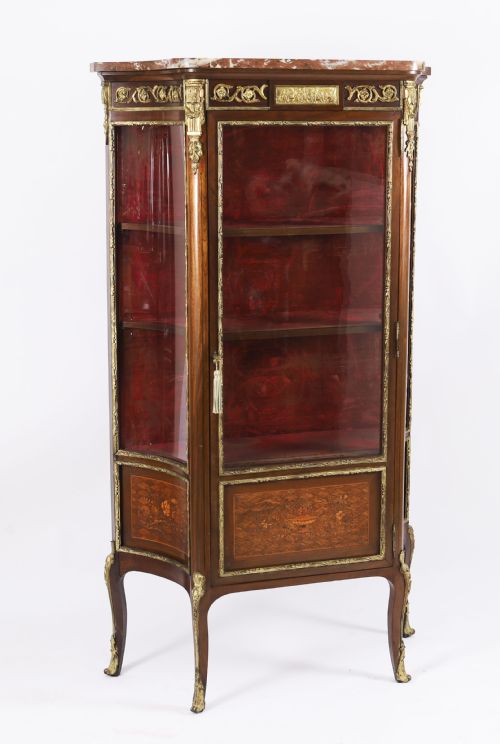


Gilt Bronze Curio Cabinet
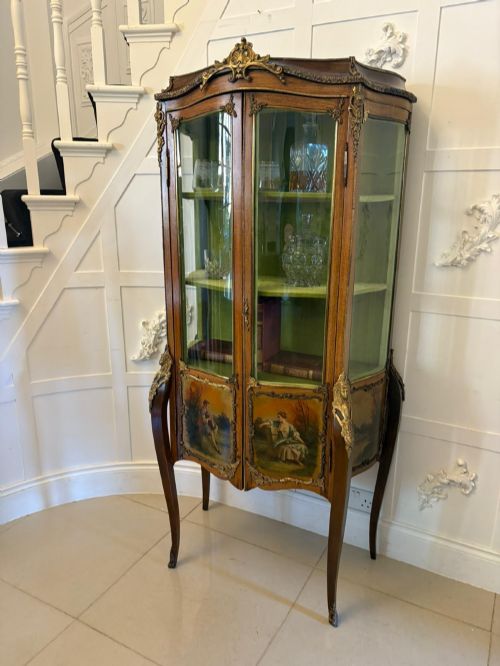
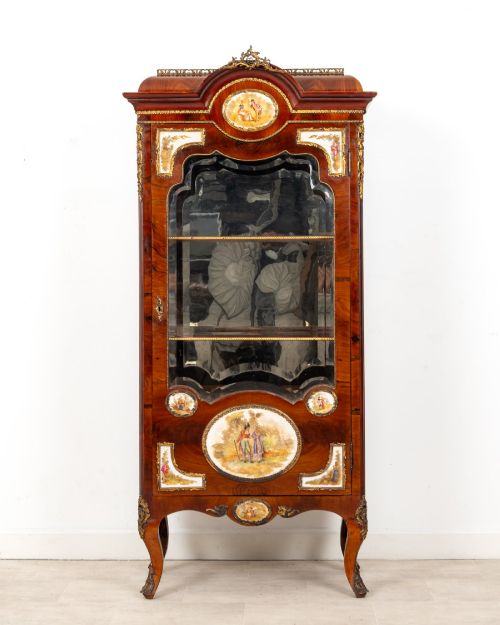
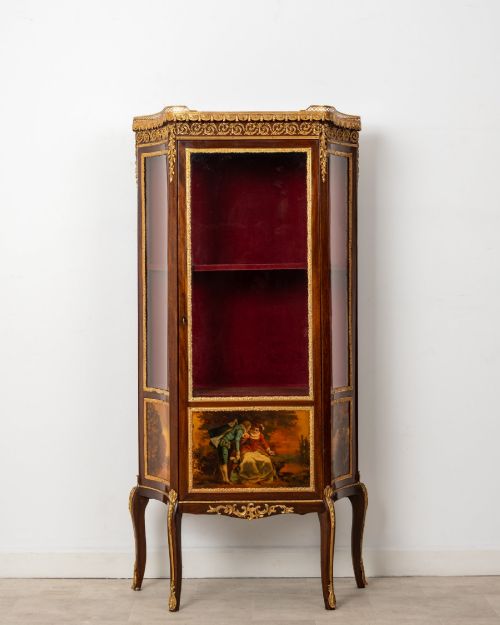
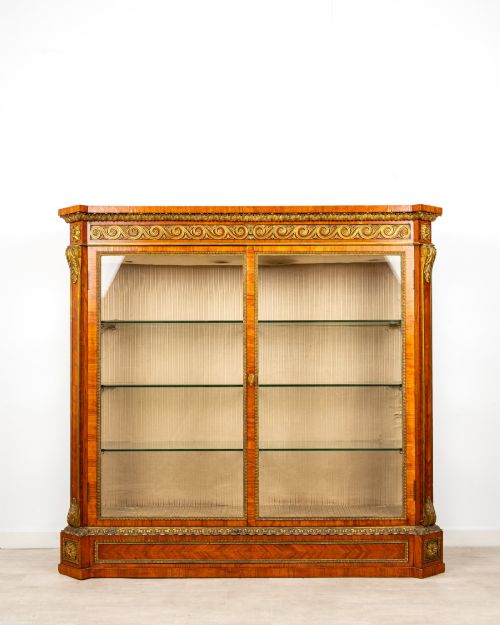
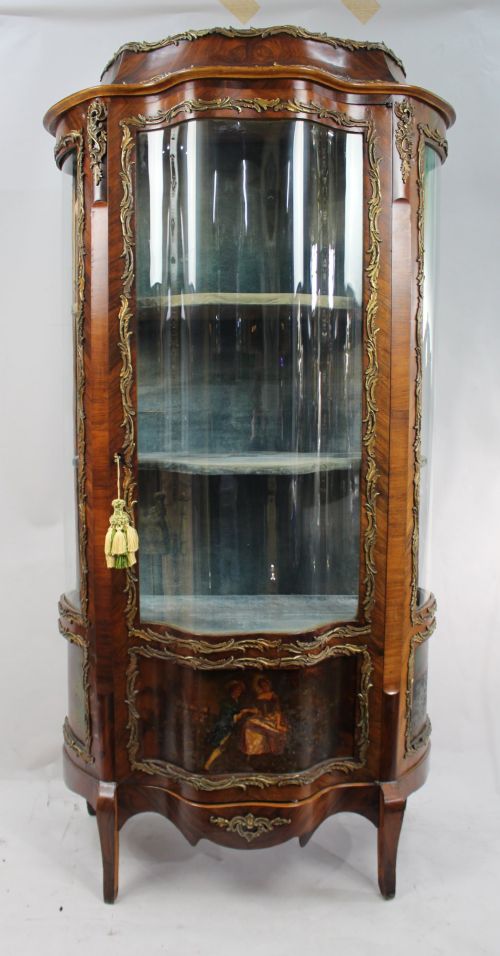
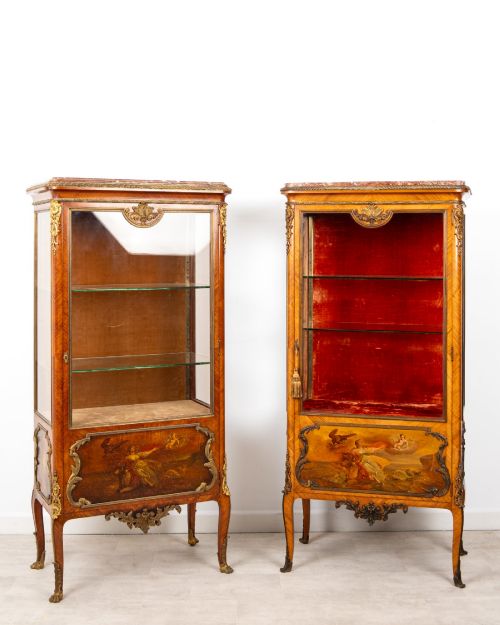
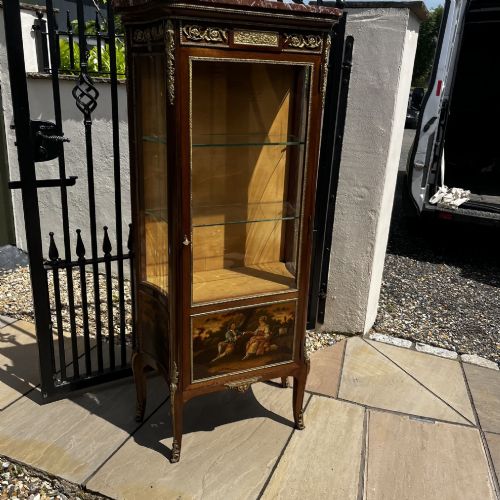
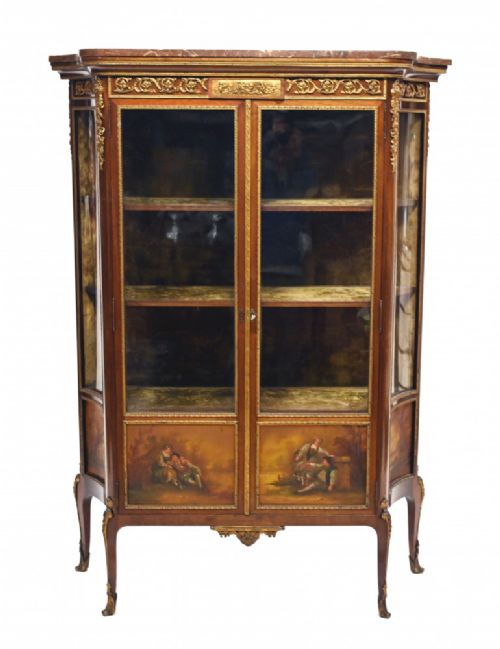
These gilt bronze curio cabinets are French and English display pieces designed to showcase small collections behind glass.
Gilt Bronze Curio Cabinet
A gilt bronze curio cabinet is a glazed display piece created to hold porcelain, small sculptures and precious objects. These items appear primarily in nineteenth century formats spanning Victorian, Edwardian and turn of the century periods.
Most examples originate from French workshops following Louis XV, Louis XVI and Rococo revival styles. Common forms include tall vitrines, freestanding cabinets and low bijouterie tables with glass tops.
Makers utilised serpentine fronts, bombe profiles and shaped glass panels to catch light from multiple angles. Interiors often feature velvet or fabric linings tailored to cushion delicate items.
Construction and Materials
Cabinet makers built foundational carcasses using mahogany, walnut, rosewood and kingwood, frequently applying intricate parquetry and marquetry patterns. Decorative painted panels in the Vernis Martin manner appear across many pieces.
Mounts and ornamentation consist of cast gilt bronze and ormolu, fixed securely around glass doors and framing. Marble tops provide a heavy, polished counterpoint to the timber and metal structures.
Listings feature mahogany, kingwood, walnut and rosewood combined with marble tops and fabric linings.
Judging Quality
Quality rests upon the crispness of the gilt bronze mounts and the precision of the timber parquetry. Superior cabinets display hand chased metalwork where details remain sharp and deep.
The sophistication of the internal painted panels and the weight of the marble slab define the upper tier. Heavier timber construction and balanced proportions indicate master workshop production.
H. J. Hatfield & Sons·G. Durand·François Linke·Paul Somani
The Gilt Bronze Curio Cabinet Glossary
- Ormolu
- Gilding technique using finely ground high carat gold applied to bronze. It provides a warm metallic lustre that endures without tarnishing.
- Vernis Martin
- Simulated Japanese lacquer developed by the Martin brothers in eighteenth century France. It involves multiple layers of varnish applied over painted scenes.
- Vitrine
- Glass fronted display cabinet designed to protect and exhibit objects. These units often feature glazed sides to maximise interior illumination.
- Bijouterie Table
- Low display table with a glazed compartment for jewellery and small valuables. They function as both furniture and tabletop showcase.
- Parquetry
- Geometric mosaic of wood pieces set into a surface. Makers arranged contrasting veneers to create optical depth on cabinet doors.
Gilt Bronze Curio Cabinet: Frequently Asked Questions
What went inside a curio cabinet?
Owners placed fragile porcelain, miniatures, medals and natural specimens inside these glazed enclosures. The glass protected dust sensitive collectibles while keeping them visible.
Lighting from nearby windows passed through the side panels to illuminate the displayed objects from multiple angles.
How do I clean the bronze mounts?
Dust bronze mounts gently with a soft dry brush to remove particulate matter. Avoid abrasive polishes that strip the historic gilding.
Professional conservators recommend simple dusting over liquid cleaners to preserve the original surface patination.
Where should I place a vitrine?
Position cabinets away from direct sunlight to prevent fabric lining fade and timber bleaching. Stable indoor humidity protects glued veneer joints.
Ensure placement on level flooring so heavy marble tops do not stress the glazed door frames.
Are these cabinets French or English?
The vast majority follow French design vocabulary from revival periods. Makers across Britain and France adopted continental styles.
French workshops produced most pieces featuring gilt bronze mounts and Vernis Martin panels.