
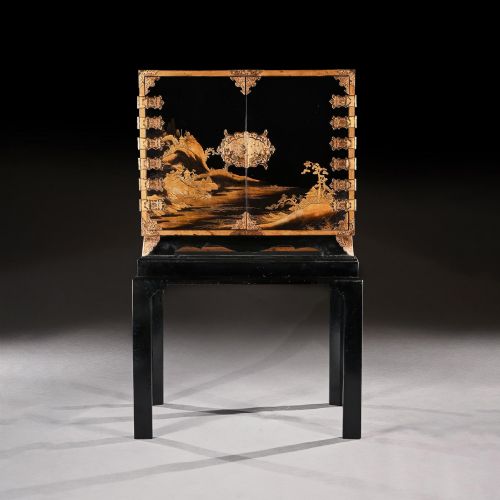


Edo Period Cabinet
These edo period cabinet examples bring traditional craftsmanship and rich materials directly into your interior.
Edo Period Cabinet
When you search for an edo period cabinet, you are looking at items designed for storage and display during notable historical Japanese eras.
The pieces on this page span from the seventeenth century through to the early twentieth century, incorporating both traditional storage furniture and related decorative plates.
You will encounter various functional forms including merchant chests, ship's tansu chests, storage cabinets, and table cabinets alongside items from the subsequent Meiji period.
How they were made
Maker construction relies heavily on specific timbers such as keyaki and kiri wood, built to endure practical daily use or maritime travel.
Surfaces are often finished with dark lacquer or embellished with intricate details using enamel, gold leaf, and gilt brass fittings.
Listings incorporate items spanning from the seventeenth century through to the early twentieth century, utilising wood, lacquer, and porcelain.
What varies in quality
The distinction between standard items and exceptional pieces rests upon the finesse of the lacquer work and the complexity of the timber construction.
Well-preserved metal mounts, iron hardware, and intact surface gilding elevate the overall refinement of a chest or cabinet.
The Edo Period Cabinet Glossary
- Tansu
- A traditional Japanese mobile storage chest built for domestic or merchant use. These pieces often feature multiple drawers and iron reinforcement.
- Lacquer
- A durable, glossy protective finish applied to wood surfaces in successive layers. It provides a hardwearing exterior often seen on traditional cabinets.
- Imari
- A style of Japanese porcelain decorated in underglaze blue and overglaze red, gold, and green. Plates in this tradition frequently appear alongside cabinets.
- Keyaki
- A species of elm-like wood native to Japan prized for its dense grain and strength. Makers selected this timber for robust merchant chests.
Edo Period Cabinet: Frequently Asked Questions
What is an edo period cabinet used for?
These pieces served practical storage functions in traditional households, holding documents, clothing, and valuables.
Today they function as focal storage furniture or decorative display units in contemporary interiors.
How do I identify a tansu chest?
A tansu is typically characterised by robust wooden construction, functional iron handles, and multiple internal drawers or sliding doors.
They were built for portability and everyday domestic utility by merchants and travellers.
What materials are used on these cabinets?
Construction relies on traditional woods like keyaki and kiri, often finished with deep black lacquer surfaces.
Details are frequently enhanced with iron hardware, gold leaf, and gilt brass.
How do cabinet pieces differ from plates?
Cabinets and tansu chests are functional wooden storage furniture items designed for containment and organisation.
Plates are ceramic decorative items featuring traditional imari patterns from related Japanese periods.