





Japanese Export Lacquer
Japanese export lacquer pieces are finely finished wooden goods crafted for overseas markets, offering intricate gold leaf decoration and centuries of traditional craftsmanship.
Japanese Export Lacquer
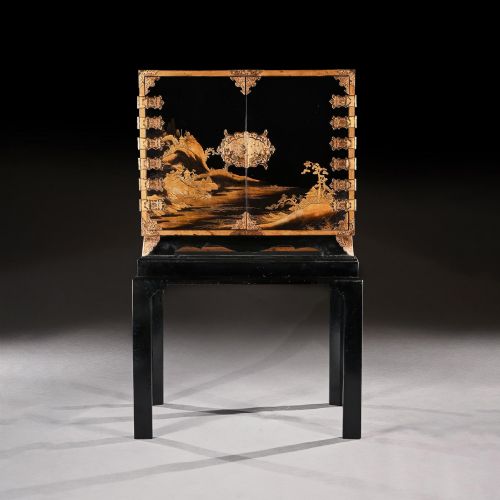
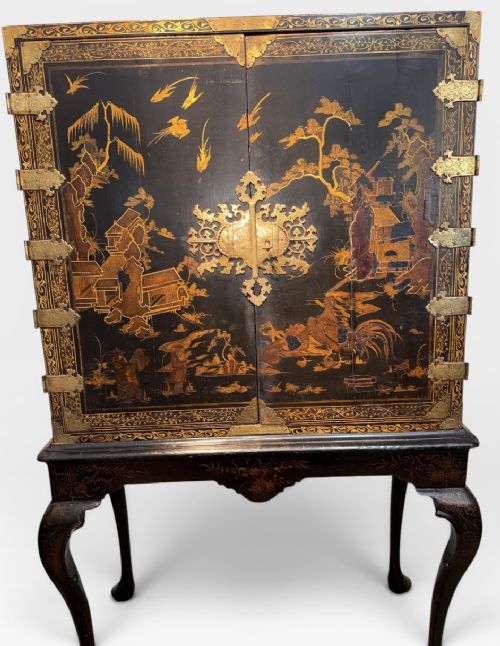
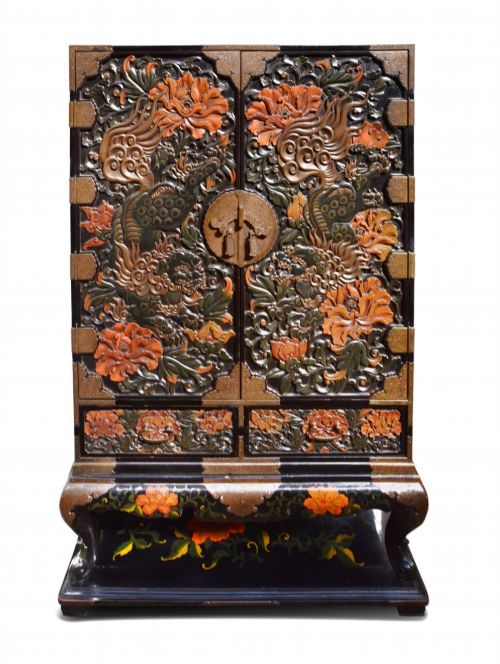
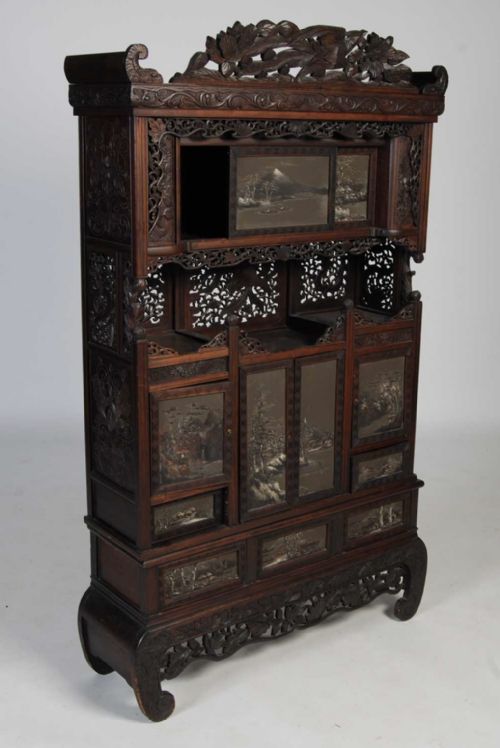
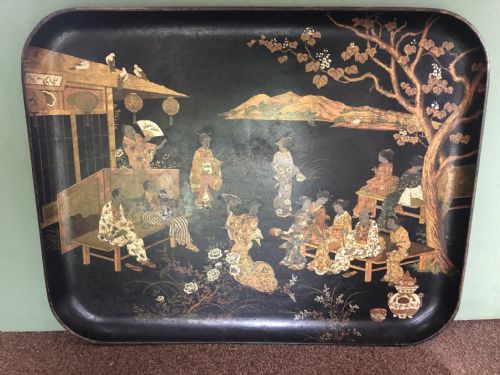
When you search for Japanese export lacquer, you are looking at items designed specifically for international trade from the seventeenth century onwards, spanning the Edo and Meiji periods. These works range from small jewellery boxes and decorative trays to elaborate cabinets on stands and table cabinets.
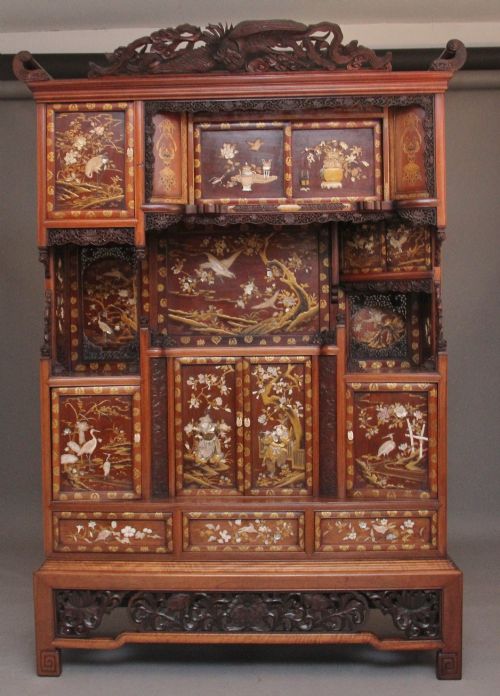
The pieces you are most likely to meet on this page date from the nineteenth century, including Meiji period Shodana cabinets and occasional tables. Earlier examples from the seventeenth and eighteenth centuries appear less frequently but remain central to the tradition of export lacquer.
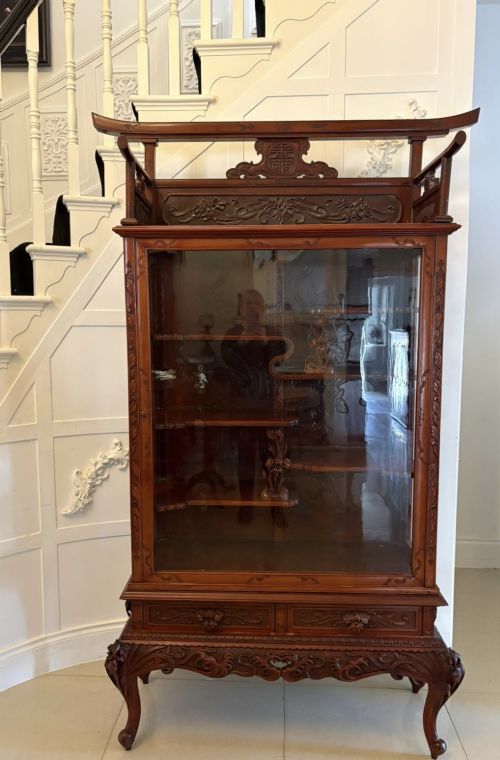
Forms include specialised furniture such as work tables and display cabinets alongside portable items like rectangular trays and table cabinets. Each object combines traditional woodworking with specialised surface finishes intended for foreign buyers.
How Japanese export lacquer pieces were made
Makers built these pieces using hardwood and standard wood substrates before applying successive coats of lacquer to create a durable, glossy surface. Artisans integrated gilt brass mounts, brass hardware, and gold leaf to ornament the dark lacquered wood.
Decoration often involved carved lacquer techniques, as seen in nineteenth-century Chinoiserie styles, alongside detailed flat and raised gilding. Some items also utilised papier-mâché bases finished with lacquer for lighter decorative trays.
The listings span from the seventeenth century through to nineteen-ten, utilising materials such as hardwood, brass, and gold leaf.
What varies in quality
The standard of a piece depends on the depth and complexity of the lacquer work and the crispness of any carved details. Superior examples exhibit precise application of gold leaf and smooth, even surfaces across intricate forms like cabinets on stands.
Hardware and mountings also distinguish the range, with well-cast gilt brass and secure joinery separating finer items from simpler production. The finesse of the underlying woodwork on cabinets and tables dictates the overall refinement of the finished object.
The Japanese Export Lacquer Glossary
- Lacquer
- A durable resin finish applied to wooden bases, creating a hard, glossy surface that protects the material beneath. It serves as the primary medium for decorative export goods.
- Edo Period
- A historical era in Japan lasting from the seventeenth to the nineteenth century, known for distinct artistic developments that influenced export goods. Pieces from this time often feature traditional forms and early lacquer techniques.
- Meiji Period
- The late nineteenth and early twentieth century era marked by increased international trade and ornate decorative arts. Items from this period frequently include complex Shodana cabinets and detailed gilding.
- Shodana
- A traditional Japanese display cabinet featuring asymmetrical shelving and compartments designed for treasured objects. These pieces often sit on stands and showcase intricate lacquer finishes.
- Chinoiserie
- A Western stylistic interpretation of Asian artistic motifs, sometimes applied to nineteenth-century carved lacquer cabinets. This style blends European furniture forms with Eastern surface decoration.
Japanese Export Lacquer: Frequently Asked Questions
What is Japanese export lacquer?
These items are decorative and functional wooden goods finished with traditional lacquer and gold leaf, produced in Japan for international markets.
They encompass a variety of forms ranging from portable jewellery boxes to large cabinets on stands created across several centuries.
How were these cabinets used?
Cabinets and Shodana pieces served as functional storage for precious items, writing materials, or curiosities within the home.
Table cabinets and work tables provided specialised surfaces for daily tasks while displaying the refined lacquer finish of the maker.
How do I date Japanese lacquer?
Dating relies on identifying the period styles, such as the seventeenth-century forms or the distinct aesthetic of the Meiji period.
Construction methods, hardware types, and the specific style of lacquer decoration also help establish the approximate age of a piece.
How do I care for lacquer furniture?
Keep these items away from direct sunlight and fluctuating humidity to protect the delicate wooden structure and surface finish.
Dust gently with a soft, dry cloth and avoid using chemical cleaners or polishes that might damage the historical lacquer.