
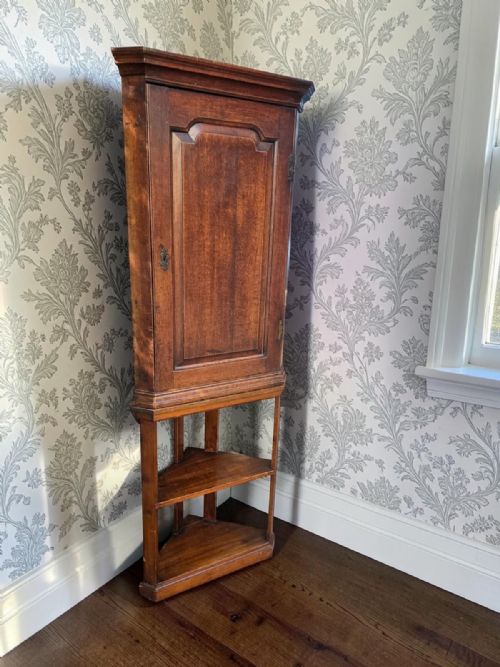
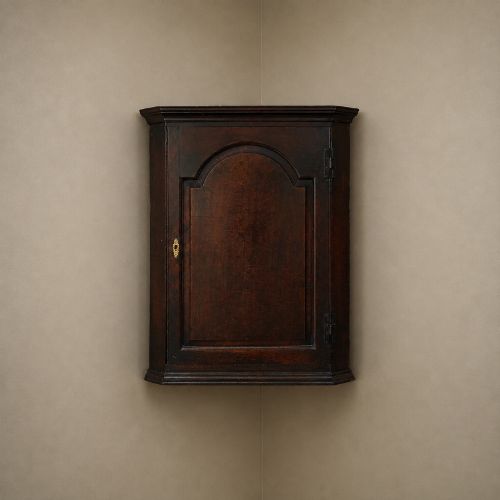
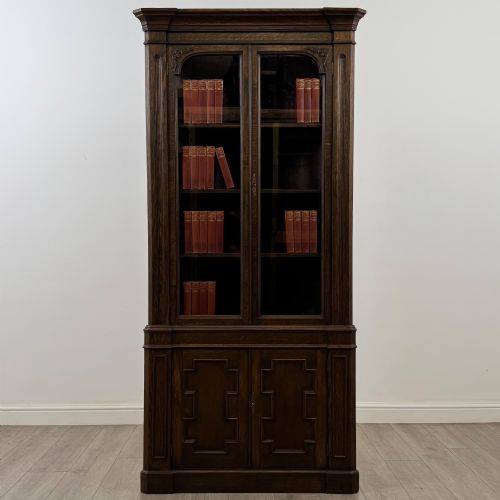
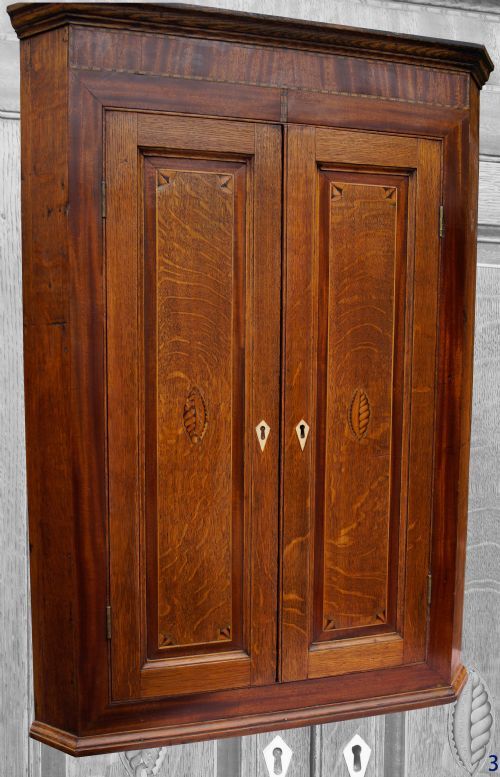



Panelled Oak Corner Cabinet
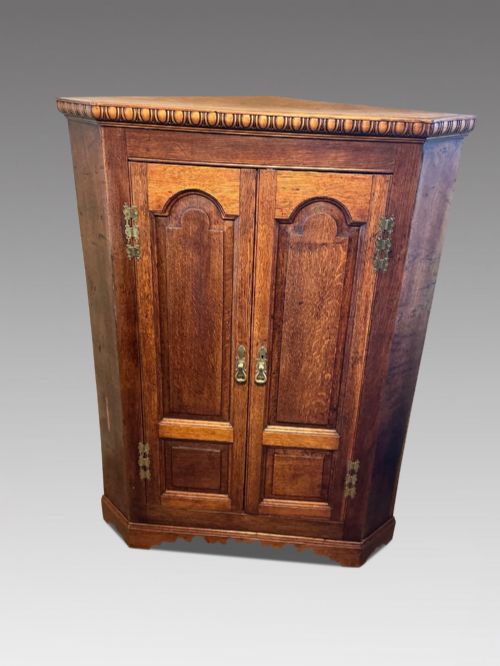
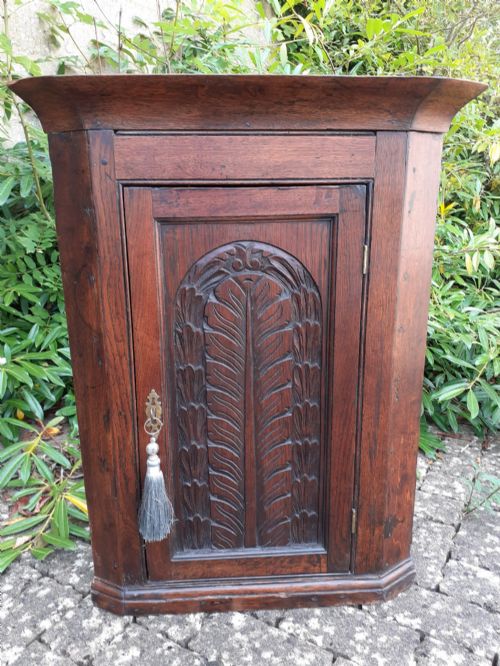
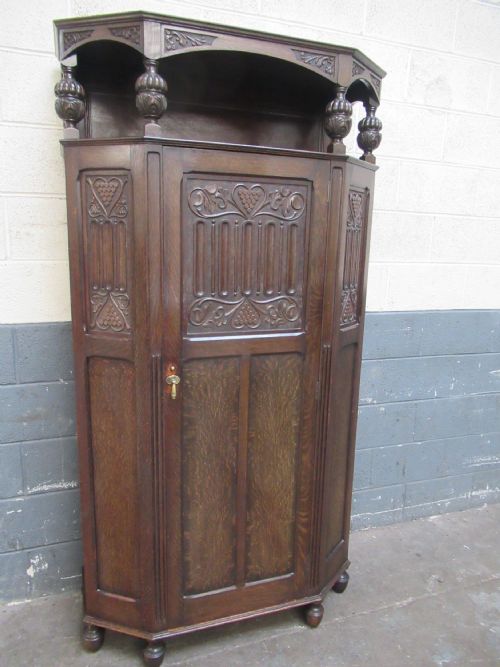
Panelled oak corner cabinets are practical storage pieces that utilise awkward room angles, commonly found here in Georgian and Victorian iterations.
Panelled Oak Corner Cabinet
A panelled oak corner cabinet solves spatial challenges while offering period character. These storage solutions turn empty room junctions into display or concealment areas, utilising otherwise dead space.
The versions most frequently met on this page span the Georgian and Victorian eras, alongside Edwardian and later interpretations. Pieces arrive as wall-hanging units, floor-standing cupboards in two parts, or elevated designs on stands.
Makers historically constructed these items to fit snugly into domestic interiors, employing sturdy timber construction to protect contents. Buyers encounter regional variations originating from English and Welsh workshops.
Construction and materials
Craftsmen primarily utilised solid oak, occasionally incorporating secondary timbers like pine or fruitwood inlay and burr oak highlights. Cabinet makers built doors utilising panelled construction methods to allow the timber to move naturally with seasonal humidity changes.
Hardware such as brass hinges, iron strapwork, and working locks provide structural integrity and security to the doors. Interior arrangements often feature shaped shelves designed to accommodate ceramics or glassware.
Panelled Oak Corner Cabinet Retail Price Guide 2026
Typical asking prices for panelled oak corner cabinet among the pieces listed under this phrase on Sellingantiques today, from the lower quarter to the upper quarter. They describe what is for sale here now, not the wider market.
Listings feature oak alongside secondary materials like brass, glass, iron, mahogany, fruitwood inlay, pine, and burr oak.
Distinctions in quality
The calibre of a piece rests upon the crispness of the raised panelling and the thickness of the primary timber used. Superior examples display thoughtful grain matching and careful proportioning between the upper display section and lower storage.
Integration of original brass or iron hardware and unaltered height dimensions elevate a cabinet's standing. Finer items exhibit regional craftsmanship, particularly those originating from Welsh workshops with detailed carved elements.
The Panelled Oak Corner Cabinet Glossary
- Panelled
- Construction method utilising wooden boards fitted within a grooved frame. This technique prevents excessive warping as the timber ages.
- Hanging corner cupboard
- A wall-mounted unit designed to be secured directly into room corners. These save floor space while providing eye-level storage.
- Floor-standing corner cabinet
- A tall storage piece resting directly on the ground. Some examples arrive in two separate stacked parts for easier transport.
- Raised panel
- A central wooden board whose edges are bevelled to fit into the surrounding frame. This decorative detail adds depth and shadow to cabinet doors.
- Fruitwood inlay
- Contrasting timber insertions used for decorative ornamentation. Makers applied this technique to accent door surrounds or cornices.
Panelled Oak Corner Cabinet: Frequently Asked Questions
How do I hang a wall cabinet safely?
Wall-hanging corner cupboards require secure fixing into solid masonry or direct timber studs behind plasterboard. Because solid oak cabinets carry substantial weight, professional installation using appropriate load-bearing brackets is necessary.
Ensure the wall fixings correspond to the hanging points integrated into the cabinet's back frame. Distributing the interior weight evenly across the shaped shelves helps maintain stability once loaded.
What is the difference between standing and hanging versions?
Hanging versions attach directly to room walls at varying heights, while standing versions rest on the floor. Standing formats often feature two distinct parts, comprising a lower cupboard base and an upper display section.
Floor-standing variations offer greater internal storage capacity and include cupboards on stands or full-height units. Wall-mounted choices suit smaller rooms where floor area remains at a premium.
How do I date an oak corner cupboard?
Dating relies upon examining construction marks, hardware types, timber patination, and stylistic clues. Georgian examples frequently display hand-cut joinery and pegged joints, whereas later Victorian or Edwardian pieces may show machine-sawn elements.
Hardware such as brass H-hinges or iron butterfly hinges can indicate earlier eighteenth-century origins. Panel styles also shift across eras, moving from simple square panels to carved Jacobean revival motifs.
Can these cabinets fit modern rooms?
These cabinets suit modern interiors by providing functional storage that utilises neglected room angles. Their traditional timber tones complement contemporary neutral walls and mixed-period furnishing schemes.
The enclosed shelving keeps clutter hidden while displaying treasured items securely behind panelled or glass doors. Their compact footprint ensures they do not overpower smaller modern living spaces.