

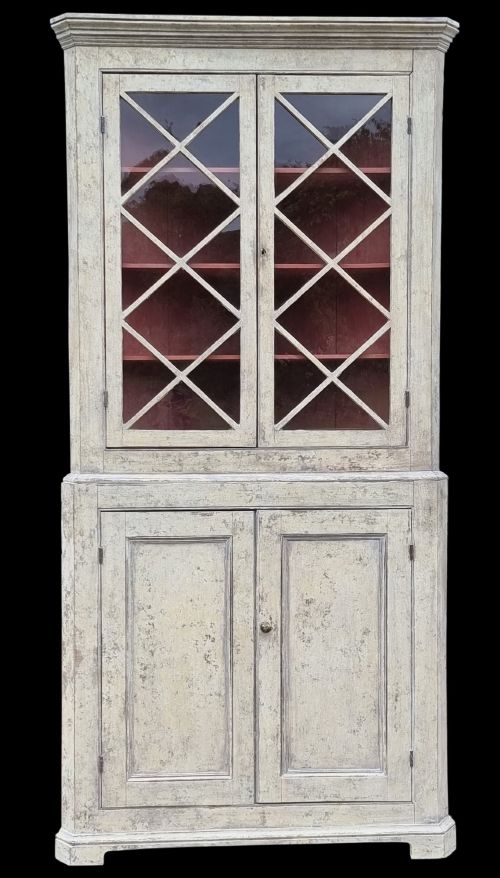
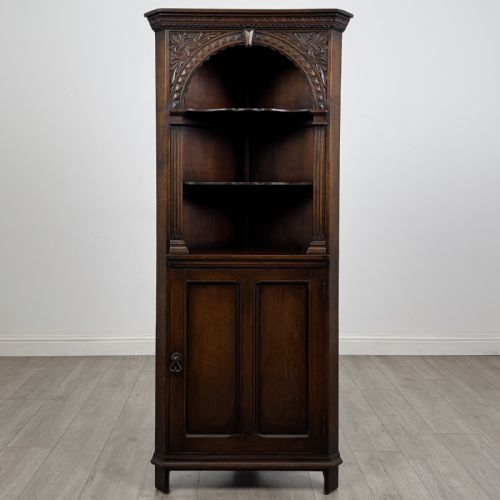
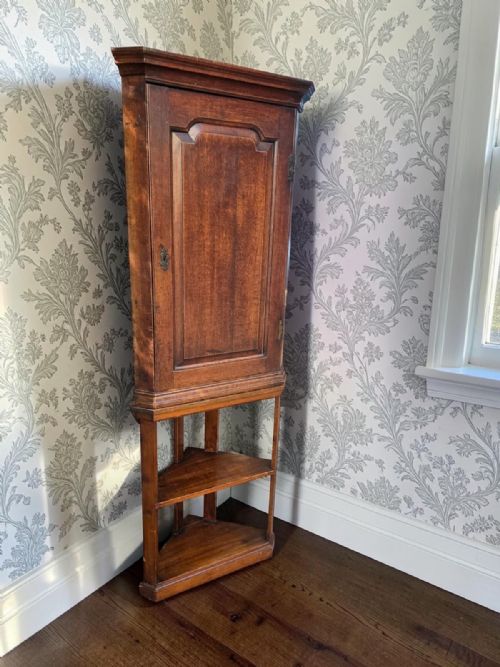

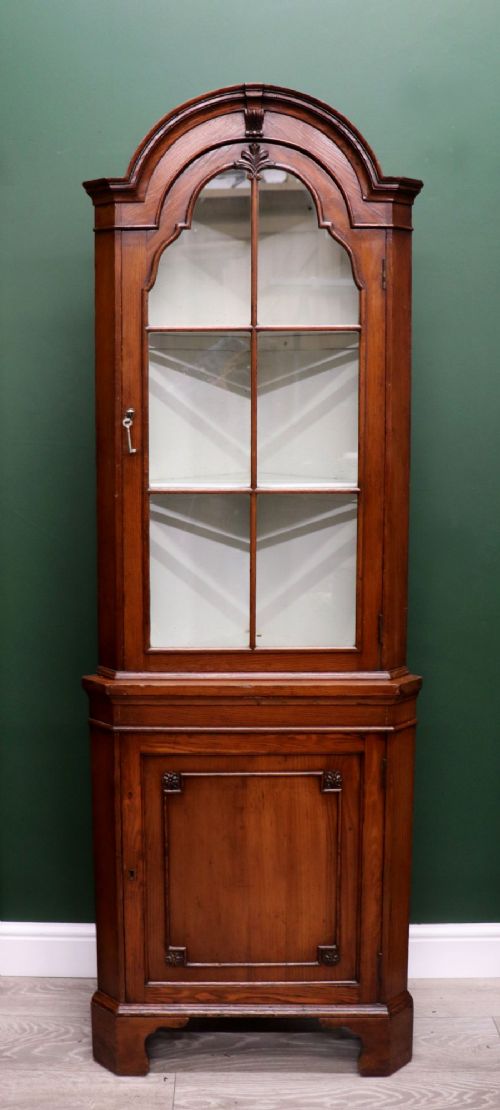

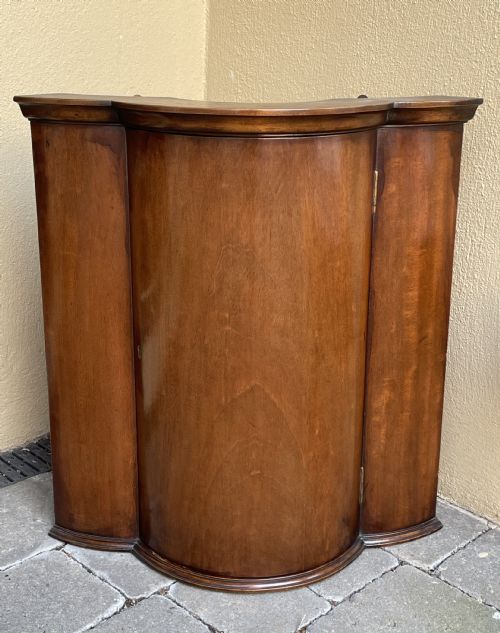


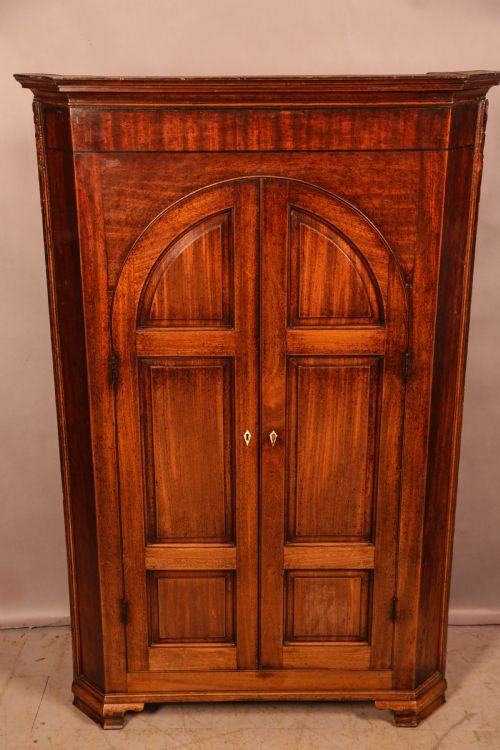


Freestanding Corner Cupboard
A freestanding corner cupboard makes clever use of neglected room angles while providing generous storage for china, books, or drinks.
Freestanding Corner Cupboard
A freestanding corner cupboard turns dead room angles into useful display and storage space without requiring wall mounting. These tall, self-supporting cabinets sit firmly in a room junction, bringing older craftsmanship directly into modern interiors.
The pieces on this page span several centuries, with Georgian oak and pine examples sitting alongside Edwardian mahogany designs, 1930s burr walnut cocktail cabinets, and Victorian pieces in dark carved oak. Many take a two-part or single-piece tall form, while others stand raised upon an open base or legs.
Makers and cabinetmakers across England, Wales, Sweden, and the Netherlands produced these cabinets to fit domestic interiors of various scales. Buyers encounter everything from rustic pine farmhouse cupboards to sophisticated glazed display units and inlaid satinwood designs.
How they were made
Carpenters constructed these cupboards primarily in oak, mahogany, pine, and walnut, often applying burr walnut or marquetry veneers to the exterior surfaces. Solid timbers formed the structural frames, panelled doors, and internal shelving required to support heavy domestic wares.
Brass hardware, iron fittings, and glass panes appear across the pieces, providing functional hinges, locks, and viewing doors for display cabinets. Inlaid details in contrasting woods and carved motifs decorate the facades of Edwardian and Victorian examples.
Freestanding Corner Cupboard Retail Price Guide 2026
Typical asking prices for freestanding corner cupboard among the pieces listed under this phrase on Sellingantiques today, from the lower quarter to the upper quarter. They describe what is for sale here now, not the wider market.
Listings feature oak, mahogany, pine, and walnut across Georgian, Victorian, and Edwardian periods.
What varies in quality
The choice of primary timber and secondary wood influences the character of each cabinet, with dense mahogany and figured walnut sitting at a different level from utilitarian pine. Finer pieces display careful timber selection, matching grain patterns across panelled doors, and precise joinery.
Decorative ambition separates standard utility cupboards from high-status furniture, visible in elaborate marquetry work, carved detailing, and well-executed glazing bars. The presence of original stands, brasswork, and glass further distinguishes well-preserved examples.
The Freestanding Corner Cupboard Glossary
- Corner cabinet
- A storage or display unit built with a triangular cross-section designed to fit snugly into the internal angle of a room.
- Bow front
- A convex, outwardly curved front facade that softens the sharp angles typical of standard cabinetwork.
- Marquetry
- Decorative patterns created by fitting thin pieces of wood veneer and other materials into a wooden background.
- Cocktail cabinet
- A specialised storage piece designed specifically for holding alcoholic beverages, glassware, and mixing equipment.
- Cornice
- The moulded horizontal projection that crowns the top of a tall cabinet or architectural structure.
Freestanding Corner Cupboard: Frequently Asked Questions
How do I fit one in a room?
These cabinets are built with a triangular footprint designed specifically to slide directly into a 90-degree room corner. Measure the wall space extending from the corner on both sides to ensure the cabinet width matches the available clearance.
Because they are freestanding rather than wall-mounted, they require stable flooring to sit evenly. Tall pieces benefit from standard safety checks to secure them against accidental tipping in busy households.
Are these cupboards made in one piece?
Construction varies between single-piece tall cabinets and two-part designs that stack an upper display section onto a lower cupboard base. Two-part models make moving and positioning heavy furniture much easier in older properties with narrow stairwells.
Some examples also stand raised on an open frame or stand rather than resting directly on the floor. Check the listing details to understand the specific height and modular build of each cabinet.
What were they originally used for?
Earlier Georgian and 18th-century examples typically served as corner cupboards for storing and displaying valuable porcelain, tea wares, or dining silver. Tall glazed doors protected delicate contents from dust while keeping them visible to guests.
Later Edwardian and 1930s variations adapted the form to hold books or act as dedicated drinks cabinets with specialised interior fittings. This evolution allowed the triangular footprint to remain useful across changing domestic fashions.
How do I tell different periods apart?
Georgian and 18th-century cabinets often feature solid oak or mahogany construction with field-panelled doors and brass H-hinges. Edwardian and later 20th-century versions frequently showcase satinwood inlay, bow fronts, or exotic veneers like burr walnut.
Stylistic revivals also appear, where 19th-century makers deliberately copied earlier Jacobean or Georgian motifs. Examining the interior construction, secondary timbers, and lock mechanisms helps clarify the true age of the piece.