



Country Oak Corner Unit
A country oak corner unit turns dead room space into useful display, bringing honest eighteenth- and nineteenth-century timber straight into your living quarters.
Country Oak Corner Unit
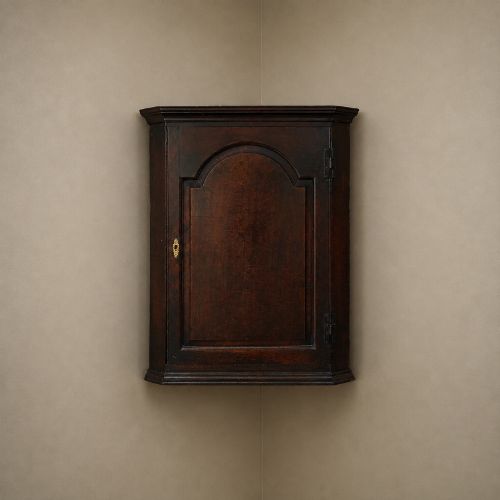
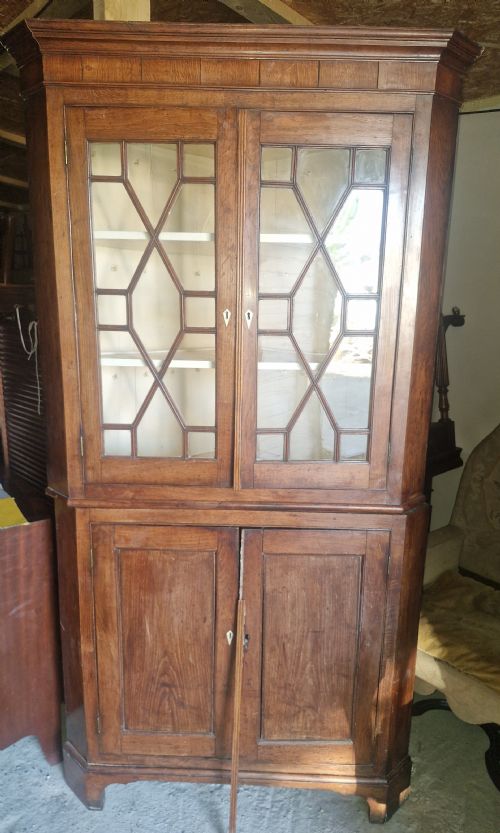
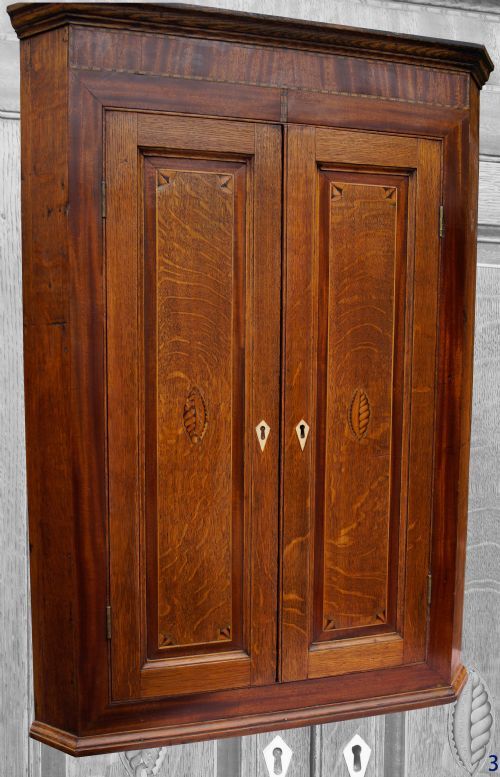
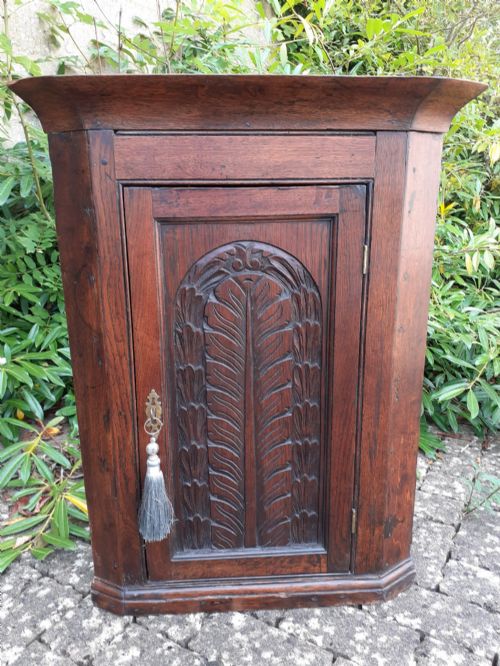
Most pieces you encounter on this page date from the eighteenth century, often showing simple architectural cornices and fielded panel doors. You will find both single-door hanging versions and grander two-part floor-standing cupboards constructed to utilise awkward room angles. Oak is the dominant timber, occasionally partnered with mahogany or fruitwood details.
How they were made
Local joiners built these cabinets using solid oak planks, frequently joined with hand-cut dovetails and wooden pegs. Panel and frame construction allowed the dense timber to expand and contract with seasonal temperature changes without splitting.
Hinges and escutcheons are forged from brass, securing doors that often feature pegged joints and pegged cornices. Glazed upper sections appear in earlier pieces, housing small glass panes held together by slender wooden glazing bars.
Country Oak Corner Unit Retail Price Guide 2026
Typical asking prices for country oak corner unit among the pieces listed under this phrase on Sellingantiques today, from the lower quarter to the upper quarter. They describe what is for sale here now, not the wider market.
What varies in quality
The distinction between standard utility cupboards and finer cabinet work rests on timber selection and decorative restraint. Better examples display carefully matched quarter-sawn oak grain on the primary doors, alongside subtle moulding details rather than rough planking.
Proportion and structural integrity dictate the grade of each piece. Superior items retain their original brass hardware, uncompromised panel work, and well-balanced cornices that sit squarely against the wall.
The Country Oak Corner Unit Glossary
- Corner cabinet
- A storage unit built with a triangular footprint designed specifically to fit into the corner of a room. These pieces maximise floor space while offering secure shelving.
- Hanging cupboard
- A wall-mounted storage box fitted with internal brackets or screw holes for direct wall attachment. They free up floor space entirely.
- Fielded panel
- A wooden panel with bevelled edges recessed into a surrounding frame. This technique reduces weight and accommodates natural wood movement.
- Quarter-sawn
- Timber cut radially across the growth rings rather than tangentially. This method produces durable boards with a distinct medullary ray figure.
- Cornice
- The decorative ornamental moulding running round the top edge of a cabinet. It crowns the structure and conceals the upper joinery.
Country Oak Corner Unit: Frequently Asked Questions
What is the difference between hanging and freestanding models?
Hanging models mount directly to the wall at eye or chest level, leaving the floor underneath completely clear. They suit smaller rooms and kitchens where ground space is at a premium.
Freestanding versions stand on the floor, often split into two distinct stacked sections for easier transport. These larger floor-standing units offer significantly greater storage capacity down to the floorboards.
How do I clean antique oak furniture?
Dust your corner cupboard regularly with a soft, dry cloth to prevent grit from accumulating in the grain. Avoid modern silicone sprays that build up a sticky residue over time.
Apply a traditional beeswax polish sparingly once or twice a year to nourish the dry timber. Buff the surface gently with a clean cloth to maintain a natural, low-gloss finish.
Where should I place a corner unit in my home?
These cabinets thrive in neglected room corners that lack purpose, such as dining room angles or hallway intersections. Their triangular footprint draws the eye upward and softens hard architectural lines.
Keep oak furniture away from direct heat sources like radiators or roaring fireplaces to prevent the old timber from drying out and cracking.