





Arts and Crafts Wall Cabinet
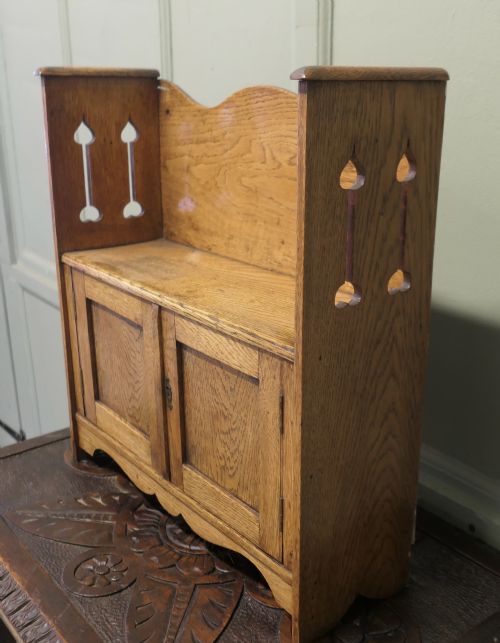
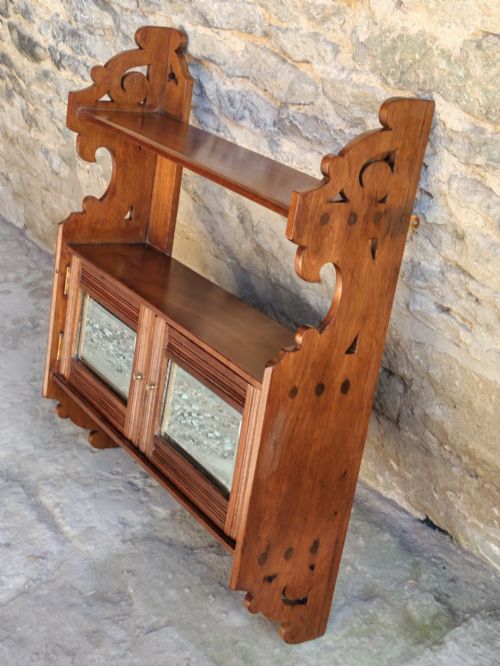
These arts and crafts wall cabinet pieces bring honest timber and purposeful joinery directly to your hallway or kitchen.
Arts and Crafts Wall Cabinet
The pieces listed span various periods from the late nineteenth century into the nineteen-thirties, showing influences from the Aesthetic Movement, Art Nouveau, and Victorian Gothic Revival.
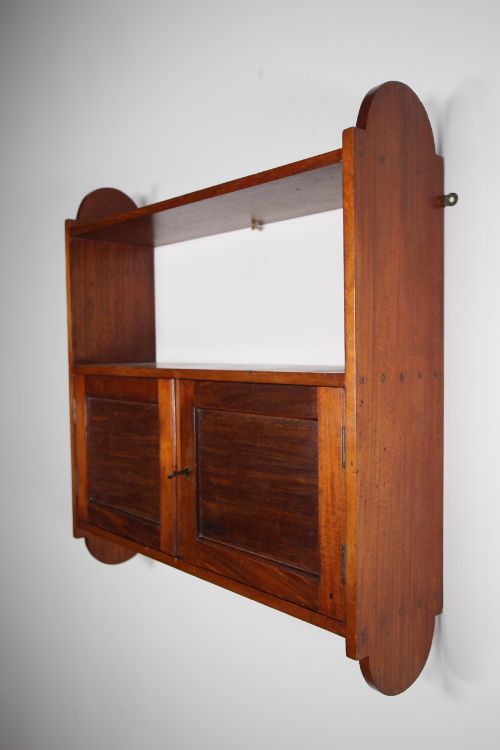
Oak remains the predominant timber across these wall-mounted forms, alongside occasional examples in mahogany, walnut, pine, and beech.
Materials and construction
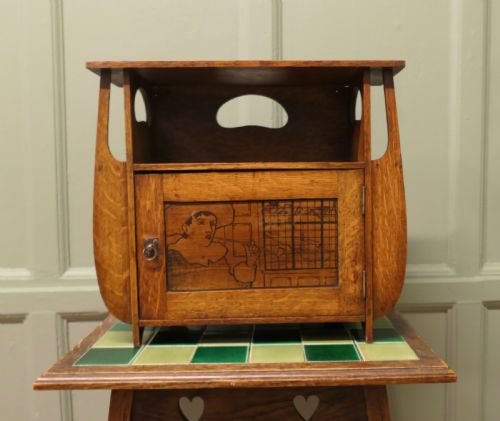
Makers relied heavily on solid oak for its robust grain, often enhancing surfaces with hand carving, pokerwork, or exposed joinery rather than heavy veneering.
Metalwork played a key structural and decorative role, with hinges, latches, and straps forged from brass, copper, and iron to complement the timber.
Glazing appears on display variants, sometimes utilising specialised leading or astragal bars to break up the glass panels.
Arts and Crafts Wall Cabinet Retail Price Guide 2026
Typical asking prices for arts and crafts wall cabinet among the pieces listed under this phrase on Sellingantiques today, from the lower quarter to the upper quarter. They describe what is for sale here now, not the wider market.
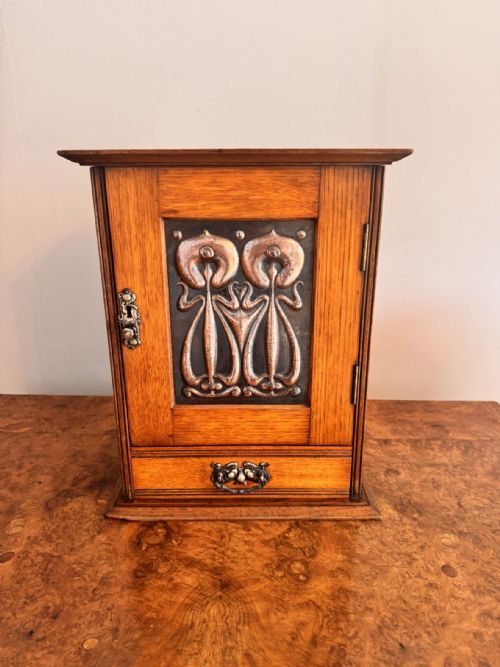
Smokers' cabinets in golden oak offered gentlemen a dedicated, lockable sanctuary for pipes and tobacco blends.
Assessing craftsmanship
Quality rests upon the integrity of the timber selection and the precision of the hand-carved or pokerwork detailing applied to the doors and panels.
The choice of original hardware, such as hammered copper hinges or bespoke brass latches, separates standard production from superior workshop output.
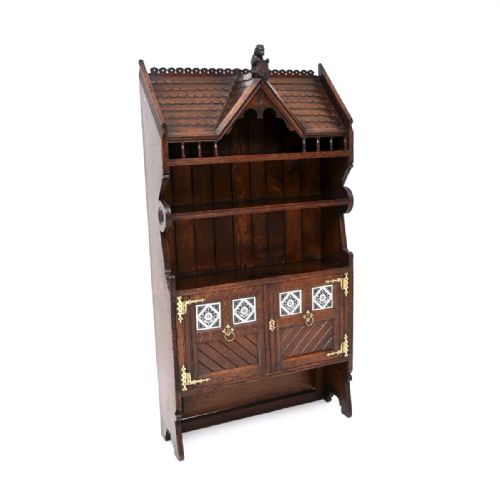
John Moyr Smith·Arthur Simpson
The Arts and Crafts Wall Cabinet Glossary
- Pokerwork
- The technique of decorating wood by burning designs with a heated tool. This method creates dark, textured lines often seen on period cupboard doors.
- Astragal
- A small moulding dividing the glass panes within a cabinet door. These bars provide structural support while adding geometric detail to glazed fronts.
- Aesthetic Movement
- A late nineteenth-century design ethos prioritising visual beauty over narrative or moral function. Pieces from this current often feature stylized floral motifs.
- Cotswold School
- A twentieth-century regional design group rooted in traditional hand-tool methods. Work associated with this circle emphasises simple lines and exposed construction.
Arts and Crafts Wall Cabinet: Frequently Asked Questions
How do I hang an arts and crafts wall cabinet safely?
These heavy timber units require secure fixing directly into wall studs or masonry using appropriate brackets. Distributing the weight evenly prevents strain on the original hanging loops.
Older mounting points should be inspected before installation to ensure the wood around the screws remains sound and capable of supporting the loaded cabinet.
What rooms suit an arts and crafts wall cabinet?
Kitchens and hallways provide ideal settings for smaller cupboards, key cabinets, and corner units. Their compact footprints keep floor space clear while offering accessible storage.
Glazed display variants function well in dining areas for tableware, whereas simpler carved oak versions complement studies and living spaces.
How do I clean and maintain the oak surfaces?
Regular dusting with a dry, soft cloth prevents particulate buildup in carved recesses and pokerwork grooves. Avoid silicone-based polishes that can degrade historic finishes over time.
Applying a traditional beeswax sparingly helps nourish dry oak and preserves the natural lustre of the timber without sealing the grain.
How do I tell an original period piece apart from a later copy?
Examine the interior construction, backboards, and dovetailing for tool marks consistent with period hand-working methods. Modern fixings or machine-sawn timber often indicate a later manufacture date.
Original hardware, such as hand-beaten copper straps or brass butterfly hinges, should show honest wear and match the age of the primary wood structure.