
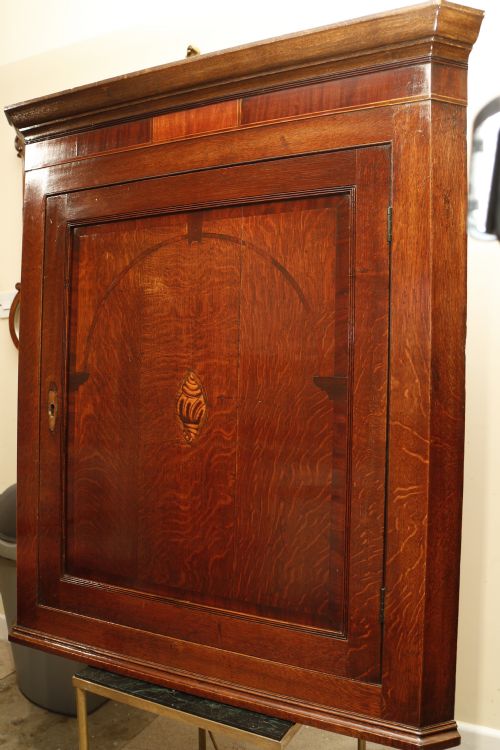


Rustic Oak Corner Cabinet
A rustic oak corner cabinet brings practical storage and honest period character to an overlooked room.
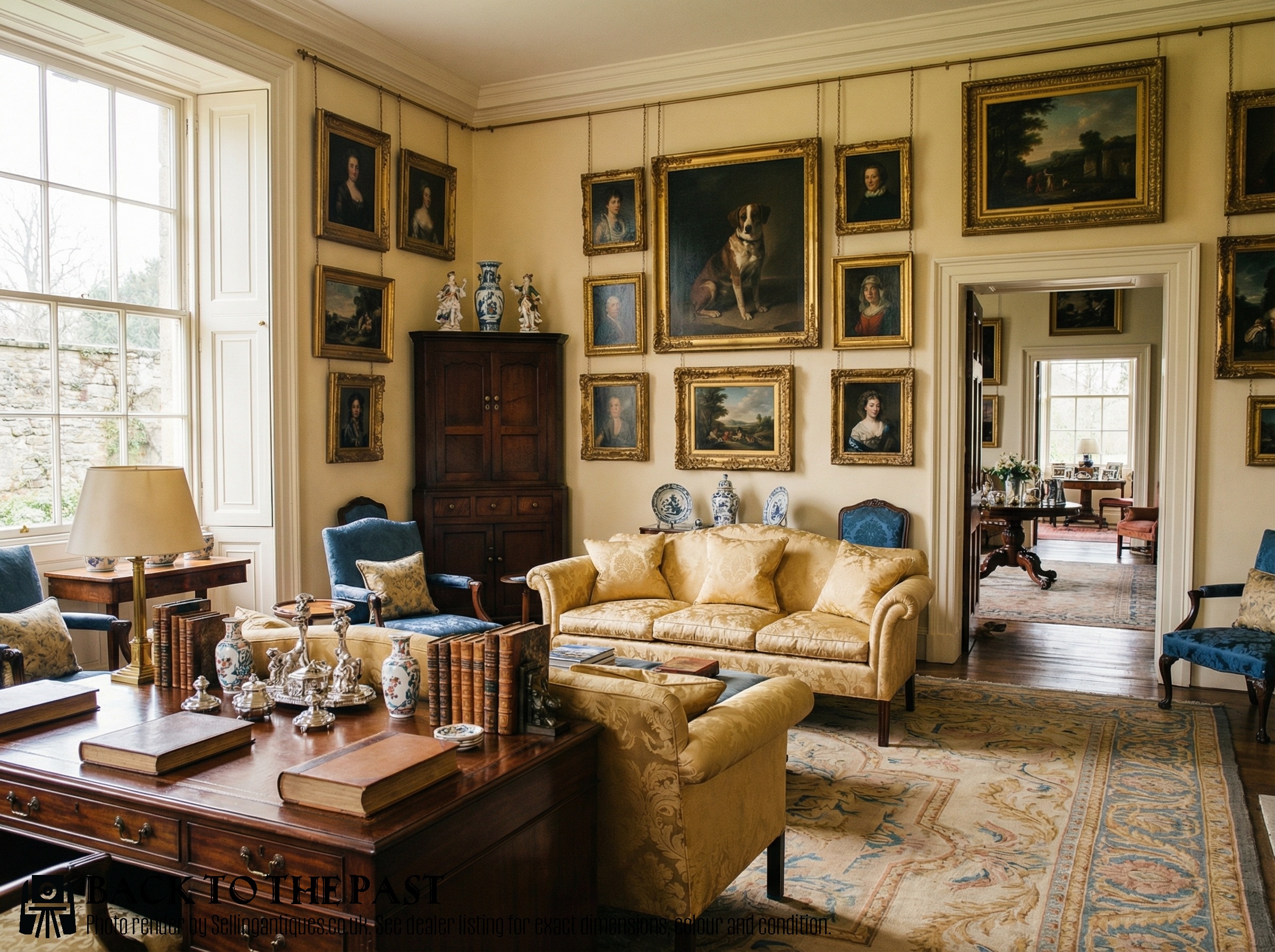
Rustic Oak Corner Cabinet
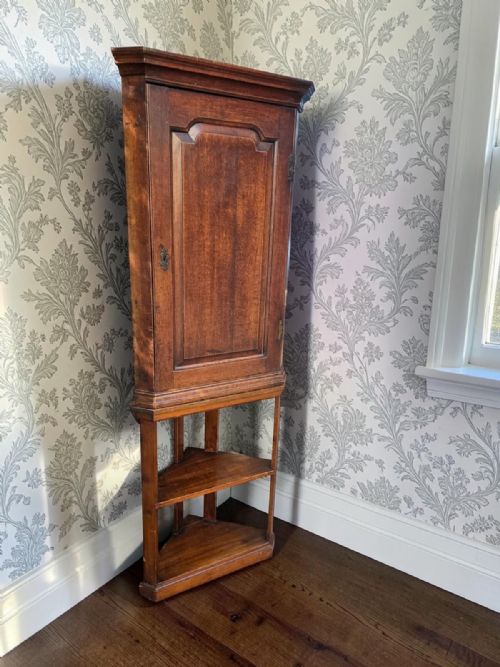
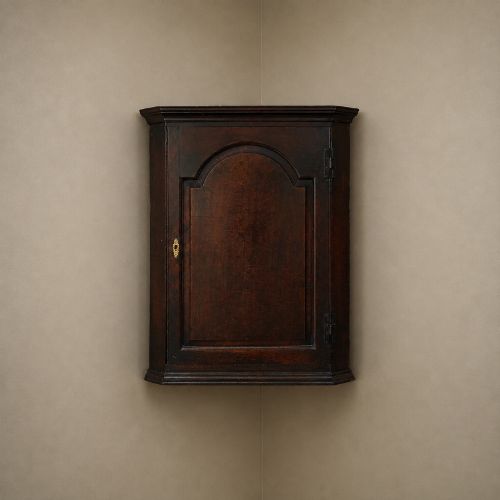
A rustic oak corner cabinet transforms unused wall junctions into useful display and storage space. These pieces span from the early 18th century through the Victorian era, taking both hanging wall-mounted forms and tall floor-standing cupboards.
Most examples originate from country workshops and regional traditions, particularly Welsh makers. The inventory ranges from simple provincial wall cupboards to larger two-part floor-standing cabinets.
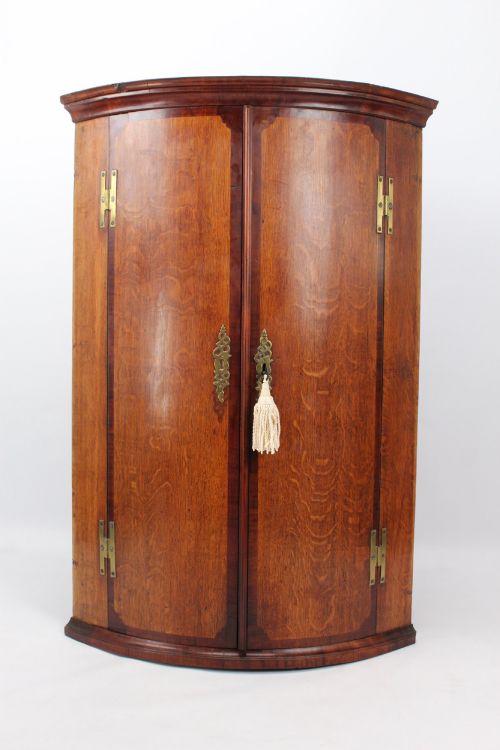
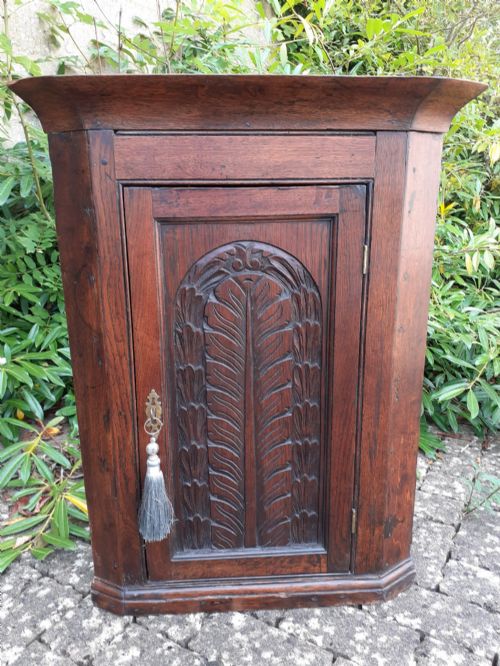
Georgian and Victorian periods dominate the selection, showing straightforward vernacular designs built for everyday domestic use. Buyers meet pieces with raised panels, bow fronts, and occasional fruitwood or mahogany accents.

Materials and construction
Solid oak provides the primary structural timber for these cabinets, complemented by secondary woods like fruitwood and mahogany in decorative details. Traditional joinery relies on panelled construction, pegged joints, and dovetailed frames designed to handle seasonal timber movement.
Hardware consists of brass escutcheons and hinges, alongside iron strap hinges on earlier vernacular pieces. Some examples incorporate glass doors for display or subtle marquetry and wood inlay around the frieze.
Rustic Oak Corner Cabinet Retail Price Guide 2026
Typical asking prices for rustic oak corner cabinet among the pieces listed under this phrase on Sellingantiques today, from the lower quarter to the upper quarter. They describe what is for sale here now, not the wider market.
Current listings feature pieces spanning the Georgian and Victorian eras, predominantly constructed from solid oak with occasional mahogany and fruitwood details.
The markers of quality
Quality rests in the selection of timber grain and the integrity of the original construction. Superior pieces retain their authentic patination, untouched panel work, and correct period brassware without excessive timber replacement.
Finer regional pieces, such as those from Welsh workshops, display careful proportions and thoughtful detailing like shaped interior shelves. Lesser examples suffer from unsympathetic alterations, heavy surface stripping, or mismatched replacement timber.
The Rustic Oak Corner Cabinet Glossary
- Bow front
- A cabinet front that curves gently outward in a convex shape. This profile adds visual depth to corner furniture.
- Hanging cupboard
- A wall-mounted storage piece fitted with internal brackets or fixing points. These units save floor space in smaller rooms.
- Raised panel
- A wooden panel with edges thinned down to fit snugly into a grooved frame. This technique allows the wood to expand and contract safely.
- Vernacular furniture
- Domestic pieces made by local craftspeople for regional use rather than high-style urban workshops. These items prioritise utility and available local timber.
Rustic Oak Corner Cabinet: Frequently Asked Questions
How do I hang a wall cabinet?
Wall-hanging corner cupboards require secure fixing to solid masonry or internal wall studs using heavy-duty brackets. The weight of solid oak demands professional installation to ensure stability.
Check the internal backboards and hanging points before mounting to confirm the timber remains sound enough to support the load.
Where should I place a corner cupboard?
These cabinets fit neatly into 90-degree room junctions that typically go unused. Dining rooms and living spaces benefit most from the combination of enclosed storage and display capacity.
Keep oak furniture away from direct heat sources and strong sunlight to prevent the timber from drying out and splitting.
What is the difference between hanging and floor-standing pieces?
Hanging models mount directly to the wall and often feature shallow footprints suited to compact kitchens or hallways. Floor-standing variants sit on a base or plinth and frequently arrive in two separate sections for easier transport.
Floor-standing versions generally offer greater storage capacity and a more commanding presence in a room.
How do I date an oak cabinet?
Dating relies on examining construction methods, timber characteristics, and hardware. 18th-century pieces often feature hand- cleft oak panels, pegged joinery, and wrought iron or brass H-hinges.
Victorian interpretations tend to show more uniform machine-sawn timber and different interior configurations while retaining traditional vernacular styles.