
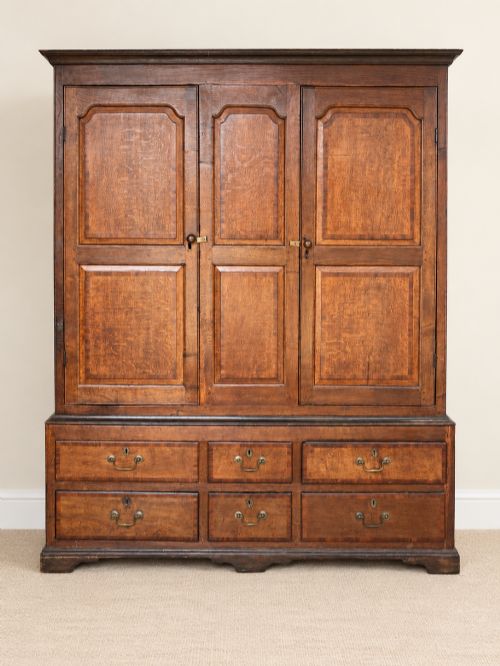
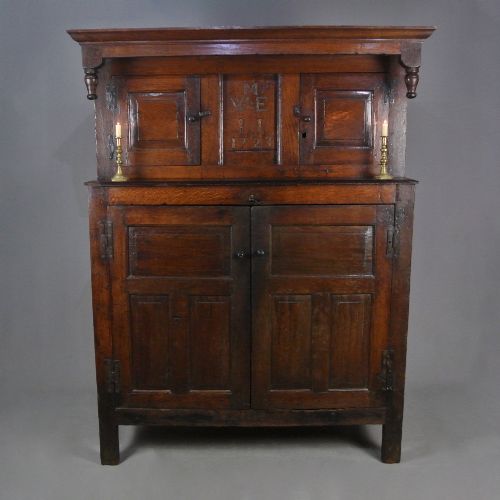
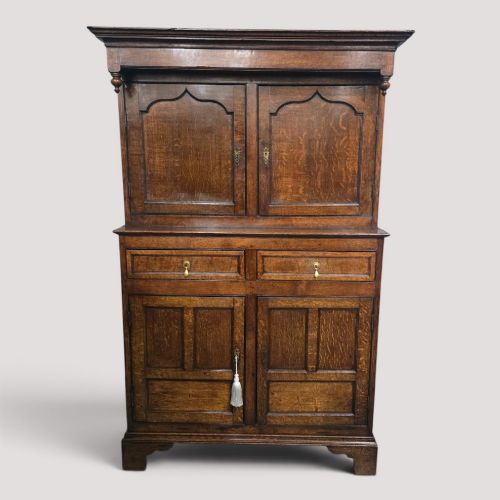
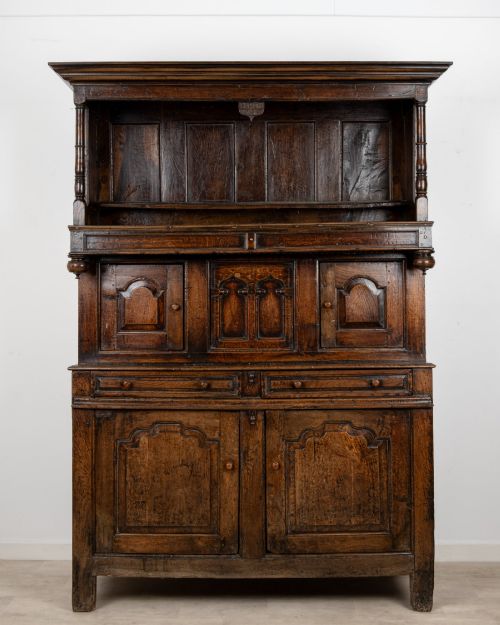
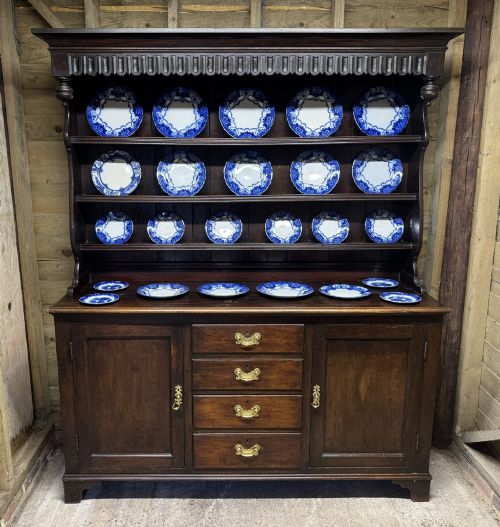
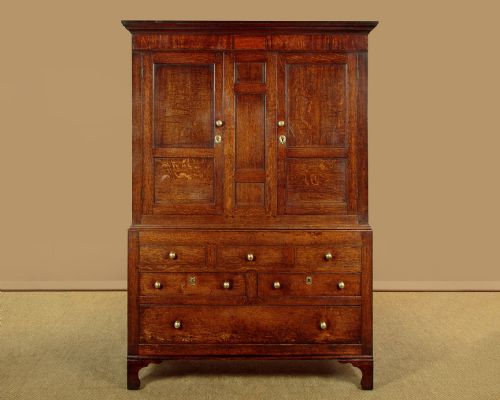
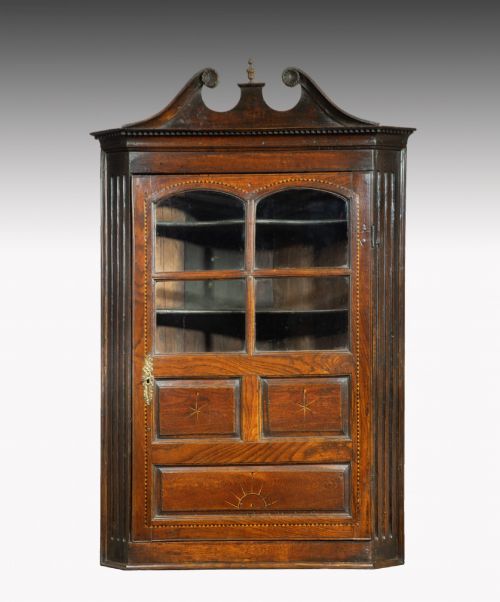
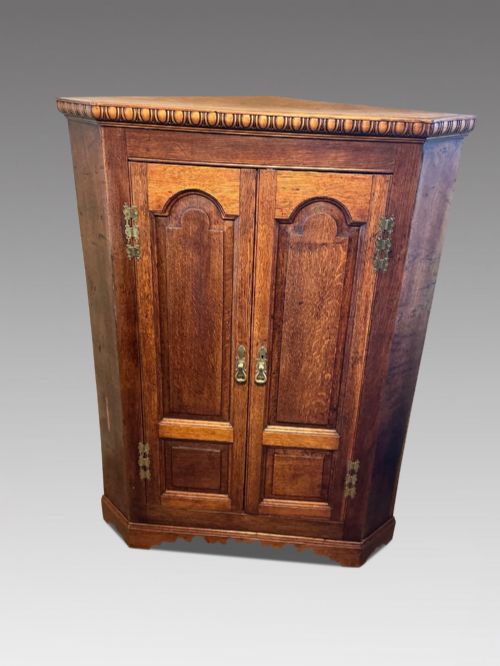



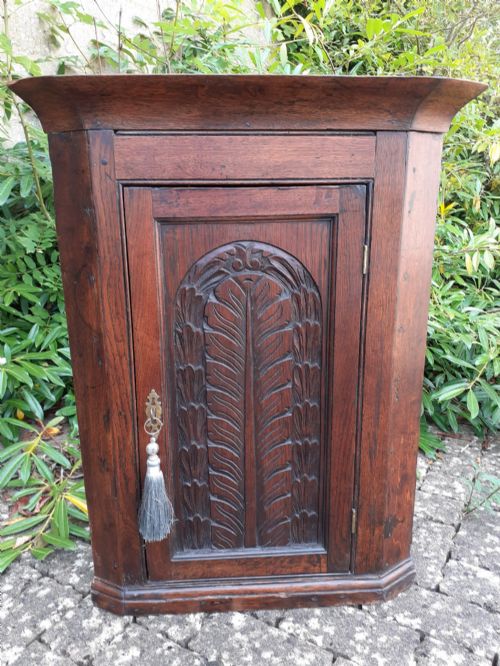
Georgian Carved Oak Cupboard
A georgian carved oak cupboard brings solid eighteenth-century craftsmanship and rich grain into a room.
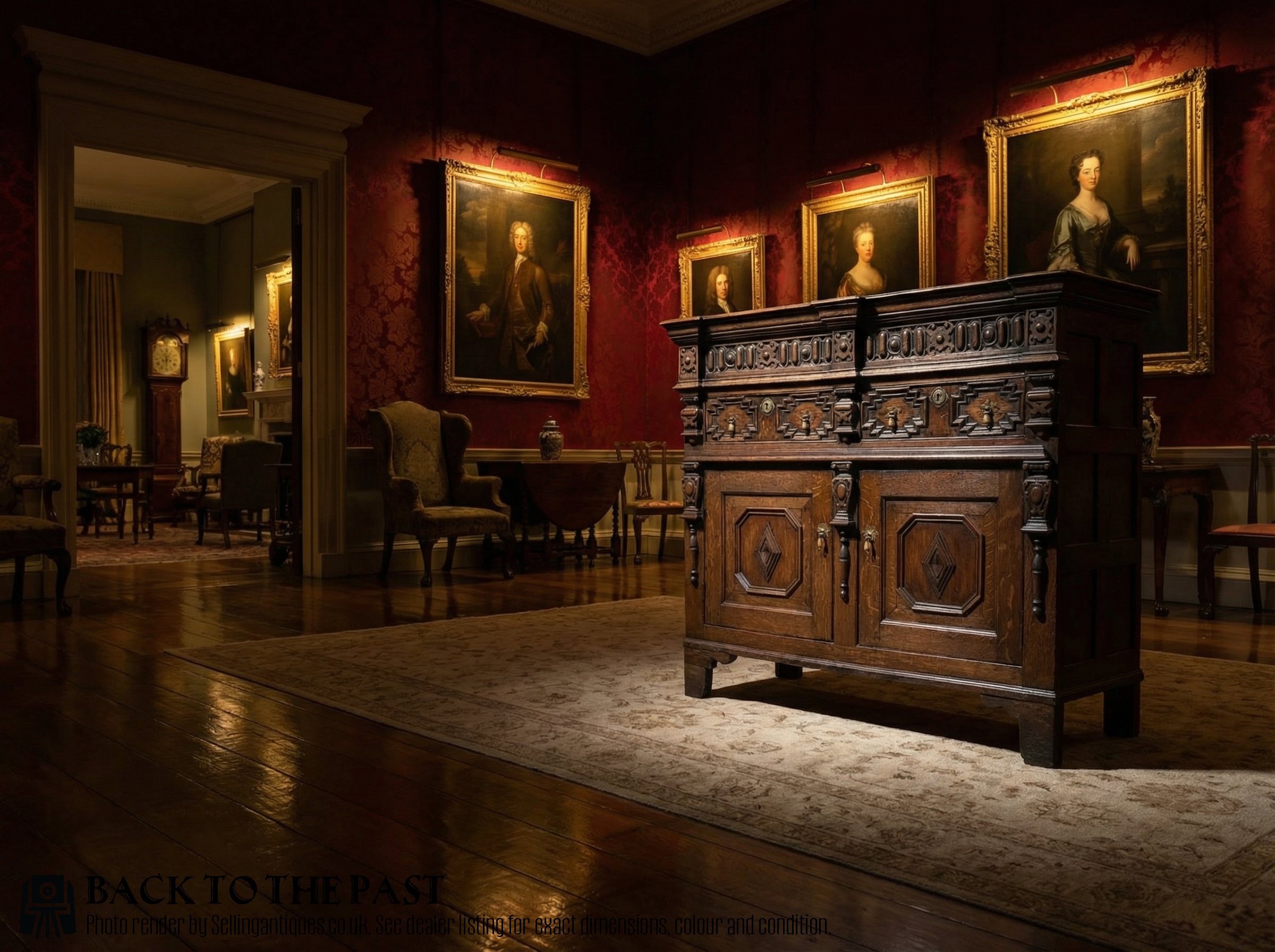
What They Are
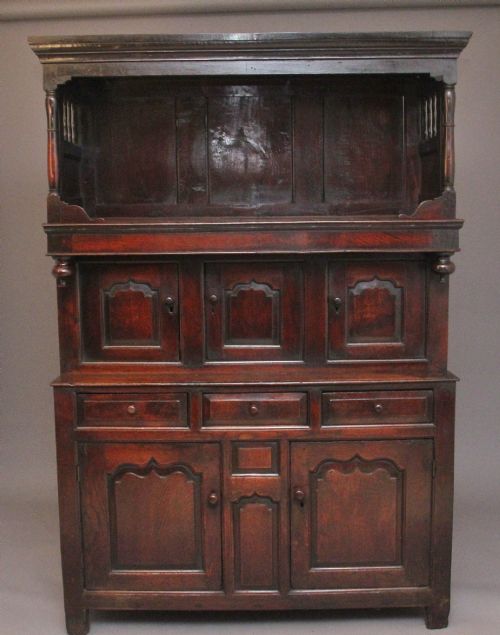
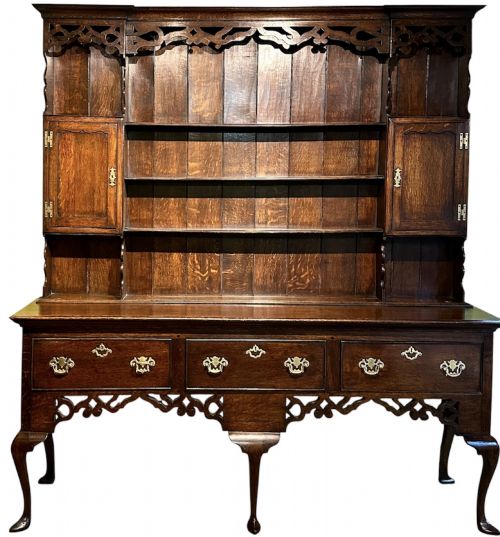
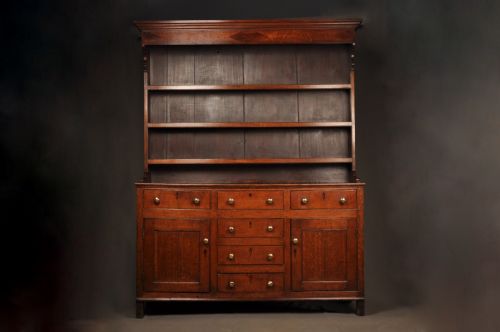
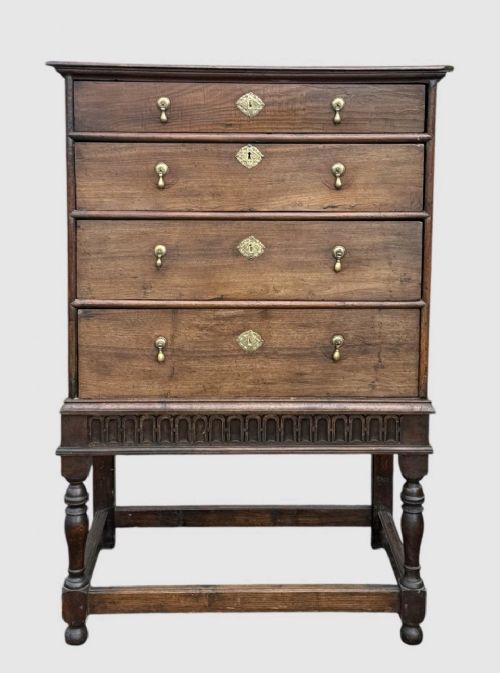
A georgian carved oak cupboard provides sturdy storage in formats ranging from wall-hanging spice cabinets and corner units to large court cupboards and press cupboards. These pieces date from the eighteenth century, spanning periods around seventeen-ten to eighteen-hundred, and emerge from English and Welsh traditions.
The buyer meets both floor-standing and wall-mounted versions on this page. Corner cupboards and small desktop cabinets appear alongside monumental press cupboards and court cupboards.
The style is predominantly Georgian Vernacular, combining robust local joinery with traditional carved ornamentation.
How They Were Made
Maker construction relies heavily on solid oak timbers, chosen for durability and distinctive grain patterns. Workshops shaped and fitted these heavy boards using traditional panel-and-frame joinery to accommodate seasonal wood movement.
Metal components add function and contrast, incorporating brass escutcheons and hinges alongside iron hardware. Carved details are executed directly into the timber surfaces by hand.
Retail Price Guide 2026
Typical UK retail prices for georgian carved oak cupboard, calculated from the Sellingantiques database of over a million retail prices indexed since 2003. This retail price guide relies exclusively on Sellingantiques data; no external sources or auction records are used, so the figures do not describe the wider market.
Listings feature oak material exclusively, combined with brass and iron hardware across eighteenth-century dates.
What Varies in Quality
Quality separates ordinary utility pieces from finer examples through the depth and precision of the carved decoration. Crisp relief work on panels and cornices indicates skilled hand execution rather than hurried production.
The choice of hardware and the retention of original brass or iron fixtures elevate a piece. Integrated proportions and uncompromised structural timber also define the upper tier of the range.
The Georgian Carved Oak Cupboard Glossary
- Court cupboard
- A traditional enclosed storage piece, often featuring multiple tiers or recessed upper sections. These substantial items date to the early eighteenth century and serve as prominent dining room furniture.
- Press cupboard
- A large storage cabinet combining upper and lower compartments, frequently used for linens and garments. Welsh examples showcase regional eighteenth-century proportions and joinery.
- Corner cupboard
- A space-saving cabinet designed to fit neatly into a room angle. These occur in hanging wall formats and floor-standing varieties with carved doors.
- Vernacular style
- Furniture made by local regional makers following traditional methods rather than high-fashion metropolitan designs. This approach prioritises utility and robust construction.
- Escutcheon
- A protective brass or iron plate surrounding a keyhole. These functional details often provide decorative contrast against dark oak timber.
Frequently Asked Questions
Where were these cupboards placed?
Wall-hanging and corner cabinets went into kitchens, parlours, and private chambers for storing small items, spices, or tableware. Large press cupboards and court cupboards stood in principal reception rooms or hallways to hold household textiles.
Smaller desk-top versions sat upon tables or chests to keep documents and valuables secure.
How do I care for oak furniture?
Keep these eighteenth-century pieces away from direct heat sources and sudden temperature shifts to prevent the solid oak panels from splitting. Natural wax applied sparingly maintains the finish and protects the wood surface without creating a heavy buildup.
Dust regularly with a soft, dry cloth following the direction of the grain.
Are these pieces strictly English?
Most items originate from English workshops, including regional variants such as Westmorland pieces. Welsh examples also appear frequently, reflecting distinct local cabinet-making traditions.
All share the overarching Georgian period aesthetic combined with regional vernacular execution.
How do I distinguish a court cupboard?
Court cupboards stand out through their multi-level construction, often featuring a recessed upper stage supported by columns or carved brackets. They represent the larger end of eighteenth-century case furniture.
Simpler corner units and wall cabinets lack this architectural complexity entirely.