
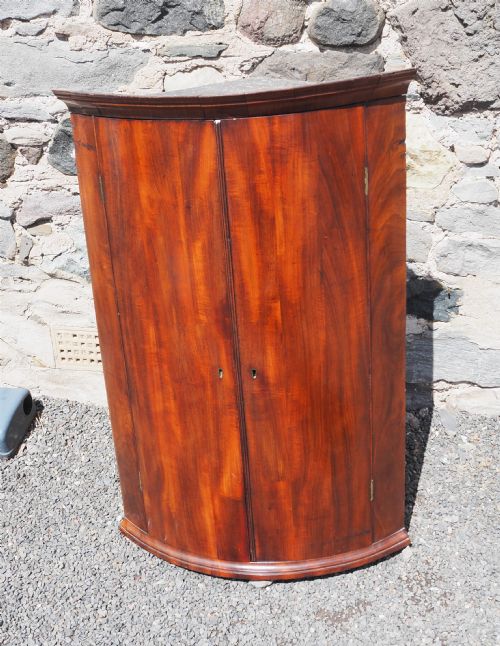


Georgian Bow Front Cupboard
A georgian bow front cupboard brings curved timber and clever corner storage into rooms that need character.
Georgian Bow Front Cupboard
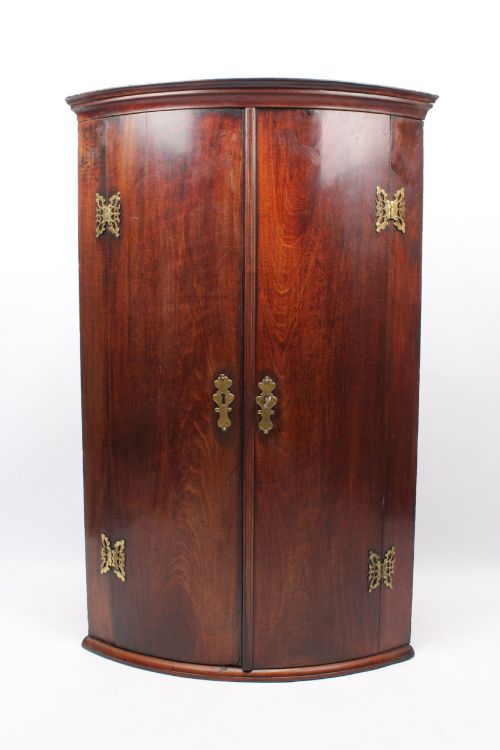
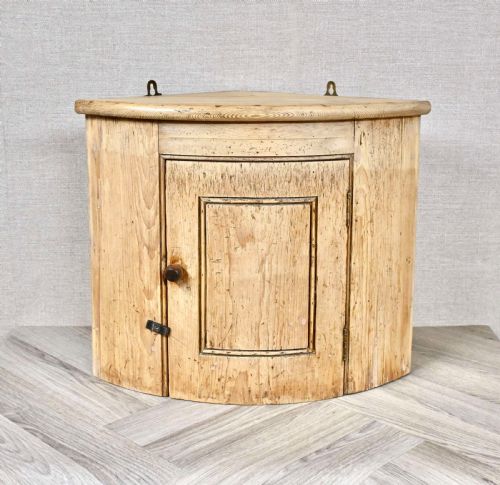
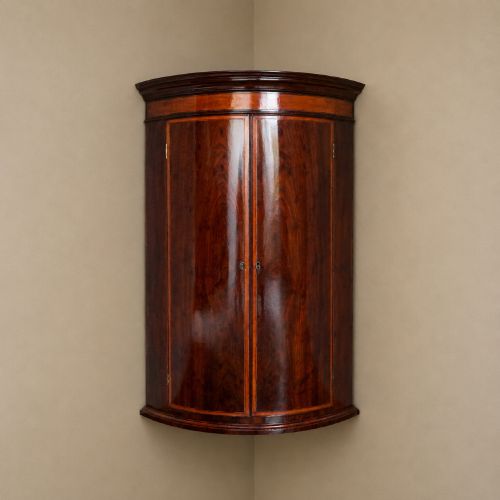
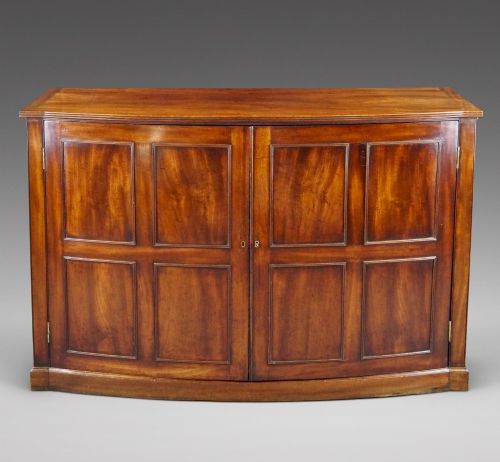
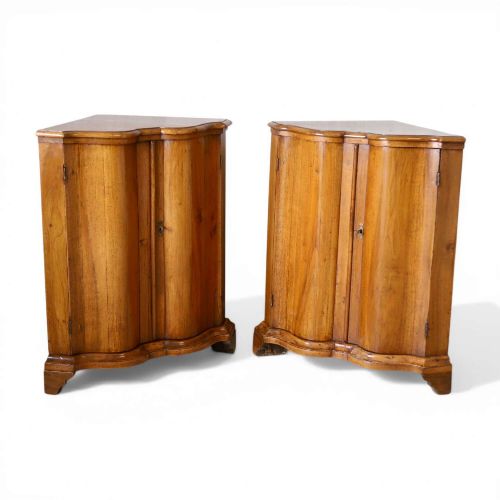
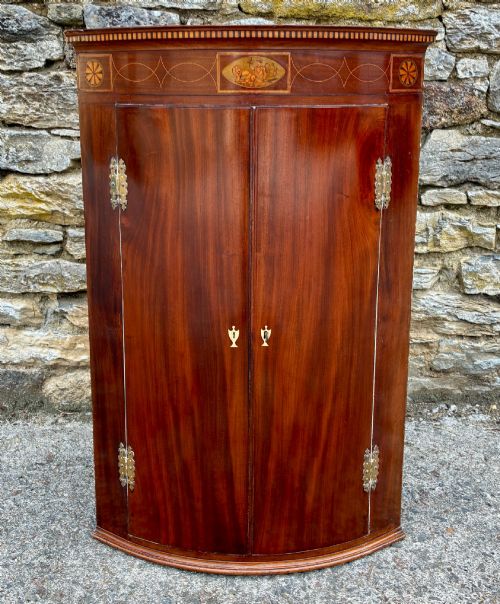
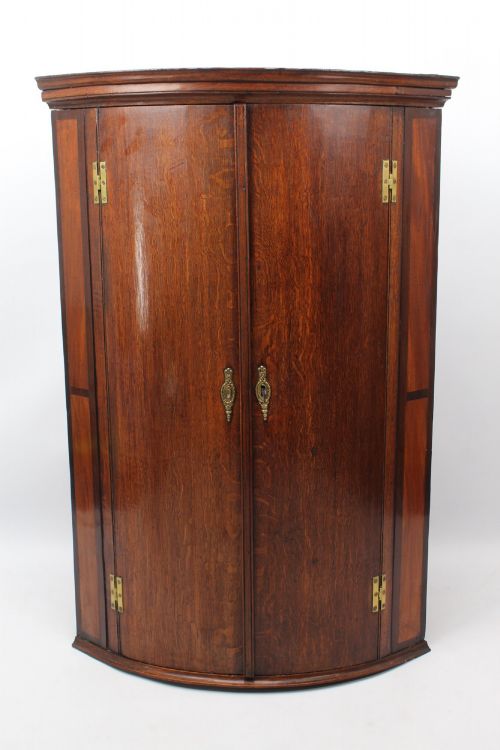
A georgian bow front cupboard primarily takes the form of a corner cabinet, designed to fit snugly into room junctions while presenting a convex facade to the interior. These storage pieces originate predominantly from the Georgian and 18th century periods, constructed to maximise domestic space without sacrificing elegance.
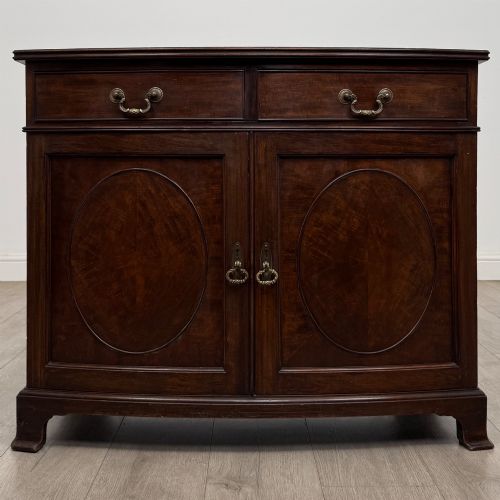
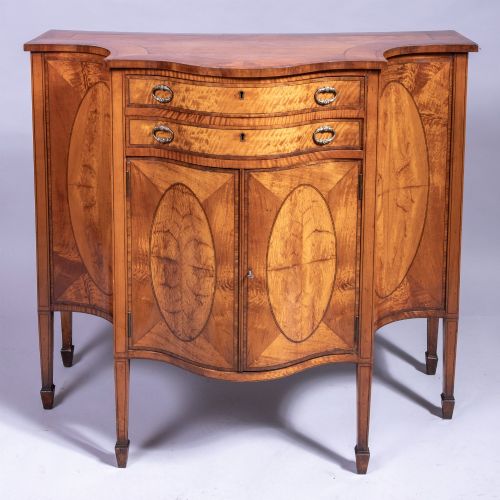
Beyond corner units, buyers encounter bedside tables, linen presses, and smaller side cabinets sharing the signature rounded front profile. Mahogany and oak dominate these forms, often enhanced by hanging brackets or standing frames.
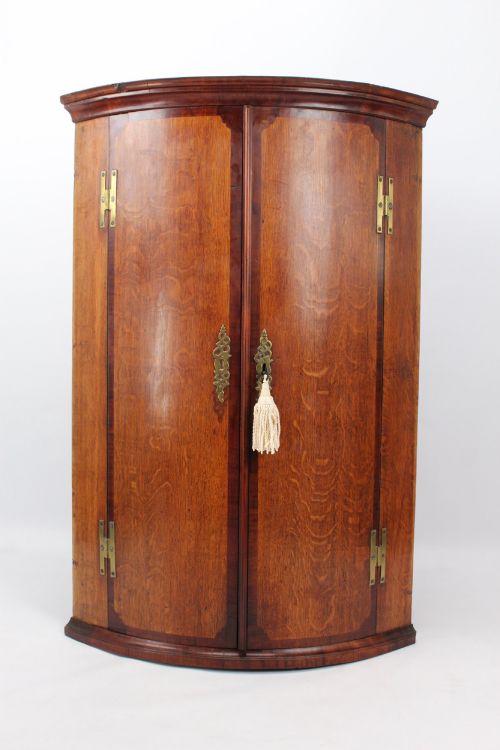
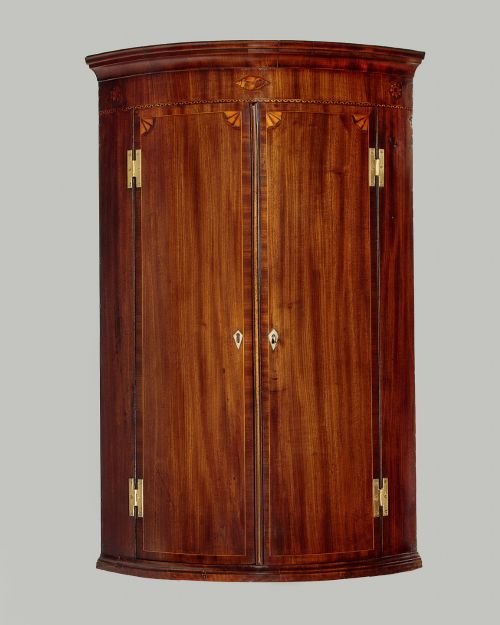
The most common survival from this era is the wall-mounted corner cupboard, frequently built in native oak or rich mahogany with brass H-hinges. These functional items served domestic interiors for storing china, glassware, or provisions before transitioning into decorative antiques.
Materials and construction
Cabinet makers built the curved facade of a georgian bow front cupboard using solid timbers or applied veneers over secondary woods like pine and oak. Flame mahogany and plum pudding mahogany provide distinct grain patterns, sometimes accented with boxwood stringing or delicate inlay work.
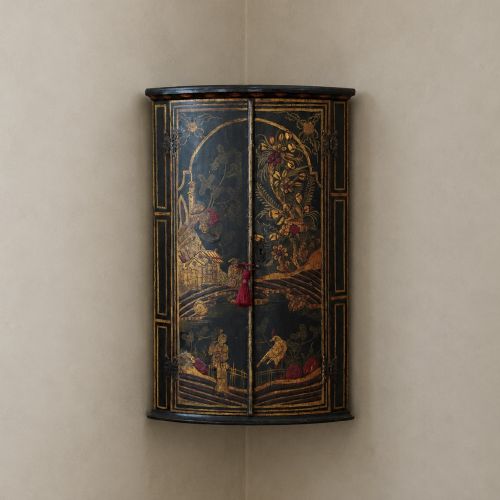
Joinery techniques relied on dovetailed joints for internal shelving and drawers, while doors swung on brass hinges secured to sturdy frames. Japanned finishes and Chinoiserie lacquer surface treatments appear on specific pieces, adding painted motifs over dark grounds.
Georgian Bow Front Cupboard Retail Price Guide 2026
Typical asking prices for georgian bow front cupboard among the pieces listed under this phrase on Sellingantiques today, from the lower quarter to the upper quarter. They describe what is for sale here now, not the wider market.
Apprentice pieces allowed young woodworkers to demonstrate mastery by scaling down a full-size linen press into a charming miniature cabinet.
Assessing quality and craftsmanship
Quality rests upon the selection of timber figure, such as highly prized plum pudding mahogany or matched flame veneers, which elevates a utilitarian storage box into a formal decorative statement. Finer examples display meticulous crossbanding and precise inlay work that follow the precise curve of the door frames.
Proportion and internal arrangement dictate value among surviving specimens, with smaller apprentice pieces or units featuring internal spice drawers commanding particular interest. The integrity of the original brass hardware and the smoothness of the curved door closure further distinguish superior workshop production.
The Georgian Bow Front Cupboard Glossary
- Bow front
- A convex, outwardly curved front facade characteristic of these cabinets. This curved design softens room angles and provides extra internal depth.
- Corner cupboard
- A cabinet specifically constructed to fit into the ninety-degree angle of a room. These save floor space while offering substantial shelving.
- Flame mahogany
- A veneer cut from timber where the branches join the trunk, producing a flickering flame-like grain pattern. Cabinet makers used this on prominent door panels.
- Linen press
- A tall storage piece with upper cupboard doors enclosing sliding trays for textiles, often sitting above a chest base. They share the characteristic curved front profile.
- Inlay
- Contrasting woods or materials fitted into recesses within the primary timber surface to create decorative borders. Boxwood and satinwood frequently serve this purpose.
Georgian Bow Front Cupboard: Frequently Asked Questions
Where should I hang a corner cupboard?
These wall-mounted storage pieces belong firmly in room corners where standard rectangular furniture cannot fit. They anchor dead space effectively in dining rooms, hallways, or sitting rooms.
Ensure the wall construction safely bears the weight of solid hardwood timber before mounting brackets secure the hanging cabinet at eye level.
How do I care for mahogany surfaces?
Maintain timber surfaces by applying natural beeswax sparingly and buffing with a soft cloth to preserve the sheen. Avoid placing these antiques near direct heat sources or strong sunlight.
Consistent indoor humidity prevents the solid woods and delicate veneers from drying out or splitting over decades of daily domestic use.
Were these cabinets used for food?
Many early corner units housed provisions, spices, or dining china safely away from household dust in Georgian parlours and kitchens. Interiors often retain small drawers or fixed wooden shelves designed for specific tableware.
Later Victorian and Edwardian examples adapted these compact storage spaces for bedside essentials or general household linens.
How do I recognise Georgian construction?
Examine the interior secondary woods, drawer dovetails, and backboards for hand-tool marks consistent with eighteenth-century workshop practices. Hand-cut joints and native oak linings indicate authentic period manufacture.
Hardware such as brass H-hinges and original escutcheons offer further clues regarding the age and originality of the cabinet structure.