

Inlaid Mahogany Corner Cabinet
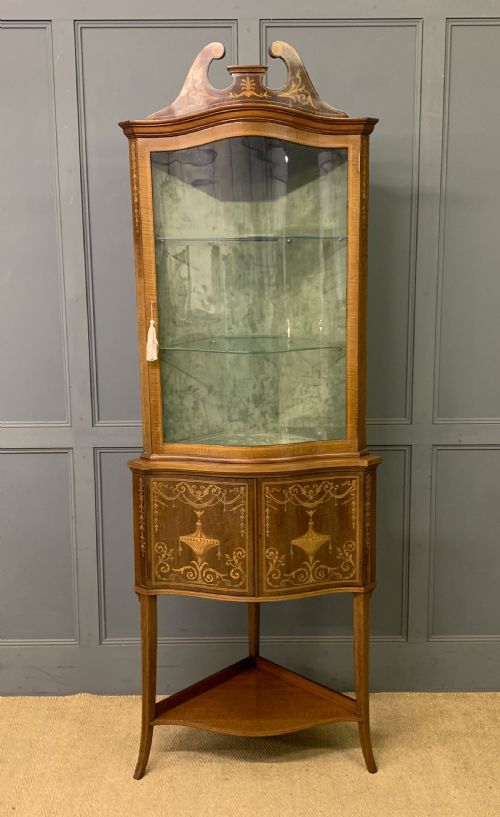
An inlaid mahogany corner cabinet utilises awkward corners to display china or store provisions with distinct Georgian or Edwardian elegance.
What an inlaid mahogany corner cabinet is
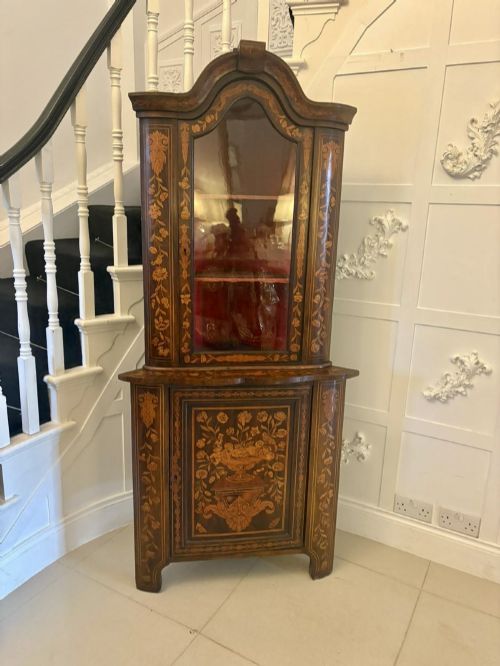
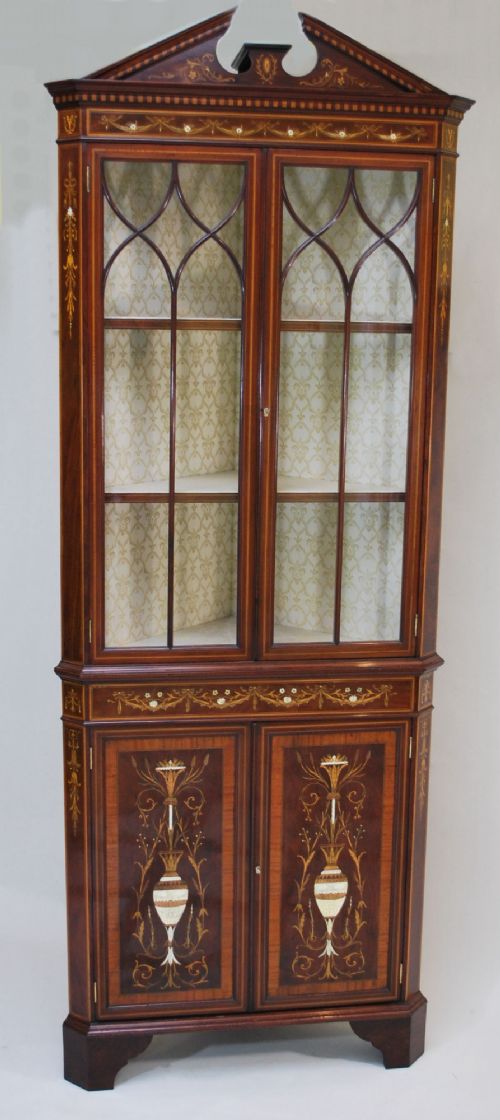
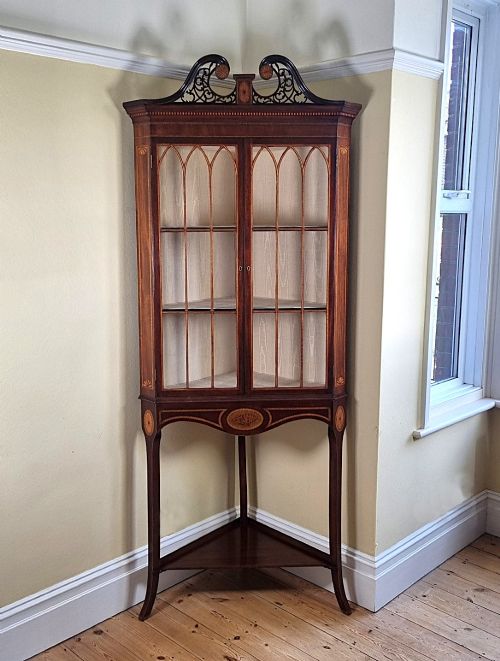
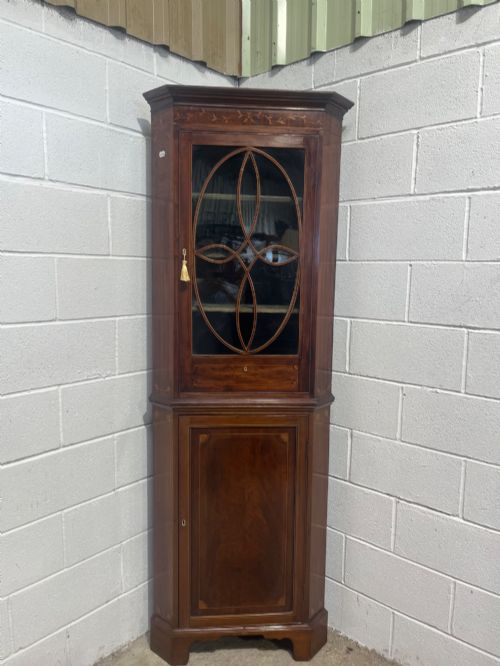
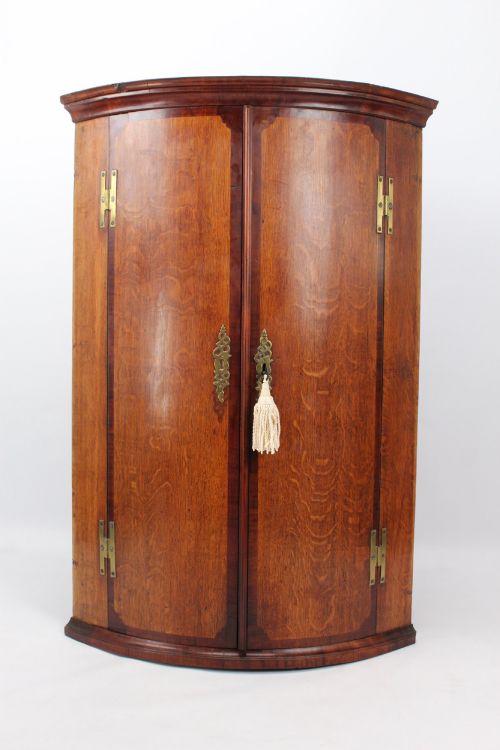
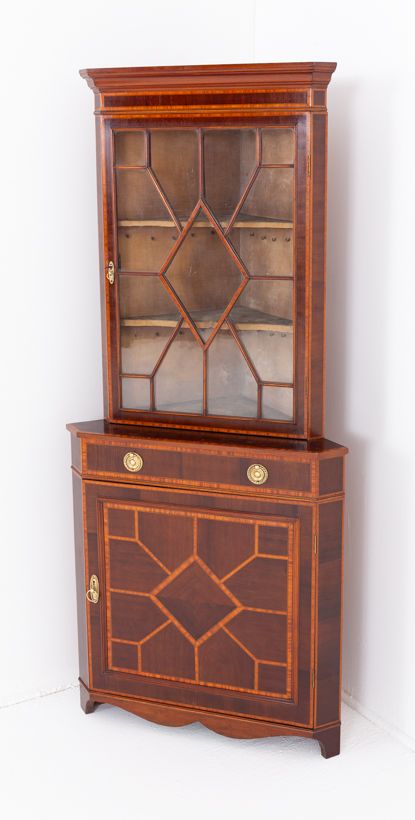
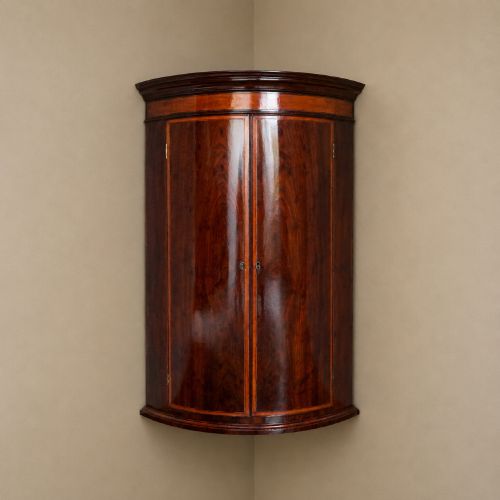
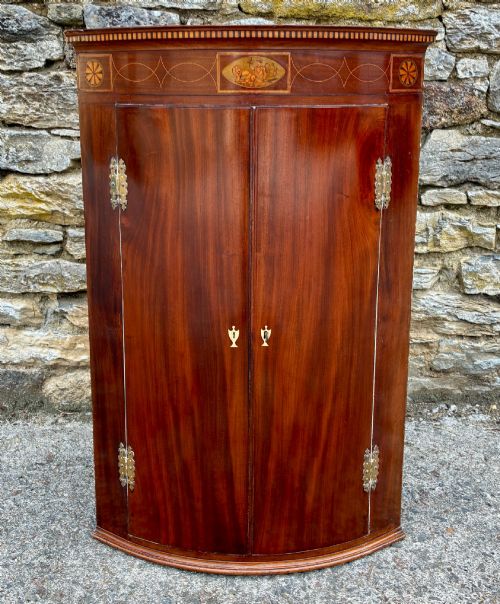
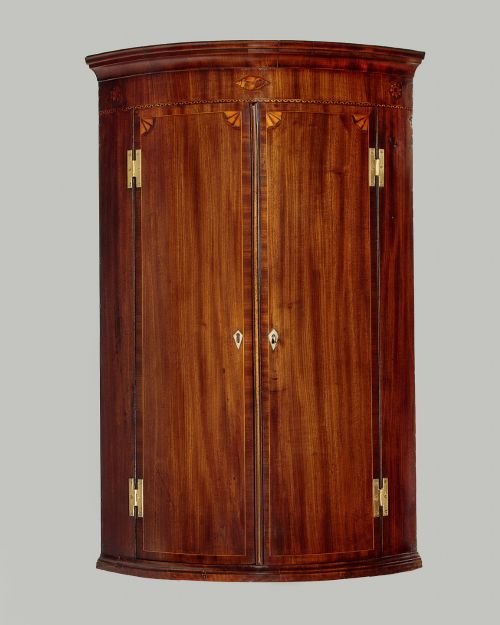
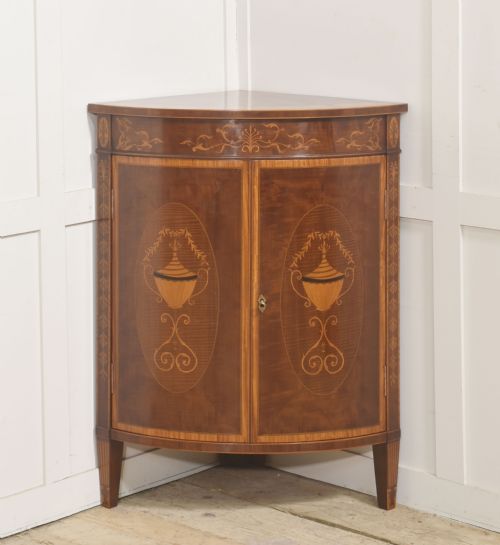
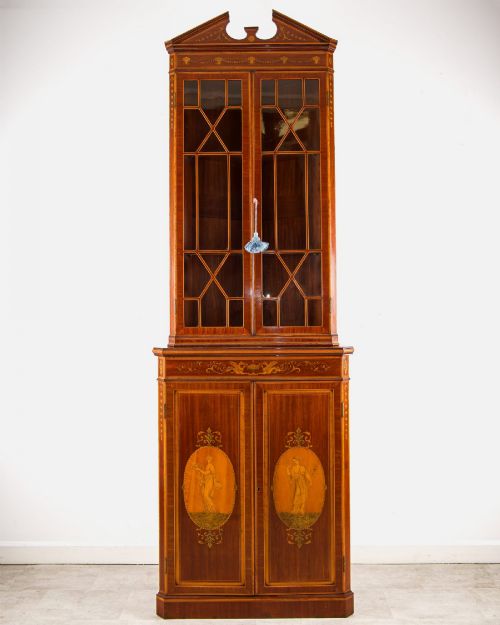
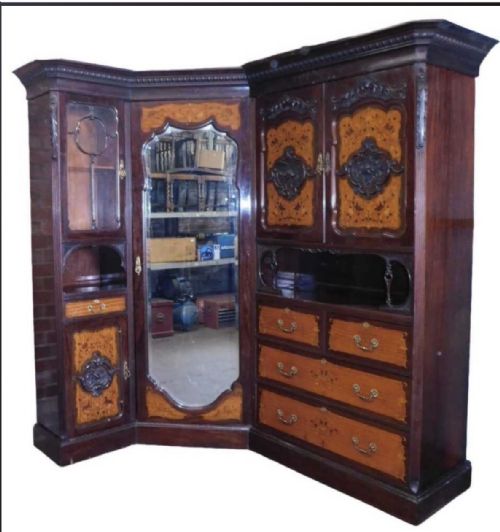
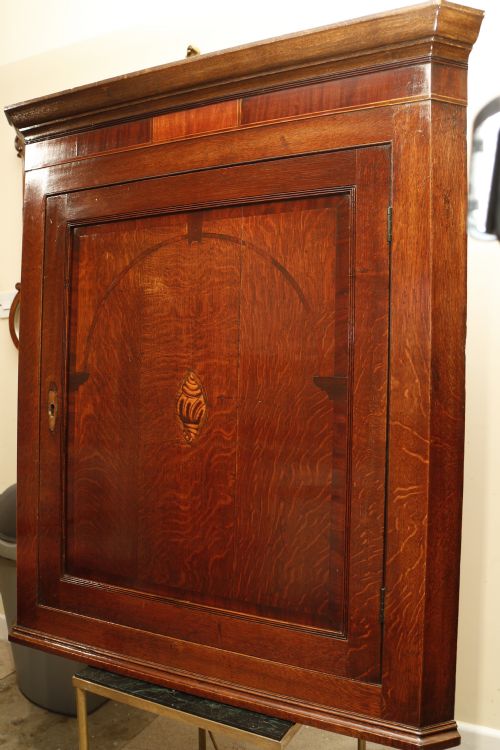
An inlaid mahogany corner cabinet brings a disciplined architectural geometry to idle room junctions, offering a clever storage solution that maximises floor or wall space. These pieces typically take the form of wall-mounted cupboards, bow-fronted standing units, or tall glazed display stands designed to fit snugly into ninety-degree angles.
The pieces appearing on this page span several distinct periods, drawing heavily from eighteenth-century Georgian origins and later nineteenth-century revivals. Buyers encounter both single and double height configurations, alongside adaptations that double as washstands with fold-down tops or intricate bijouterie display cases.
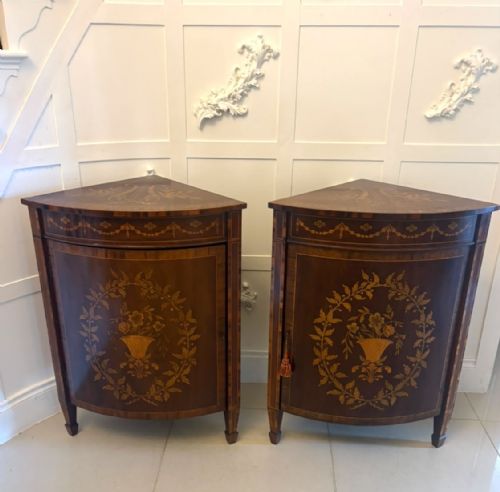
Georgian examples lean towards structural honesty with rich flame mahogany and barrel bow-fronts, whilst Edwardian interpretations introduce refined satinwood and boxwood inlay work. Whether wall-hanging or standing on stout legs, each version solves the persistent challenge of furnishing domestic corners without cluttering the room.
How they were made
Cabinetmakers constructed these pieces using dense mahogany, frequently selecting figured flame veneers to catch the light across curved bow-fronts. Secondary timbers such as oak provided rigid internal framing for wall-hanging cupboards and heavy standing display units.
Decorative detailing relied on precision satinwood and boxwood inlay, creating sharp contrasting borders and floral motifs that frame the doors and cornices. Brass hardware, including hinges and escutcheons, secured the timber whilst glass panes set within wooden astragal bars protected the contents within.
Retail Price Guide 2026
Typical UK retail prices for inlaid mahogany corner cabinet, calculated from the Sellingantiques database of over a million retail prices indexed since 2003. This retail price guide relies exclusively on Sellingantiques data; no external sources or auction records are used, so the figures do not describe the wider market.
What varies in quality
The refinement of the timber selection dictates the visual weight of the piece, moving from plain stock to deeply figured flame mahogany with rich natural depth. Superior examples demonstrate tight, even grain matching across curved surfaces, whereas lesser pieces rely on uniform, flat veneers.
Inlay work separates standard production from exceptional craftsmanship, depending on the precision of the mitres and the variety of contrasting woods employed. Crisp joinery in the astragal glazing bars and substantial brass fittings further elevate the standing of a cabinet.
Edwards and Roberts
The Inlaid Mahogany Corner Cabinet Glossary
- Astragal
- The narrow wooden moulding that divides panes of glass within a cabinet door. These fine bars create geometric patterns that frame the contents of the display.
- Bow front
- A convex curved cabinet front that projects outward from the corner. This curved profile softens the harsh angles of a room.
- Flame mahogany
- A highly figured timber veneer produced from the branch junctions of the tree. It creates a distinctive rippled pattern resembling flickering flames.
- Satinwood
- A pale, lustrous exotic timber utilised for contrasting inlay work. Its bright yellow tone highlights stringing and geometric borders against dark mahogany.
- Washstand
- A utilitarian form adapted to hold washing basins, occasionally featuring clever fold-down tops. Some surviving corner examples integrate these practical surfaces into domestic furniture.
Frequently Asked Questions
Are these cabinets difficult to hang on walls?
Wall-mounted versions require secure fixing into solid masonry or firm stud work to safely bear the heavy weight of dense mahogany and glass.
Most historic pieces feature robust internal hanging brackets or sturdy backboards designed to distribute this load evenly against the corner walls.
How do I distinguish Georgian from Edwardian pieces?
Georgian cabinets originate from the eighteenth and early nineteenth centuries, displaying heavier construction and simpler, robust proportions. Edwardian interpretations emerge later around nineteen hundred, frequently featuring lighter frames and more intricate satinwood stringing.
Examining the interior secondary woods and the style of the brass hardware helps clarify the true age of the construction.
Can these cabinets stand freely on the floor?
Freestanding floor models appear in both single height formats and grand double-height configurations that rest securely on sturdy bases or bracket feet. Wall-hanging cupboards require structural support from a wall rather than standing independently on the floorboards.
Choosing between hanging and standing formats depends entirely on the available floor space and the desired height of the display.
What is the purpose of a bow front?
The convex curve projects the cabinet forward into the room, increasing internal capacity whilst softening the rigid geometry of ninety-degree corners. This shaping creates a dynamic interplay of light and shadow across the figured mahogany veneers.
Cabinetmakers utilised this technique to lend visual grace to furniture designed for tight domestic spaces.