


Breakfront Credenza Sideboard
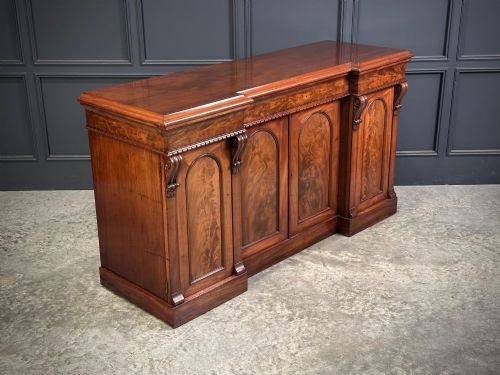
A breakfront credenza sideboard brings monumental presence to a room, combining display glass and deep cabinetry in one grand statement piece.
Breakfront Credenza Sideboard
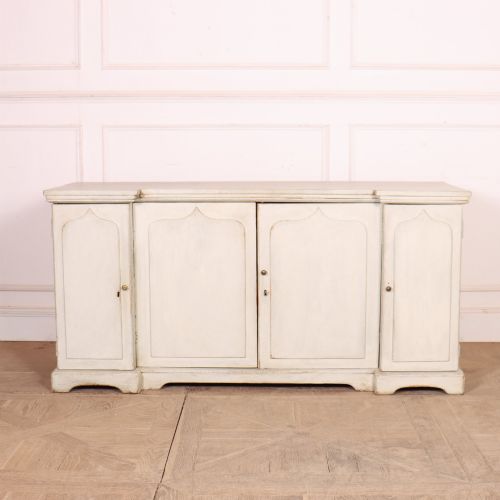
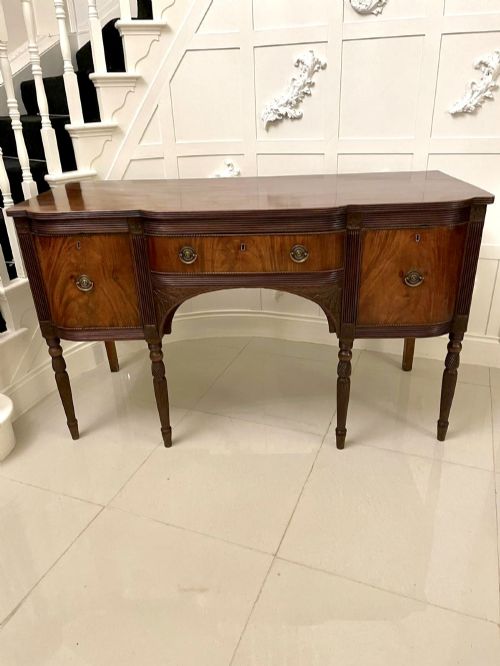
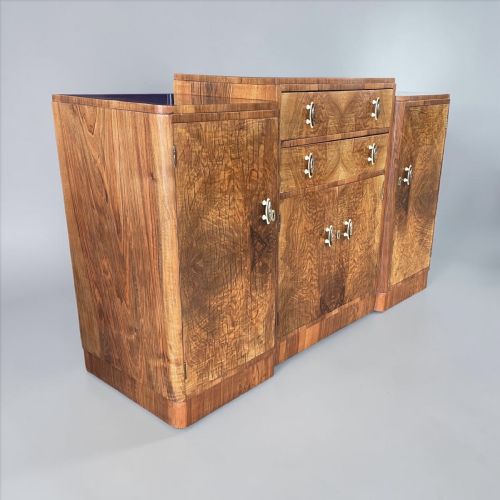
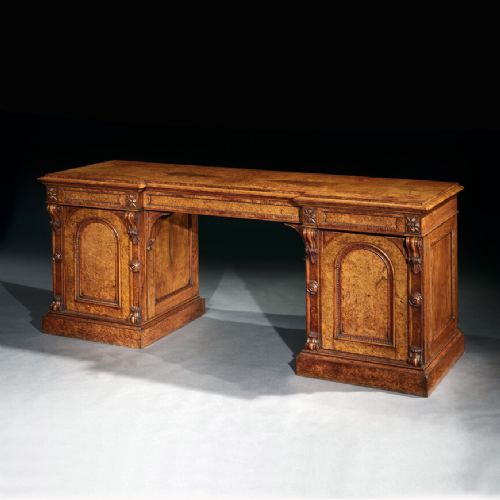
A breakfront credenza sideboard unites the forward-projecting centre of a breakfront cabinet with the low, cabinet-based form of a credenza or sideboard. When searching for a breakfront credenza sideboard, buyers meet pieces spanning the nineteenth century alongside later revivals, originating mainly from Victorian and Regency workshops.
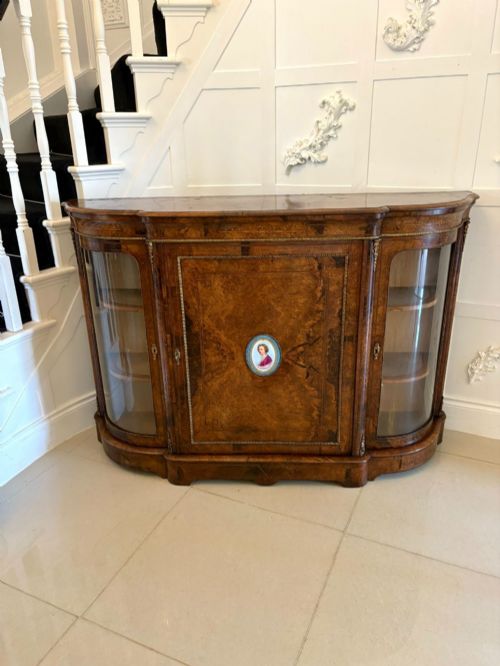
The inventory on this page shows a heavy reliance on Victorian burr walnut, mahogany, and ebonised timber formats. These larger items served formal dining rooms and drawing rooms to display porcelain and house silverware behind glazed or panelled doors.
Materials and Construction
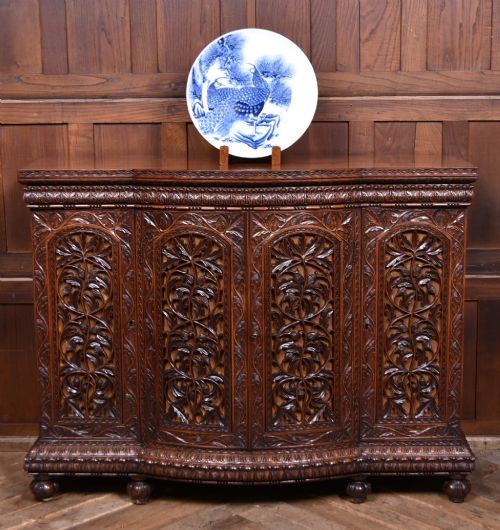
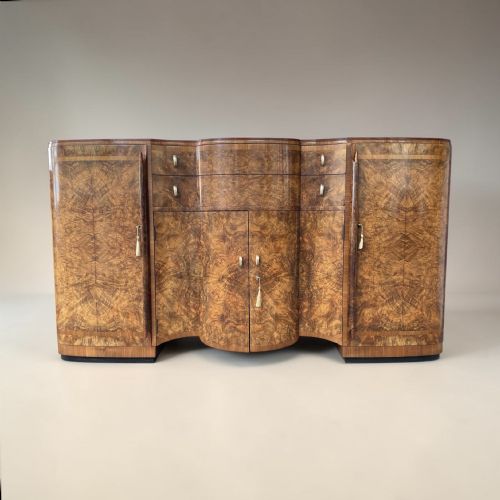
Cabinet makers utilised dense native and exotic timbers, laying burr walnut, flame mahogany, rosewood, and satinwood veneers over sturdy carcases. Grain matching across large door surfaces required exceptional skill from the timber selector.
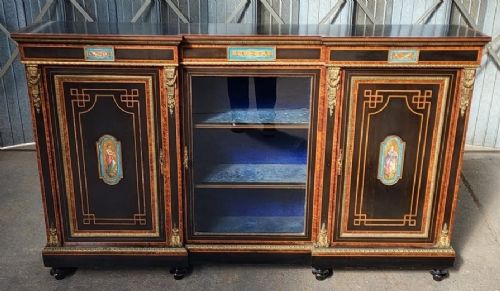
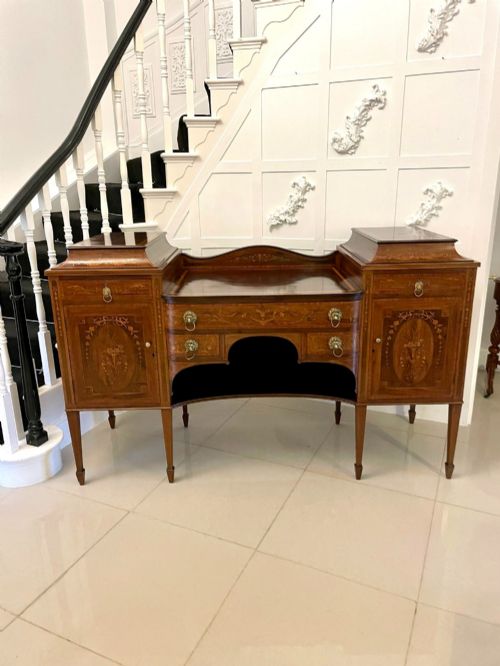
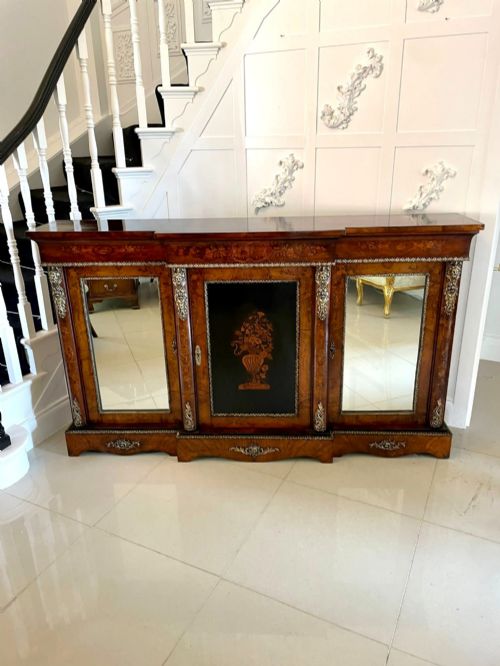
Decoration relied on applied ormolu mounts, intricate brass and wood marquetry inlay, porcelain plaques, and occasionally marble tops. Ebonised finishes provided a stark backdrop for metallic embellishments, while glass panels allowed interior display.
Materials span plain mahogany and figured burr walnut, alongside exotic amboyna, satinwood, and ebonised finishes.
Craftsmanship and Proportion
Quality rests in the depth of timber figure and the precision of the marquetry inlay. Superior examples display seamless veneer matching across the central breakfront projection and the flanking side cabinets.
The integration of heavy cast ormolu mounts and porcelain plaques dictates the tier of manufacture. Well-executed mounts fit the contours of the timber precisely, whereas simpler pieces rely purely on wood grain and minimal brass stringing.
Hewetsons London·Maurice Adams·Collinson & Lock·Gillows
The Breakfront Credenza Sideboard Glossary
- Breakfront
- A cabinet construction where the central section projects forward from the flanking wings. This architectural arrangement creates shadow lines and breaks the flat expanse of large sideboards.
- Credenza
- A low cabinet, frequently fitted with doors and glass display sections, originating in Italy and adopted widely in the nineteenth century. It sits lower than a traditional tall bookcase.
- Ormolu
- Gilded bronze used for decorative mounts and feet on nineteenth-century furniture. It provides metallic contrast against dark woods like mahogany and ebonised timber.
- Marquetry
- The art of applying pieces of veneer to a structure to form decorative patterns and pictures. Makers used various coloured woods to create floral or geometric motifs.
- Boulle work
- A type of marquetry using tortoiseshell and brass inlaid in contrasting patterns. Named after a French cabinet maker, it appears on high-status nineteenth-century pieces.
Breakfront Credenza Sideboard: Frequently Asked Questions
Where should I place a breakfront credenza sideboard?
These substantial cabinets demand considerable wall space and suit formal dining rooms, large reception rooms, or wide hallways. Their deep profiles and glass fronts mean they anchor a room best when placed opposite a primary light source.
Ensure the floor is level so the large doors and drawers operate smoothly. Because many examples incorporate delicate marquetry or marble tops, keep them out of direct, prolonged sunlight to protect the timber finishes.
How do I care for burr walnut and mahogany?
Dust timber surfaces regularly with a dry, soft cloth to prevent grit accumulation in the grain and carved details. Avoid modern silicone sprays, which build up a residue and attract dust.
Feed the polish-finished wood periodically with traditional beeswax to maintain the moisture in the veneer. Keep the room at a stable humidity to prevent the timber carcase or applied veneers from splitting.
What is the difference between a sideboard and a credenza?
Traditional sideboards generally feature a combination of drawers and cupboards designed primarily for dining room storage and serving. They sit at a height convenient for placing dishes and platters during meals.
Credenzas traditionally offer a lower profile with an emphasis on display, frequently incorporating central glass-fronted cabinets flanked by curved or straight end cupboards. The hybrid form combines both storage utility and display capability.
How do I identify Victorian pieces from later revivals?
Examine the interior timber linings, drawer construction, and backboards for tool marks and material consistency. Nineteenth-century pieces typically use secondary woods like oak or pine behind the primary mahogany or walnut veneers.
Revival pieces from later periods often show machine-sawn timber uniformity and modern fixings. The weight of the cast brass or ormolu mounts and the hand-cut nature of the marquetry also offer clues to the period.