




Ebonised Vienna Regulator
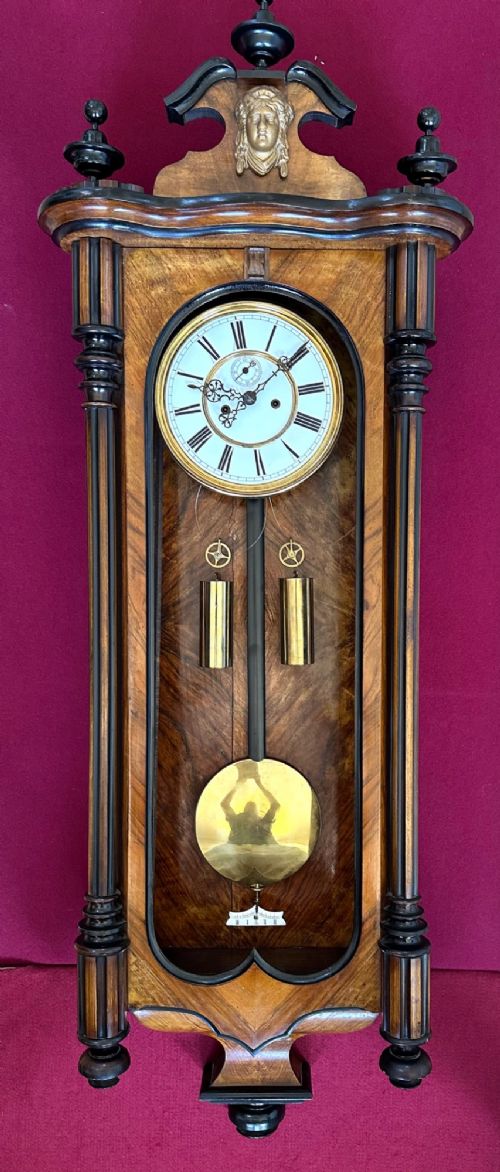
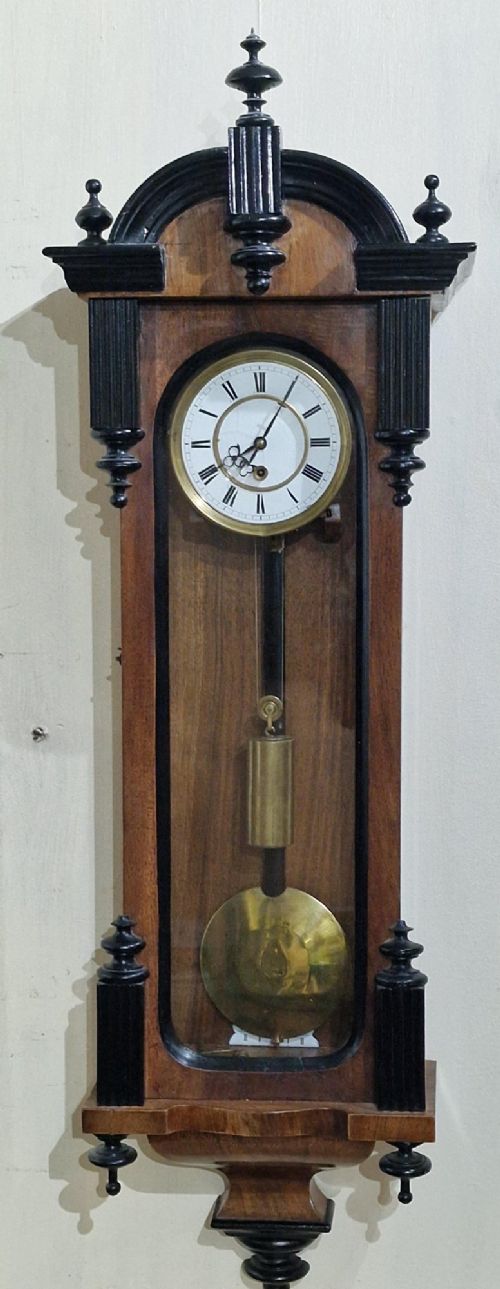
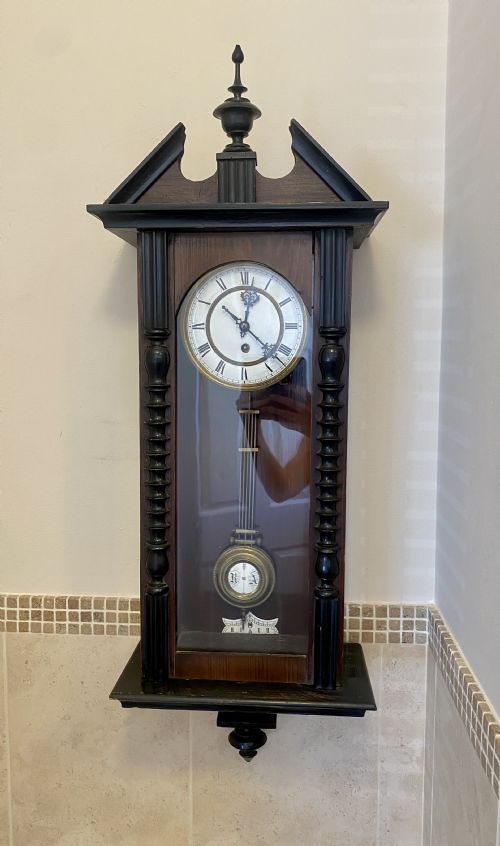
These ebonised vienna regulator clocks are striking wall timepieces offering precision timekeeping alongside deep, dark timber finishes that anchor a room.
Ebonised Vienna Regulator
When you search for ebonised vienna regulator clocks, you are looking at wall-hung timepieces originating from the nineteenth century. These clocks represent precision engineering housed in sophisticated architectural cases.
The versions you are most likely to meet on this page span the Victorian period, along with Austrian and Biedermeier influences. They appear as wall clocks with varying movement durations and striking capabilities.
Makers such as Gustof Becker produced notable examples during this era, while others remain unsigned. Formats range from small timepieces to grand sonnerie models with double weights.
How they were made
Cabinet makers utilised walnut and ebonised wood to build the architectural cases, applying dark finishes to create high-contrast facades. Glass panels protect the dial and pendulum while allowing a clear view of the interior mechanics.
Clockmakers fitted brass movements driven by springs or weights, depending on whether the clock was an eight-day timepiece or a month-duration regulator. Enamel dials with precise numerals were mounted centrally to ensure accurate legibility.
Ebonised Vienna Regulator Retail Price Guide 2026
Typical asking prices for ebonised vienna regulator among the pieces listed under this phrase on Sellingantiques today, from the lower quarter to the upper quarter. They describe what is for sale here now, not the wider market.
What varies in quality
The complexity of the movement largely dictates the standard of the piece, separating simple timepieces from grande sonnerie or month-duration regulators. Intricately constructed walnut cases combined with fine ebonised detailing demonstrate superior workshop output.
Proportion and case architecture also define the hierarchy among these wall clocks. Finer examples display balanced proportions and crisp dial enamel, while standard production pieces maintain simpler timber framing.
Gustof Becker
The Ebonised Vienna Regulator Glossary
- Ebonised wood
- Timber treated to imitate ebony, providing a deep black finish popular in nineteenth-century cabinet making. This technique creates a dramatic contrast against walnut and brass elements.
- Vienna regulator
- A high-precision wall clock developed in Austria during the nineteenth century. These clocks are prized for their accurate movements and architectural cases.
- Grande sonnerie
- A complex striking mechanism that chimes both the hours and the quarters automatically. It represents a higher tier of horological achievement in regulator clocks.
- Enamel dial
- A metal face coated with fused glass powder to create a smooth, durable white surface. Black Roman or Arabic numerals are typically fired onto this background.
- Timepiece
- A clock that indicates the time without possessing a striking train or chiming mechanism. These focus purely on accurate timekeeping.
Ebonised Vienna Regulator: Frequently Asked Questions
What is a vienna regulator?
A Vienna regulator is a high-precision wall clock developed in Austria during the nineteenth century. These clocks were designed for extreme accuracy, often featuring long pendulums and fine movements.
They earned their reputation in public buildings and affluent homes where exact timekeeping was paramount. Today, they remain centrepieces for collectors of nineteenth-century horology.
How do eight day movements work?
An eight-day movement requires winding approximately once a week to maintain continuous operation. Power is supplied either by hanging weights or internal springs.
This duration offered a convenient balance for households, reducing the frequency of winding while maintaining reliable precision.
Where should I hang a wall clock?
These wall clocks require a sturdy, stable vertical surface to ensure the pendulum swings freely and accurately. Placing them away from heavy vibrations and drafts helps maintain timekeeping precision.
Visually, they suit high-ceilinged rooms where their architectural wood cases and glass viewing panels can be appreciated at eye level.