





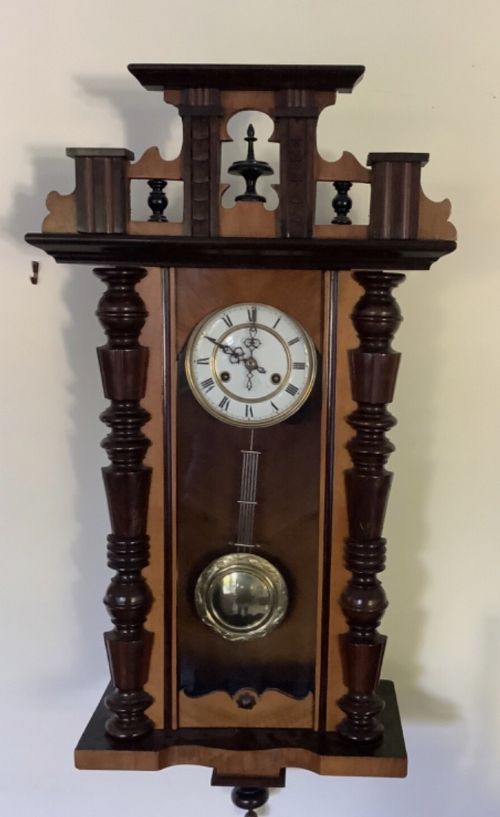

Victorian Walnut Wall Clock
A victorian walnut wall clock brings nineteenth-century engineering and domestic warmth into a room, spanning grand Vienna regulators and carved Black Forest timepieces.
Victorian Walnut Wall Clock
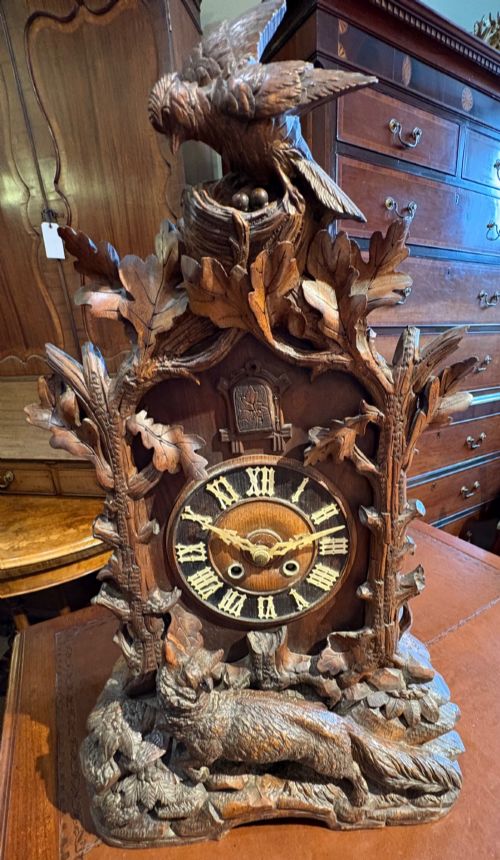
When you search for a victorian walnut wall clock, you encounter a variety of nineteenth-century timekeeping instruments designed to mount directly onto domestic walls. These pieces range from simple dial clocks used in offices and hallways to elaborate Vienna regulators and carved Black Forest cuckoo clocks.
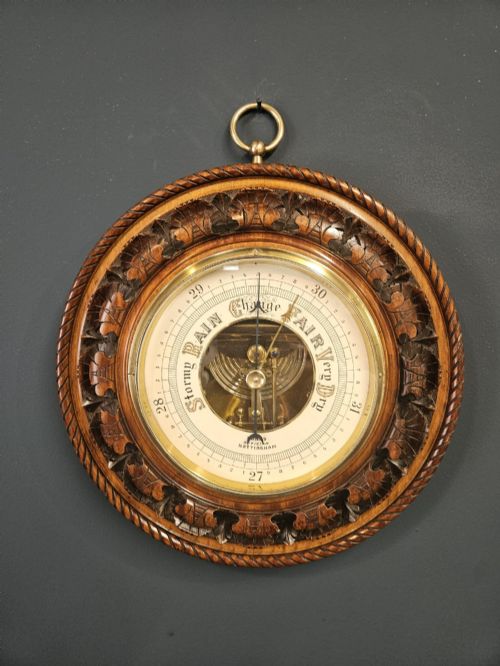
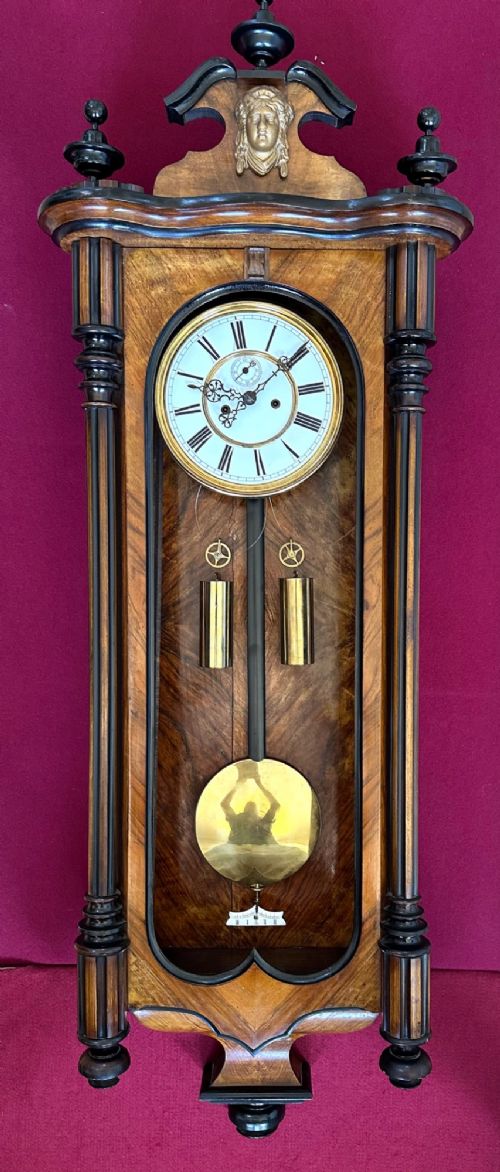
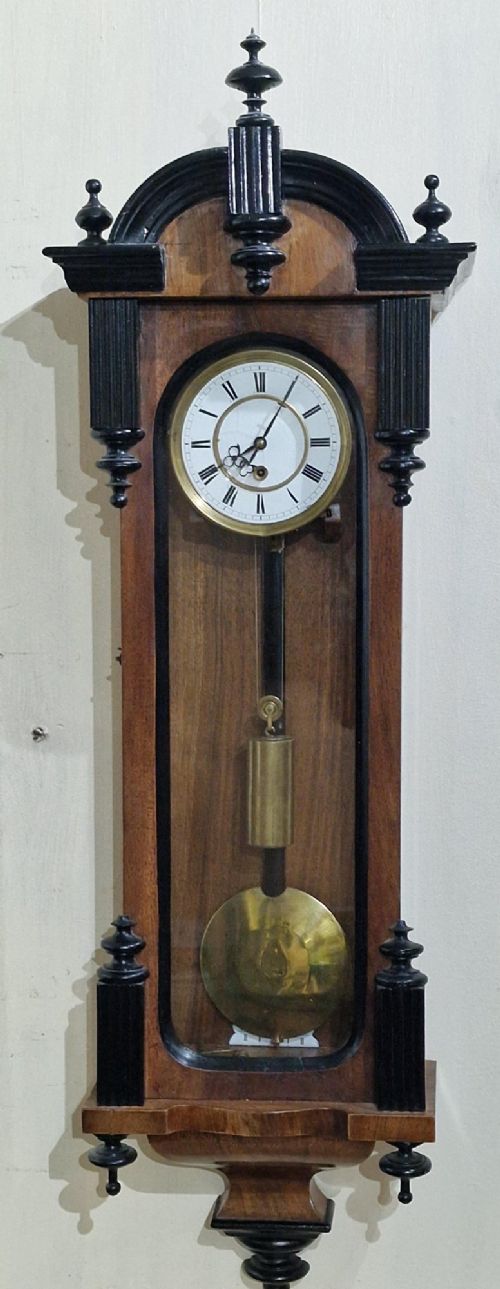
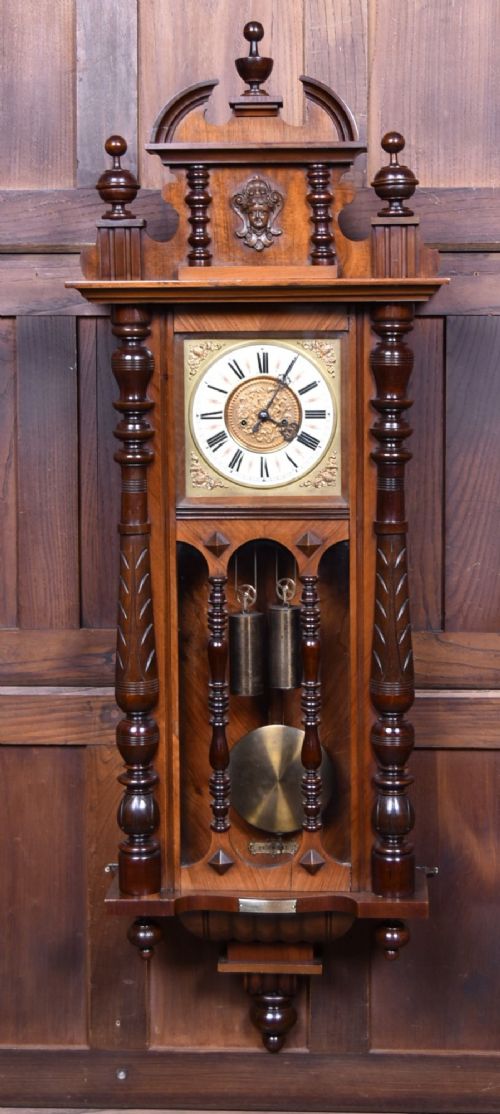
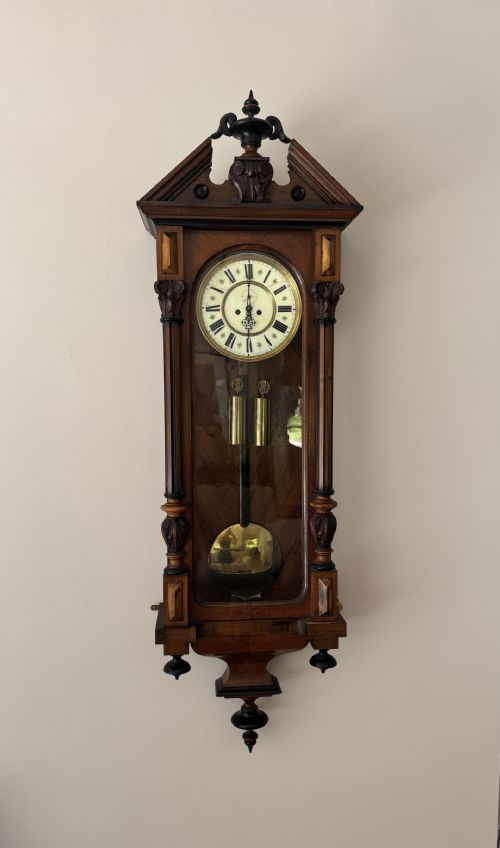
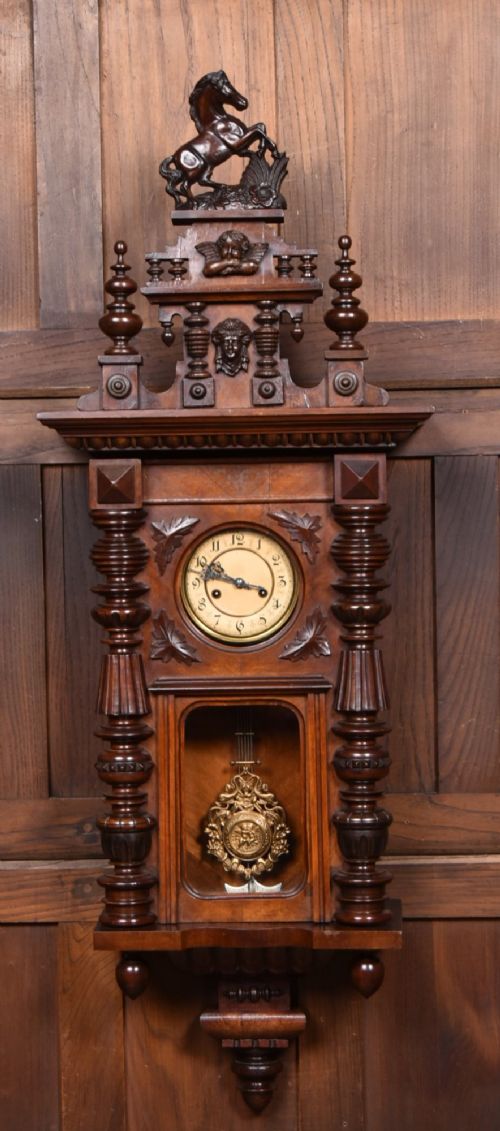
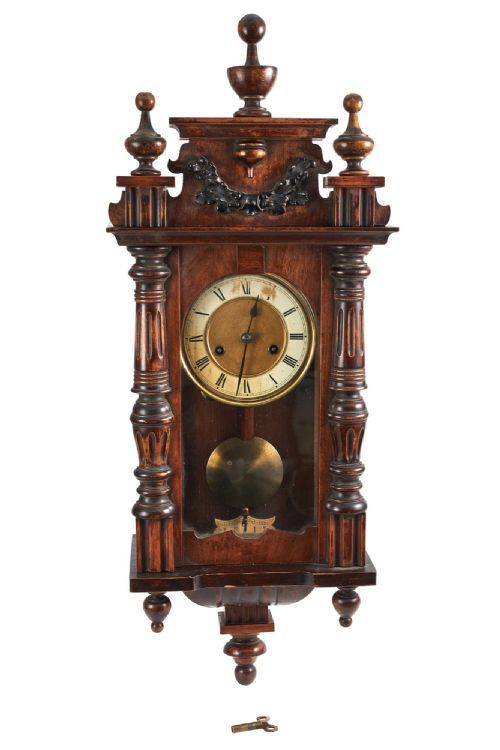
The most common form on this page is the Vienna wall clock, often driven by single or double brass weights and housed in a glazed walnut case. Alongside these are drop dial wall clocks, aneroid barometers combined with barometric instruments, and striking bracket clocks.
Originating predominantly from British, German, and Austrian workshops, these clocks date from the mid-nineteenth century through to the early twentieth century. Walnut and ebonised wood dominate the housing materials, frequently accented by brass bezels and white enamel dials.
How They Were Made
Cabinetmakers constructed the cases using solid walnut and burr walnut veneers applied to secondary timbers, sometimes adding ebonised wood details or parquetry inlay. Carved walnut variants feature deep relief work, particularly evident in Black Forest and late nineteenth-century styles.
Movements relied on brass gear trains, driven either by suspended weights - ranging from single to triple weight configurations - or by spring-driven mechanisms with pendulums. Dials were commonly finished in white enamel with Roman numerals, protected behind hinged glass doors set within brass or wood bezels.
Listings feature walnut, ebonised wood, and brass across nineteenth-century Victorian, Biedermeier, and Black Forest styles.
What Varies in Quality
The sophistication of the movement largely dictates the standard of a victorian walnut wall clock, with month-duration or double and triple weight systems sitting above standard eight-day spring movements. High-grade examples frequently bear the signatures of known makers on their backplates or dials.
Case construction and aesthetic execution also separate examples, with figured burr walnut veneers, intricate hand-carved ornamentation, and multi-piece architectural mouldings representing higher workshops. The crispness of the brass casting and the legibility of the enamel dial further distinguish the tiers of production.
Gustav Becker·Johann Baptist Beha·AG Lenzkirch·Connell of London·Payne of Tunbridge Wells
The Victorian Walnut Wall Clock Glossary
- Vienna Regulator
- A precision pendulum wall clock developed in Austria, characterised by a long glass door displaying the swinging pendulum and a weighted movement.
- Double Weight
- A movement driven by two suspended weights, typically powering separate trains for the timekeeping and the hourly or half-hourly strike.
- Ebonised Wood
- Timber treated with a dark finish to imitate ebony, commonly utilised for contrasting mouldings and decorative highlights on walnut cases.
- Drop Dial
- A wall clock featuring a circular dial mounted above an extended wooden box that encloses the hanging pendulum.
- Skeletonised
- A design where the dial or case is open to reveal the working mechanical movement behind the face.
Victorian Walnut Wall Clock: Frequently Asked Questions
How do I wind a Vienna wall clock?
Weights must be carefully pulled back up to the top of the case using the winding key or by supporting the weight directly, depending on the specific pulley arrangement.
Care should be taken not to pull the chains or cords too rapidly, which can damage the internal ratchet mechanism of the brass movement.
What is the difference between a single and double weight clock?
A single weight clock typically drives only the timekeeping mechanism, requiring manual adjustment or running for a shorter duration.
A double weight clock powers both the time and the striking train separately, allowing the clock to chime on the hours and half-hours without draining the main power reserve.
Where should I hang a wall clock?
These clocks require a sturdy, stable wall surface away from direct sunlight, excessive heat sources, and damp environments that can affect the walnut veneer and wood movement components.
The clock must be mounted securely on a solid fixing rather than plasterboard alone to ensure the pendulum hangs plumb and the beat remains even.
How do I identify a Vienna regulator?
Vienna regulators are identified by their long, glazed front doors designed to showcase the gridiron or brass-bob pendulum swinging within a refined wood case.
They generally feature high-precision movements with porcelain or enamel dials and slender seconds sub-dials.