


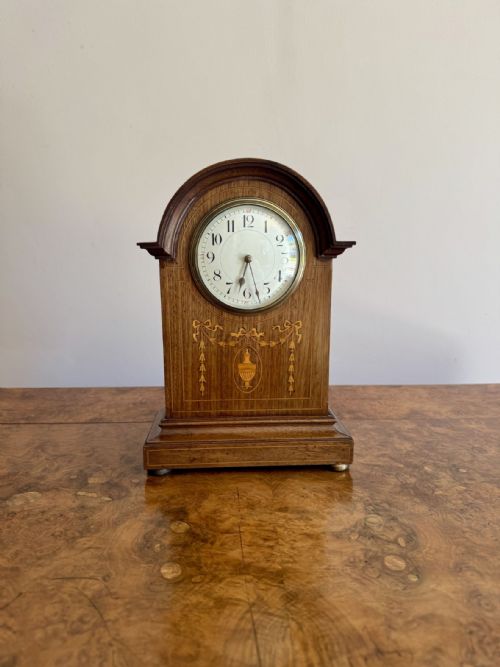

Antique Wooden Desk Clock
An antique wooden desk clock brings the weight of Georgian, Victorian, and Edwardian craftsmanship directly to your writing surface.
Understanding the antique wooden desk clock
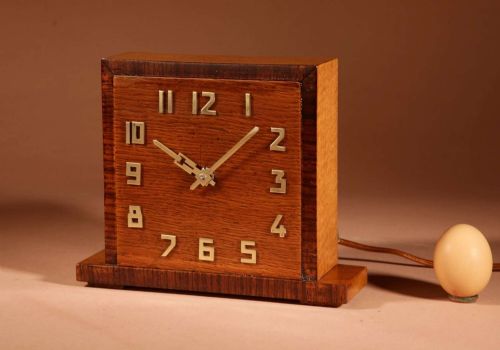
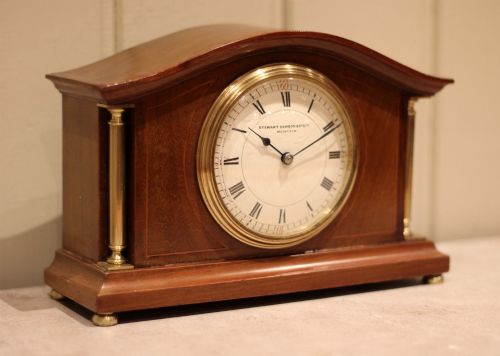
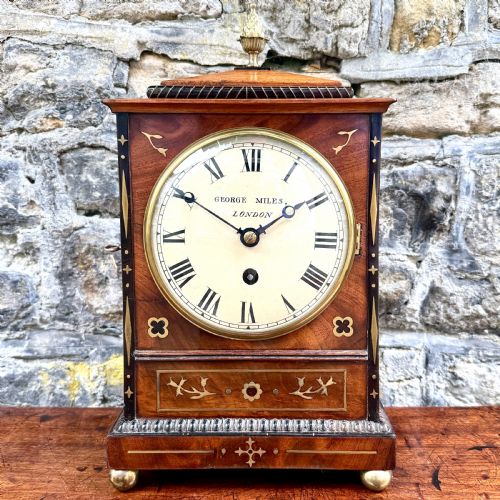
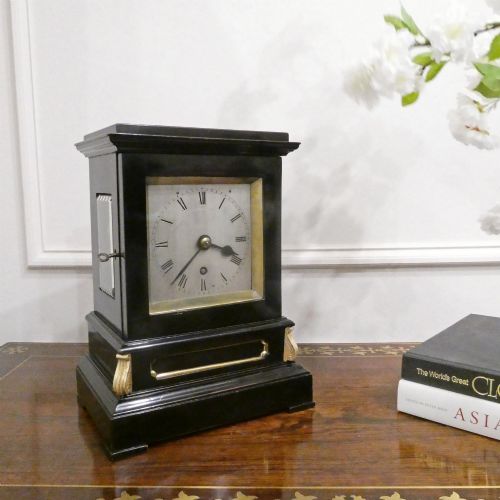
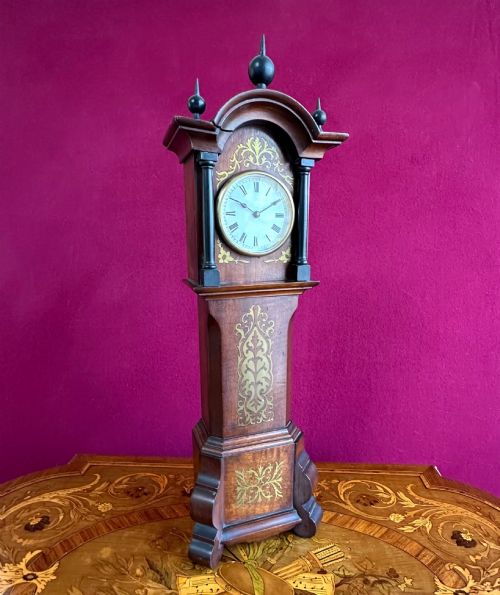
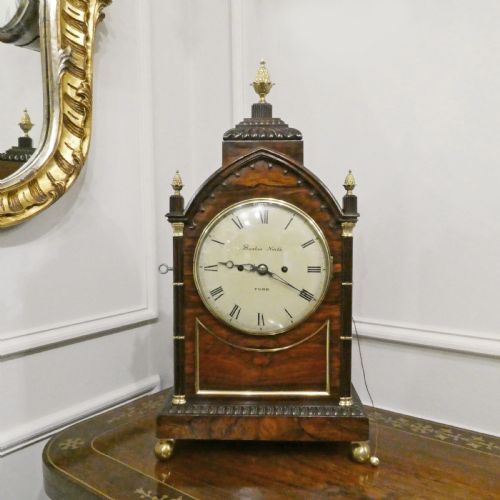
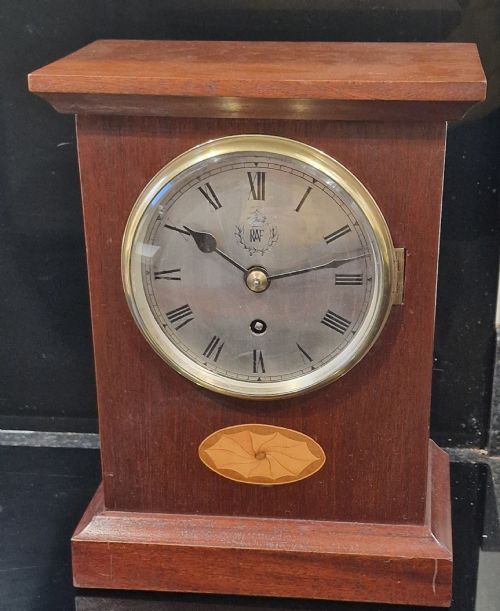
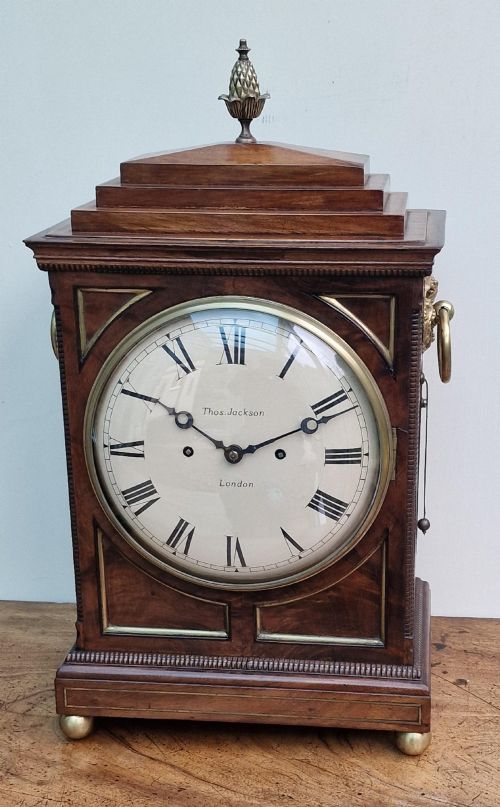
An antique wooden desk clock unites timekeeping utility with cabinetmaker artistry across several distinct historic periods. Pieces here span Georgian, Victorian, Edwardian, and early twentieth-century eras, reflecting changing domestic tastes in timber and time. Buyers encounter forms ranging from library clocks to inlaid mantel clocks and fitted desktop boxes.
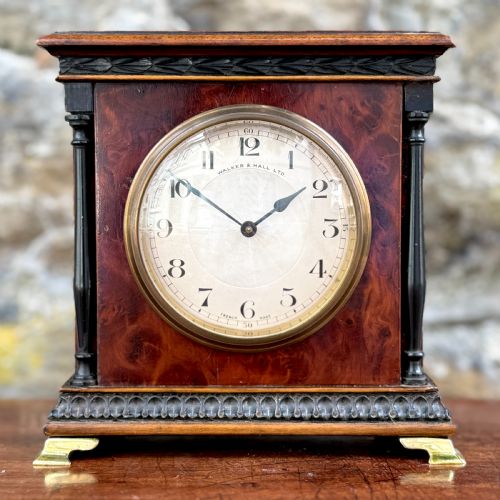
The materials recorded in these listings show a preference for rich natural timbers paired with functional metals and glass. Mahogany and satinwood feature prominently alongside burr yew veneer and intricately carved wood. Dials frequently incorporate enamel and brass bezels to frame the mechanism.
Materials and construction
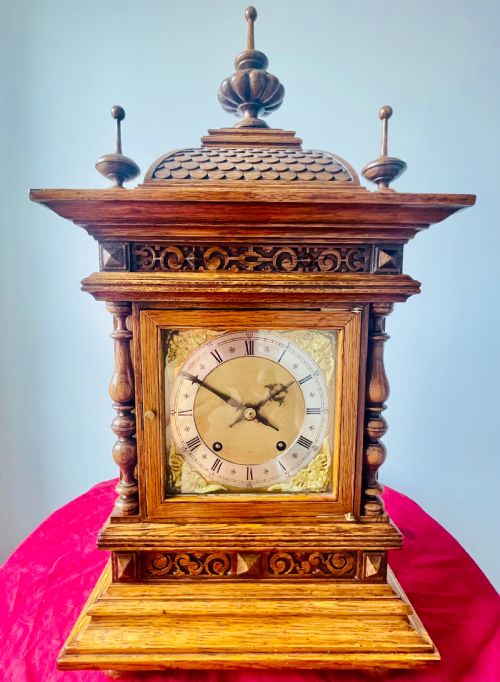
Cabinetmakers constructed these timepieces using solid hardwoods and decorative veneers applied to carcase timbers. Mahogany and satinwood provide smooth surfaces for polish, while burr yew offers complex natural grain patterns. Black Forest examples demonstrate skilled hand-carving techniques directly into solid wood.
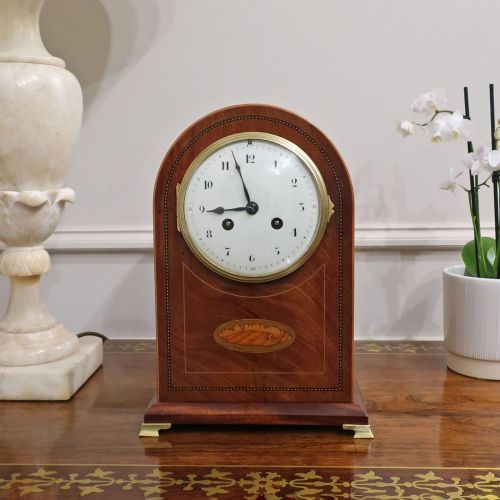
Internal movements rely on brass components, sometimes incorporating specialised mechanisms like single chain fusee drives. Dials are protected behind glass panes, often held within brass bezels, and decorated with enamel or subtle inlay work such as poppy motifs.
Retail Price Guide 2026
Typical UK retail prices for wooden desk clock, calculated from the Sellingantiques database of over a million retail prices indexed since 2003. This retail price guide relies exclusively on Sellingantiques data; no external sources or auction records are used, so the figures do not describe the wider market.
Current listings feature items spanning the Georgian, Victorian, Edwardian, and 1920s periods, utilising mahogany, satinwood, and burr yew veneer.
Assessing quality and craftsmanship
Superior examples reveal themselves through the precision of the cabinetwork and the sophistication of the timber selection. Matched veneers, delicate inlay, and deeply detailed hand-carving separate accomplished workshop pieces from utilitarian items. The integration of high-grade movements, such as fusee mechanisms, further distinguishes finer library clocks.
Material preservation and decorative integrity dictate the standing of individual pieces. Crisp carving lines on Black Forest items and intact enamel dials without hairline fractures indicate careful historic ownership. The harmony between the timber case and the original brass hardware defines the overall visual cohesion.
The Antique Wooden Desk Clock Glossary
- Fusee
- A conical pulley used in clock movements to equalize the driving force of the mainspring as it winds down. This mechanism ensures more consistent timekeeping.
- Satinwood
- A durable, yellowish-gloss timber native to India and Sri Lanka, highly prized for fine furniture and decorative clock cases during the eighteenth and nineteenth centuries.
- Burr Yew
- A knotty, highly figured growth timber used for decorative veneers. It provides swirling patterns across desktop boxes and clock housings.
- Mantel clock
- A portable clock designed to sit on a shelf or desk surface. These pieces often feature substantial wooden cases housing reliable mechanical movements.
Frequently Asked Questions
What is a library clock?
A library clock is a portable timepiece traditionally designed for study rooms or offices. These clocks focus on clear dials and sturdy wooden cases suitable for desktop placement.
Such pieces often utilise reliable mechanical movements intended for daily use in quiet spaces. Their understated timber housings complement traditional library furniture.
How do I wind a mechanical desk clock?
Mechanical desk clocks require a dedicated key to tension the internal spring via winding arbors on the dial face. Care must be taken not to overwind the movement.
Consulting the specific mechanism type helps determine the correct winding frequency. Most antique movements require attention every few days to maintain accuracy.
Where should I place a wooden desk clock?
These clocks belong on stable surfaces away from direct sunlight and excessive temperature fluctuations. Desks, tables, and mantelpieces provide ideal settings.
Keeping the clock away from damp areas protects both the timber case and the internal brass mechanism from corrosion. A level surface ensures the pendulum or balance wheel operates evenly.
How do I identify an Edwardian clock?
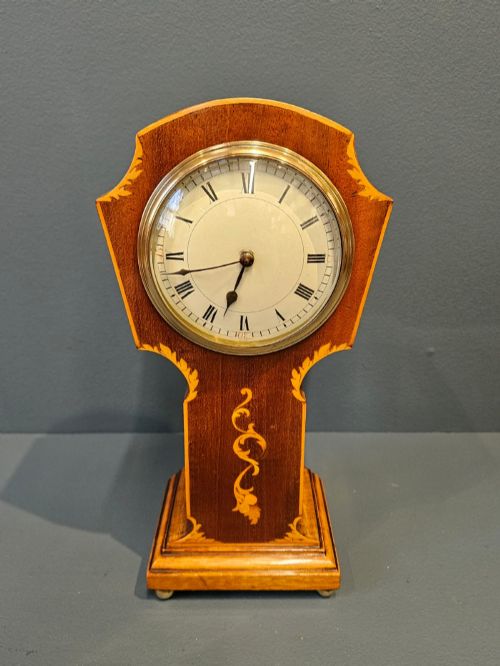
Edwardian timepieces often display lighter decorative touches, such as delicate floral inlay or marquetry on mahogany or satinwood cases. These designs reflect the aesthetic preferences of the early twentieth century.
Examining the internal components and secondary woods can also confirm the era. Stylistic details generally lean toward refined, lighter ornamentation compared to heavier Victorian predecessors.