



English Fusee Bracket Clock
When you search for an english fusee bracket clock, you are looking at precision timepieces housed in timber cases that sit upon furniture or dedicated wall mounts.

English Fusee Bracket Clock
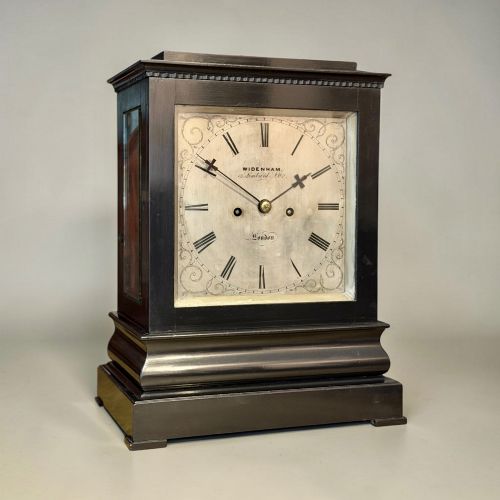
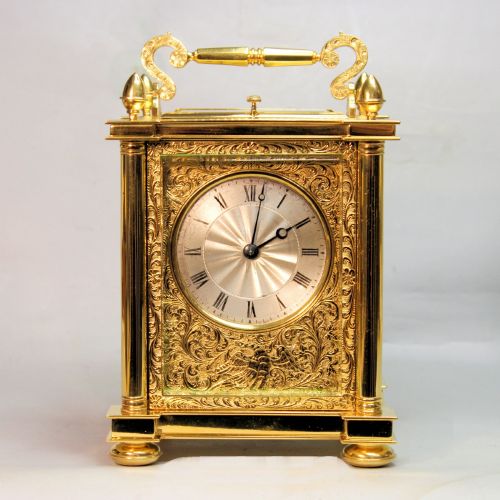
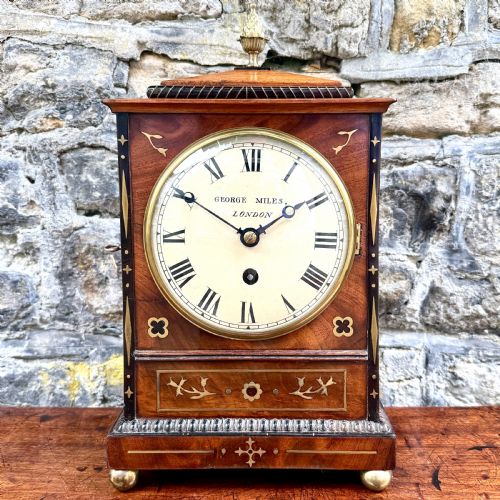
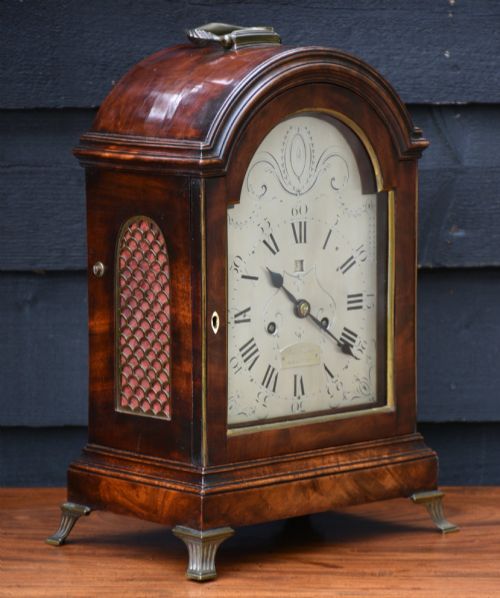
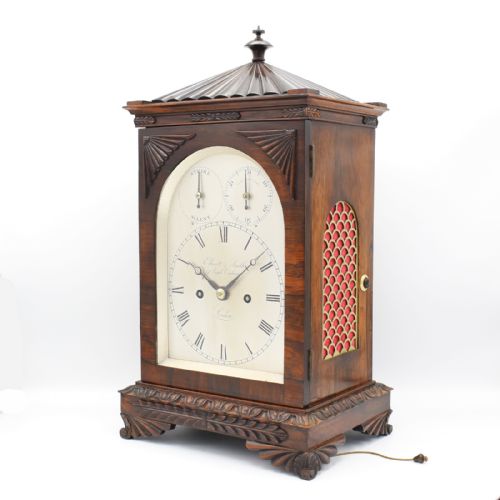
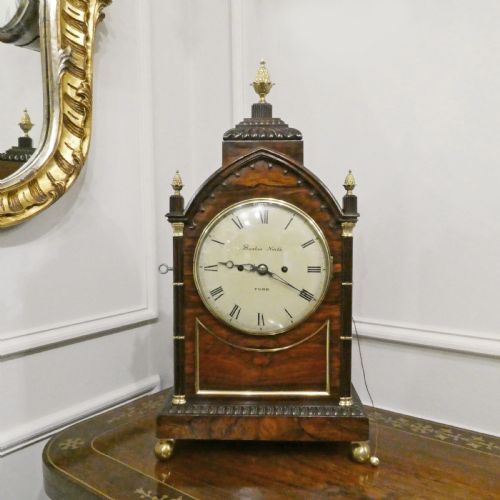
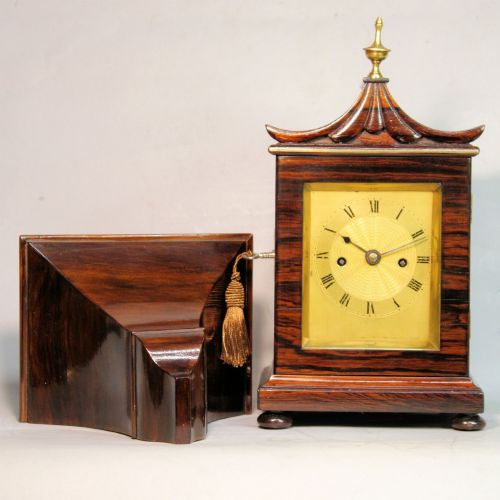
An english fusee bracket clock is a portable timepiece driven by a fusee movement, designed during the Georgian, Regency, and Victorian periods. These clocks appear in forms such as library clocks, table clocks, and mantel clocks, frequently constructed with mahogany, rosewood, oak, or ebonised wood.
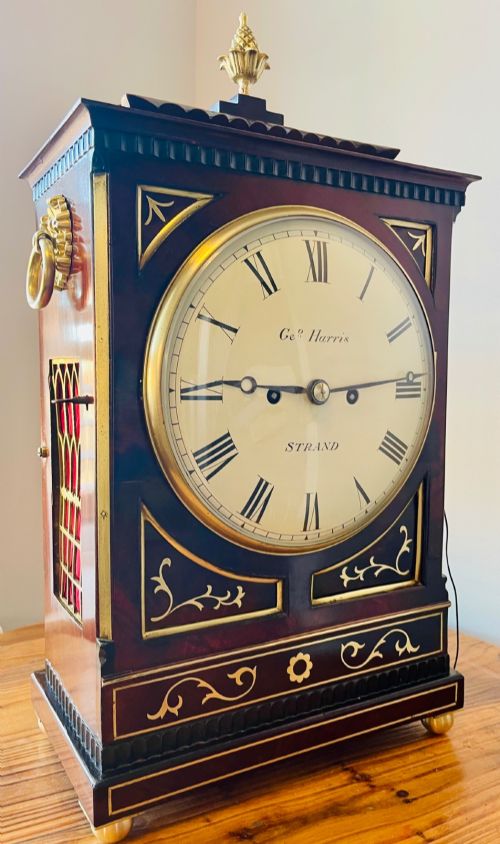
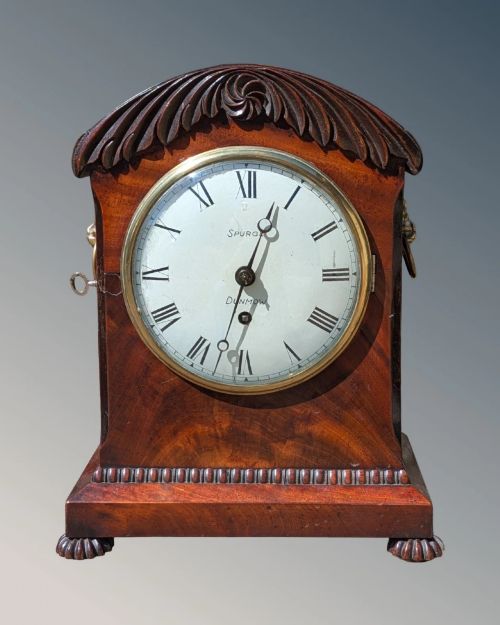
The version you are most likely to meet on this page is a nineteenth century mahogany piece with a single or twin fusee movement. Makers housed these mechanisms in cases featuring architectural styles like pagoda tops, chamfer tops, and pad tops, often complemented by brass mounts and glass panels.
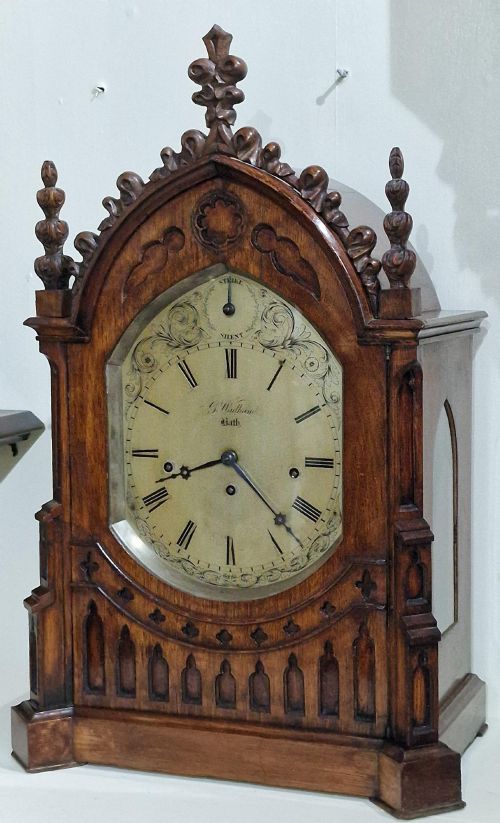
Originating primarily from London workshops alongside provincial makers across England, these objects reflect domestic timekeeping traditions from the eighteenth to the early twentieth century. Regional examples from places like Bath, York, and Manchester sit alongside pieces bearing signature metropolitan names.
How they were made
Cabinetmakers constructed the housing using dense timbers such as mahogany and rosewood, frequently incorporating ebonised finishes, brass inlay, and glass inspection panels. Movements relied upon the fusee cone to equalise the declining power of the mainspring as it unwound.
Dials were manufactured from enamelled metal or silvered brass, protected behind glazed bezels and fitted with delicate hands. Mechanics required hand-cut brass gears and escapements, occasionally arranged to strike bells or gongs on the hour or quarters.
English Fusee Bracket Clock Retail Price Guide 2026
Typical asking prices for english fusee bracket clock among the pieces listed under this phrase on Sellingantiques today, from the lower quarter to the upper quarter. They describe what is for sale here now, not the wider market.
Some miniature models were made small enough to travel inside luggage without missing a tick.
What varies in quality
The sophistication of the movement dictates the standing of the piece, moving from simple timepieces to complex twin or triple fusee mechanisms that strike on multiple bells. Engraving upon the backplate and dial indicates the level of attention applied by the horologist.
Cabinet construction separates standard production from exceptional examples, observed through figured timber veneers, cast brass ornaments, and balanced proportions. The integration of matching wall brackets and original keys further distinguishes the lineage of individual specimens.
Widenham of London·Cousens & Whiteside·George Wadham·Barwise·Ellicott & Smith·Barber & North·Webster Cornhill London·Spurge Dunmow·Mappin & Webb·Dent·Cording of London·William Payne·Phillips Brothers·Geo Carter Hackney·Barrett London·J Kingerley Manchester·Thomas Connold·Taylor of London·Richard Rooker·Payne & Co·Joseph Jump·JA Wheatley Carlisle·Budgen Croydon·James Moore·Funnell of Brighton
The English Fusee Bracket Clock Glossary
- Fusee
- A conical pulley used in spring-driven clocks to maintain equal force on the gear train as the mainspring unwinds. This mechanism ensures consistent timekeeping across the duration of the wind.
- Bracket clock
- A portable timepiece originally built to sit upon a matching wall bracket or shelf. Over time, the term came to describe table and mantel clocks of similar proportions.
- Silvered metal
- A brass dial plate treated with a silver compound to produce a pale, reflective surface for engraved numerals. This technique provides clear contrast against dark clock hands.
- Chamfer top
- A clock case style featuring bevelled edges along the upper section of the timber hood. This architectural detail softens the silhouette of Georgian and Victorian designs.
- Twin fusee
- A movement incorporating two separate fusee cones to power the timekeeping train and the striking train independently. Such systems allow the clock to chime hours or quarters without disrupting the pendulum.
English Fusee Bracket Clock: Frequently Asked Questions
How do fusee clocks work?
A fusee clock uses a conical pulley connected to the mainspring via a fine chain or gut line. As the spring unwinds and loses tension, the chain moves to a wider part of the cone, maintaining steady torque.
This clever mechanical device ensures the gear train receives even power from full wind to empty, which helps the clock keep accurate time throughout its run.
Where should I place a bracket clock?
These clocks look best on sturdy pieces of furniture like sideboards, desks, or mantelpieces where their timber cases can be appreciated at eye level. Some examples include dedicated wall brackets for mounting directly onto a wall.
Position them away from direct sunlight, draughts, and damp areas to protect the wood case and delicate internal metalwork from environmental stress.
How do I wind an english fusee bracket clock?
Winding requires inserting the key into the dial aperture and turning it gently until resistance indicates the mainspring is fully tensioned. Twin and triple fusee models require winding each train through separate arbors on the face.
Take care not to overwind the mechanism, and support the key steadily to avoid putting lateral pressure on the delicate brass arbors and plates.
How can I tell the period of a clock?
Dating relies on stylistic clues in the wooden case, such as the architectural proportions of Georgian pad tops, Regency brass inlay, or Victorian Gothic Revival motifs. Examining the signature on the dial or engraved backplate often reveals the maker and operating decade.
Construction methods inside the movement, including the shape of the plates and the type of escapement, also provide physical evidence of when the clock left the workshop.