




Satinwood Mantel Clock
These satinwood mantel clock pieces bring warm, figured timbers and precise timekeeping to a room, offering a distinct focal point for a mantelpiece.
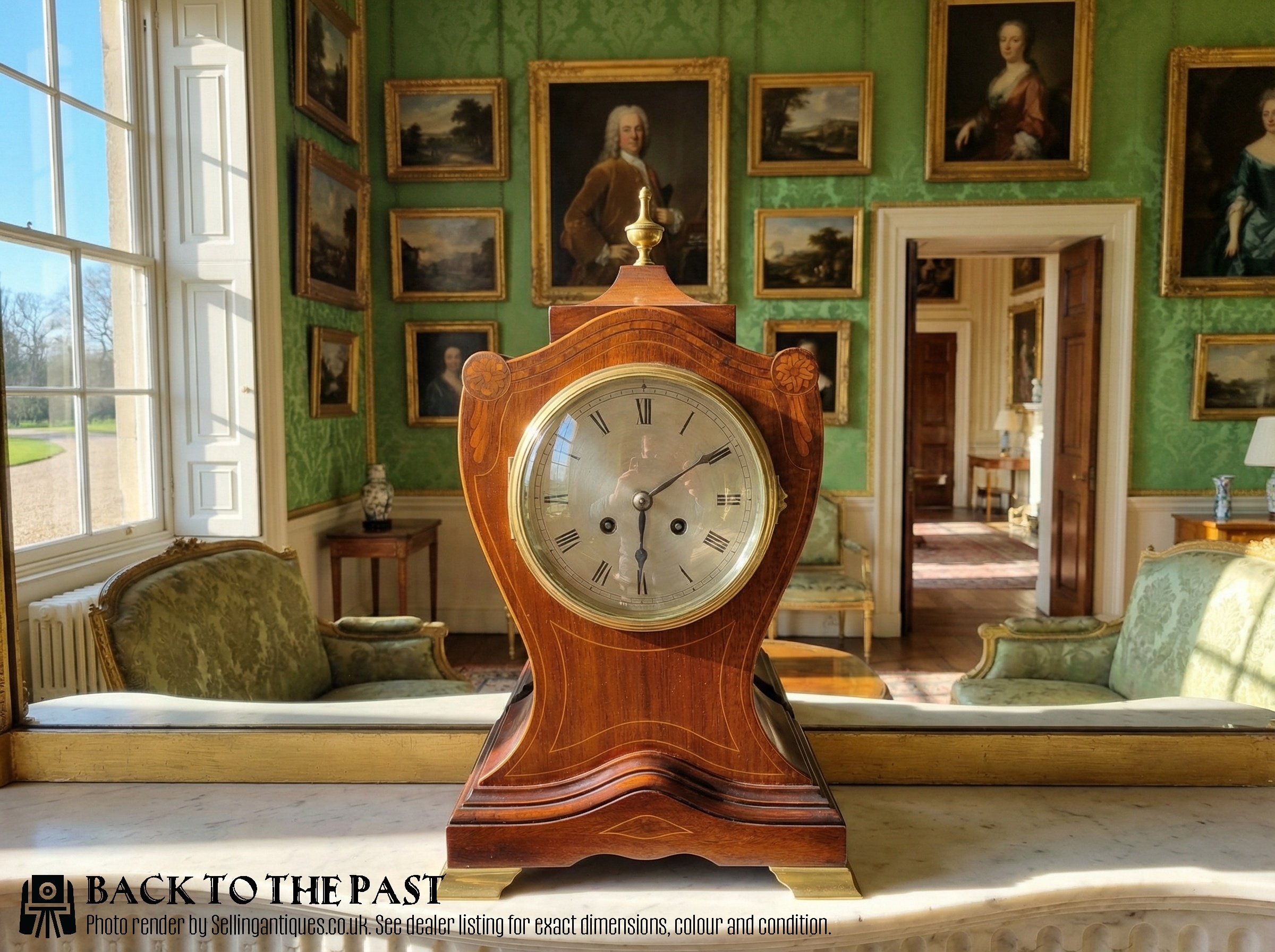
Satinwood Mantel Clock
A satinwood mantel clock sits upon a fireplace shelf or library table, combining practical timekeeping with decorative cabinetwork. Buyers seek a satinwood mantel clock to introduce light timbers and classical inlay into period interiors.
The pieces on this page span the Victorian and Edwardian eras, reaching back to the mid-nineteenth century. You will encounter compact library clocks alongside broader bracket forms and architectural portico cases.
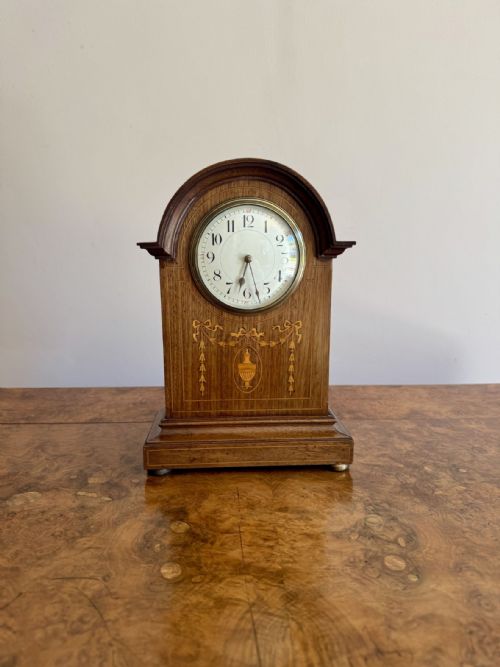
Edwardian examples frequently display delicate boxwood inlay or painted motifs such as poppies and Dutch figures. Earlier nineteenth-century specimens often rely on fine timber grain and clean architectural proportions.
How they were made
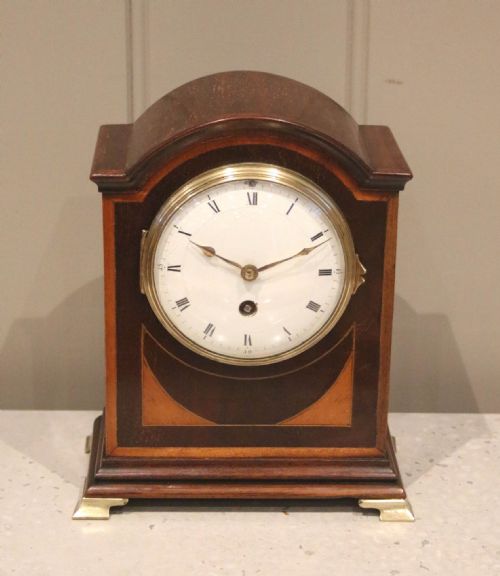
Cabinetmakers constructed these clock cases using solid or veneered satinwood, frequently accented with contrasting mahogany, rosewood, and boxwood stringing. Brass bezels, dial surrounds, and movement plates provide structural contrast to the timber frames.
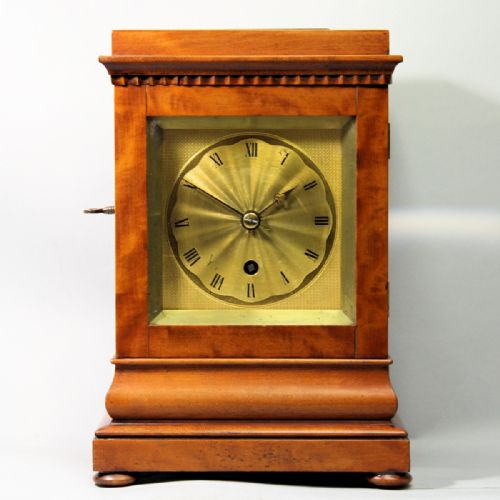
Dials feature white enamel with dark numerals, or engine-turned gilded brass that reflects light from the room. Interior mechanisms range from standard spring-driven movements to precision chain fusee systems designed for accurate timekeeping.
Satinwood Mantel Clock Retail Price Guide 2026
Typical asking prices for satinwood mantel clock among the pieces listed under this phrase on Sellingantiques today, from the lower quarter to the upper quarter. They describe what is for sale here now, not the wider market.
A tiny painted Dutch girl peers out from beneath a clock arch, reminding us that Victorian timekeepers had a playful side.
What varies in quality
Quality rests in the crispness of the cabinetmaker's inlay and the selection of figured satinwood veneer. Finer examples display meticulous botanical or figurative painted details rather than mass-produced transfers.
The sophistication of the internal movement separates standard timepieces from superior library clocks. Chain fusee movements and engine-turned dials indicate higher workshop standards.
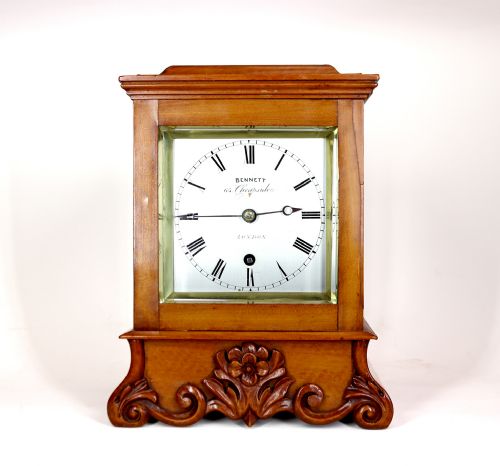
Sir John Bennett·Maple and Co
The Satinwood Mantel Clock Glossary
- Satinwood
- A hard, yellow timber with a lustrous, chatoyant grain that takes a high polish. It forms the primary visual surface on these clock cases.
- Fusee
- A conical pulley used in better mechanical clocks to maintain even tension on the drive chain as the mainspring unwinds.
- Inlay
- The technique of fitting contrasting woods, such as boxwood or mahogany, into recessed cavities to create decorative patterns.
- Portico clock
- An architectural clock style featuring two side columns supporting a lintel, often executed in rosewood and satinwood.
- Lancet top
- A clock case profile featuring a pointed, gothic arch shape at the crown.
Satinwood Mantel Clock: Frequently Asked Questions
How do I wind a chain fusee clock?
Use the provided key to turn the winding square slowly and steadily until the chain reaches its stop point. Avoid over-winding to protect the delicate internal mechanism.
Ensure the clock rests on a level surface before operating the movement to maintain proper pendulum beat.
Where should I place a satinwood clock?
Position the clock away from direct sunlight and heat sources such as active fireplaces to prevent timber drying and veneer cracking.
A stable mantelpiece or a sturdy library desk provides the necessary support for mechanical timepieces.
How do I identify an Edwardian satinwood clock?
Edwardian pieces often feature lighter satinwood finishes combined with mahogany banding and hand-painted floral or figurative details. The proportions tend toward lighter, refined Edwardian revival aesthetics.
Cabinet construction methods and secondary timbers from this era also help confirm the period of manufacture.
What maintenance do antique clock movements need?
Mechanical clocks require professional cleaning and oiling every few years to prevent wear on the brass pivots and gears. Regular servicing ensures accurate timekeeping and preserves the original components.
Keep the glass door closed to protect the delicate enamel dial and hands from dust.