


Charles X Mantel Clock
A charles x mantel clock brings architectural order and rich gilt ormolu to a room, driven by the clean symmetry of the French Restoration.
Charles X Mantel Clock
When you search for a charles x mantel clock, you enter a field dominated by nineteenth-century French architectural forms and striking portico designs. The pieces on this page lean heavily into the French Restoration aesthetic, bringing together precise geometry and classical proportions.
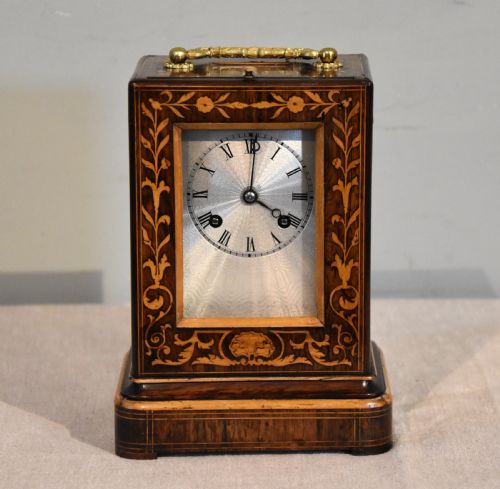
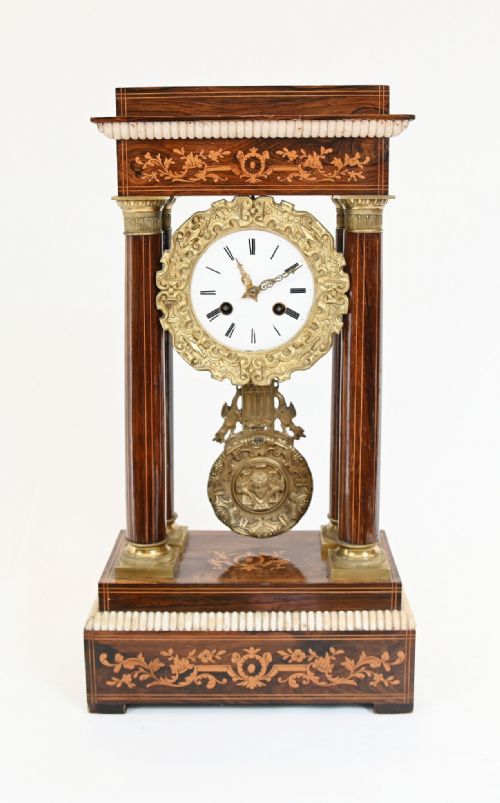
The most common form you will meet is the portico clock, characterised by slim side pillars supporting an architrave that frames the pendulum swing. Alongside these architectural pieces, rosewood and marquetry wooden cases appear frequently, often detailed with intricate lemon wood inlay.
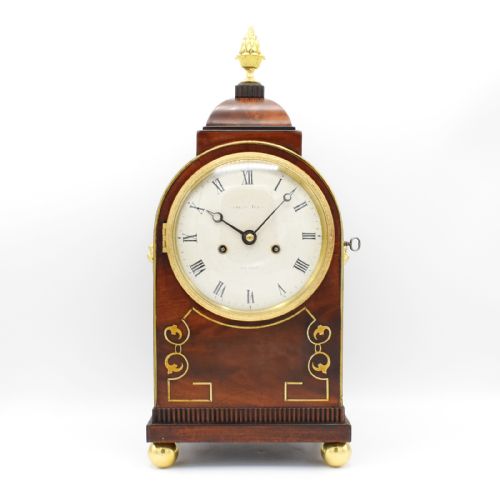
The timeline stretches from the early nineteenth century into the Victorian era, drawing on nineteenth-century French workshops as well as English makers of the Regency period. These clocks served as the focal point of the mantelpiece, combining timekeeping with monumental presence.
How they were made
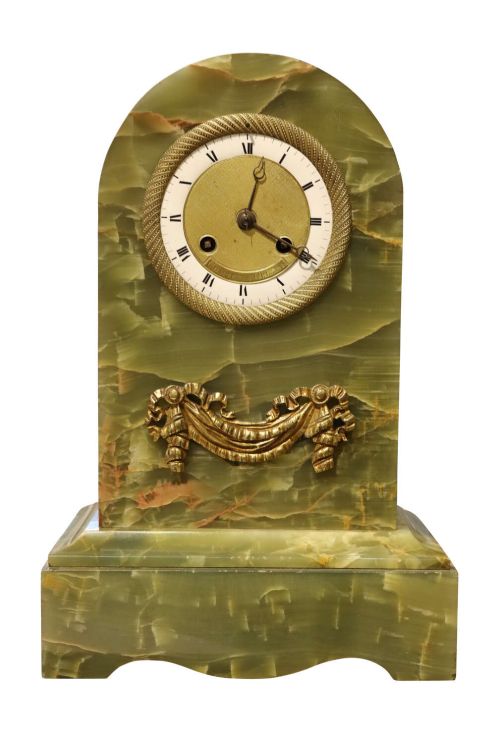
Makers built these clock cases using dense timbers like rosewood and mahogany, frequently applying contrasting stringing and marquetry in satinwood or lemon wood. Gilt bronze and ormolu mountings provided structural highlights, catching the light against the dark grain of the wood or the polish of green onyx and white marble.
The dial enamel required careful firing to achieve a smooth white surface, onto which delicate numerals were painted. Cut crystal and glass components were integrated into portico frames to add transparency and reflection, while patinated bronze provided depth and contrast to the gilt elements.
Charles X Mantel Clock Retail Price Guide 2026
Typical asking prices for charles x mantel clock among the pieces listed under this phrase on Sellingantiques today, from the lower quarter to the upper quarter. They describe what is for sale here now, not the wider market.
Some nineteenth-century clocks carried built-in thermometers right on the dial, ensuring you knew just how chilly the drawing room was.
What varies in quality
The distinction between ordinary and exceptional examples lies in the crispness of the gilt ormolu chasing and the depth of the cabinetwork. Superior portico clocks display balanced proportions where the columns and the central pendulum housing relate harmoniously without heavy or clumsy junctions.
Attention to detail in the marquetry and the precision of the wood inlay elevate a piece from a standard timepiece to a work of fine decorative art. The integration of signed movements by known makers further separates high-tier examples from anonymous workshop production.
Charles à Orléans·Charles Pratt London·Breguet·Henry Marc·Charles Frodsham·Holingue Frères·Baltazart·Savory & Fils A Paris·George IV·Charles Valogne·Charles Hour
The Charles X Mantel Clock Glossary
- Ormolu
- Gilt bronze created by applying a mixture of gold and mercury to a bronze base and heating it. This technique produced a rich, durable golden finish favoured on French mantel pieces.
- Portico clock
- An architectural clock design featuring two or four vertical pillars supporting a top entablature. The pendulum typically swings visibly in the open space between the supports.
- Marquetry
- The art of applying small pieces of veneer to a structure to form decorative patterns or pictures. Makers used contrasting timbers like satinwood and lemon wood.
- Enamel dial
- A metal clock face coated with powdered glass fused at high heat. This created a durable, glossy white surface that resisted fading and held painted numerals clearly.
- Stringing
- Thin inlay lines of contrasting wood used to outline panels and edges on wooden clock cases. It added visual definition to rosewood and mahogany surfaces.
Charles X Mantel Clock: Frequently Asked Questions
What is a portico clock?
A portico clock is an architectural style of timepiece featuring vertical side pillars that support a top entablature. The design mimics classical building facades, leaving the centre open so the pendulum can swing visibly.
These pieces were particularly popular during the French Restoration and appear frequently in rosewood, ormolu, and cut crystal configurations.
How do I wind the clock?
Winding requires a matching key inserted into the winding holes on the enamel dial. Care must be taken not to overwind the mainspring.
Most movements run for a week on a full wind, though specific procedures depend on whether the piece has a striking train or a simple time-only mechanism.
Where should I place my clock?
These clocks belong on a stable mantelpiece, shelf, or console table where they are safe from vibration and accidental knocks. Placing them away from direct sunlight and dampness protects the delicate wood veneer and enamel dial.
Level surfaces are essential to ensure the pendulum swings evenly and the movement keeps accurate time.
How do I identify the period?
Period identification relies on examining the combination of materials, case construction, and dial style. French Restoration and Regency pieces often feature architectural symmetry, portico forms, and specific ormolu mounts.
Signatures on the enamel dial or backplate from makers like Breguet or Henry Marc provide a clearer anchor for dating.