


Gilt Bronze Portico Clock
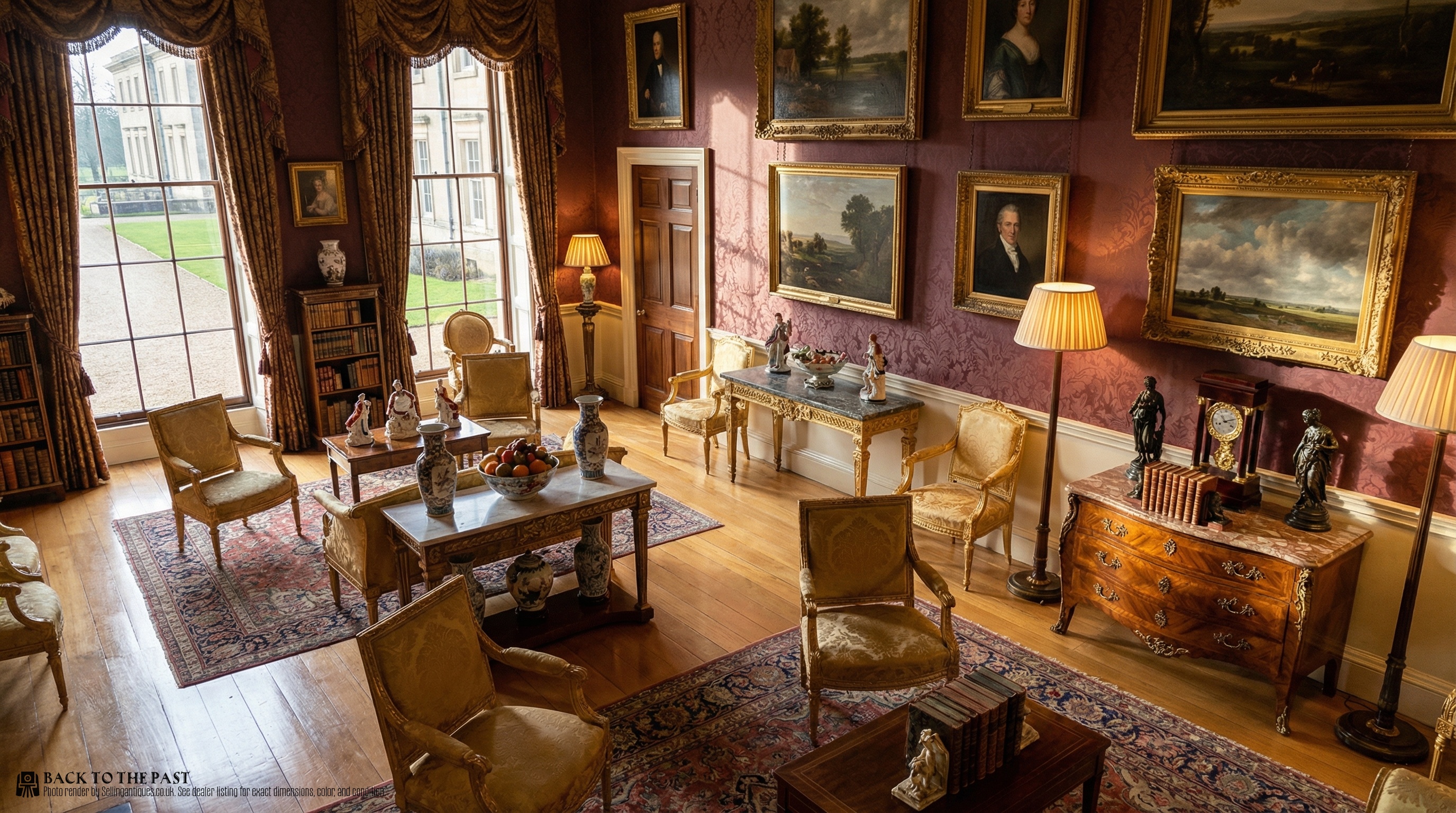
These gilt bronze portico clocks are stately architectural timepieces that bring striking neoclassical symmetry and mechanical precision to a mantelpiece.
What They Are
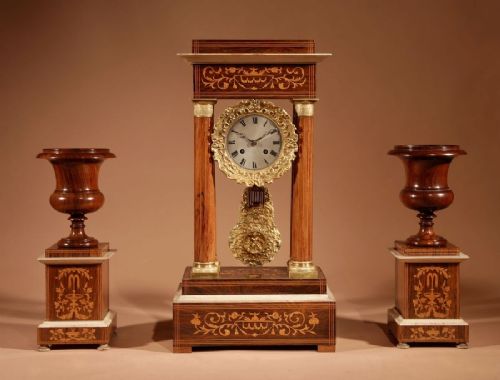
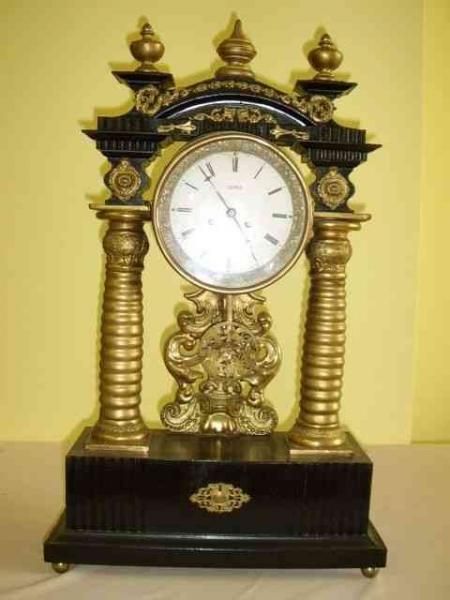
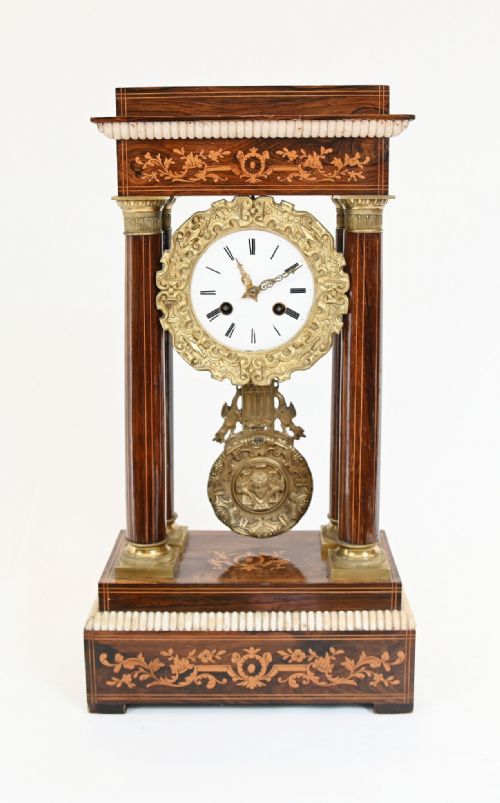
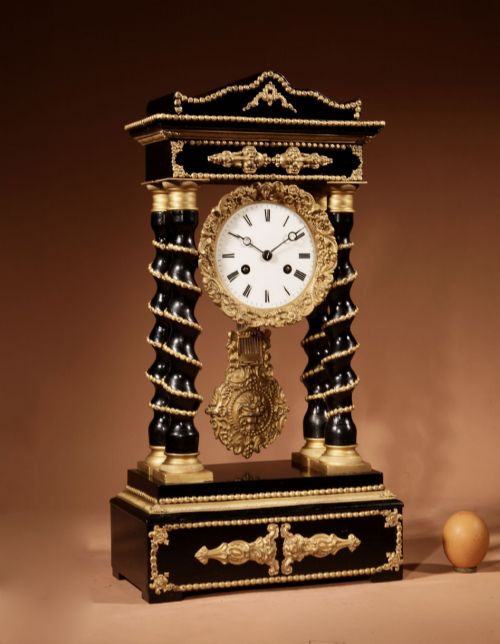
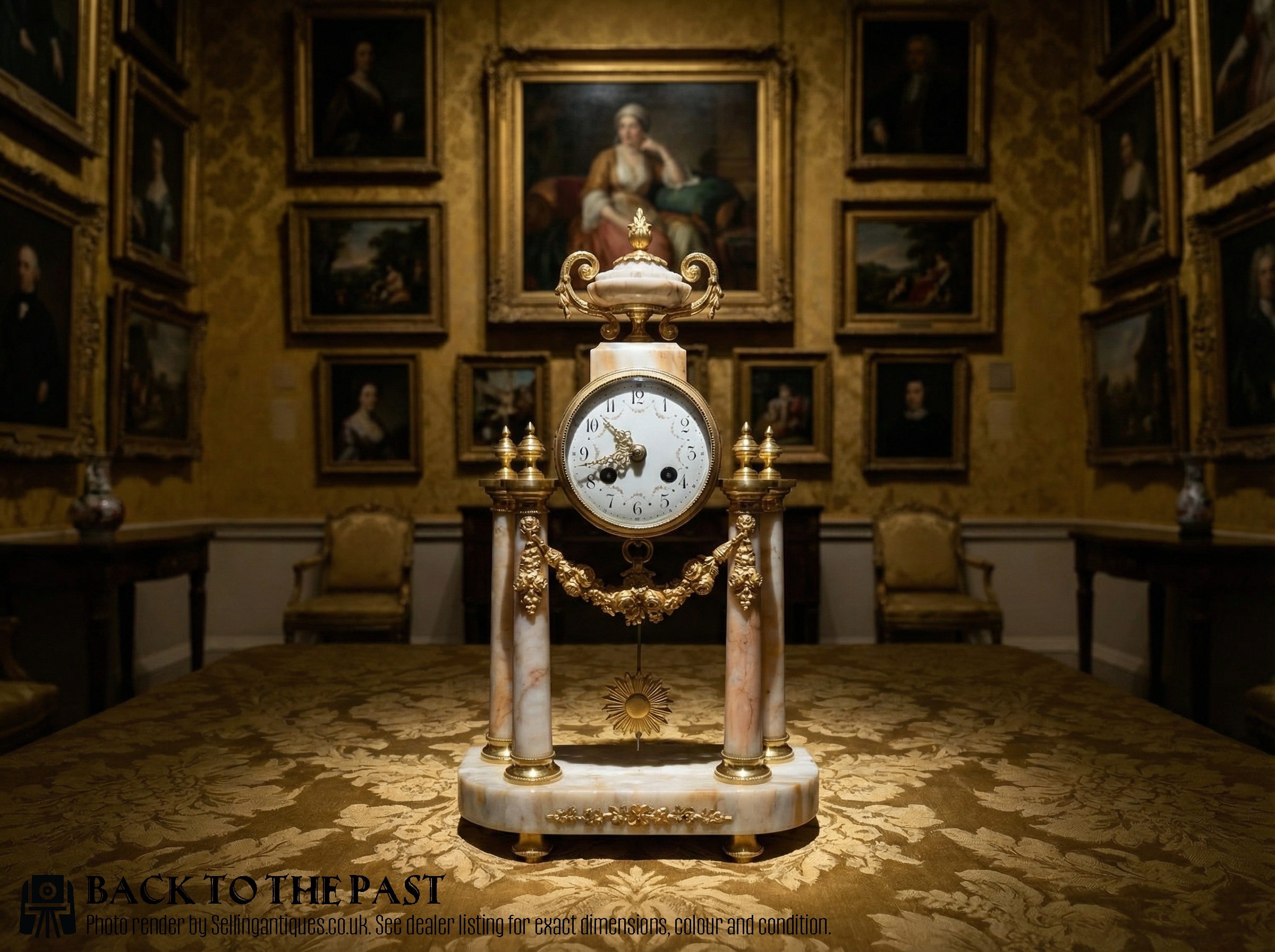
A gilt bronze portico clock is an architectural timepiece supported by slender columns that frame a central pendulum.
The evidence shows these clocks span the eighteenth and nineteenth centuries, taking forms such as the French Empire, Charles X, and French Louis XVI styles.
How They Were Made
Maker workshops built these clock bodies using dense hardwoods like mahogany and rosewood, alongside white or dark marble and brass.
The decorative highlights rely on ormolu and gilt bronze, applying a layer of gold to cast bronze surfaces to create a bright metallic finish.
Dials were finished in enamel or silvered metal to contrast against the polished stone and wood of the upright frame.
Retail Price Guide 2026
Typical UK retail prices for gilt bronze portico clock, calculated from the Sellingantiques database of over a million retail prices indexed since 2003. This retail price guide relies exclusively on Sellingantiques data; no external sources or auction records are used, so the figures do not describe the wider market.
Some clocks feature mystery movements so clever they make timekeeping look like sheer magic.
What Varies in Quality
The division between standard and superior pieces rests on the crispness of the cast bronze ornament and the depth of the marble or timber housing.
Finely integrated marquetry inlay and complex dial treatments indicate higher workshop investment than simple veneered surfaces.
The inclusion of mystery movements or patinated bronze figures alongside standard ormolu elevates a piece within the hierarchy of surviving examples.
Japy Freres
The Gilt Bronze Portico Clock Glossary
- Ormolu
- Gilded bronze produced by applying a mercury and gold amalgam to a cast bronze object and heating it to drive off the mercury. This technique creates a durable, luminous golden finish characteristic of French decorative arts.
- Portico clock
- A mantel clock designed with a distinct architectural case resembling a classical porch, featuring vertical columns holding an upper entablature. The pendulum typically swings visibly between these supports.
- French Empire
- A decorative style spanning the early nineteenth century defined by heavy classical references, military motifs, and symmetrical forms. It draws inspiration from ancient Roman and Greek design.
- Mystery clock
- A timepiece where the mechanism driving the hands is concealed or seemingly magical, often using glass dials with no visible connection to the movement. These represent high technical skill in horology.
Frequently Asked Questions
What is a portico clock?
A portico clock is an architectural timepiece built with vertical columns that flank a central pendulum. The design mimics a classical temple portico.
These clocks became popular in France during the late eighteenth and early nineteenth centuries. They sit prominently on mantelpieces and tables.
How do I date a portico clock?
Dating relies on observing the materials, architectural styles, and dial construction methods. Empire and Charles X pieces show distinct neoclassical decorative choices.
Examining the timber types, such as mahogany or rosewood, alongside marble bases helps narrow down the production era. Ormolu quality also shifts across decades.
Where were these clocks made?
The surviving evidence points primarily to French workshops and makers. France dominated the production of gilt bronze and ormolu architectural timepieces during this period.
Export markets brought these French mantel clocks across Europe and Britain. Specialised horologists and bronze-casters collaborated on each piece.
What materials are used in these clocks?
Makers utilised a combination of cast metals, natural stone, and dense hardwoods. Ormolu and gilt bronze provide the bright metallic decoration.
Enamel and silvered metal form the clock faces, while mahogany, rosewood, and marble construct the sturdy architectural frames.