

Inlaid Wooden Mantel Clock
These inlaid wooden mantel clock pieces bring together fine cabinetmaking and horology, offering a decorative timepiece that anchors a room.

What these pieces are
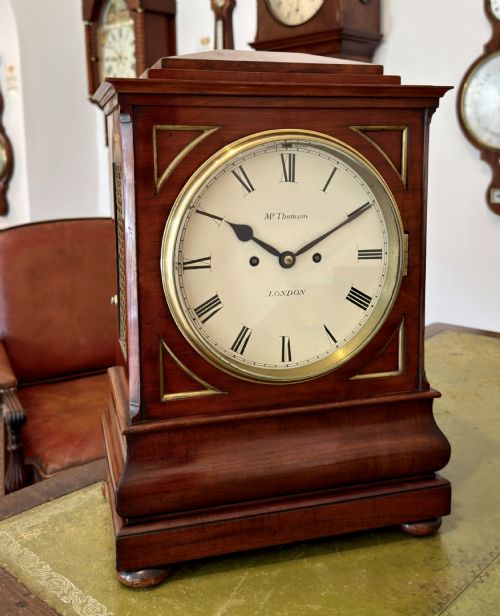
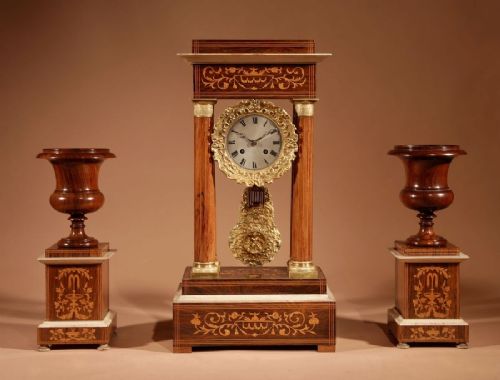
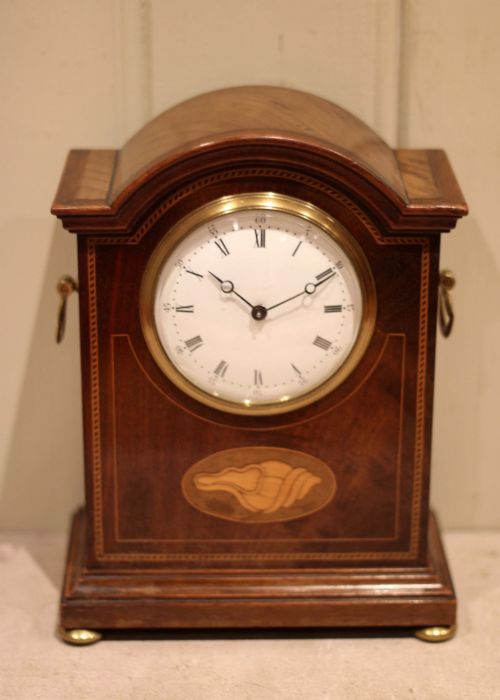
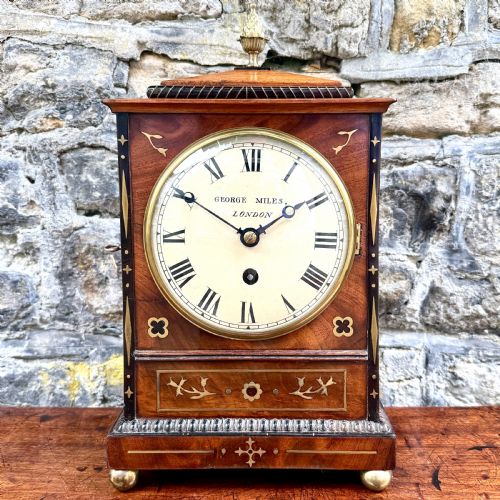
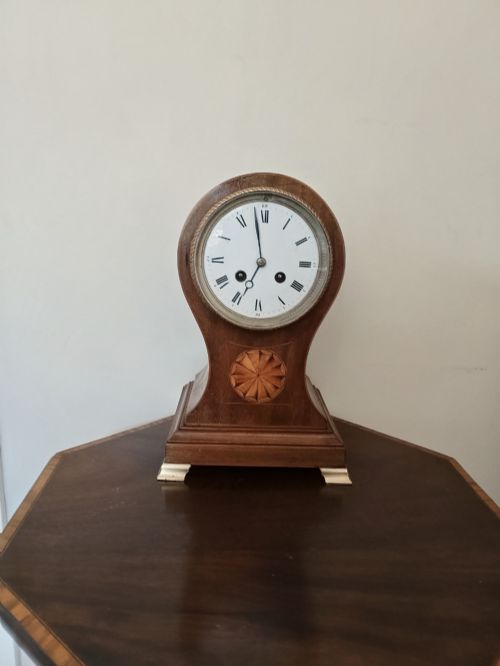
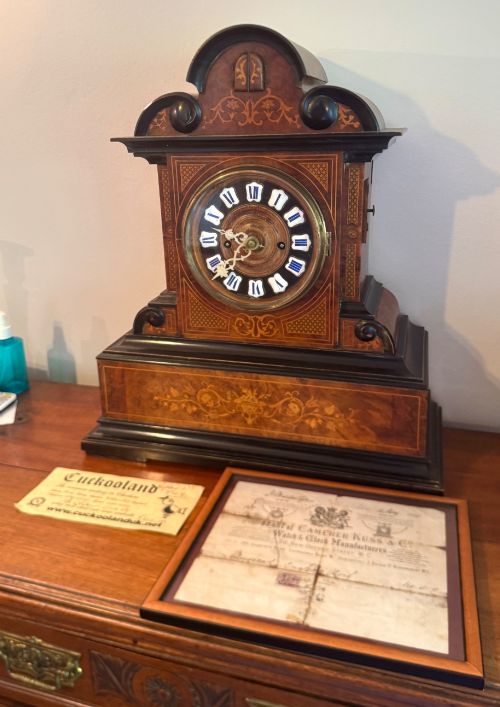
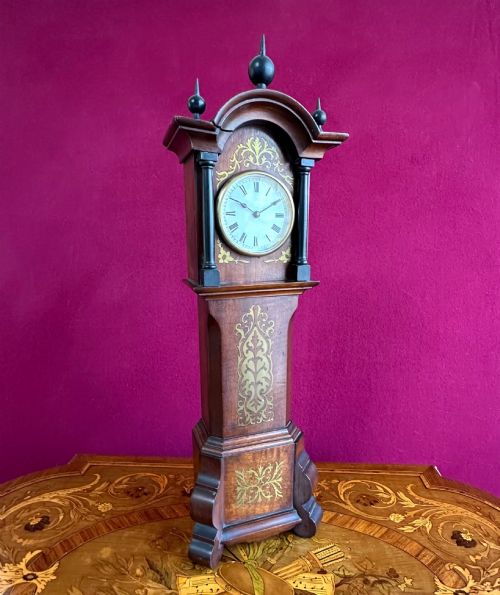
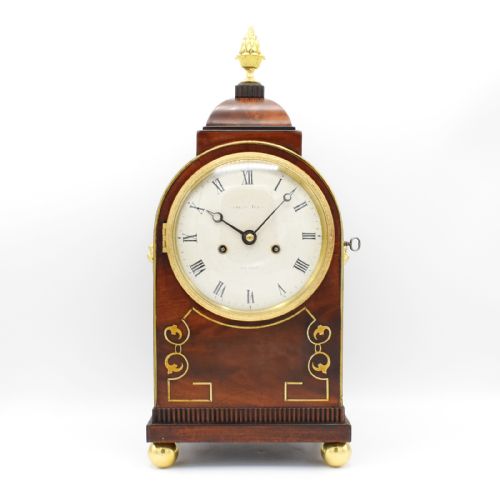
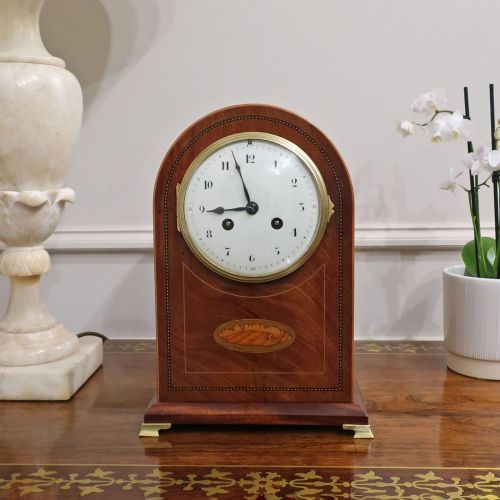
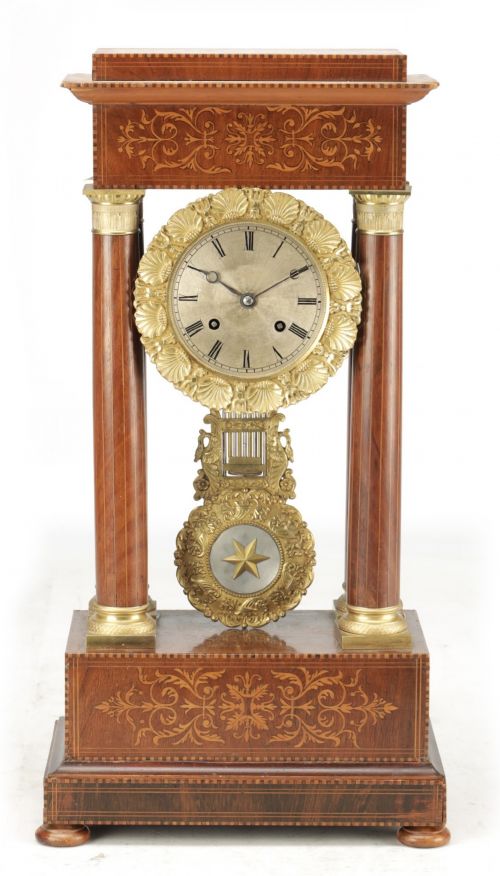
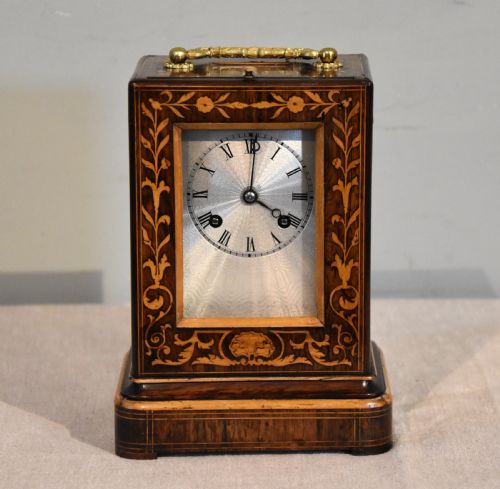
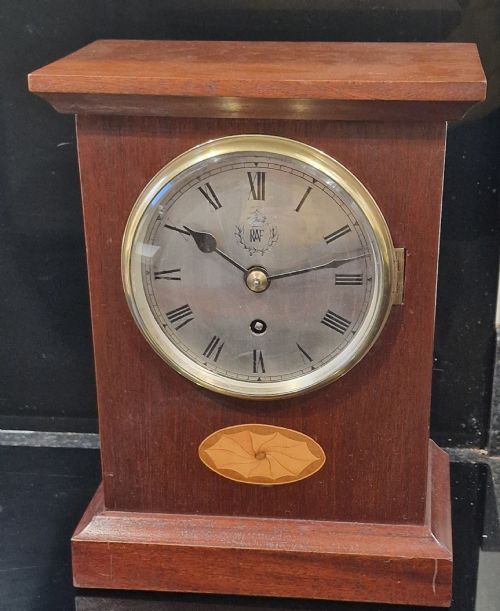
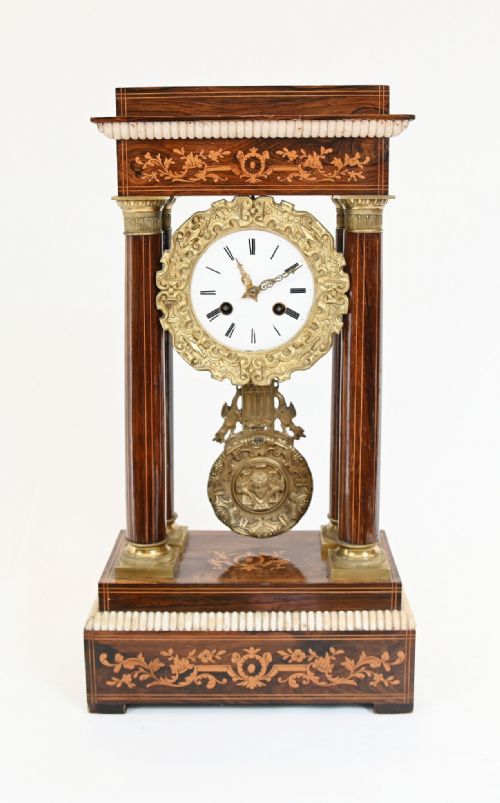
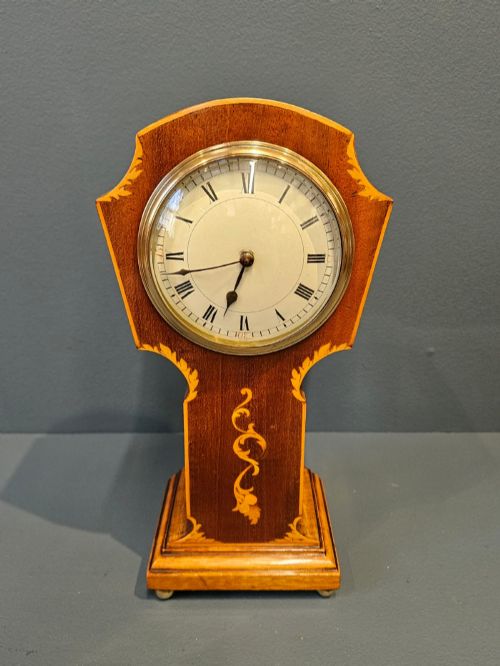
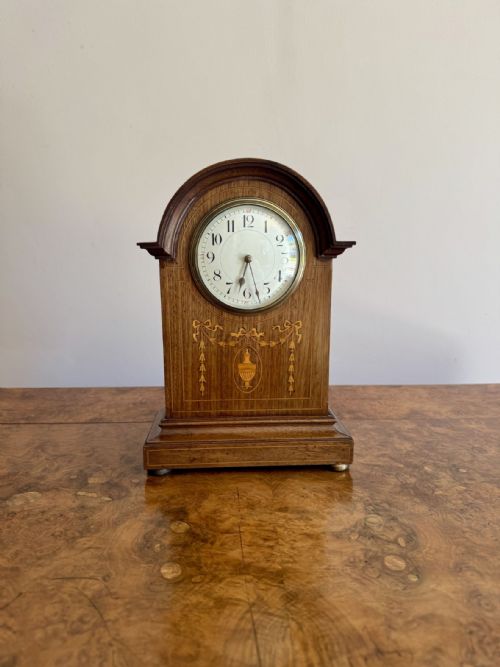
An inlaid wooden mantel clock combines timber casework with precision clockmaking, designed to sit upon a fireplace surround or shelf. These pieces range from upright miniature grandfather forms to shaped French designs and classical portico structures.
The selections span distinct periods, drawing upon nineteenth-century French workshops as well as later twentieth-century interpretations. Each object pairs a functional timekeeping movement with decorative marquetry, veneers, and classical motifs.
How they were made
Casework relies on cabinet timbers such as mahogany, rosewood, and satinwood, shaped and polished to reveal the grain. Artisans decorated the wooden surfaces with intricate inlay work before mounting subsidiary elements.
Retail Price Guide 2026
Typical UK retail prices for inlaid wooden mantel clock, calculated from the Sellingantiques database of over a million retail prices indexed since 2003. This retail price guide relies exclusively on Sellingantiques data; no external sources or auction records are used, so the figures do not describe the wider market.
The inventory spans the eighteenth century through to the nineteen-twenties, encompassing French Rococo Revival and Belle Epoque styles.
What varies in quality
Quality rests upon the precision of the cabinetwork and the integration of the decorative elements. Finer examples display meticulous matching of timber veneers alongside crisp, well-cast ormolu mounts and finely painted enamel dials.
The sophistication of the silhouette defines the upper tier of objects, moving from simple boxes to architectural porticos or shaped rosewood bodies. The execution of the woodwork and the harmony of metal with timber dictate the standing of each piece.
The Inlaid Wooden Mantel Clock Glossary
- Portico clock
- A monumental clock style featuring side pillars supporting an upper entablature, popular during the Charles X period.
- Ormolu
- Gilt bronze ornamentation applied to furniture and clocks, created through a mercury gilding process on high-end pieces.
- Marquetry
- The art of applying decorative pieces of veneer to a structure to form geometric or pictorial designs.
- Bezel
- The metal ring that holds the glass protecting the dial of a clock face.
Frequently Asked Questions
Where should I place a mantel clock?
These clocks sit comfortably on a mantelpiece, shelf, or sideboard where their decorative woodwork remains visible. Ensure the surface is level to keep the movement running reliably.
Keep them away from direct heat sources and damp environments to protect the polished timber and delicate metal mounts over time.
How do I identify a French mantel clock?
French examples often feature characteristic styling such as Belle Epoque or Rococo Revival details, alongside specific dial signatures or movement stamps.
The use of materials like ormolu and shaped rosewood or mahogany casework points towards continental workshops of the nineteenth century.
What is a portico clock?
A portico clock is an architectural timepiece structured with vertical columns or pillars that frame the central pendulum housing.
Originating in neoclassical designs, this style uses timber inlay and gilt bronze mounts to create a formal, symmetrical presence.
How do I care for wooden clock cases?
Dust the timber case gently with a soft, dry cloth to prevent the buildup of particles in the grain and intricate inlay work.
Avoid using liquid polishes or silicone sprays, which can damage antique finishes and discolour the surrounding brass or ormolu mounts.