



Classical Column Clock
A classical column clock brings architectural dignity and precise nineteenth-century mechanics into a room.
Classical Column Clock
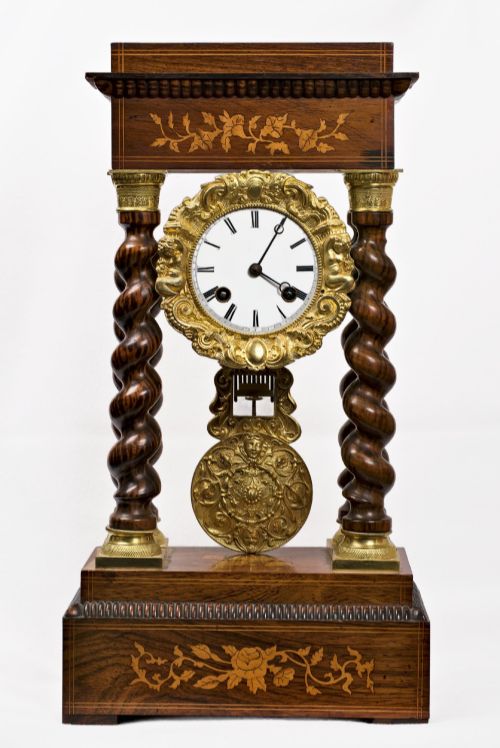
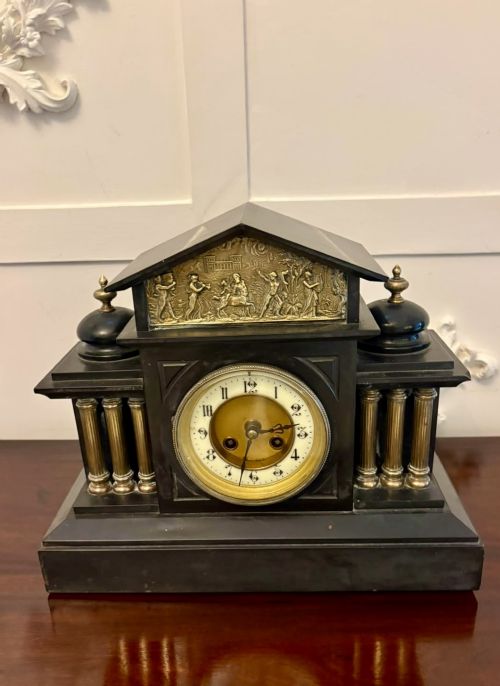
A classical column clock is an architectural timepiece that draws on ancient Greek and Roman building forms, typically housing a mechanical movement within or between upright pillars. These timepieces range from French portico models with suspended pendulums to substantial Victorian architectural mantel clocks.
The versions most frequently met on this page date from the nineteenth century, particularly the eighteen-sixties and eighteen-eighties. They span Victorian, Neoclassical, and French Empire styles, often incorporating matching garnitures or striking mechanisms.
How they were made
The construction of a classical column clock relies on heavy stone bodies such as black marble, alabaster, slate, and pink marble, which provide a stable foundation for delicate metalwork. Masons shaped these mineral blocks into porticos and architectural cases while metalworkers cast mounts in ormolu, gilt brass, and bronze.
Dials were finished in enamel or silvered metal, protected behind bevelled glass panes. Movements were mechanical, featuring eight-day durations and pendulum regulation, sometimes driven by single fusee systems.
Classical Column Clock Retail Price Guide 2026
Typical asking prices for classical column clock among the pieces listed under this phrase on Sellingantiques today, from the lower quarter to the upper quarter. They describe what is for sale here now, not the wider market.
Materials recorded across the inventory include cut crystal, alabaster, mahogany, and patinated bronze alongside traditional black marble.
What varies in quality
Quality in a classical column clock rests upon the crispness of the stone cutting and the refinement of the cast bronze or ormolu mounts. Finer examples display meticulous marble inlay and deeply chased gilt work rather than flat, machine-stamped decoration.
The sophistication of the internal movement also distinguishes higher-grade pieces, with signed maker movements and well-finished escapements commanding greater regard than standard commercial equivalents.
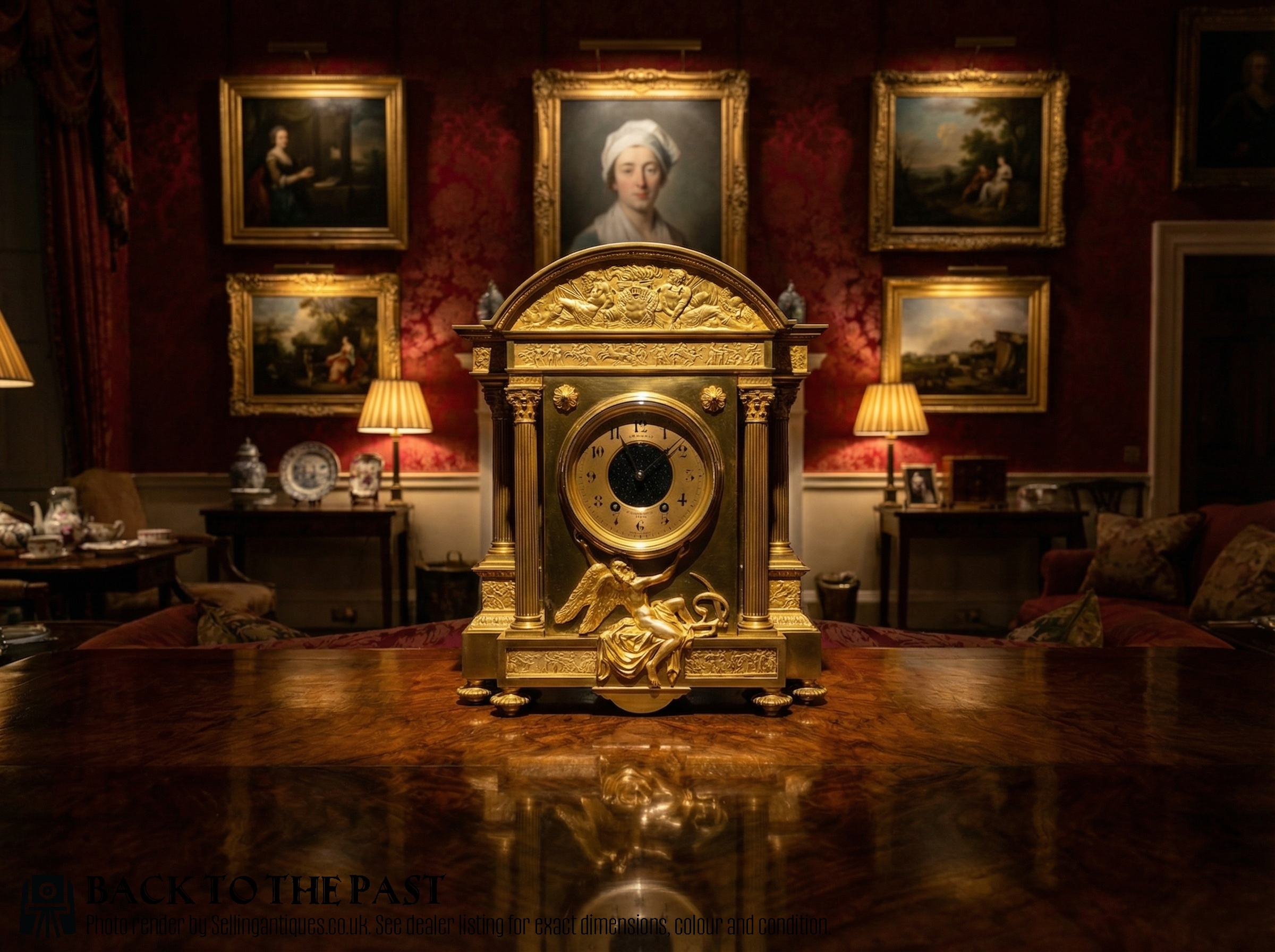
Philippes Paris·Baby and Jannings·Benson 67 Ludgate Hill London
The Classical Column Clock Glossary
- Portico clock
- A mantel clock designed with open architectural columns supporting a lintel, leaving the pendulum visible as it swings between them. This style became popular during the French Charles X and Empire periods.
- Ormolu
- Finely ground high-carat gold mercury-gilded onto a bronze base. This technique creates a rich, lasting metallic lustre on clock mounts.
- Garniture
- A set consisting of a central clock flanked by matching decorative objects such as urns or vases. These sets were designed to sit together on a mantelpiece.
- Fusee
- A conical pulley used in spring-driven clocks to maintain even power delivery to the gear train as the mainspring unwinds. It represents a higher standard of clockmaking.
- Architectural clock
- A timepiece styled to resemble a miniature building, utilising columns, pediments, and cornices drawn from classical architecture.
Classical Column Clock: Frequently Asked Questions
What is a classical column clock?
A classical column clock is a nineteenth-century timepiece built in the form of a miniature building or portico, using upright pillars to frame the dial or pendulum.
These pieces draw on Victorian and Neoclassical styles, combining stone cases with metal ornamentation.
Where should I place a portico clock?
Portico clocks suit prominent locations where their open architectural structure and suspended pendulum can be appreciated from multiple angles. A mantelpiece or a deep desk provides a stable surface for their heavy marble or alabaster bases.
Because many include glass panels and delicate gilt bronze mounts, they benefit from placement away from high-traffic household areas.
How do I wind an eight-day movement?
An eight-day movement requires winding once a week using a matching key inserted into the dial winding arbors. Care must be taken not to overwind the mainspring.
Most movements of this era regulate time via a pendulum, which may need slight adjustment to keep accurate time.
What materials were used in these clocks?
The primary materials include black marble, pink marble, slate, alabaster, and oak. These structural elements are enhanced with brass, gilt bronze, ormolu, and glass.
Enamel and silvered metal feature on the visible clock faces.