
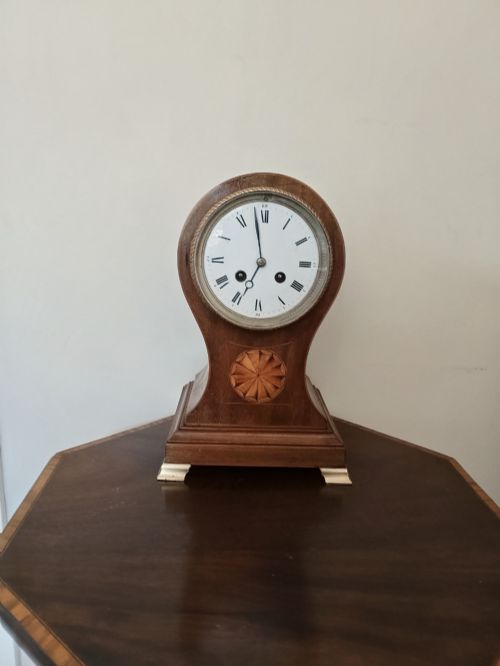
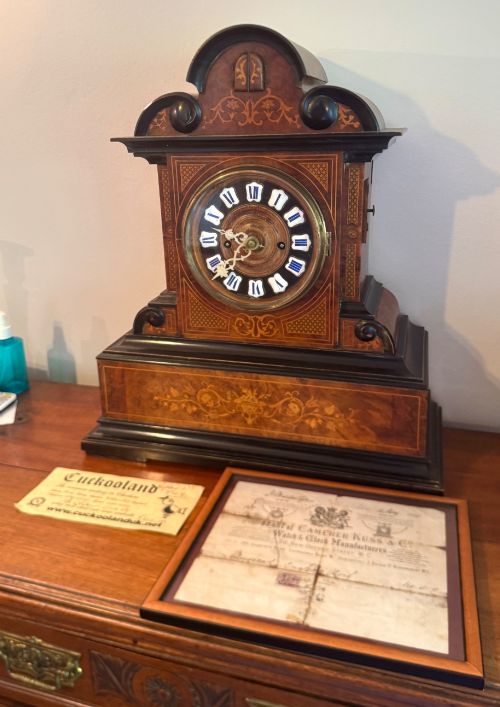
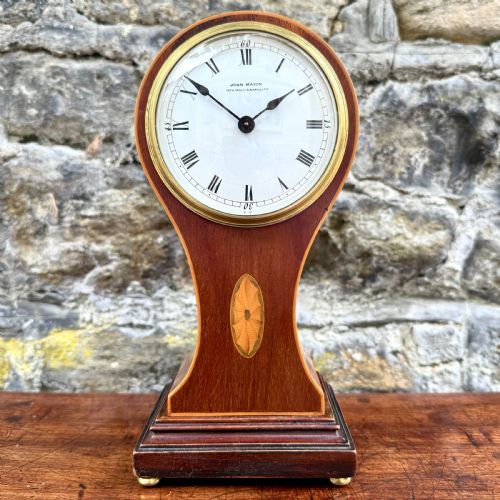
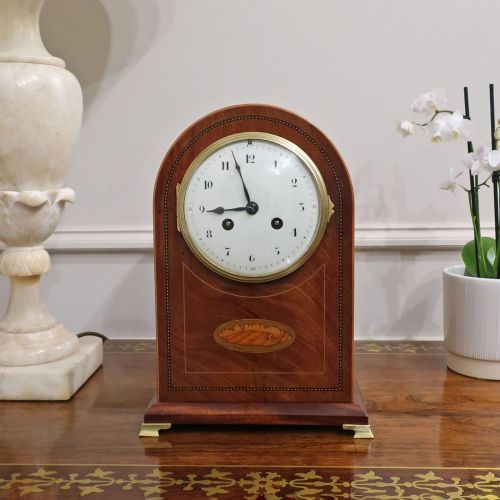


Marquetry Table Clock
A marquetry table clock combines fine French cabinet-making with precision horology, offering both architectural presence and reliable timekeeping for the home.
Understanding the Marquetry Table Clock
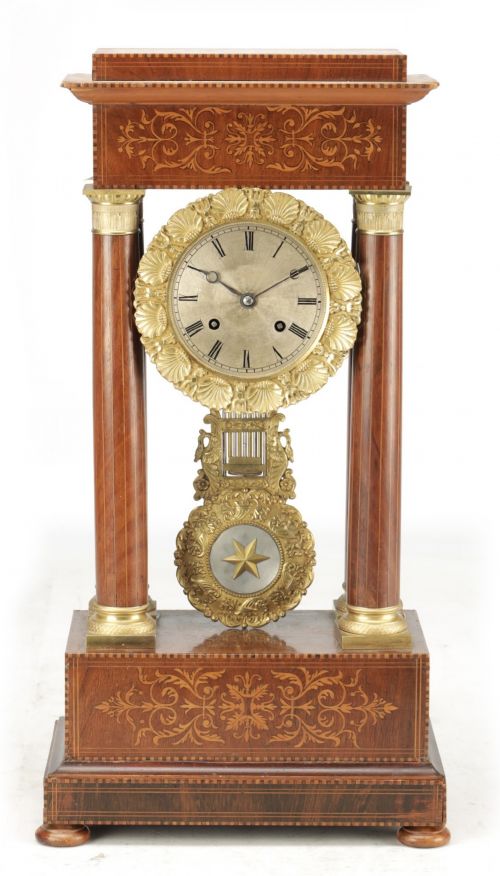
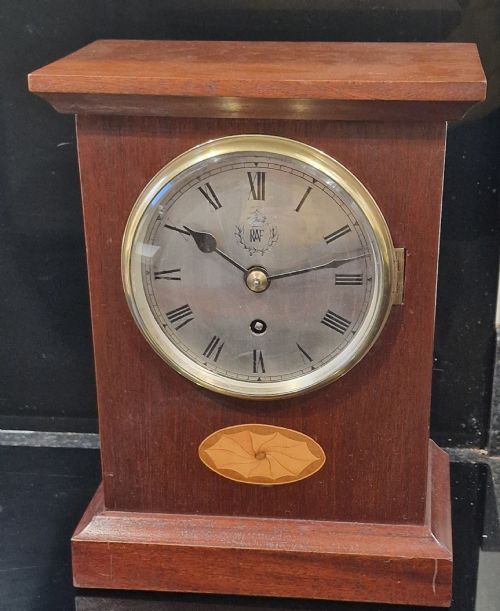
The surviving selection centres upon nineteenth-century French examples, including specific French Restoration and portico formats. Buyers will find these works functioning as mantel or library timepieces designed for prominent domestic display.
Materials and Construction
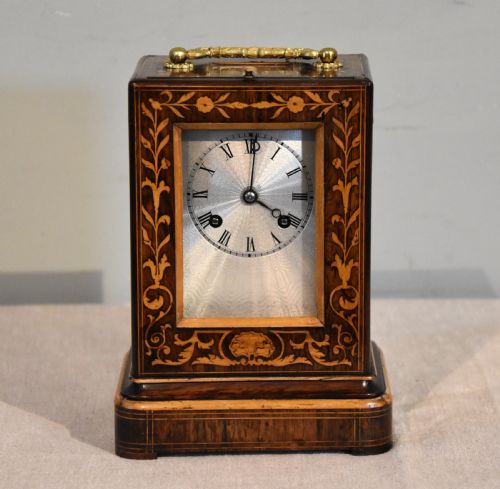
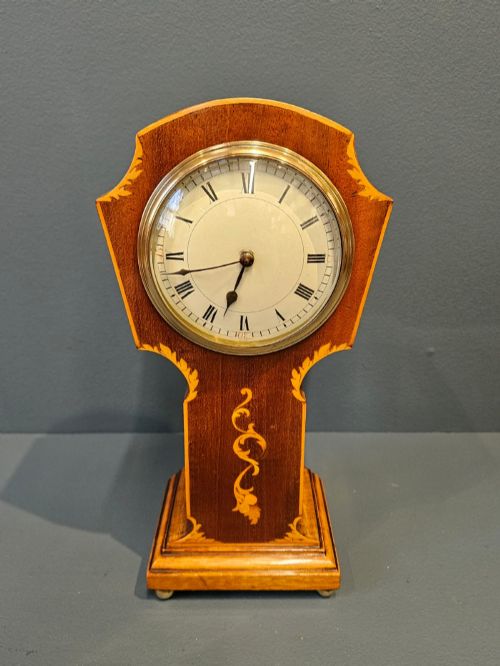
These clocks are constructed using rosewood bodies embellished with boxwood and boxwood inlay to create detailed marquetry patterns. The timber foundations are paired with glazed bezels, enamel dials, and silvered metal components.
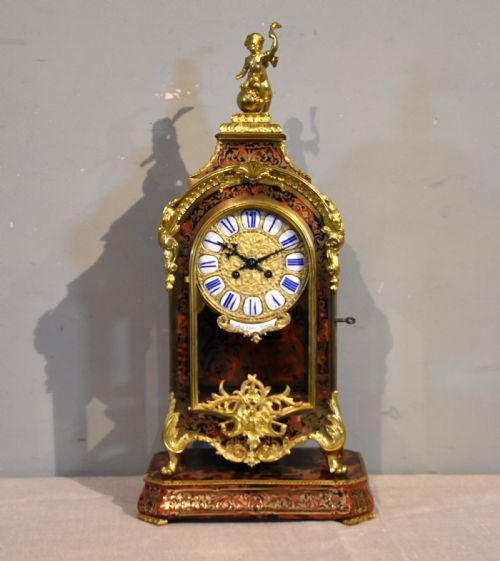
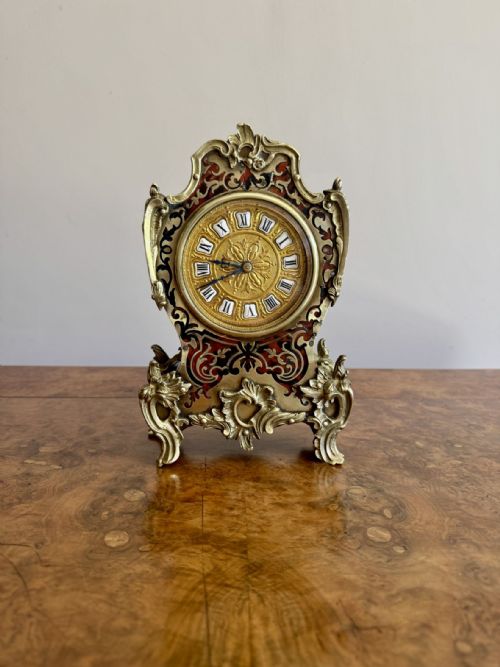
Metal ornamentation includes cast brass and ormolu mounts that accent the architectural portico frames and dial surrounds. The combination of cabinet-making and metalwork results in robust yet highly decorative horological objects.
Retail Price Guide 2026
Typical UK retail prices for marquetry table clock, calculated from the Sellingantiques database of over a million retail prices indexed since 2003. This retail price guide relies exclusively on Sellingantiques data; no external sources or auction records are used, so the figures do not describe the wider market.
Rosewood and boxwood inlay dominate the casework across all available portico and mantel clock forms.
Distinctions in Quality
The upper tier of these clocks is defined by the precision of the marquetry work and the reputation of the maker, such as Henry Marc. Superior examples exhibit tightly fitted boxwood inlay across the rosewood surfaces alongside finely cast ormolu and brass mounts.
Lesser pieces feature simpler timber selection and less refined dial execution. The overall architectural harmony and the crispness of the applied metalwork separate standard nineteenth-century timepieces from the finer portico models.
Henry Marc
The Marquetry Table Clock Glossary
- Marquetry
- Decorative veneer applied to a wooden structure in patterns and pictures. This technique uses contrasting timbers like rosewood and boxwood to create visual depth on the clock case.
- Portico clock
- A clock featuring an architectural frame supported by pillars or columns. This classical style was popular in nineteenth-century French horology.
- Ormolu
- Gilded bronze used for decorative mounts and accents. It provides a bright metallic contrast against dark rosewood cases.
- Enamel dial
- A fused glass surface fired onto metal to form the clock face. These dials typically feature painted numerals for clear legibility.
Frequently Asked Questions
What is a portico clock?
A portico clock is an architectural timepiece featuring vertical columns supporting a central pediment. This design draws inspiration from classical building facades.
In these listings, portico clocks are constructed from rosewood and embellished with marquetry inlay.
How do I wind these clocks?
Winding typically involves inserting a key into the dial apertures to tension the internal springs. Care must be taken not to over-wind the movement.
These nineteenth-century mechanical movements require periodic setting to maintain accurate timekeeping.
Where should I place a table clock?
These pieces suit placement on mantelpieces, library shelves, or sturdy console tables. Their finished backs and compact forms allow prominent display.
Protection from direct sunlight and sudden temperature changes helps preserve the rosewood and boxwood materials.
How do I identify a Victorian French clock?
Victorian French clocks are identified through their distinct use of rosewood, boxwood inlay, and ormolu mounts. The architectural forms reflect nineteenth-century design aesthetics.
Signatures on the enamel dials or movements, such as Henry Marc, confirm the maker and origin.