
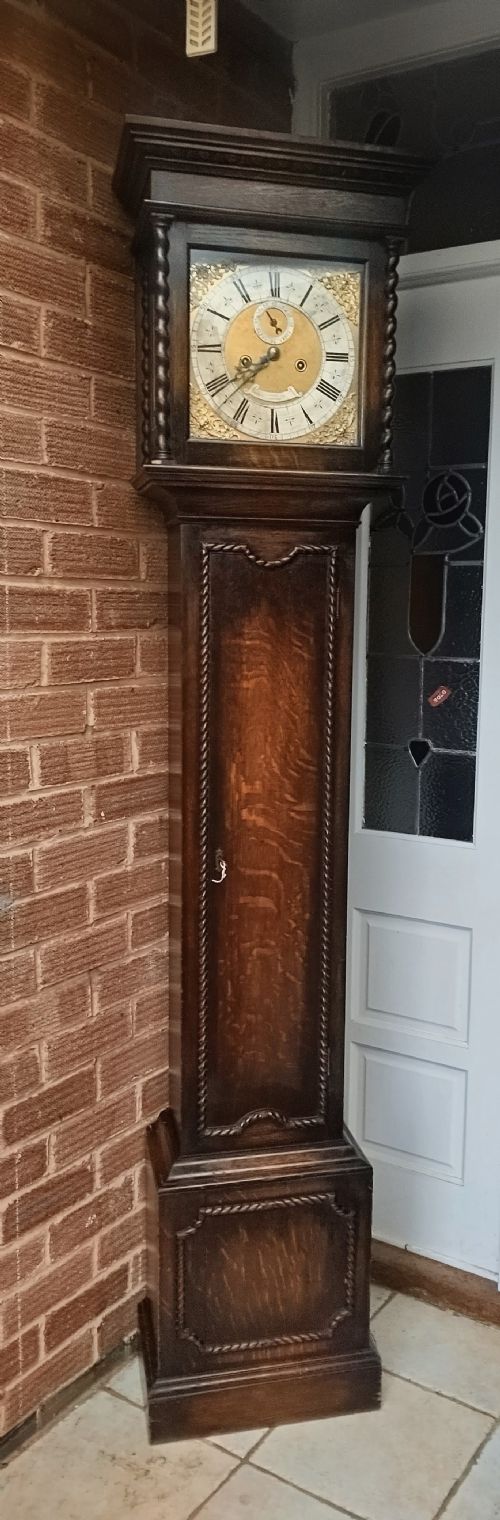
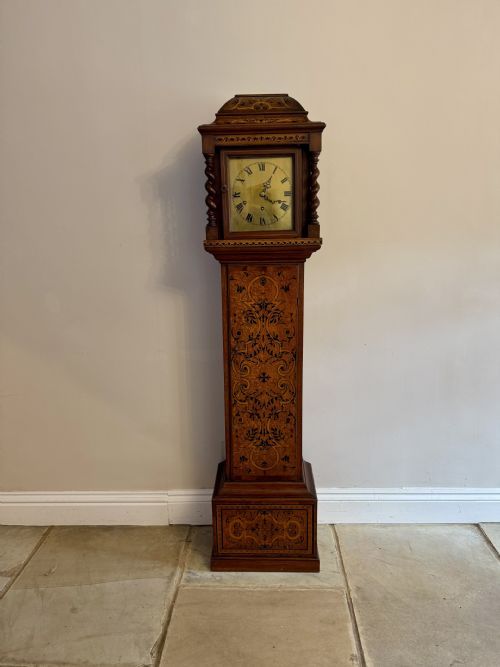


Barley Twist Clock
A barley twist clock combines precise timekeeping with the distinctive, spiralling turned columns found on oak and walnut cases.
Barley Twist Clock
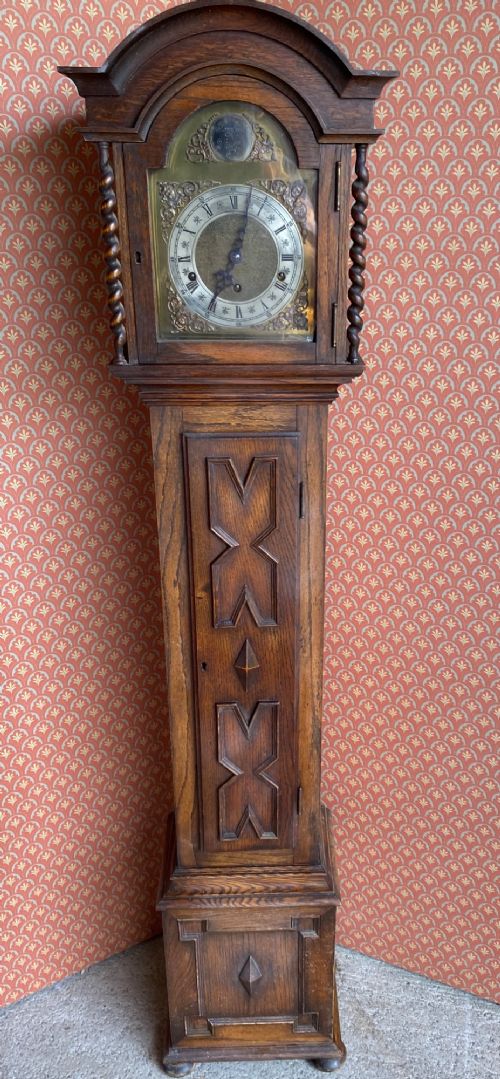
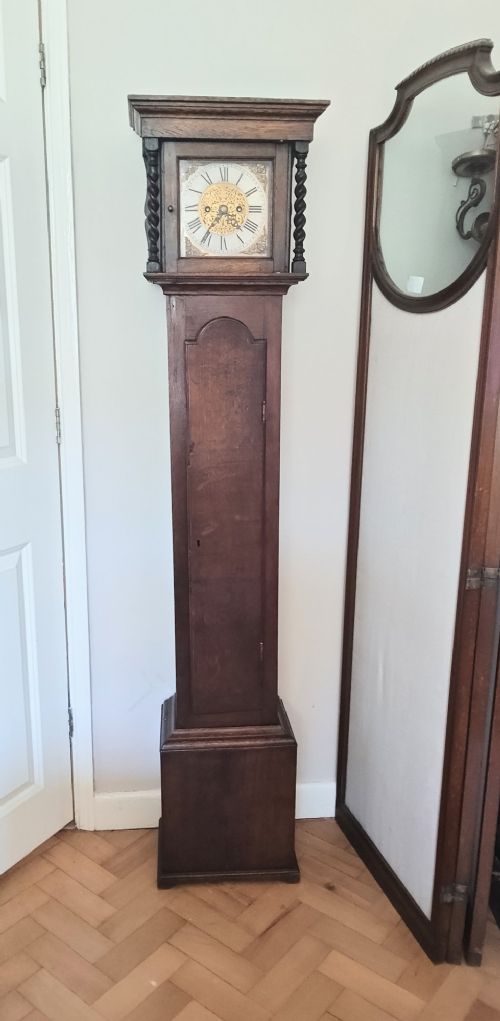
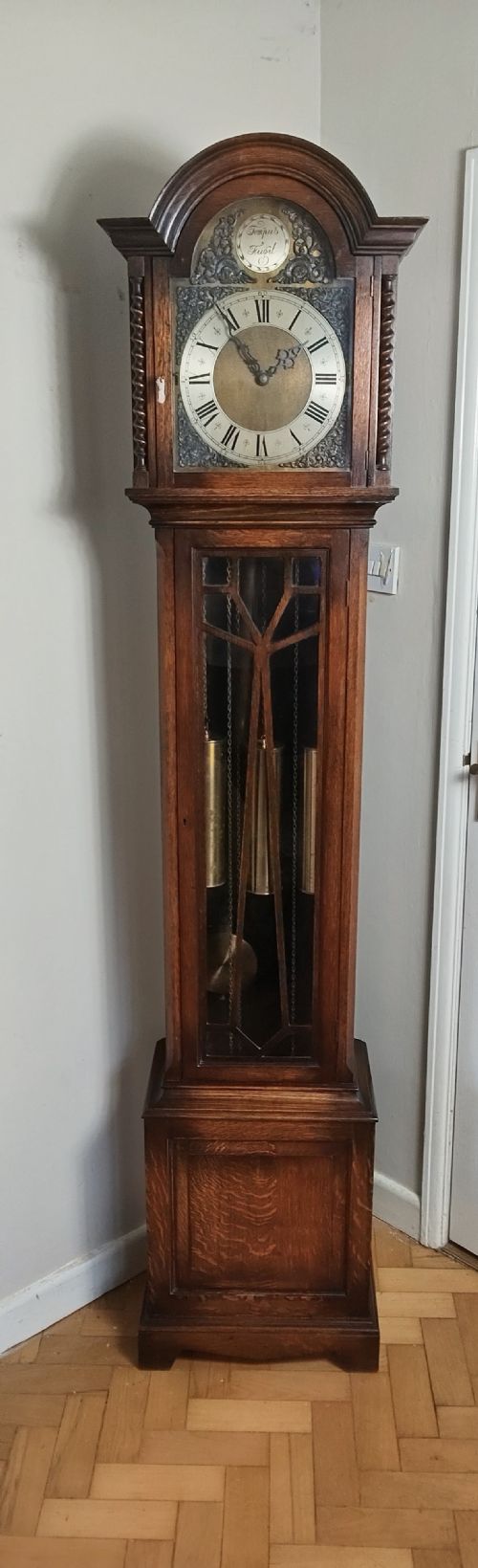
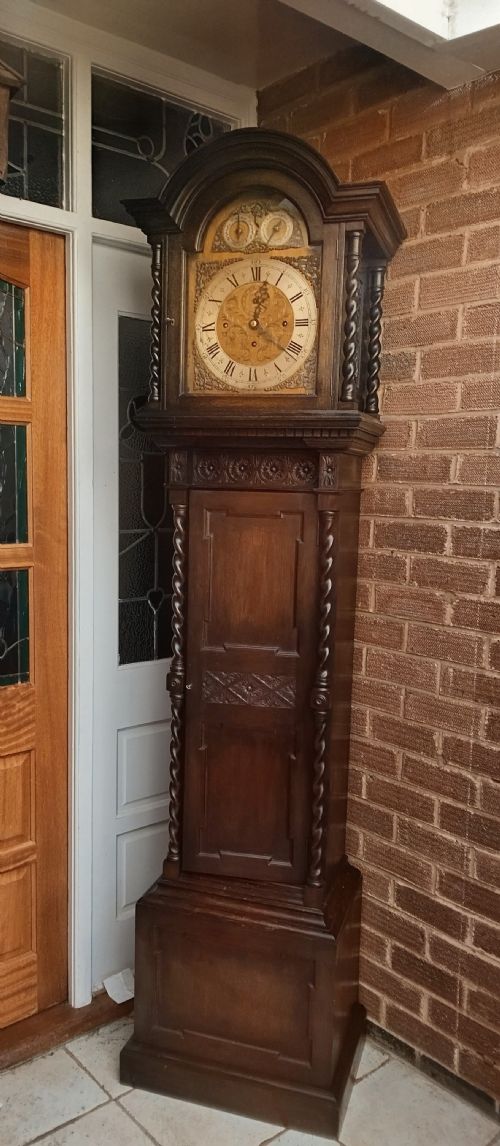
A barley twist clock is a timekeeper defined by its spiralling turned wooden columns, appearing most frequently as oak or walnut grandmother and grandfather longcase clocks from the Edwardian period and the late nineteenth century. These tall floor-standing pieces range from slim chiming models to smaller floor clocks, often housing Westminster chimes and brass dials within glazed trunk doors.
How they were made
Cabinetmakers constructed the tall floor cases primarily from solid and veneered oak, walnut, and mahogany, utilising specialised wood-turning lathes to shape the characteristic helical columns for the hood and trunk doors. Ebonised wood, rosewood, and maple also appear, providing dark or contrasting tones that complemented brass bezels and silvered metal dials.
Movements ranged from thirty-hour weight-driven mechanisms to complex eight-day and triple-weight chiming systems, sometimes incorporating musical barrels, tubular bells, or London-made G&J movements. Glass panels were fitted to doors to display the pendulum and weights, while enamel or brass dials frequently featured intricate marquetry inlay and engraved spandrels.
Some grandfather clocks double as musical instruments, chiming tunes with enough enthusiasm to wake the household at every quarter hour.
What varies in quality
Quality rests heavily on the crispness and depth of the wood turning on the twist columns and the precision of the cabinetwork, where tight joints and well-matched timber veneers distinguish finer pieces from plainer production. The complexity and reputation of the clock movement also set pieces apart, moving from standard weight-driven timepieces to intricate triple-weight musical chiming mechanisms.
The integration of decorative elements such as hand-engraved brass dials, silvered chapter rings, marquetry inlay, and bevelled glass panes marks the upper tier of the range. Originality of the case timber and the preservation of signed movements further elevate a piece, separating standard workshop output from exceptional horological examples.
Edward East·Joseph Knibb·William Noke of Shropshire·John Drew·Henry Massy
The Barley Twist Clock Glossary
- Grandmother clock
- A slim, smaller version of the traditional longcase clock, typically standing lower to the ground while retaining full chiming movements. These pieces gained immense popularity during the Edwardian period.
- Barley twist
- A decorative turning style shaped in a helical spiral resembling a twisted stalk of barley. It forms the defining visual motif on the hood columns and trunk sides of these clocks.
- Portico clock
- A architectural style of timepiece, often French in origin, supported by columns resembling a classical portico. They frequently utilise mahogany, rosewood, or ebonised wood with visible pendulums.
- Triple weight
- A movement driven by three separate suspended weights that power the going train, the hour strike, and the chiming melodies. This system allows the clock to play tunes such as Westminster chimes.
- Marquetry
- Decorative veneer work arranged in intricate patterns using various coloured woods. It often decorates the door panels and plinths of fine Edwardian and seventeenth-century cases.
- Regulator
- A high-precision pendulum clock designed for exact timekeeping. These movements were built for rigorous accuracy and often housed in maple or hardwood longcases.
Barley Twist Clock: Frequently Asked Questions
What is a grandmother clock?
A grandmother clock is a shorter, more slender version of the traditional grandfather or longcase clock. They were designed to fit into smaller domestic rooms without sacrificing mechanical complexity.
Most examples found in this style pair this reduced height with distinctive turned barley twist columns flanking the dial hood and glass trunk door.
How do triple weight clocks work?
Triple weight movements use three hanging heavy metal weights to power three separate functions within the clock. One weight drives the timekeeping gear, the second powers the hour strikes, and the third operates the chiming melodies.
This setup allows the clock to play complex tunes, such as Westminster chimes, automatically at every quarter hour.
Where were barley twist columns placed?
On tall longcase clocks, these spiralling wooden columns are most commonly positioned on the hood flanking the dial face, or running vertically down the sides of the glazed trunk door. They act as architectural frames for the moving parts within.
Wall clocks and portico models also utilise smaller versions of these turned pillars to frame the central glass door and dial.
How do you date an oak longcase?
Dating relies on examining the construction methods of the oak case, the style of the dial, and the mechanical evolution of the movement. Seventeenth-century examples feature simpler, darker panels and square brass dials, whereas Edwardian pieces often incorporate lighter oak, glazed doors, and elaborate chiming arrangements.
Signatures inscribed on the brass dial or movement backplate provide the most direct link to a specific maker and era.