
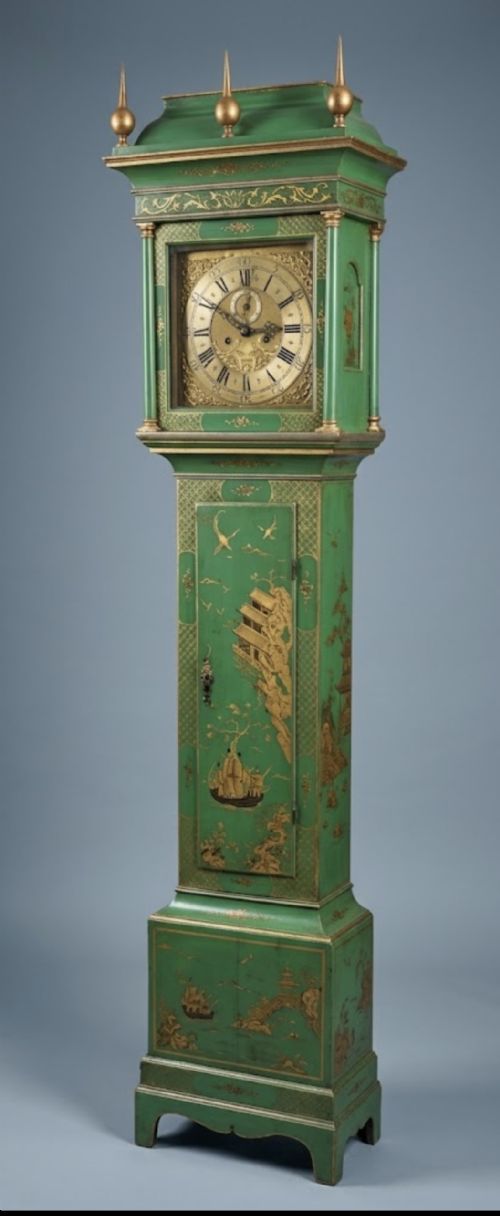
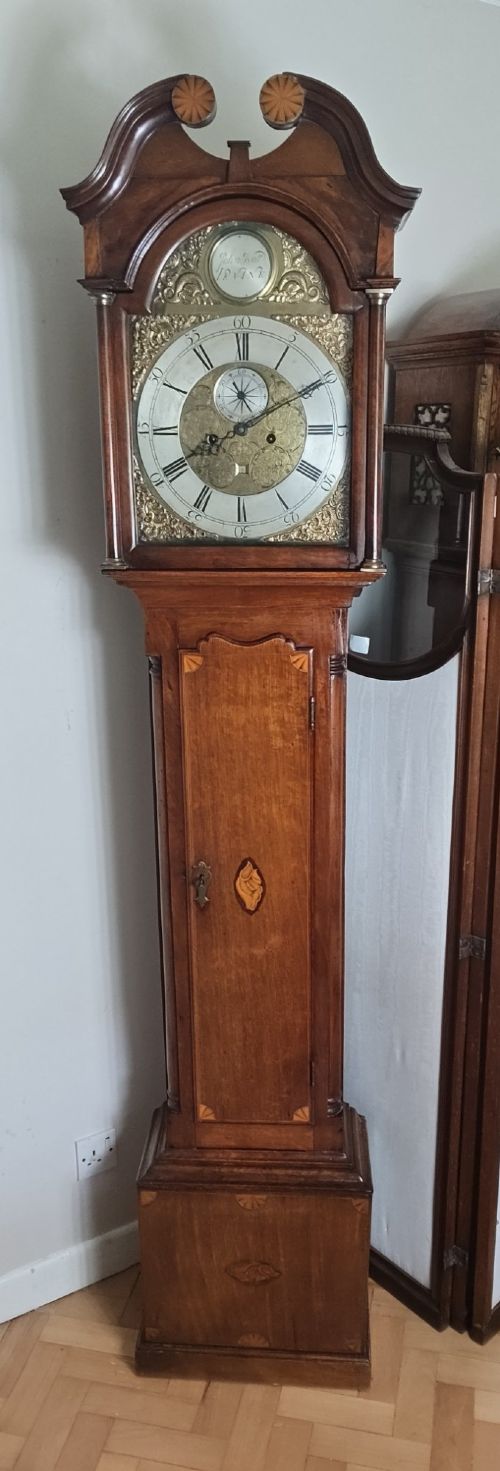
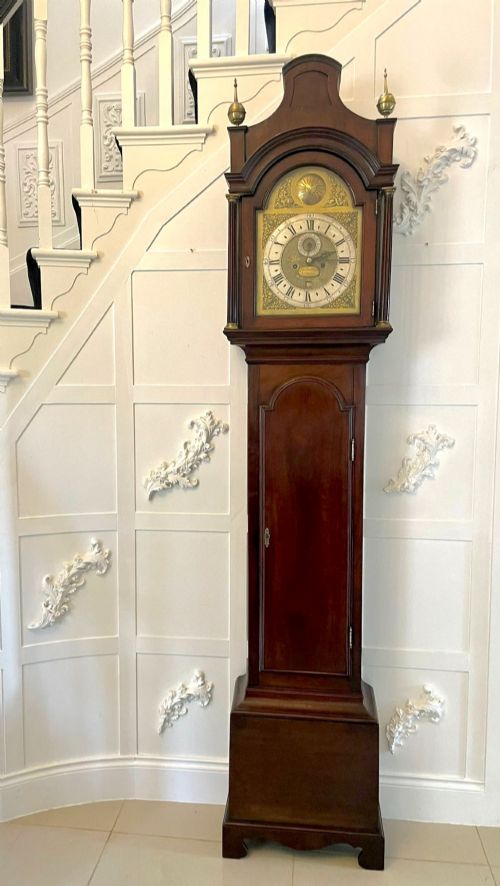
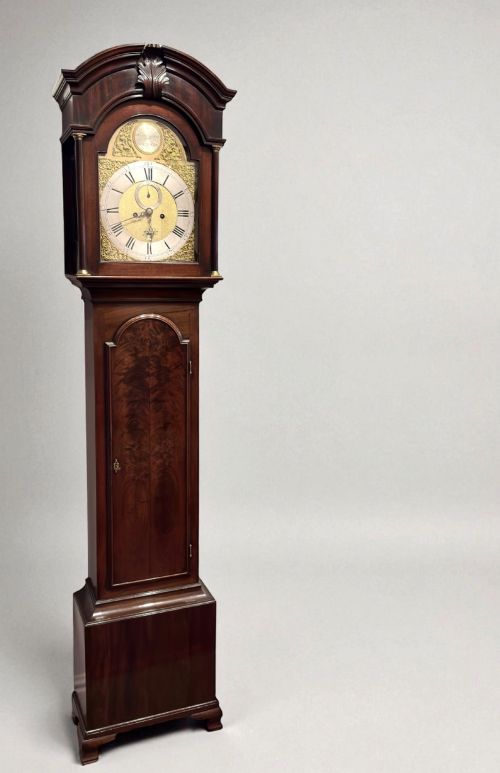


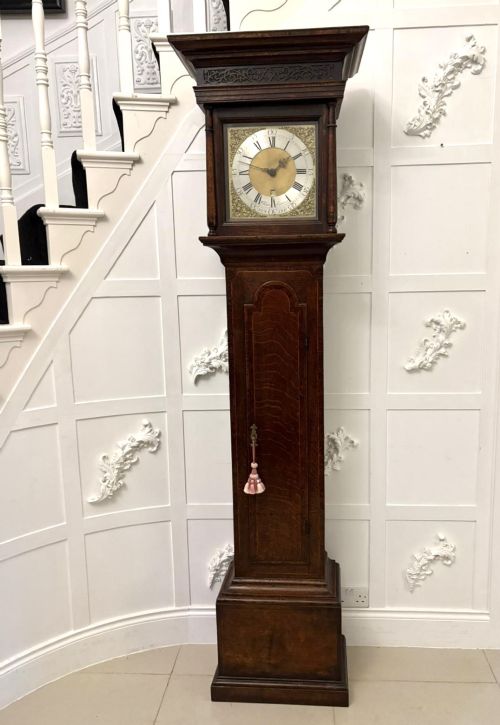
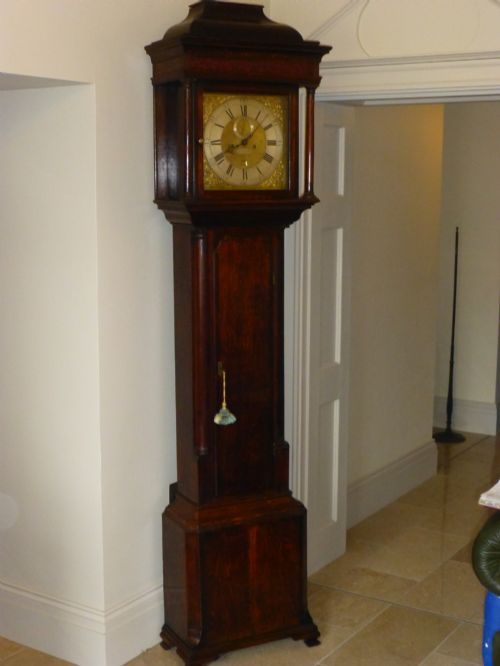
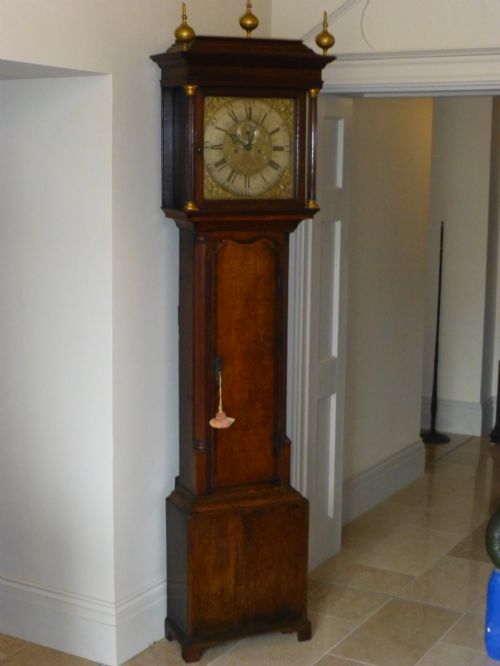
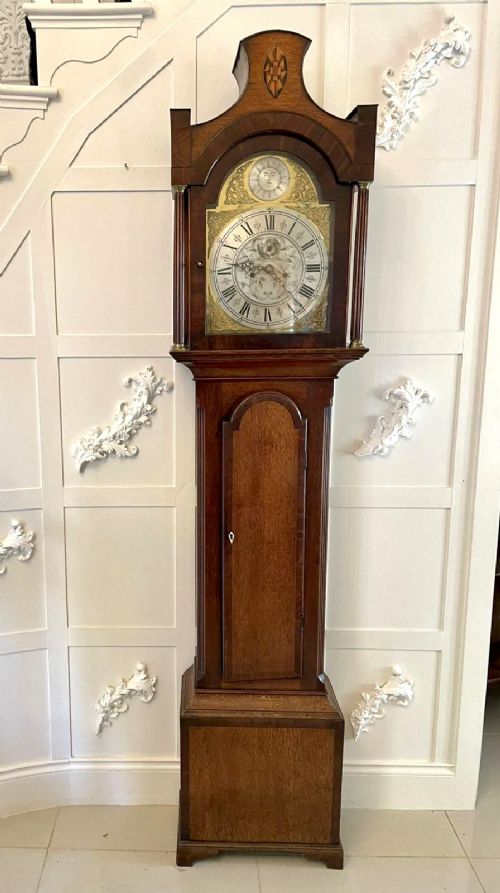
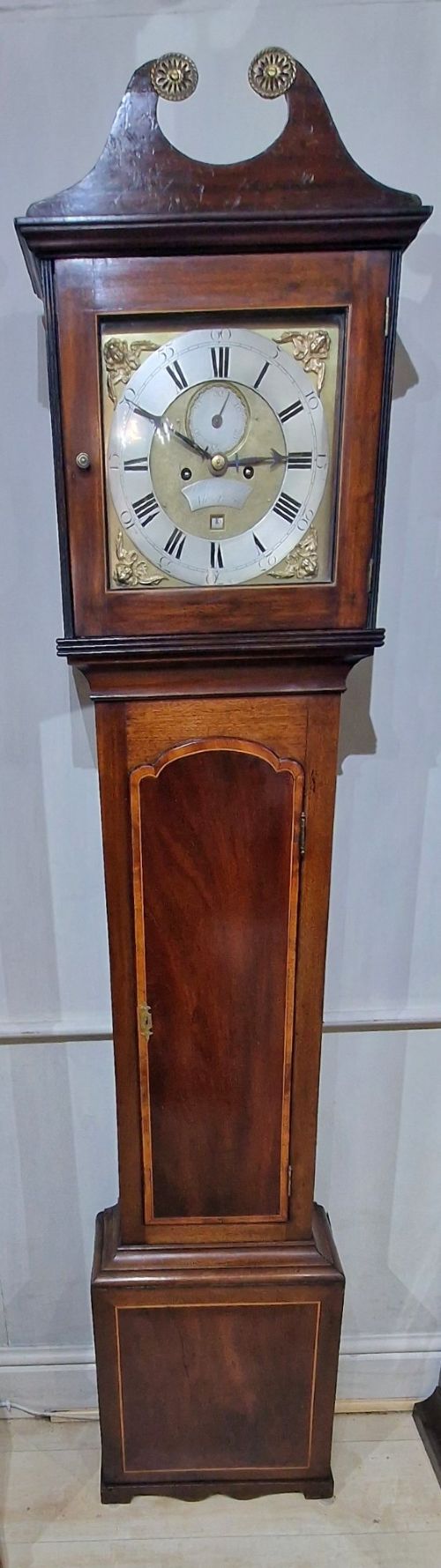
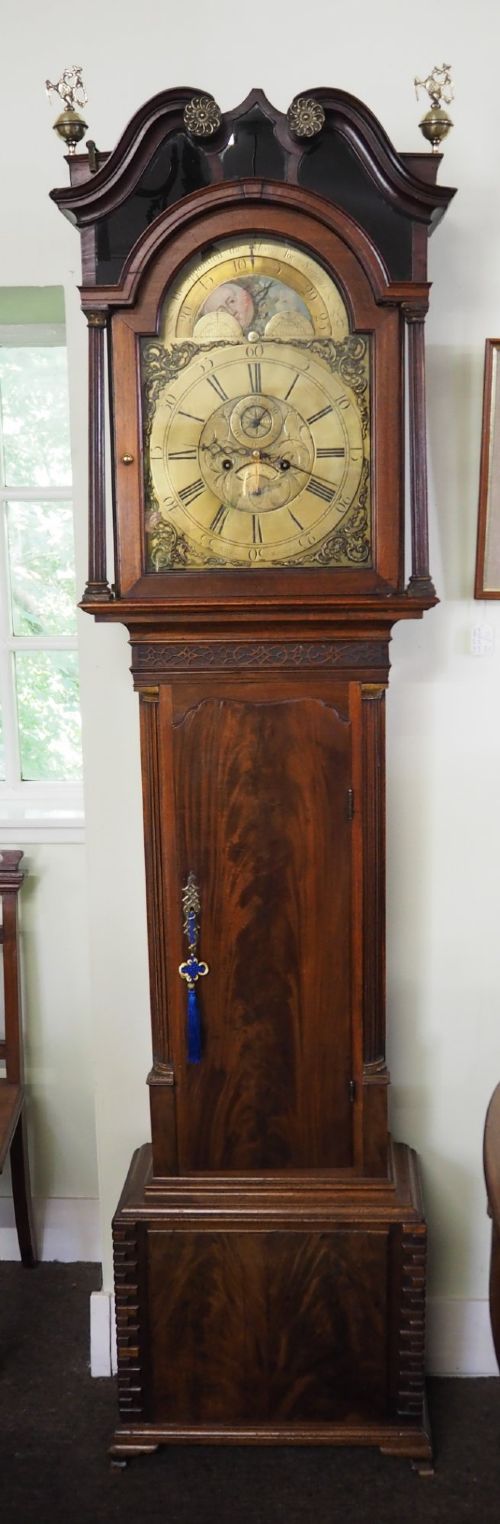
Brass Dial Longcase
When you search for a brass dial longcase, you step into centuries of precision engineering housed in timber.

Brass Dial Longcase
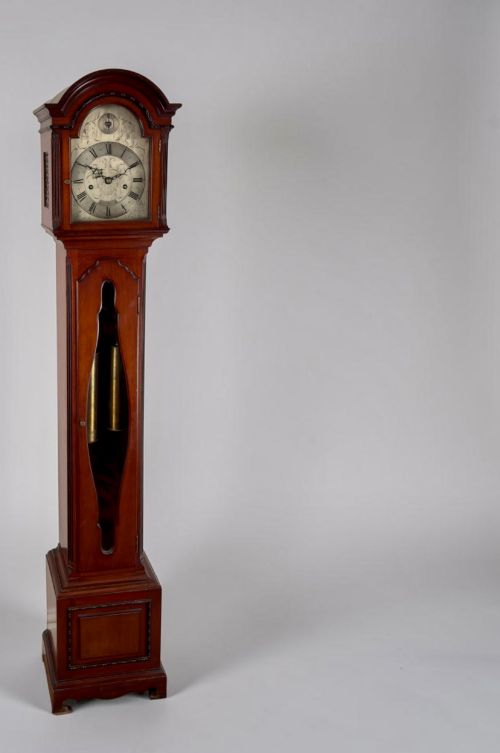
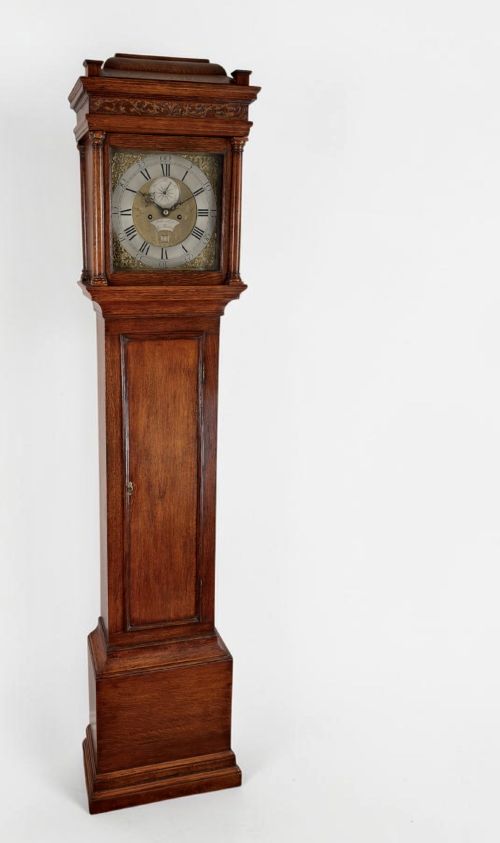
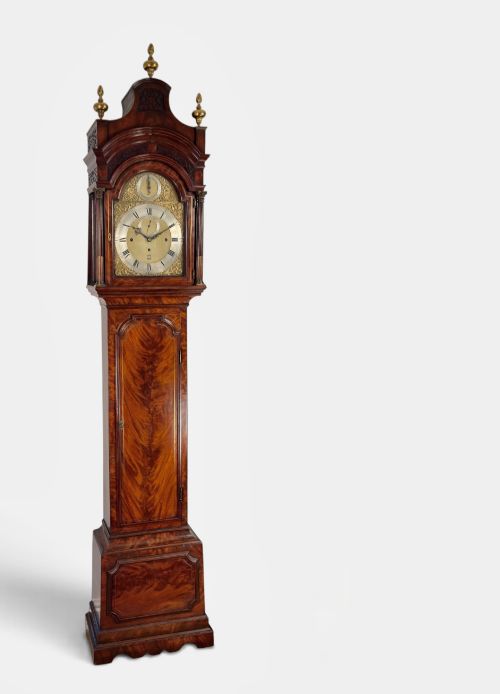
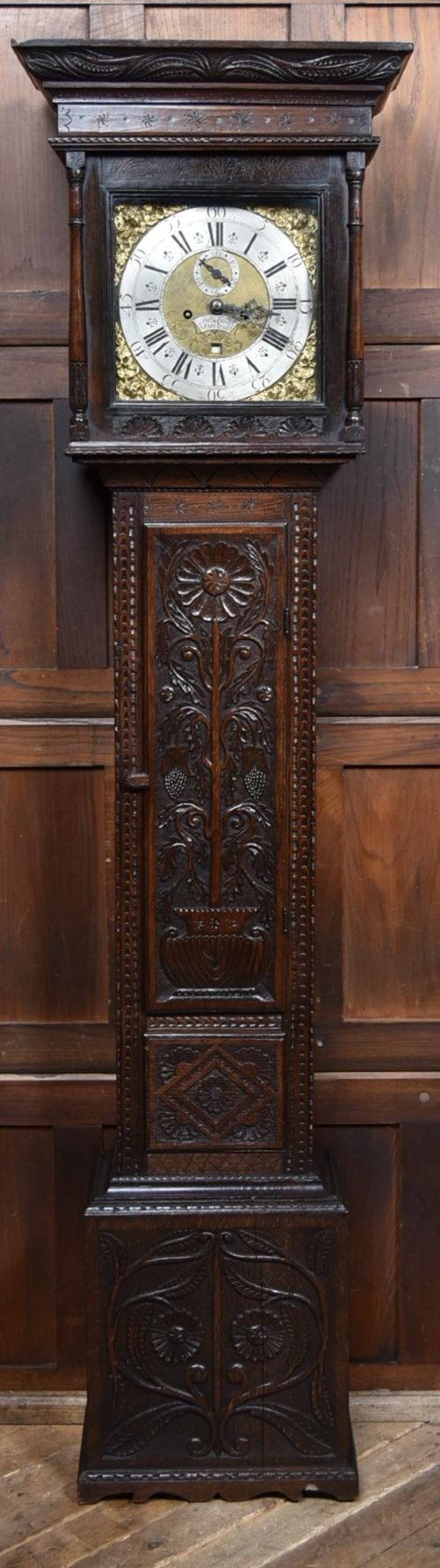
A brass dial longcase combines a weight-driven mechanical movement with a tall wooden housing, designed to stand upright in domestic spaces. These tall clocks measure time through swinging pendulums and falling weights, enclosed within cases built to protect the delicate internal mechanics.
Most examples encountered date from the eighteenth century into the early twentieth century, spanning the Georgian, Victorian and Edwardian eras. Regional makers across England, Scotland, Wales and Ireland produced these timepieces, resulting in distinct local variations in cabinet proportions and dial layout.
The form ranges from full-sized grandfathers down to smaller grandmother and daughter variants produced in later decades. Cases alternate between regional timbers like oak and imported hardwoods such as mahogany and walnut.
Materials and construction
Dial construction relies on cast brass sheets, often featuring applied silvered brass chapter rings for the hour numerals and engraved corner spandrels. Movements utilise brass wheels, steel pinions and iron plates, driven by lead or cast iron weights suspended by cords or chains.
Cabinet makers constructed the tall outer cases using native oak or figured mahogany and walnut veneers, frequently incorporating glass panels in the hood doors to display the dial. Joinery techniques included dovetailing for carcases and framed panels for trunk doors, finished with wax or polish.
Brass Dial Longcase Retail Price Guide 2026
Typical asking prices for brass dial longcase among the pieces listed under this phrase on Sellingantiques today, from the lower quarter to the upper quarter. They describe what is for sale here now, not the wider market.
Some regional clockmakers doubled as village blacksmiths, hammering out iron movement plates between shoeing horses and tuning church bells.
Assessing quality and execution
The refinement of the movement engraving and the precision of the wheel-cutting separate standard workshop production from master horological work. Hand-engraved dial centres, matted brass grounds and signed brass nameplates indicate higher status commissions.
Cabinet execution depends on timber selection, such as figured mahogany or burr walnut veneers, matched against proportion and secondary woods. Cases featuring slender dimensions, architectural hoods with columns and integrated arch mouldings represent superior cabinetmaker output.
Charles Shuckburgh·John Ellicott·James Field·William Jourdain·Benjamin Taylor
The Brass Dial Longcase Glossary
- Chapter ring
- The circular ring fixed to the dial face that displays the hour numerals. It is usually silvered brass to contrast with the yellow brass dial plate.
- Spandrels
- The decorative ornaments placed in the four corners of a square brass dial, often cast in brass as scrolls or cherubs.
- Moon dial
- A subsidiary mechanism beneath the arch of the dial that tracks the lunar month and phases of the moon using a rotating painted disc.
- Grandmother clock
- A smaller, slender version of the traditional longcase clock, typically produced during the twentieth century for more compact rooms.
Brass Dial Longcase: Frequently Asked Questions
How do I wind an 8 day longcase clock?
Use the winding key provided on the square arbor in the dial face to raise the weights slowly. Turn the key evenly until the weight reaches the top of its drop.
Take care not to overwind the movement, stopping as soon as resistance increases noticeably at the end of the chain or cord.
What is the difference between a grandfather and grandmother clock?
A grandfather clock is a full-sized floor-standing timepiece scaling upwards of six feet in height. These tall proportions accommodate long pendulums and heavy weight drops.
Grandmother clocks are scaled-down versions measuring significantly shorter, generally produced in the twentieth century to fit modern domestic ceiling heights.
Why do some clocks have moon dials?
A moon dial tracks the lunar cycle over a roughly twenty-nine and a half day period. This mechanism assisted farmers and travellers in gauging moonlight during night journeys before widespread artificial illumination.
The rotating disc displays two painted moons that appear consecutively beneath the dial arch as the cycle progresses.
How do I date an 18th century longcase clock?
Examine the dial dimensions, spandrel styles, and signature formatting to establish an approximate decade. Square brass dials dominate the early to mid-eighteenth century, while arched dials become prevalent towards the seventeen-seventies.
Case timber also offers clues, with native oak common in early regional pieces and imported mahogany rising in popularity during the Georgian period.