


Antique Portico Clock
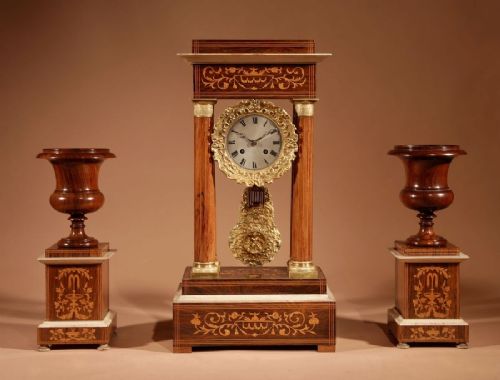
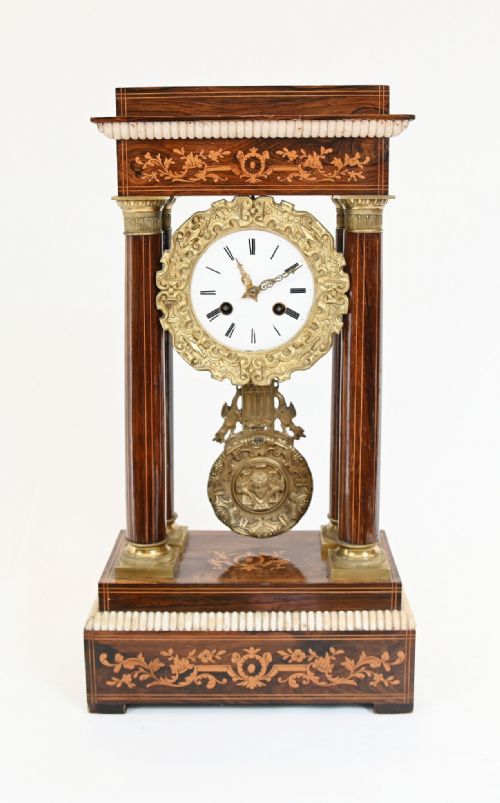
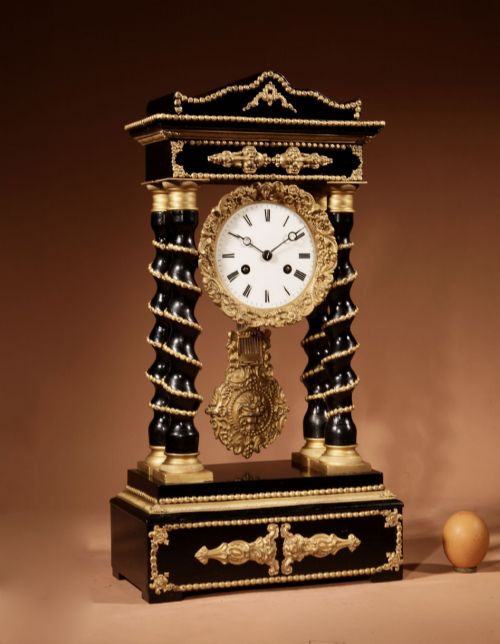
An antique portico clock brings architectural balance and steady motion to a mantelpiece, framed by slender columns supporting a central movement.
Antique Portico Clock
An antique portico clock is an architectural timepiece defined by two or more vertical columns supporting an upper entablature that houses the dial and movement, often accompanied by matching side garnitures. These pieces emerge primarily from the nineteenth century, spanning periods from the late eighteenth-century Empire and Charles X eras through to the later Victorian decades.
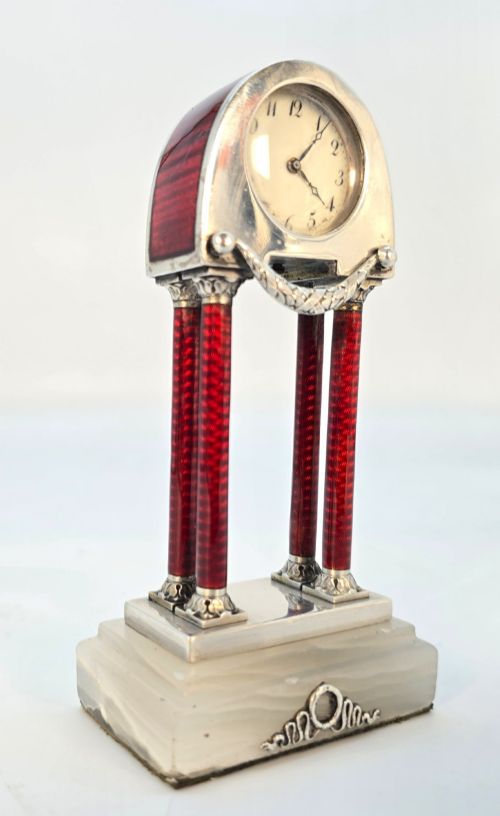
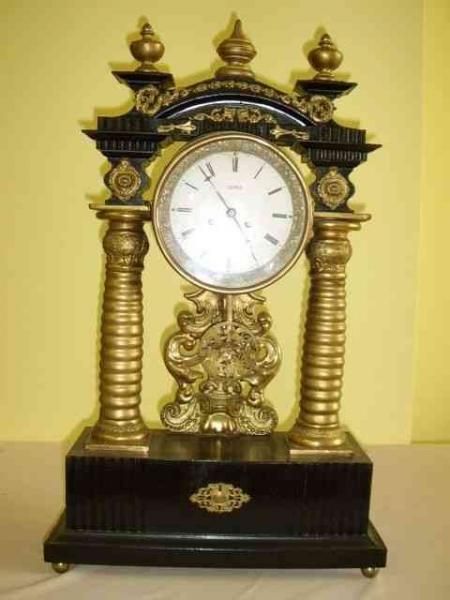
Variations include larger clock sets featuring matching candelabras or urns, alongside more compact desk clocks and occasional Vienna models. The prevailing styles draw heavily upon Louis XVI revival, neoclassical design, and French restoration aesthetics.
How they were made
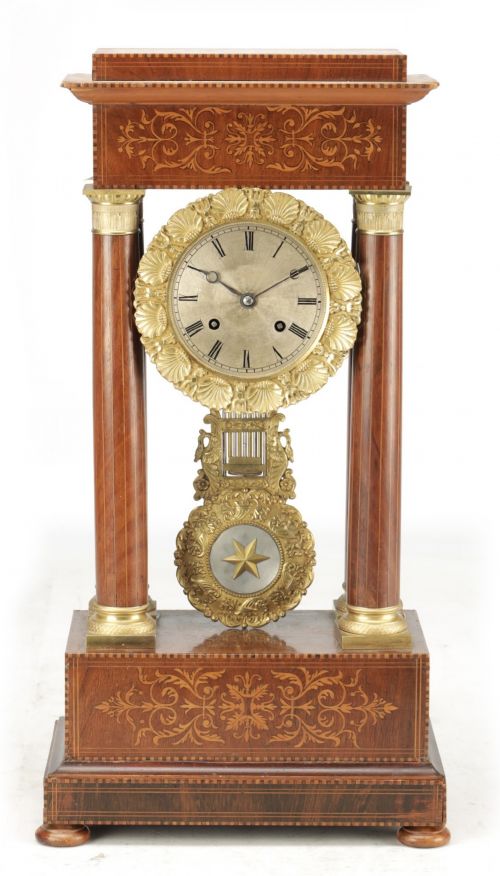
Cabinetmakers constructed the wooden frames from rosewood, mahogany, and ebonised timber, frequently applying delicate marquetry, satinwood, or lemon wood inlay to the flat surfaces. Stone varieties such as white marble, pink marble, alabaster, and sienna marble were shaped into solid bases and columns, providing substantial weight to anchor the towering structure.
Foundries cast ormolu, gilt bronze, and brass elements to ornament the bases, capitals, and bezels, often employing mercury gilding on earlier nineteenth-century pieces to achieve a deep, lasting lustre. Dials were formed from enamel, silvered metal, or cut crystal, housing precision mechanical movements driven by springs or weights.
Materials span alabaster, cut crystal, ebonised wood, and ormolu paired with enamel dials.
What varies in quality
The refinement of the casting and chiselling in the ormolu mounts separates standard production from superior work, where hand-chased details remain crisp and deep after gilding. The choice of materials also dictates quality, distinguishing standard timber carcases from finely figured rosewood veneer embellished with intricate marquetry and specimen marbles.
Georg Adam Scheid·Breguet·Baltazart·AD Mougin Paris·Fritz Marti·Japy Freres
The Antique Portico Clock Glossary
- Portico clock
- A mantel timepiece designed in the architectural form of a portico, featuring two or more vertical pillars supporting a pediment above a suspended pendulum.
- Ormolu
- Gilt bronze produced by applying a mixture of gold amalgam to a brass or bronze base and heating it to drive off the mercury.
- Clock garniture
- A matching set consisting of a central clock flanked by decorative accessories such as candelabras, vases, or urns designed to sit together on a mantelpiece.
- Knife-edge suspension
- A delicate clock suspension system utilising a sharp steel edge resting against a flat surface to minimise friction in the pendulum swing.
- Specimen marble
- Multi-coloured decorative marble sections assembled into a mosaic pattern, frequently utilised on high-status nineteenth-century clock bases.
Antique Portico Clock: Frequently Asked Questions
How do I wind an antique portico clock?
Most models use a key inserted into winding holes on the enamel or silvered dial to tension the mainsprings for time and strike trains.
Care must be taken not to over-wind the movement, turning the key gently until firm resistance is felt.
Why does the pendulum need beating evenly?
The architectural symmetry of a portico clock requires the cabinet to stand level on the mantelpiece so the pendulum maintains an even tick.
Adjusting the small screws on the feet or using a spirit level ensures the delicate suspension spring functions without binding.
What is a clock garniture?
A garniture comprises the main mantel clock accompanied by a matched pair of decorative side pieces like candelabras or urns.
These sets were designed to create a balanced symmetrical display across a fireplace or sideboard.
How can I tell Charles X from Empire style?
Empire portico clocks lean towards heavy classical military motifs and rich ormolu mounts on dark wood or plain marble.
Charles X pieces often introduce lighter wood veneers like rosewood alongside geometric inlay and clearer, airier architectural proportions.