


Rosewood Desk Clock
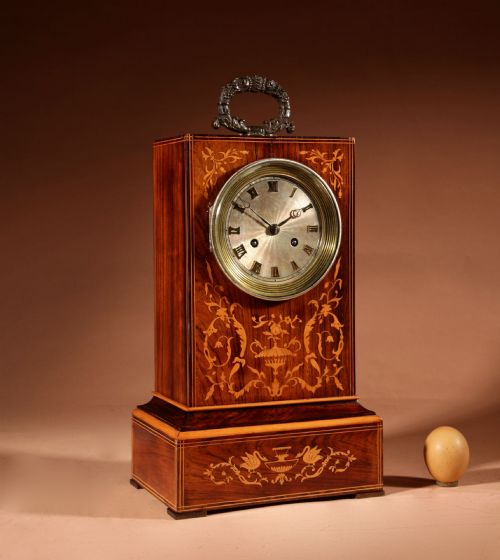
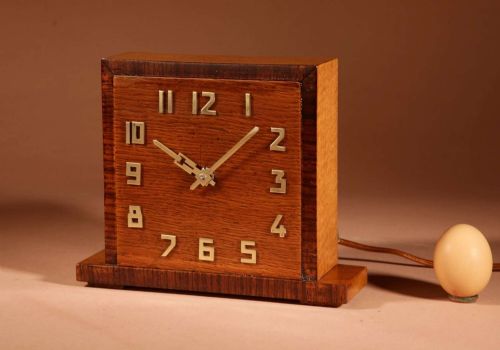
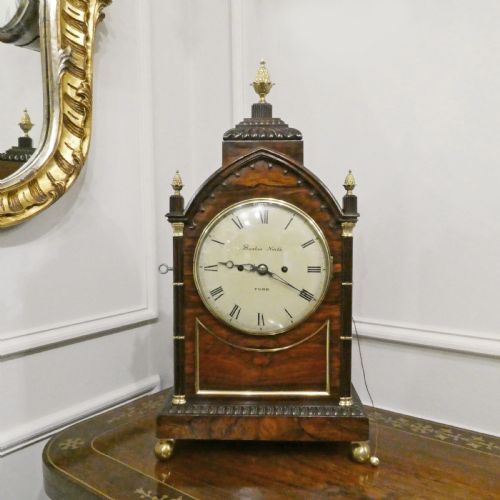
These rosewood desk clock examples combine rich timber cases with precise timekeeping, making them a handsome addition to any writing surface or mantelpiece.
Rosewood Desk Clock
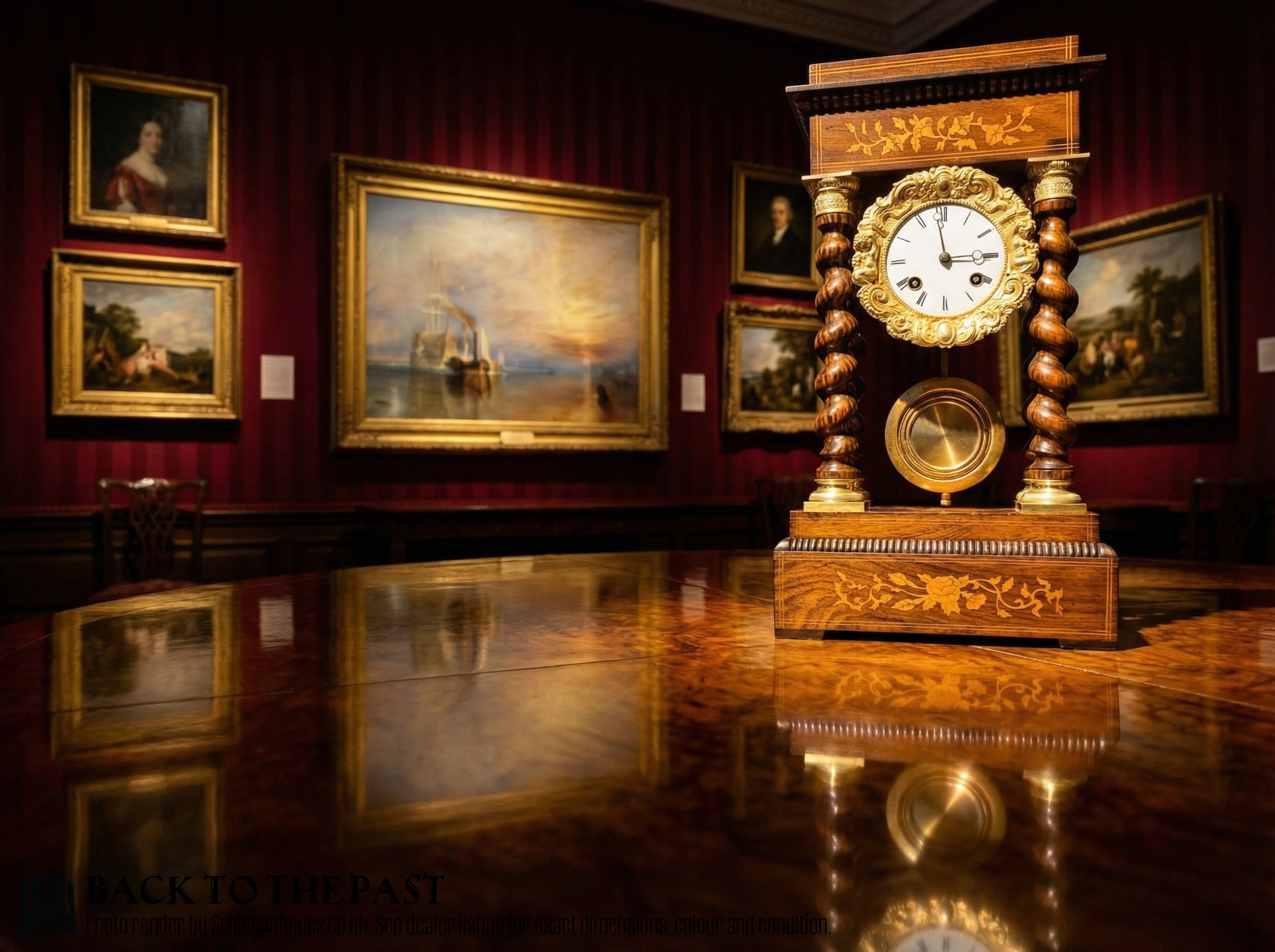
When you search for a rosewood desk clock, you are looking at timepieces housed in dark, heavily grained timber cases that sit comfortably on furniture surfaces. The pieces listed on this page span several distinct periods, including Regency, William IV, Victorian, and the early twentieth century.
Most examples you will meet here take the form of mantel clocks, bracket clocks, or library clocks. These range from substantial architectural portico designs to smaller drum head and five-glass library timepieces intended for personal desks.
How they were made
Cabinetmakers constructed the housing using solid rosewood or applied wood veneer over a secondary timber foundation such as oak. Many cases incorporate contrasting details, utilising boxwood inlay, satinwood, or delicate mother of pearl to accent the dark grain of the rosewood.
What varies in quality
The standard of a rosewood desk clock depends heavily on the crispness of the cabinetwork and the integration of secondary materials like boxwood inlay or brass stringing. Finer examples display meticulous attention to timber selection, matching the grain patterns symmetrically across the front of the case.
Movement sophistication also separates the range, with fusee mechanisms and platform escapements representing higher grades of horological engineering. Signed dials bearing the names of established makers add a layer of distinction that elevates certain pieces above standard production clocks.
Barber and North of York·S Simpson Southampton·Henry Marc·Walker and Hall·Plumbly and Tupman London·Malecot of Paris
The Rosewood Desk Clock Glossary
- Bracket Clock
- A portable spring-driven clock originally designed to sit on a wall bracket but later placed on tables or desks. They frequently feature arched wooden cases with brass carrying handles on top.
- Fusee
- A conical pulley used in spring-driven clocks to equalise the diminishing power of the mainspring as it unwinds. This mechanism ensures more consistent timekeeping throughout the running cycle.
- Portico Clock
- A style of clock featuring an architectural case modelled after classical temples with vertical pillars. These French designs often pair rosewood with contrasting wood veneers and gilt bronze mounts.
- Library Clock
- A compact timepiece designed for domestic study use, often featuring glass panels on multiple sides to expose the movement. English five-glass variants are typical examples of this form.
- Platform Escapement
- A self-contained escapement and balance wheel assembly fitted directly to the movement. This innovation allowed clocks to keep accurate time without needing to remain strictly vertical.
Rosewood Desk Clock: Frequently Asked Questions
Where should I place a desk clock?
These clocks suit flat surfaces where their detailed timber cases remain visible at close range. They sit well on writing desks, side tables, or mantelpieces.
Keep them away from direct sunlight and strong draughts to protect the rosewood finish and internal mechanisms.
How do I wind a fusee clock?
Use the appropriate key inserted into the dial winding square, turning it gently until resistance indicates the mainspring is fully tensioned. Take care not to overwind the mechanism.
Consult the specific winding requirements for fusee or spring-driven movements before adjusting them.
What is a five-glass clock?
A five-glass clock is a library timepiece featuring glass panels on the top, front, two sides, and back of the case. This construction allows light to pass through and reveals the inner workings.
English examples from the nineteenth century frequently utilise this open design in rosewood cases.
How do I tell Regency from Victorian styles?
Regency rosewood clocks often display restrained classical geometry, sometimes incorporating precise brass inlay and architectural proportions. They reflect tastes from the early nineteenth century.
Victorian pieces introduce broader stylistic influences, including marquetry work, heavier proportions, and French portico designs.