
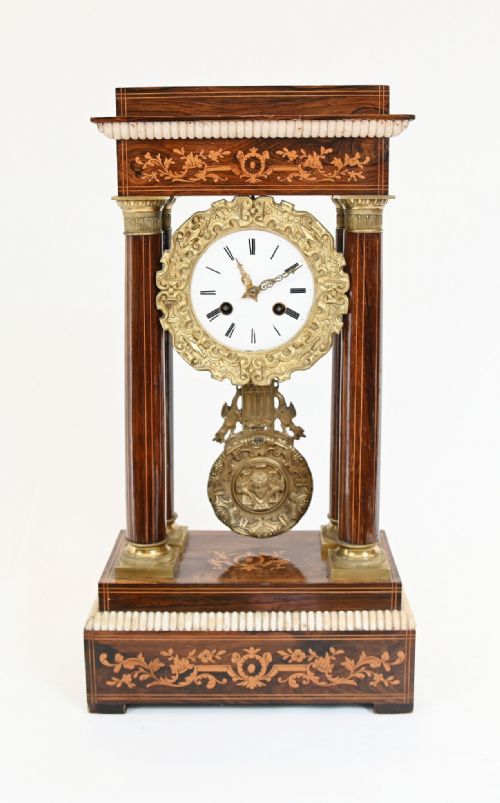


Charles X Portico Clock
A charles x portico clock combines architectural symmetry with precision timekeeping, offering the classic pillar-and-lintel silhouette collectors seek for grand mantelpieces.
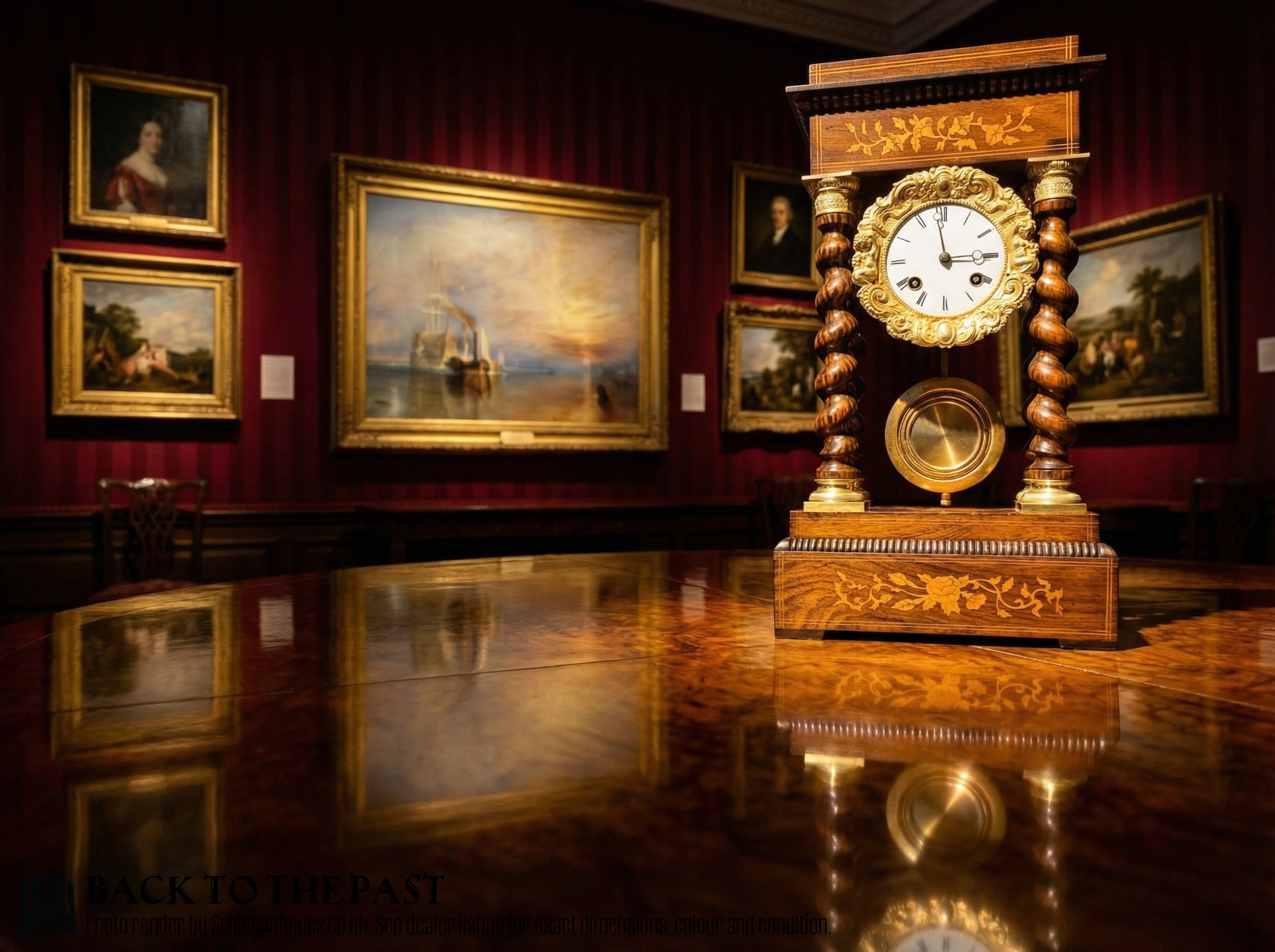
Charles X Portico Clock
A charles x portico clock takes the form of a miniature temple supported by slender columns, housing a central pendulum movement within an architectural framework.
Most examples found here date from the nineteenth century, reflecting the French Restoration style alongside occasional Victorian reinterpretations.
Makers utilised distinct forms ranging from geometric rosewood cases with lemon wood inlay to extravagant designs featuring cut crystal columns and ormolu mounts.
Materials and construction
Cabinetmakers constructed these architectural frames using dense timbers like rosewood and satinwood, frequently applying intricate marquetry and contrasting wood inlays.
Gilt bronze and ormolu mounts provided structural accents and decorative bezels around the enamel dials, while heavy cut crystal served for the supporting pillars on high-end examples.
Listings feature nineteenth-century French pieces alongside Victorian variations, incorporating materials such as cut crystal, white marble, rosewood, and gilt bronze.
Judging the work
Quality rests upon the crispness of the mercury gilding or ormolu chasing and the complexity of the timber inlay work across the base and lintel.
Superior pieces display harmonious proportions between the heavy marble or wooden base and the delicate columns, accompanied by signed movements from notable horologists.
Breguet·Baltazart
The Charles X Portico Clock Glossary
- Portico clock
- An architectural mantel clock supported by four or more columns resembling a classical porch. This symmetrical design gained immense popularity during the French Restoration period.
- Ormolu
- Finely ground high-carat gold mercury-gilded onto a bronze base. This technique creates a rich, durable metallic finish characteristic of French luxury pieces.
- Marquetry
- Decorative veneer patterns assembled from various woods and applied to the clock case. Artisans used contrasting tones to create geometric or floral motifs.
- Enamel dial
- A metal face fused with powdered glass powder fired at high temperatures. This creates a smooth, glossy surface resistant to discolouration over centuries.
Charles X Portico Clock: Frequently Asked Questions
What is a portico clock?
A portico clock is a mantel timepiece built in the shape of a classical temple, featuring vertical columns that support an upper lintel with the dial suspended between them.
These clocks emerged strongly during the nineteenth century in France, reflecting a widespread architectural fascination with classical antiquity.
How do I wind the clock?
Most mechanical versions require a specialised winding key inserted directly into the enamel dial holes to tension the mainsprings for time and strike functions.
Careful handling ensures the internal movement remains undamaged during routine maintenance.
Where should I place it?
These architectural timepieces require a sturdy, level mantelpiece or console table to maintain proper pendulum beat and prevent the tall columns from leaning.
Keeping them away from direct sunlight and drafts protects delicate wooden veneers and antique gilding.
How are periods told apart?
Early nineteenth-century examples often favour warm rosewood veneers paired with fire-gilded ormolu mounts and cut crystal pillars, following strict French Restoration aesthetics.
Later Victorian interpretations tend to incorporate denser marquetry and alternative timber combinations while retaining the core architectural template.