

French Timepiece
These French timepiece examples range from robust carriage clocks to decorative mantel designs, offering mechanical precision and period elegance for the collector.
French Timepiece
A French timepiece encompasses diverse forms such as carriage clocks, mantel clocks, and pocket watches originating from the nineteenth and early twentieth centuries. These objects combine practical utility with sophisticated decorative arts, spanning periods from the French Empire through the Art Deco era.
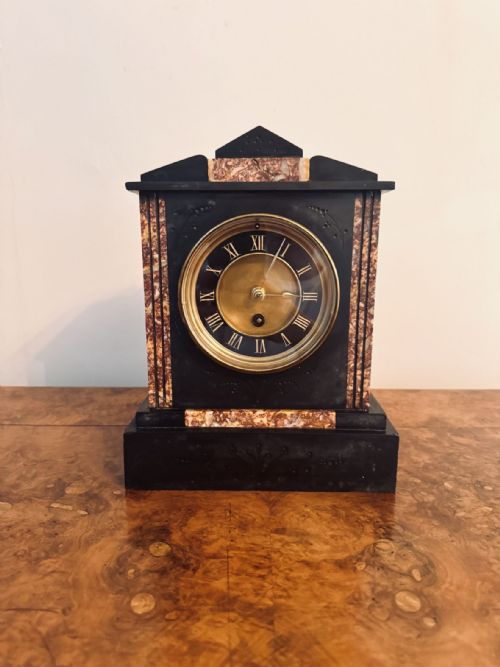
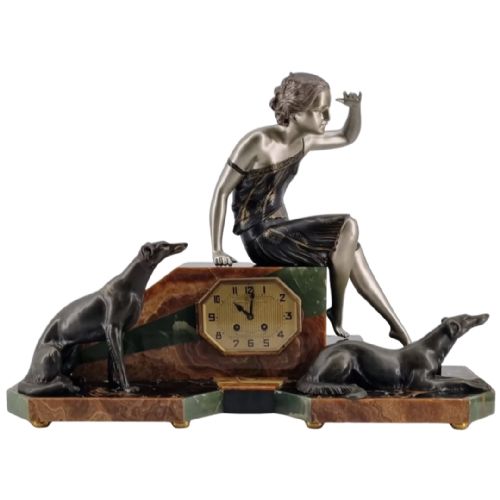
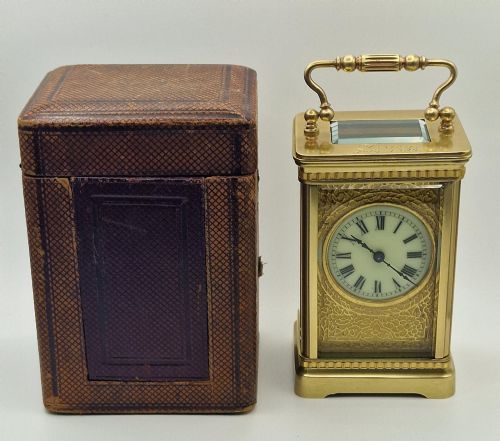
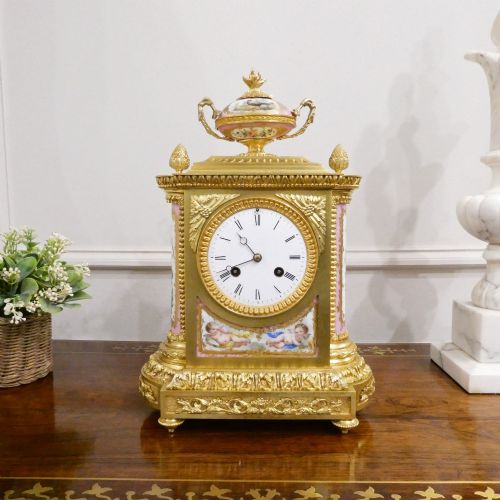
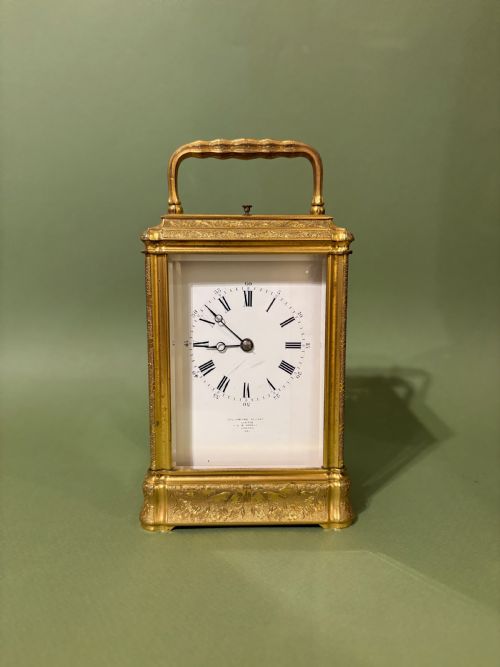
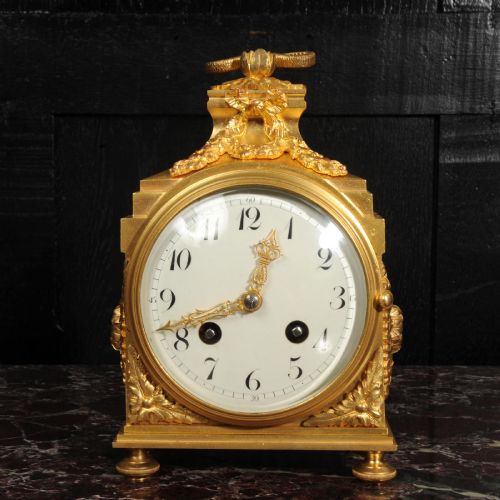
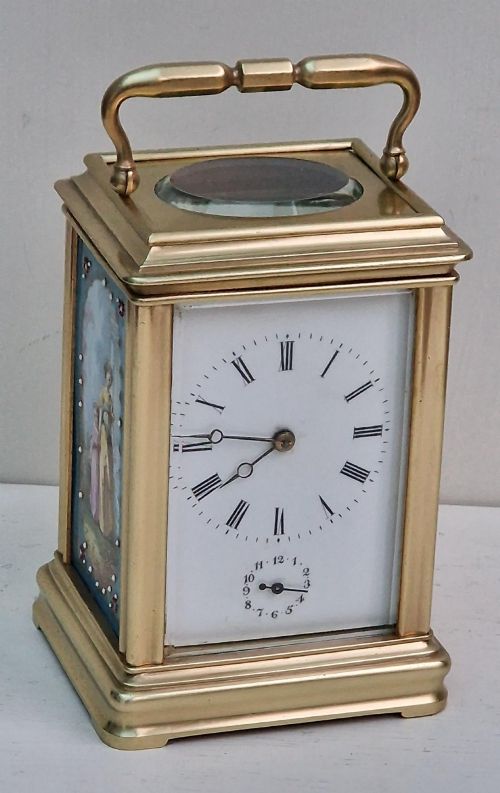
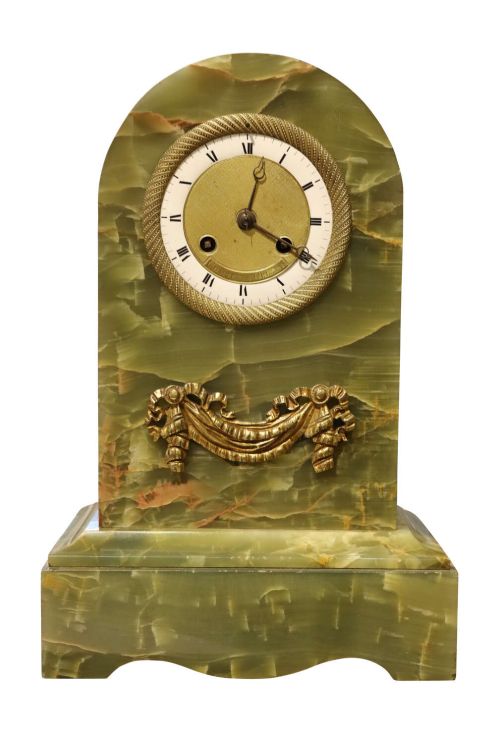
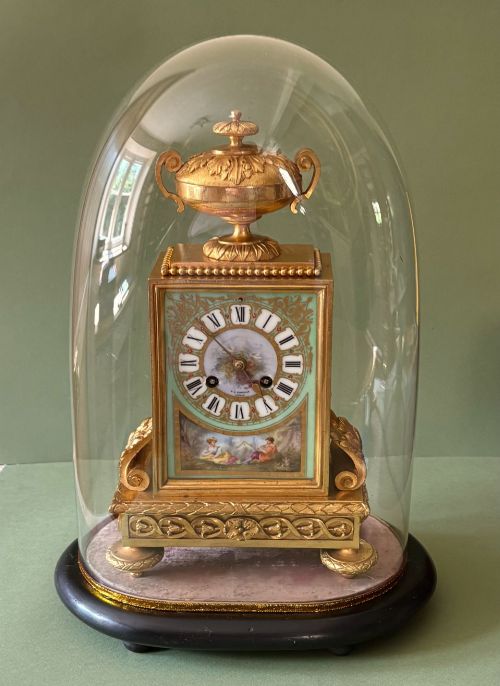
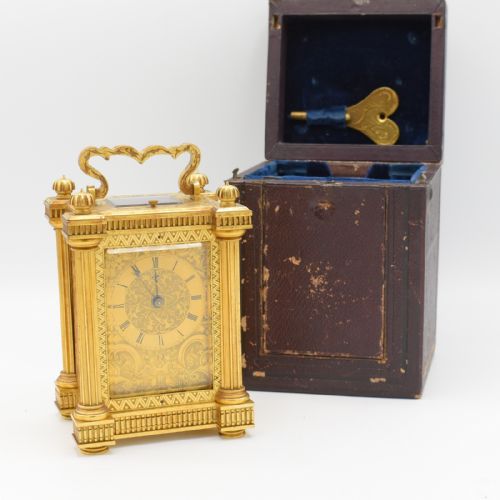
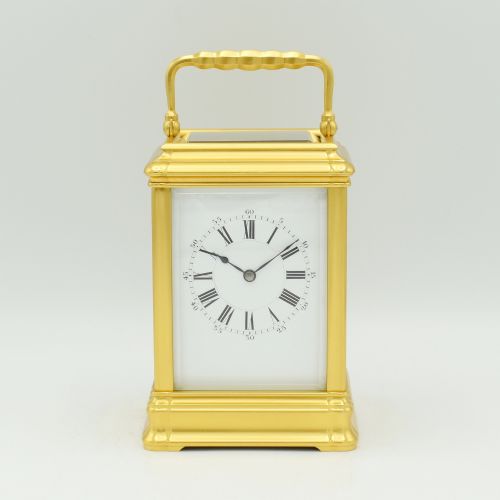
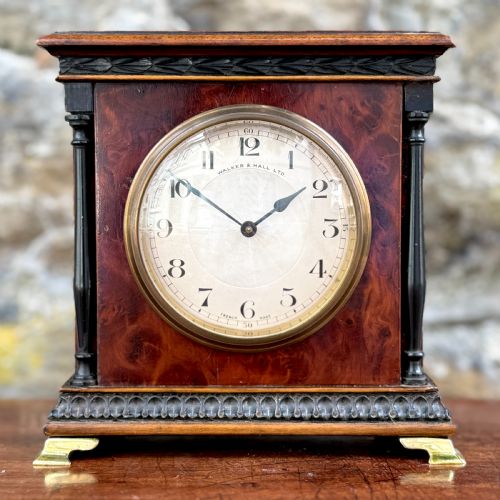
Mantel clocks dominate the selection, frequently utilising heavy marble, ormolu, and bronze alongside classical or figural motifs. Carriage clocks provide a more compact alternative designed originally for travel, housed in brass frames with glass panels.
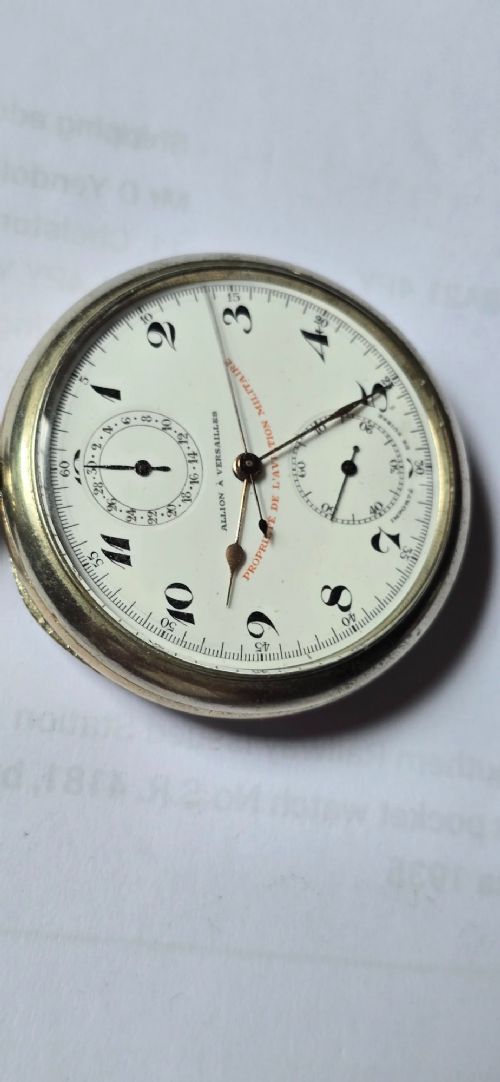
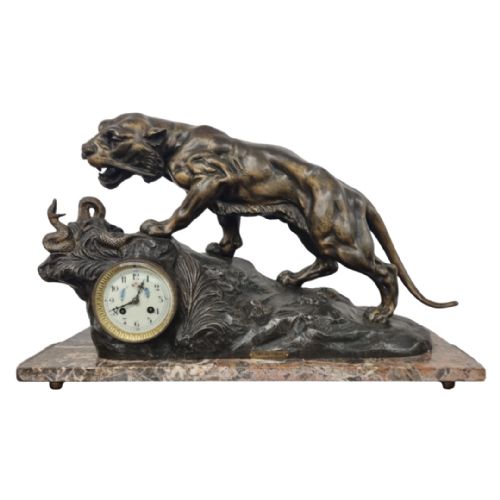
The aesthetic evolves from ornate nineteenth-century ormolu and porcelain mounts towards streamlined geometric forms in walnut, bakelite, and opalescent glass by the 1920s and 1930s. Buyers encounter everything from military pocket chronographs to monumental sculptural pieces featuring animals or mythological themes.
Materials and Construction Methods
Metalworking forms the structural foundation of these objects, utilising cast brass, gilded bronze, and ormolu to create elaborate cases and bezels. Foundries employed lost-wax and sand casting techniques to shape intricate decorative mounts and figural sculptures.
Natural materials such as green onyx, marble, mahogany, rosewood, and walnut provide weighty, stable housing for precision movements. Glass panels enclose carriage clocks and wall dials, while painted enamel and porcelain panels introduce detailed floral or narrative imagery to the dial faces.
Specialised decorative treatments like fire gilding and Boulle marquetry decorate the external surfaces of high-status pieces. Mechanical components require hand-finished brass gears, escapements, and steel springs fitted by skilled horologists.
An opalescent Art Deco glass clock depicts inseparable love birds perched quietly above the dial.
Distinctions in Quality
The refinement of the casting and chasing work separates standard production from exceptional examples, visible in the sharpness of detail on ormolu mounts and bronze figures. Makers who invested time in hand-chasing after casting achieved depth and crispness that mass production missed.
The complexity and reputation of the horological movement dictate the standing of a piece, with complications like repeaters or specialised escapements commanding greater regard. Signature marks from recognised makers or retailers add documentary weight and confirm workshop standards.
Material selection and preservation of original surfaces dictate overall desirability, particularly where mercury gilding, hand-painted porcelain panels, or delicate opalescent glass remain intact without replacement parts.
Uriano·Allion of Versailles·Jean-Baptiste Delettrez·Henri Jacot·Charles à Orléans·R Varnier·Walker and Hall·R Lalique·Vedette·Jaz·Pickford of London
The French Timepiece Glossary
- Ormolu
- Gilded bronze produced by applying a mercury and gold amalgam to a bronze base and heating it until the mercury vaporised. This technique creates a durable, deep golden surface common on nineteenth-century French mantel clocks.
- Carriage clock
- A portable spring-driven timepiece designed for travel during the nineteenth century. These clocks typically feature a rectangular brass case with bevelled glass panels and a swinging handle on top.
- Pendule d'Officier
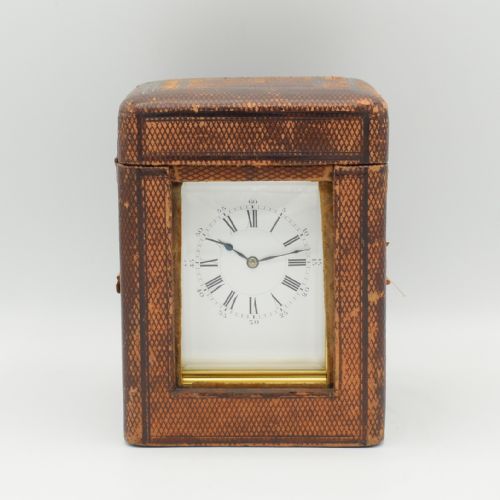
- A military-style travel clock from the French Empire period, often housed in a leather travel case. These compact timepieces served military officers in the field.
- Boulle
- A form of marquetry developed in France utilising tortoiseshell and brass inlay. It appears on decorative clock cases of the nineteenth century.
- Escapement
- The mechanical linkage in a clock that transforms rotary motion into impulses to sustain the pendulum or balance wheel. It regulates the speed at which the gear train unwinds.
French Timepiece: Frequently Asked Questions
What is a French carriage clock?
A French carriage clock is a portable timepiece housed in a brass frame with glass panels, originally designed for travellers. They rely on spring-driven movements rather than weights.
Most examples date from the Victorian era up to the early twentieth century and feature swinging handles on their upper cases.
How do I identify an Art Deco timepiece?
Art Deco timepieces utilise geometric shapes, streamlined silhouettes, and modern materials such as bakelite, walnut, and opalescent glass. They frequently incorporate stylized motifs rather than classical ornamentation.
These clocks generally date from the 1920s and 1930s, moving away from nineteenth-century ormolu and heavy marble.
Where should I place a heavy marble mantel clock?
Heavy marble mantel clocks require stable, level surfaces capable of supporting substantial weight, such as a fireplace mantel, sturdy sideboard, or dedicated console table. Placement should avoid direct sunlight and damp environments to protect internal metals and stone.
Ensuring a level foundation allows the pendulum to swing evenly and keeps the movement running accurately.