


Antique Floral Inlay Clock
An antique floral inlay clock brings together botanical marquetry and mechanical timekeeping, offering a striking focal point for any room through centuries of craftsmanship.
Antique Floral Inlay Clock
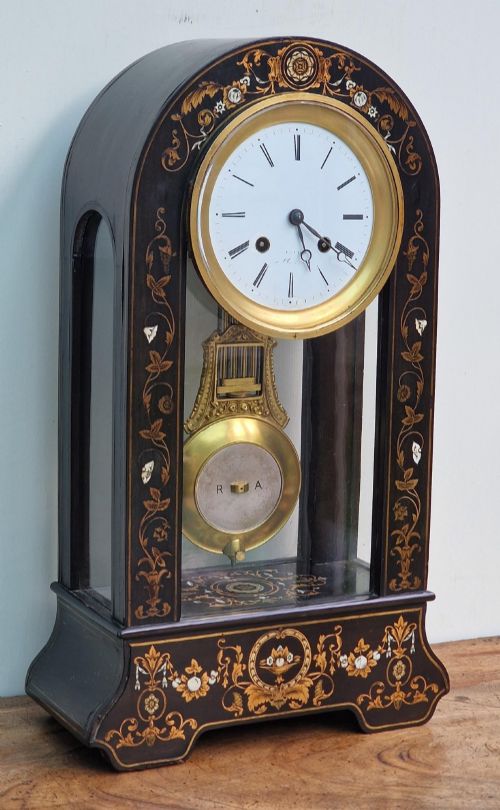
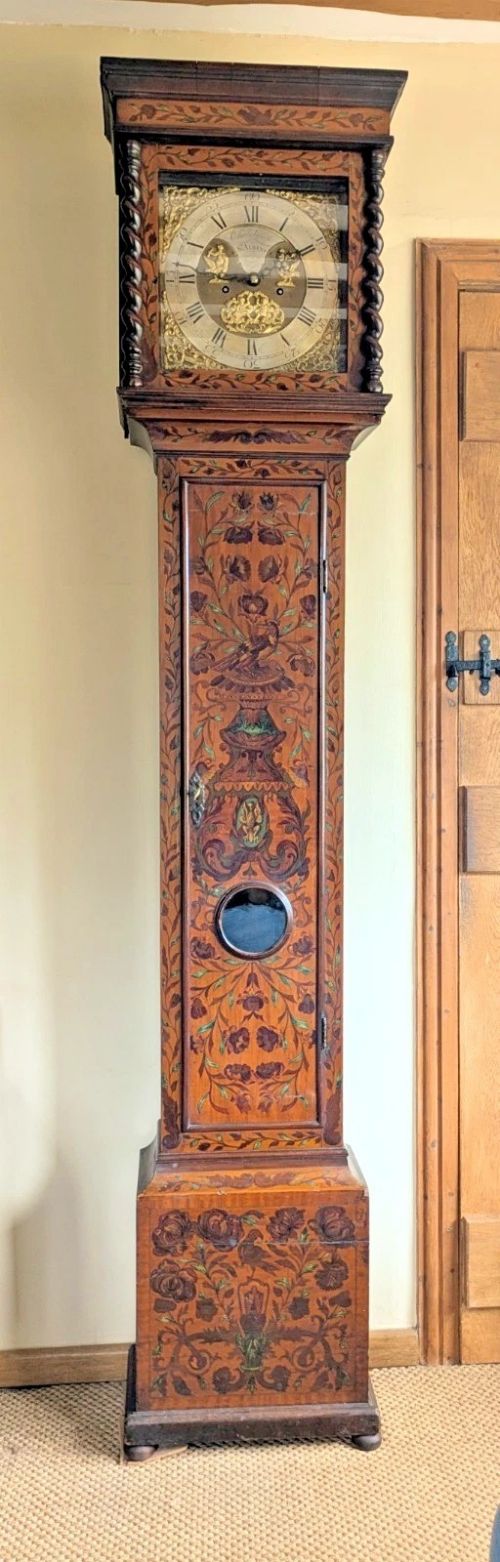
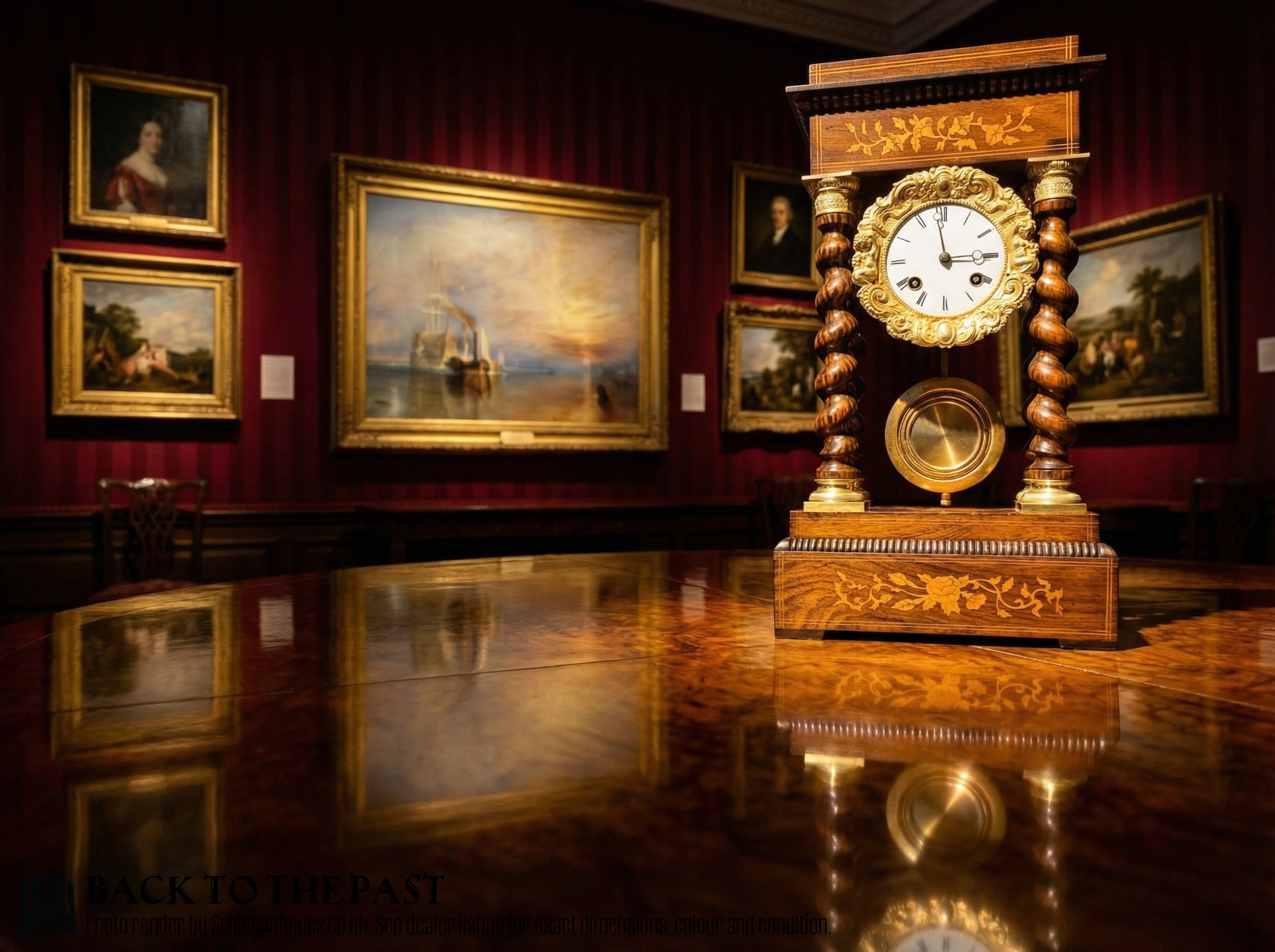
When you search for an antique floral inlay clock, you are looking at timepieces decorated with detailed wood patterns representing flowers, foliage, and natural motifs. These pieces span from the late seventeenth century through the Edwardian period, encompassing tall longcase clocks and smaller mantel variations.
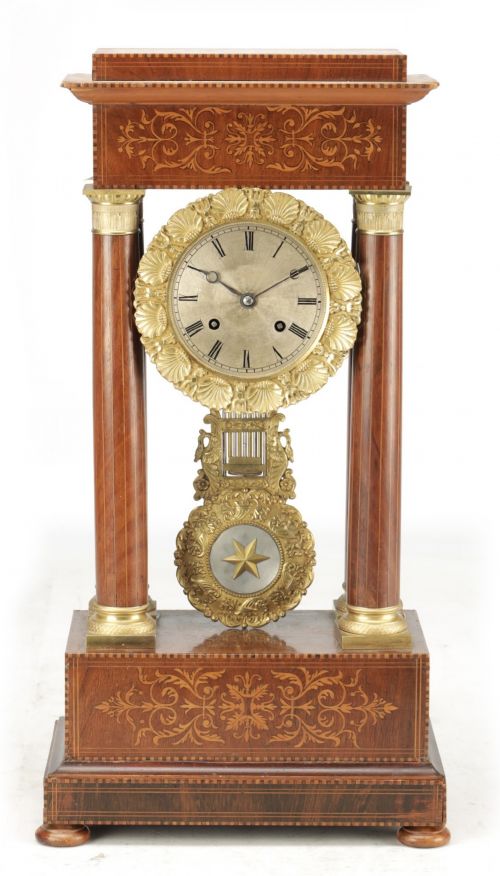
The selection ranges from early English longcase clocks housed in walnut and marquetry to nineteenth-century French rosewood mantel clocks and Edwardian mahogany designs. Mantel clocks and longcase clocks dominate the offerings, showcasing intricate floral details executed in contrasting timbers.
Originating across English and French workshops, these clocks reflect diverse stylistic movements from William and Mary to Art Nouveau. You will frequently encounter domestic mantel clocks alongside substantial floor-standing longcase examples.
How they were made
Cabinetmakers utilised rich foundation timbers such as rosewood, walnut, mahogany, and satinwood to construct the primary housing for the clock movements. These woods provided a stable and dark background against which lighter decorative elements could stand out.
Marquetry inlay techniques involved cutting thin veneers of boxwood and other contrasting materials to form floral motifs, which were then fitted precisely into recessed channels within the cabinet surface. Brass accents, glass panels, and enamel dials completed the physical assembly of the timepieces.
Listings feature clocks spanning the seventeenth century through the Edwardian era, constructed from rosewood, walnut, mahogany, and brass.
What varies in quality
The precision and complexity of the floral marquetry dictate the upper tier of execution, where individual petals and leaves are shaded and fitted with extreme accuracy. Simpler designs rely on basic geometric borders with minimal floral detailing.
The choice of cabinet wood and the sophistication of the clock movement separate standard domestic pieces from works bearing maker signatures. Superior examples integrate mechanical complexity, such as eight-day movements or added thermometers, within finely figured rosewood or walnut cases.
Charles Louch St. Albans·Nathaniel Pyne·Henry Marc·Savory and Fils A Paris·Henry Massy·Richard Baker·Malecot of Paris
The Antique Floral Inlay Clock Glossary
- Marquetry Inlay
- The art of applying decorative pieces of veneer to a structural surface to form intricate floral or geometric patterns. This technique defines the visual character of the clock cases.
- Longcase Clock
- A tall, weight-driven pendulum clock housed in a wooden tower standing directly on the floor. These grand timepieces often feature elaborate hood designs and detailed dial faces.
- Mantel Clock
- A portable clock designed to sit on the shelf above a fireplace or on domestic furniture. These compact pieces frequently display floral marquetry across their wooden housings.
- Portico Clock
- A distinct architectural style of mantel clock featuring side columns supporting a lintel structure. They often utilise rosewood and gilt brass elements.
- Bracket Clock
- A portable household clock originally designed to sit on a wall bracket or table. Examples in this category employ satinwood and incorporate distinct decorative styles.
Antique Floral Inlay Clock: Frequently Asked Questions
How do I wind an antique clock?
Most mechanical clocks require a key inserted into the dial face to tension the internal springs or lift the driving weights.
Care must be taken not to over-wind the mechanism, stopping as soon as resistance is felt.
Where should I place a mantel clock?
Mantel clocks suit stable horizontal surfaces away from direct sunlight and sources of excessive heat.
Placing them on a level shelf ensures the pendulum swings evenly for accurate timekeeping.
How do I identify a longcase clock?
Longcase clocks are tall floor-standing timepieces characterised by a trunk that encloses the hanging weights and pendulum.
They typically feature a hooded top containing the dial and movement.
What woods were used for inlay?
Cabinetmakers employed contrasting timbers such as boxwood, satinwood, and various fruitwoods to create distinct floral designs against darker carcases.
The natural grain and colour variations of the wood provide depth to the marquetry.