
Brass Pendulum Mantel Clock
A brass pendulum mantel clock brings mechanical precision and nineteenth-century craftsmanship into a room.
Brass Pendulum Mantel Clock
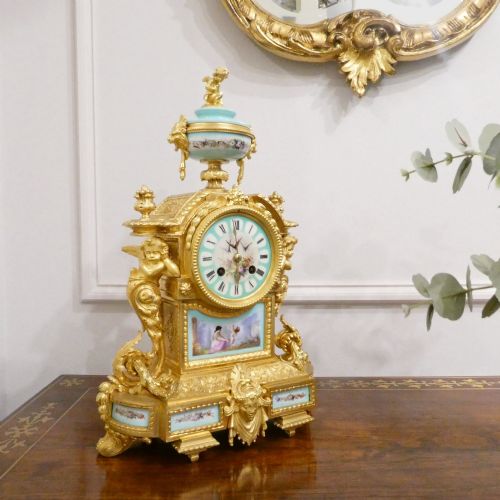
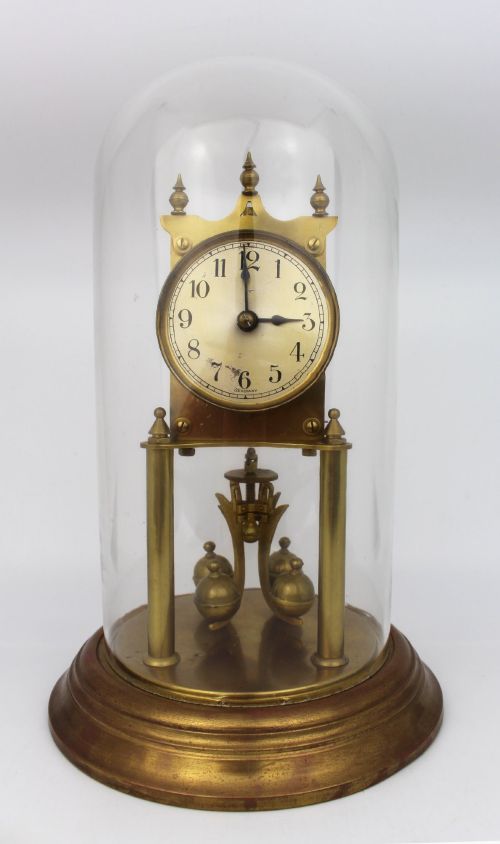
A brass pendulum mantel clock combines heavy brass framing with visible swinging movements designed to sit stably on a shelf or fireplace mantel. Buyers searching this phrase encounter numerous nineteenth-century French and British examples produced during the Victorian and Edwardian periods.
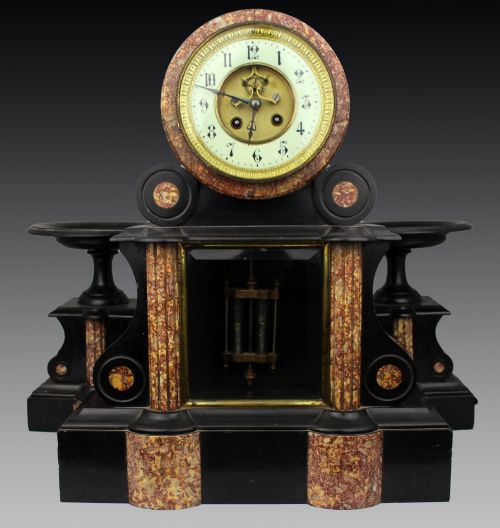
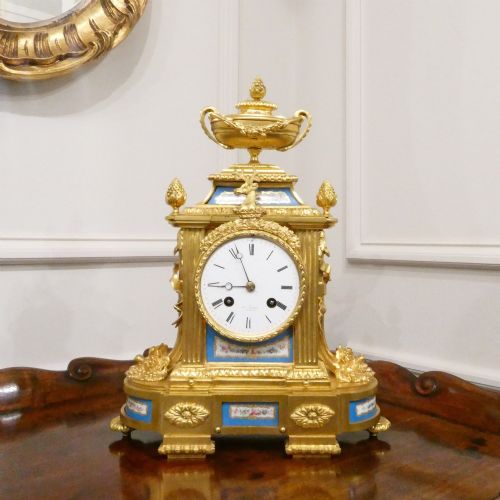
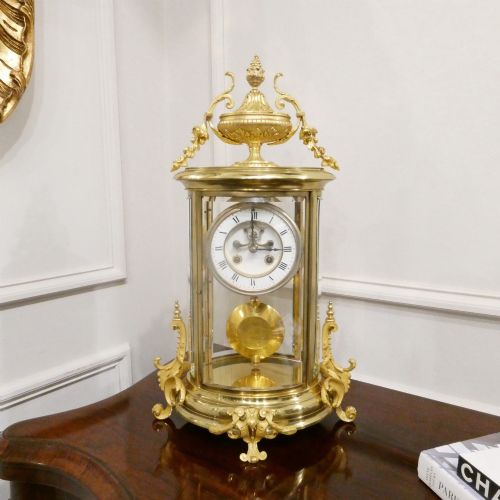
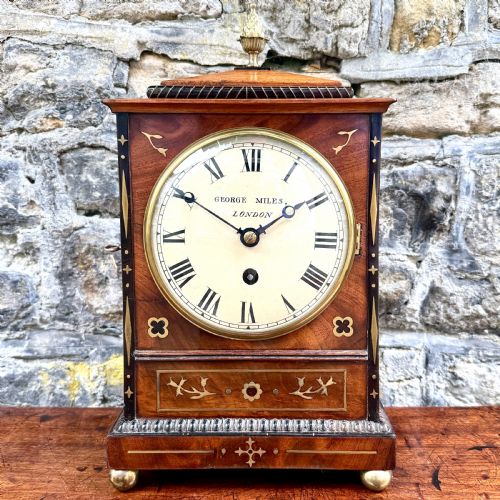
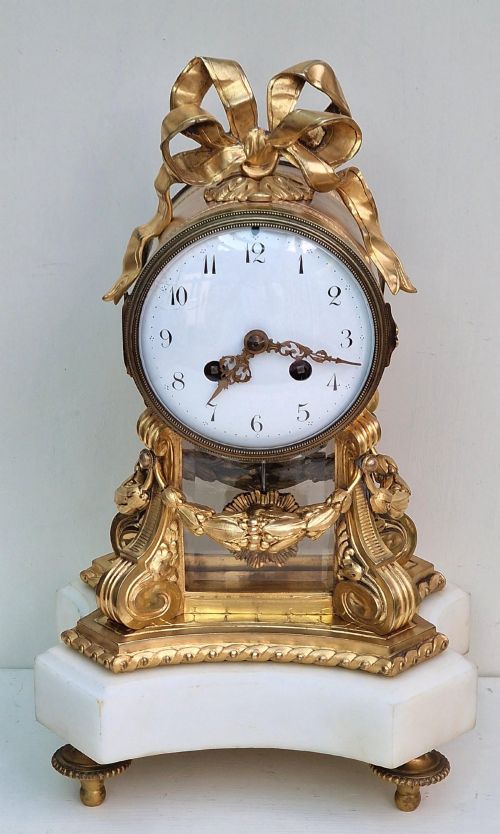
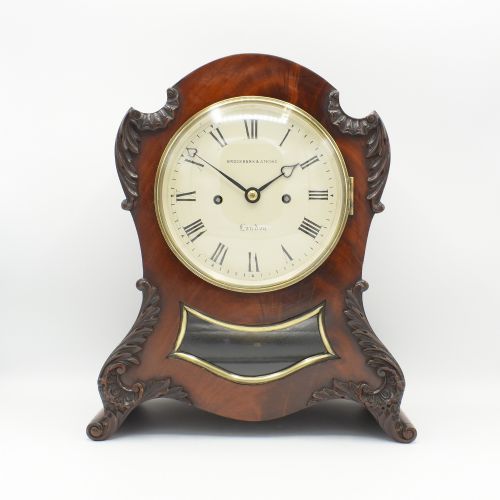
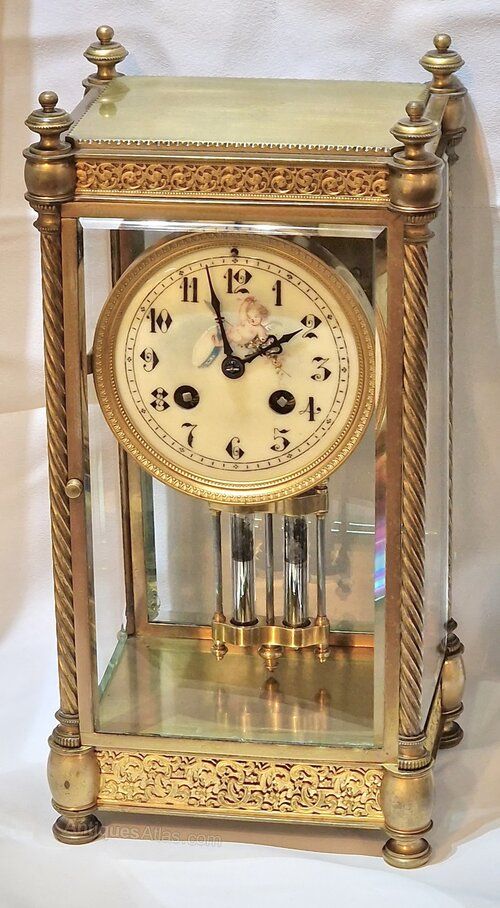
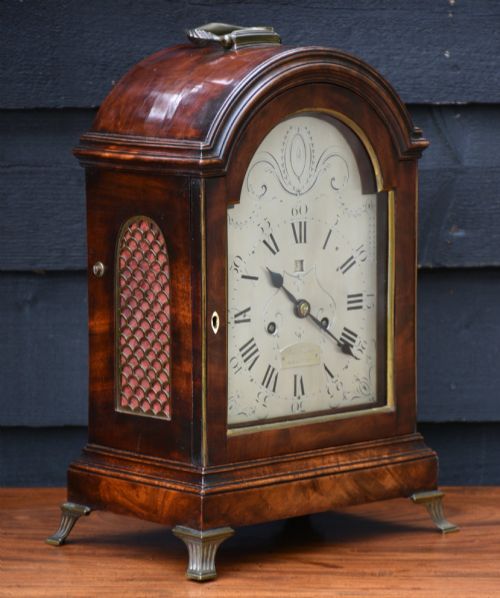
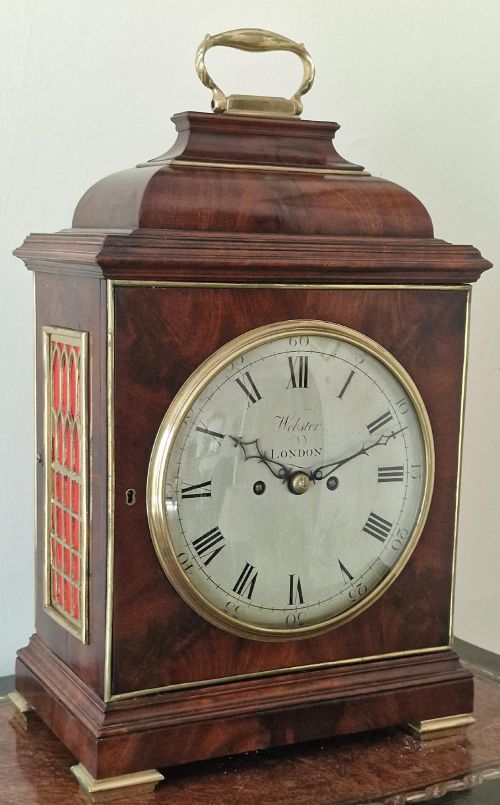
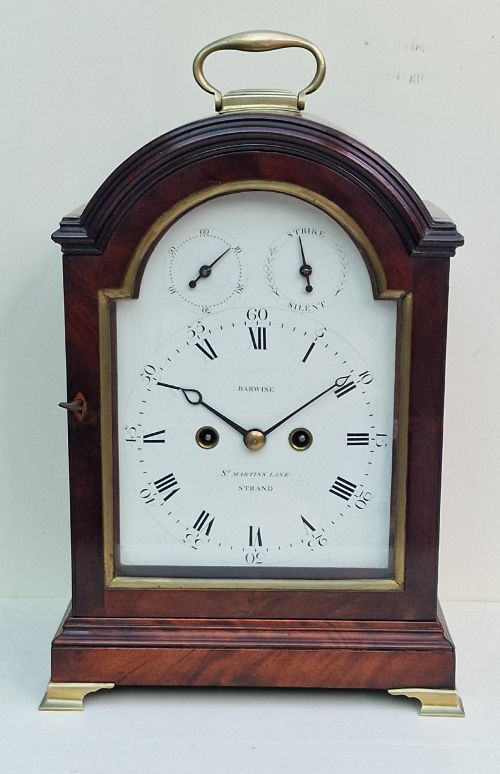
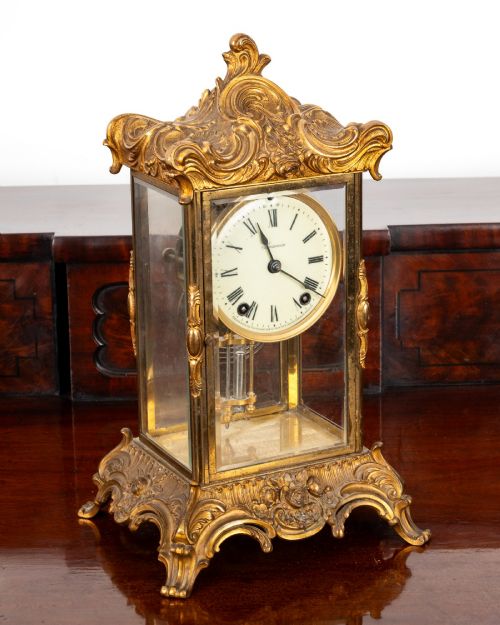
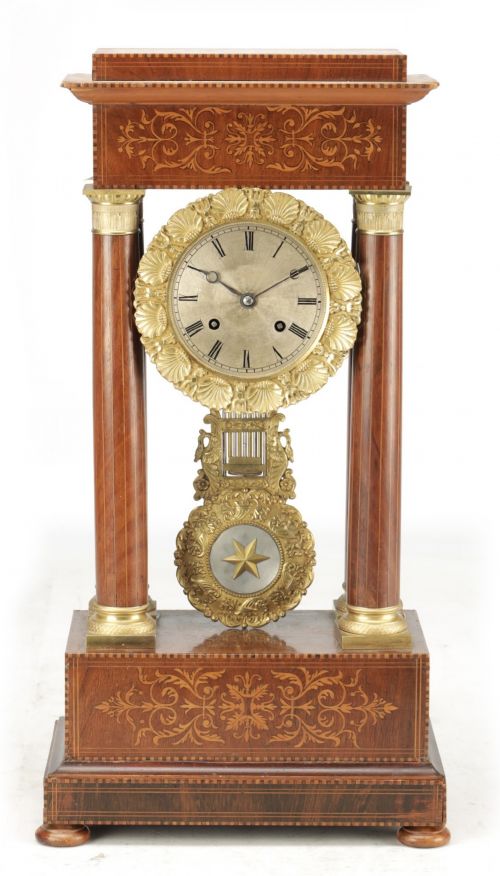
The most common formats on this page include four-glass cases displaying the internal mechanism, alongside architectural marble and mahogany bracket clocks. These pieces range from restrained Georgian library timepieces to ornate French Rococo and Louis XVI revival designs.
Makers from various European workshops utilised durable metals, glass panels, and enamel dials to construct clocks intended for both domestic utility and formal display. The surviving inventory spans decades of horological development, reflecting changing tastes in decorative arts.
Materials and Construction
Cases rely on cast brass, gilt bronze, ormolu, and polished mahogany, frequently combined with white marble, slate, or glass panels. These dense materials provide the necessary structural rigidity to house intricate gear trains and maintain balance.
Movements utilise brass plates and steel pivots driven by coiled springs or hanging weights, regulated by a suspended pendulum. Enamel dials feature painted numerals, while subsidiary elements incorporate porcelain plaques, gilt bronze mounts, and miniature paintings.
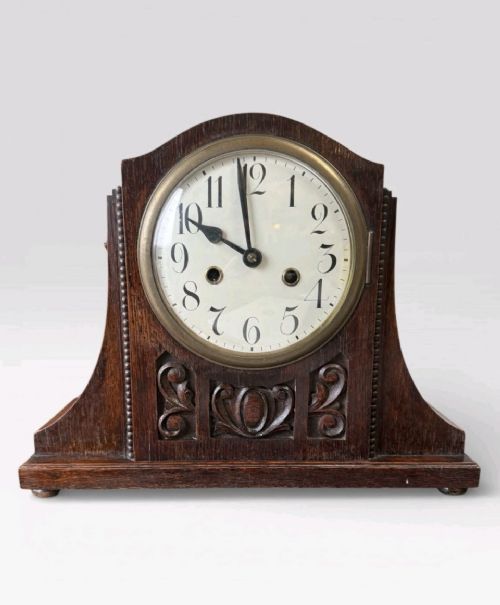
Listings feature brass pendulum mantel clocks spanning the Georgian, Victorian, and Edwardian periods, constructed in mahogany, marble, and gilt bronze.
Distinctions in Quality
Quality rests upon the precision of the movement, the weight and thickness of the brass casting, and the crispness of the chased or carved details. Finer pieces display signed mechanical movements by recognised makers, hand-painted enamel dials, and fire-gilt surfaces rather than modern electroplating.
The architectural harmony of the case and the preservation of original glass panels or mercury-weighted pendulums separate standard production models from exceptional workshop output. Superior examples retain matching components and balanced proportions that demonstrate deliberate craftsmanship.
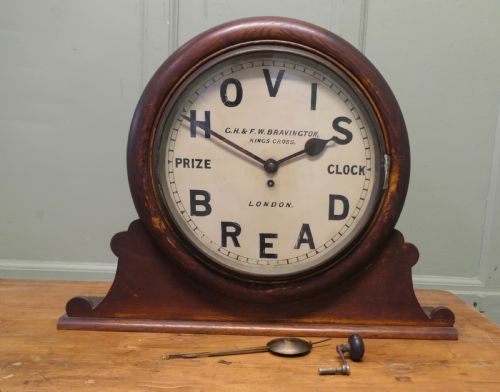
Japy Freres·Henry Marc·Samuel Marti·Brockbanks & Atkins·G.H.& F.W. Bravington·Webster·Barwise·Ansonia·Le Roy·Mappin & Webb·Delettrez·Thomas Moss·Tiffany
The Brass Pendulum Mantel Clock Glossary
- Bracket clock
- A portable table or shelf clock, originally designed to sit on a wall bracket. These timepieces typically feature wooden cases with carrying handles.
- Four glass clock
- A mantel clock featuring glass panels on the front, back, and sides. This design allows an unobstructed view of the moving pendulum and internal brass gears.
- Ormolu
- Finely ground high-carat gold applied to a bronze base using a mercury amalgamation process. This technique creates a rich, durable metallic finish seen on French revival pieces.
- Fusee
- A conical pulley connected to the mainspring by a chain or cord. It equalises the driving force of the spring as it winds down to maintain consistent timekeeping.
- Garniture set
- A mantel clock accompanied by matching decorative side ornaments such as urns or candelabra. They were designed to form a coordinated decorative arrangement on a fireplace.
Brass Pendulum Mantel Clock: Frequently Asked Questions
How do I wind a brass pendulum mantel clock?
Use the appropriate key on the winding arbors located on the dial face, turning gently until resistance increases.
Avoid over-winding the mainspring, as this can damage the internal gearing and compromise timekeeping accuracy.
Why does my clock lose time?
Timekeeping accuracy depends on the precise regulation of the pendulum swing using the small adjustment nut. Temperature changes and uneven surfaces can also affect the rate at which the movement operates.
Minor adjustments to the pendulum bob length will usually correct the timing over a twenty-four-hour period.
How do I set up a pendulum clock?
Place the clock on a level mantel or shelf to ensure the escapement beats evenly from side to side. Hang the pendulum onto its suspension spring and gently start the swing by hand.
Listen for a regular tick-tock rhythm; an uneven beat indicates the case needs minor shimming to level the base.
What is a mercury pendulum?
A mercury pendulum contains glass tubes filled with liquid mercury designed to compensate for temperature fluctuations. As ambient heat expands the metal rod, the mercury shifts downward to keep the centre of gravity constant.
This precise engineering helps the clock maintain consistent accuracy across different seasons.