


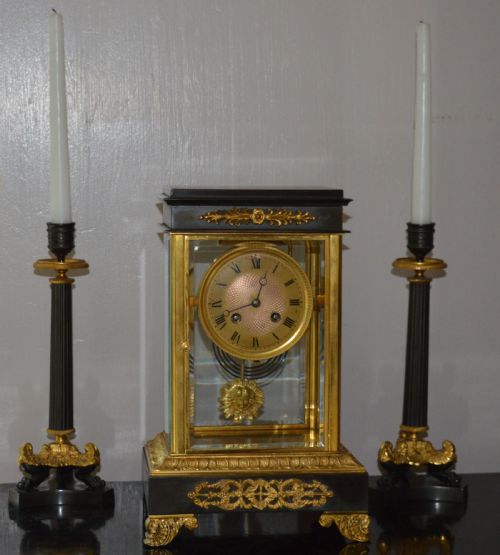


Napoleon III Clock Set
These pieces are a napoleon iii clock set, bringing together matching mantel timepieces and garnitures that anchor a room with nineteenth-century French presence.
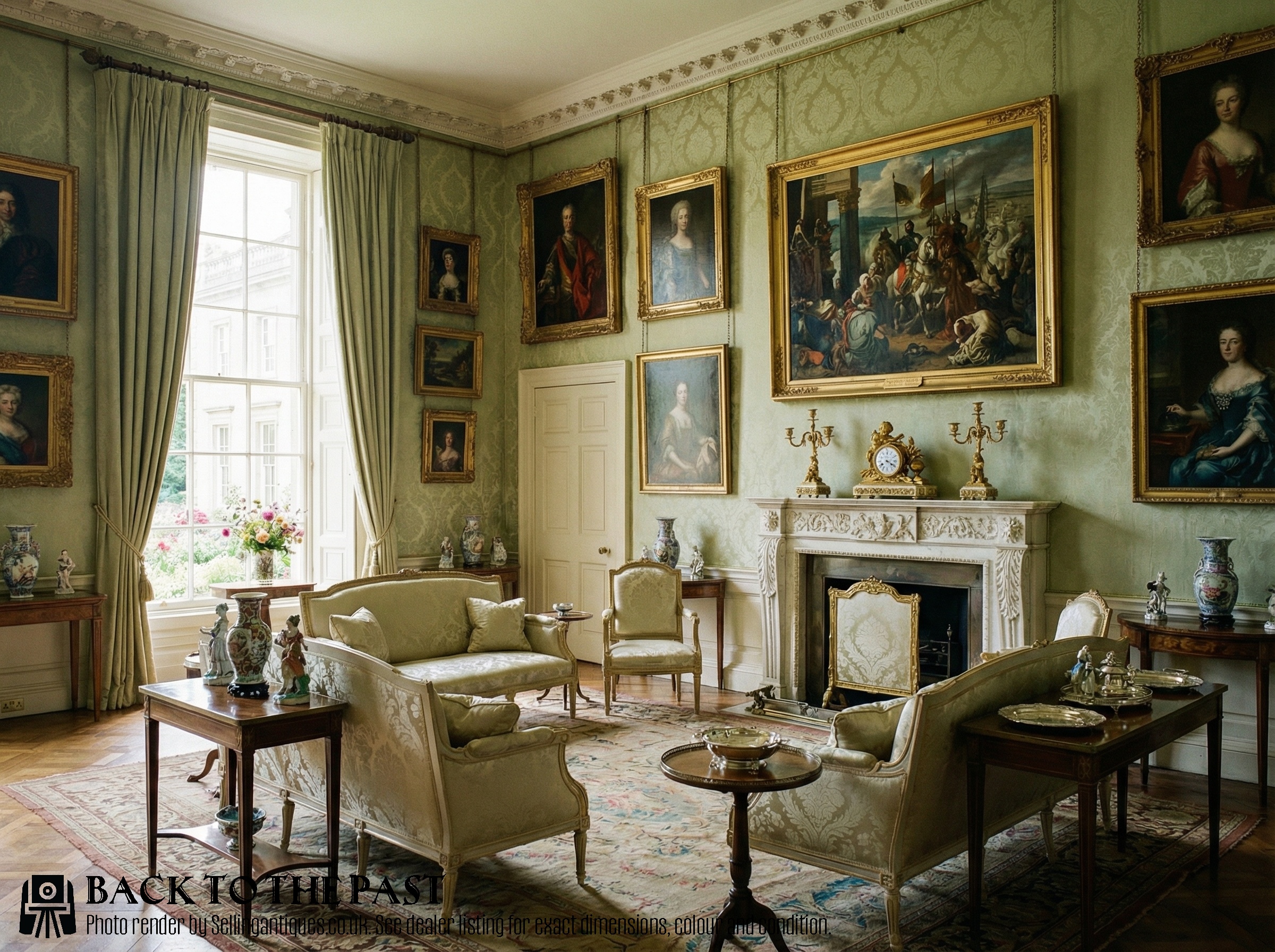
Napoleon III Clock Set
A napoleon iii clock set typically comprises a central mantel timepiece accompanied by matching side pieces such as garnitures, urns, or candelabra. When searching this phrase, a buyer encounters matching assemblies designed to create a symmetrical centrepiece on a mantelpiece or console table.
The versions most commonly met on this page span the nineteenth century, including specific decades from 1860 to 1880, as well as broader Victorian datings. Formats range from three-piece bronze and marble ensembles to four-glass configurations and designs housed under glass domes.
Stylistic influences appearing alongside the core Napoleon III and French Second Empire designs include French Empire, Rococo Revival, and French Sevres style. Occasional variations venture into Chinoiserie aesthetics and works by specific makers like Moser.
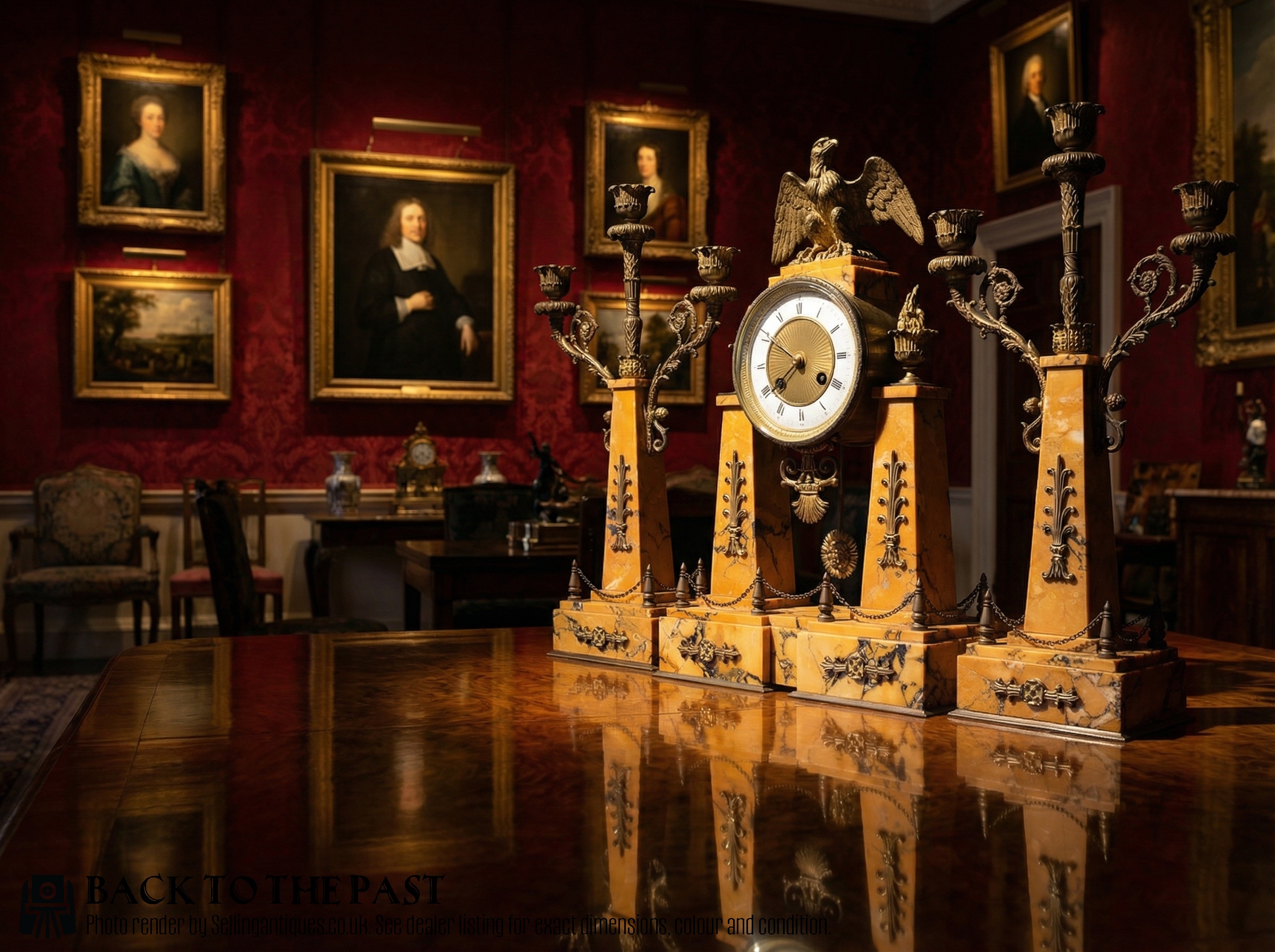
Materials and construction
Makers of the period utilised heavy metals such as ormolu and gilt bronze, often combining them with natural stones like marble and onyx for substantial structural weight. These metallic elements provide the characteristic golden sheen and detailed cast ornamentation associated with the style.
Decorative surfaces frequently incorporate enamel, porcelain panels in the Sevres style, and intricate champleve enamel work. Glass domes and four-glass enclosures protect the delicate internal movements and decorated dials from dust.
Mechanical construction relies on eight-day striking movements and specialised escapements, such as chaff-cutter mechanisms found in desk clocks and garnitures. The integration of porcelain, glass, and metal required distinct artisan guilds working in concert.
Materials span natural stone foundations including marble and onyx, paired with protective glass domes and housing eight-day striking clock movements.
Distinctions in quality
Quality rests primarily in the crispness of the gilt bronze or ormolu casting and the depth of hand-chasing applied after the metal leaves the mould. Finer examples display sharp architectural and organic details that retain their definition across all matching components of the garniture.
The selection and finish of materials also dictate standing, with solid marble or onyx bases and hand-painted Sevres porcelain panels marking out superior workshops. Matching integrity matters deeply, ensuring the central clock and its side pieces share identical patination, ornamentation, and period characteristics.
Moser
The Napoleon III Clock Set Glossary
- Ormolu
- Gilded bronze produced by applying a mercury-gilding amalgam to cast bronze. This technique creates a rich, durable golden surface characteristic of nineteenth-century French luxury goods.
- Garniture
- A set of matching ornamental objects designed to be displayed together on a mantelpiece. In these listings, they accompany a central clock to form a balanced three-piece set.
- Champleve
- An enamelling technique where troughs or cells are hollowed out in the metal surface and filled with vitreous enamel powder before firing. It produces vibrant, multicoloured geometric or floral patterns.
- Escapement
- The internal mechanism in a clock that controls the release of power from the gear train to the pendulum or balance wheel. Specific variants like the chaff-cutter escapement indicate particular mechanical traditions of the 1860s.
Napoleon III Clock Set: Frequently Asked Questions
What pieces belong in a clock garniture?
A garniture typically includes a central mantel clock accompanied by two matching side pieces, such as urns, vases, or candelabra. These companion pieces mirror the materials and ornamentation of the clock to create a unified decorative arrangement.
In nineteenth-century interiors, this three-piece grouping was specifically proportioned for display on a fireplace mantel or large sideboard. The matching elements distribute visual weight evenly across the furniture surface.
How do glass domes affect these clocks?
Glass domes serve to protect delicate gilt bronze surfaces, enamel dials, and exposed mechanical components from household dust and atmospheric tarnishing. They rest upon matching bases made of wood, marble, or velvet-covered plinths.
Finding a clock set complete with its original glass dome adds a layer of preservation that few pieces retain. It keeps the original nineteenth-century finish undisturbed by frequent cleaning.
What is the difference between marble and onyx?
Marble provides a dense, opaque foundation with natural veining, often seen in rich colours like Siena or black framing ormolu mounts. It offers heavy structural stability for large nineteenth-century clock bodies.
Onyx presents a slightly translucent quality with banded layers of warm tones, catching ambient light differently than standard marble. Both stones were selected by makers to contrast sharply against gilded bronze details.
How are Sevres style panels identified?
Sevres style panels feature hand-painted floral motifs or pastoral scenes, typically set against a rich blue or turquoise ground framed by gilded scrollwork. They draw inspiration from the famous French royal porcelain manufactory.
These ceramic plaques appear on clock dials and beneath the clock face, integrated directly into the bronze or brass housing. Their presence elevates the decorative ambition of the garniture set.