

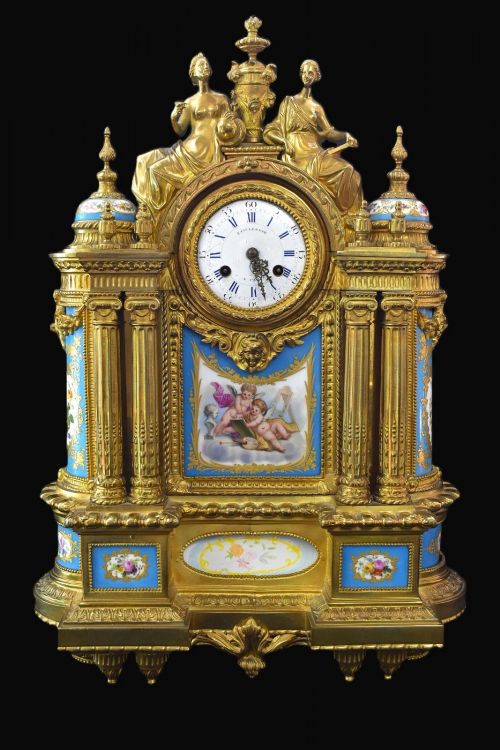


Classical French Table Clock
A classical french table clock brings a disciplined architectural presence to a room, combining precise horology with sculptural bronze and marble.
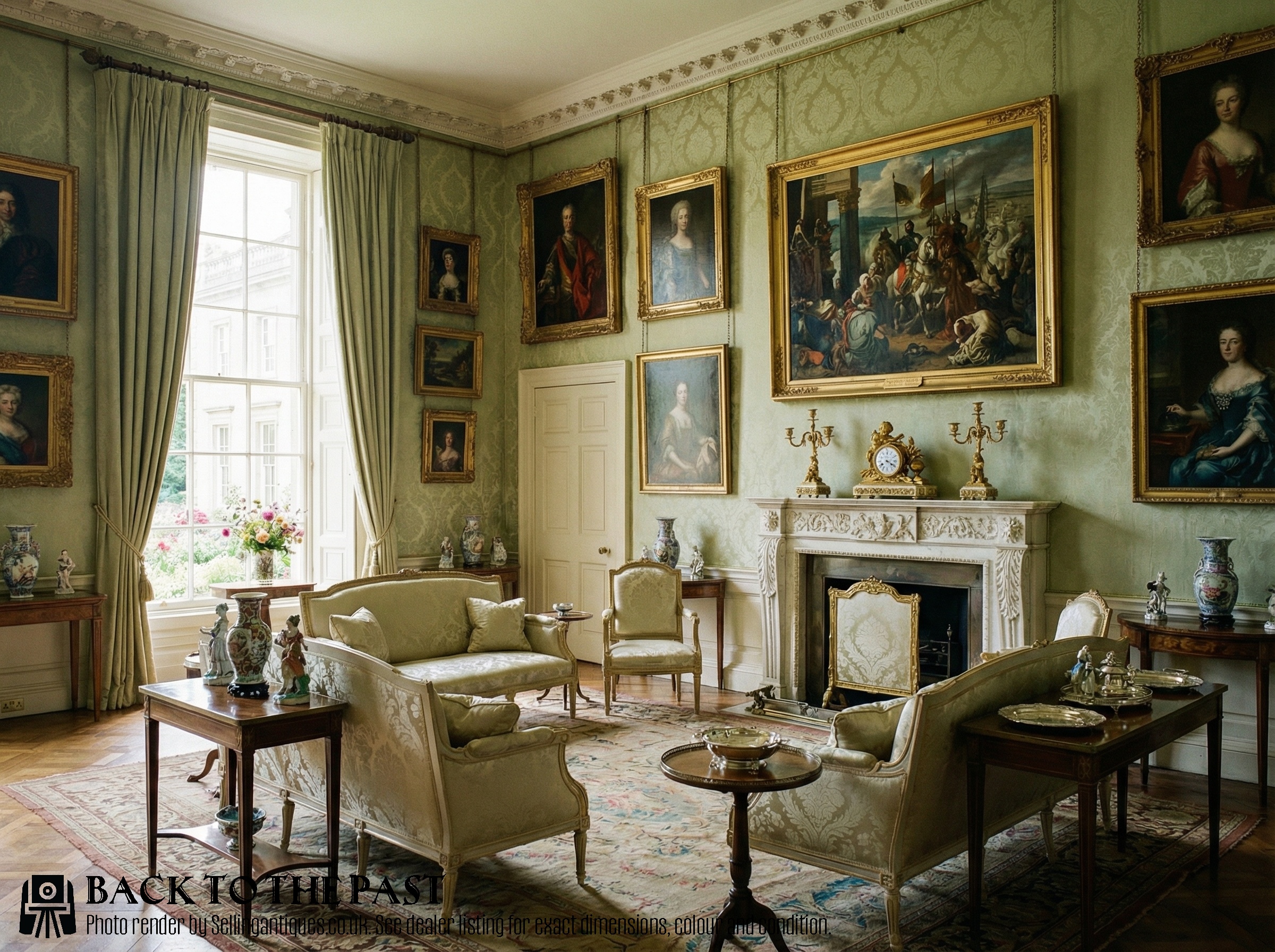
Classical French Table Clock
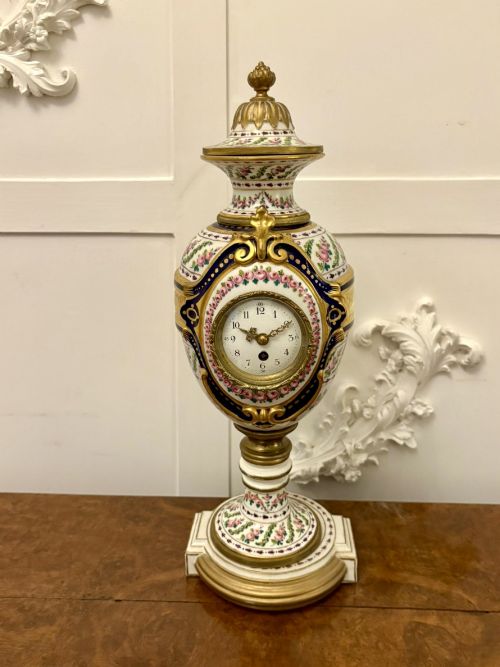
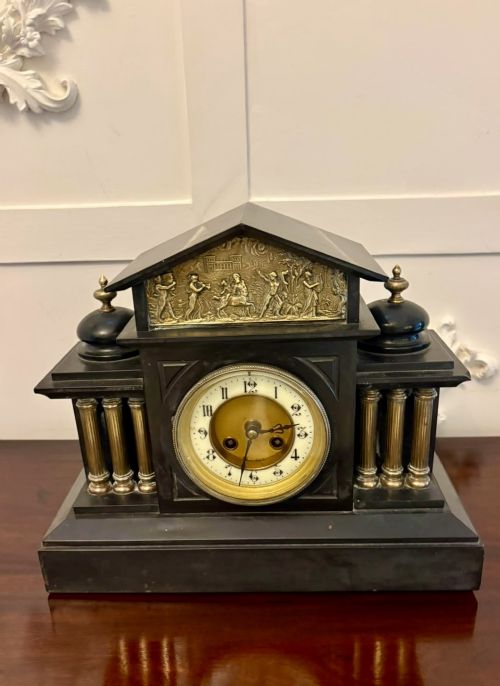
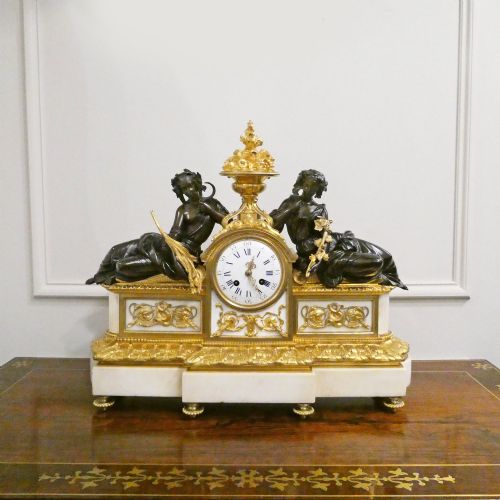
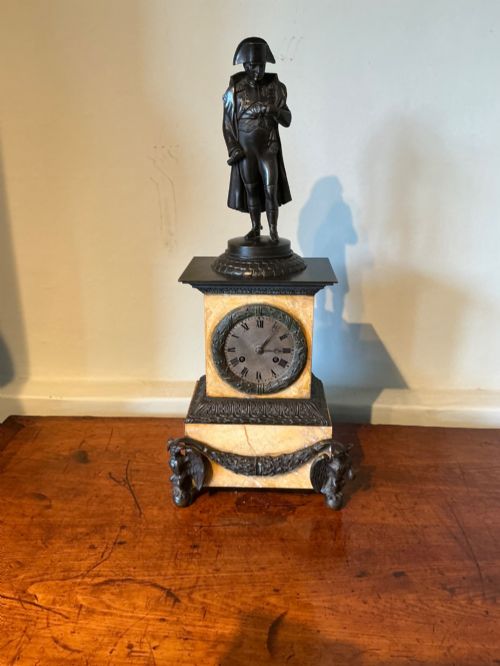
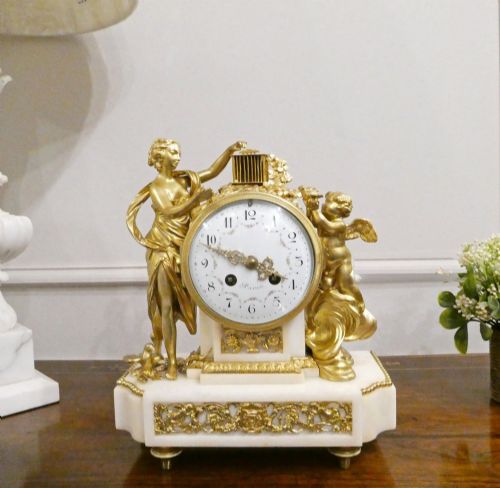
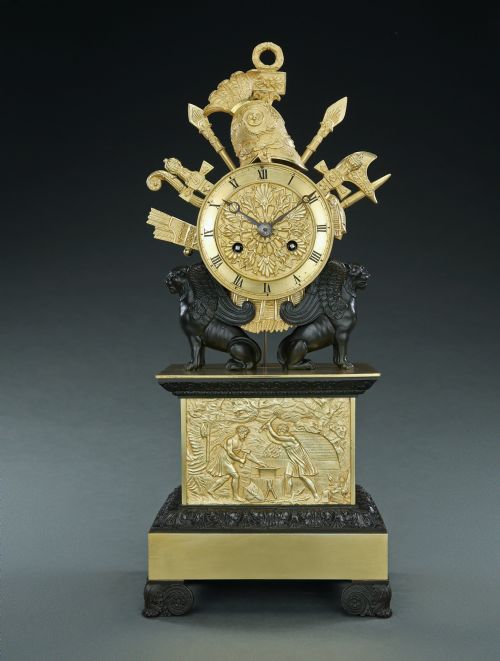
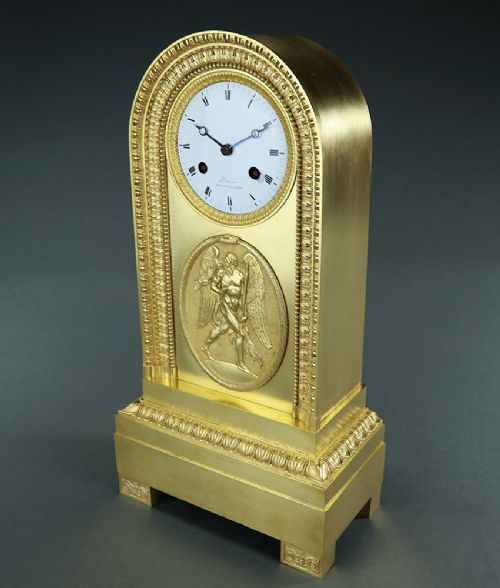
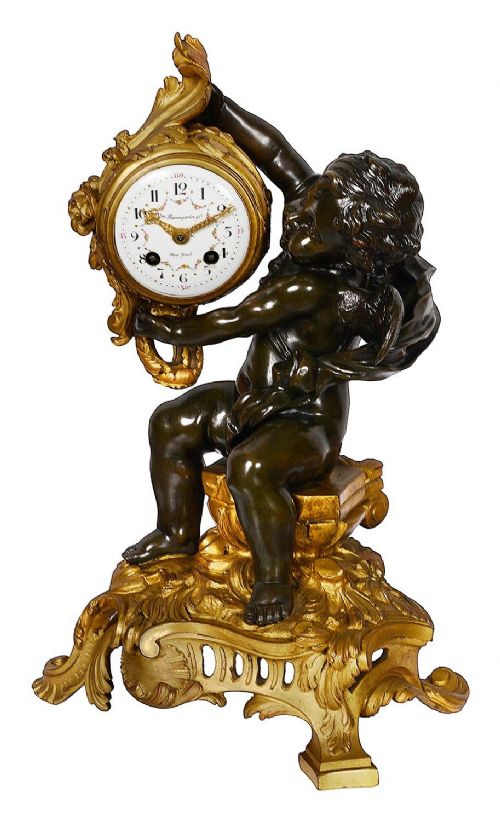
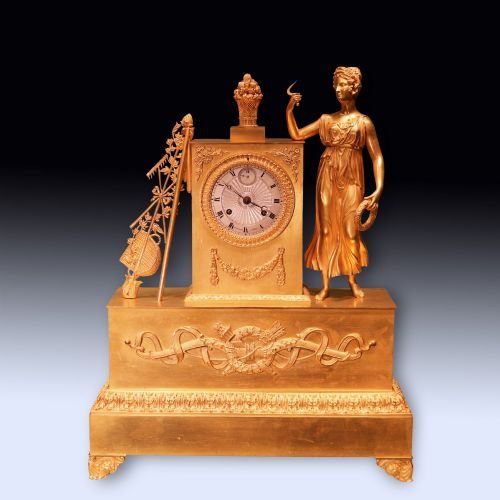
A classical french table clock represents a tradition of domestic horology spanning the nineteenth century, taking the form of mantel clocks, portico designs, and garniture sets. These pieces range from restrained architectural marble boxes to elaborate figural compositions influenced by the Empire, Louis XVI, and Second Empire styles.
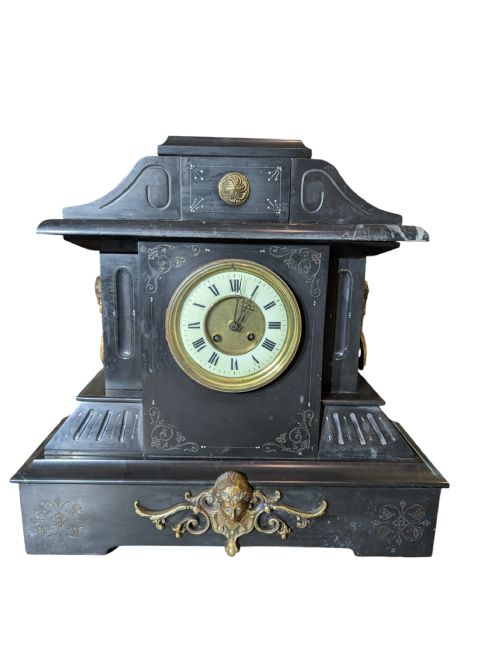
The versions most commonly met on this page combine heavy stone bodies in black, rouge, or sienna marble with cast metal mounts in gilt brass, ormolu, and patinated bronze. They sit on horizontal surfaces, often accompanied by matching side urns or candelabra.
Makers and retailers such as Vincenti, Japy Freres, and Samuel Marti provided the movements housed within these decorative shells. Collectors encounter both drum head timepieces and complex eight-day striking mechanisms.
Materials and construction
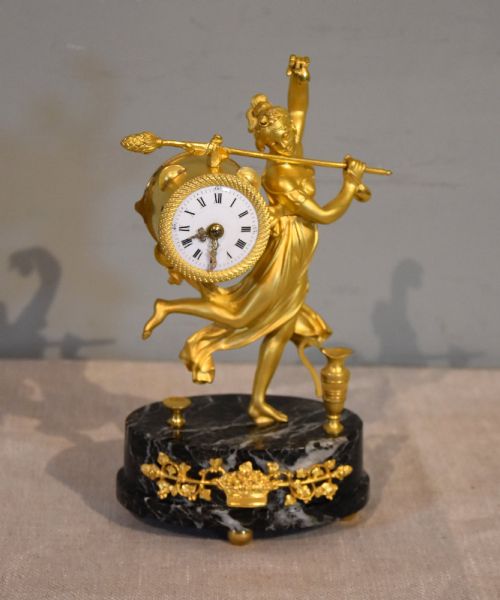
Foundries utilised cast bronze and ormolu for figural elements and decorative bezels, applying fire-gilding or patination to achieve varied surface textures. These metal mounts were then secured to structural cases formed from natural stones including marble.
Dial faces frequently integrated white enamel with painted Roman numerals, protected beneath glass bezels. Movements were engineered from brass and steel, often incorporating eight-day pendulum regulated mechanisms designed for domestic interiors.
Listings feature marble cases in black, rouge, and sienna varieties paired with gilt bronze mounts.
Quality differences
The distinction between tiers rests upon the crispness of the bronze chasing and the architectural proportion of the marble case. Superior examples display deep, hand-finished chiselling on ormolu mounts rather than soft, mass-produced cast surfaces.
Movement execution also dictates standing, with named Parisian makers commanding attention through robust gear trains and stamped medals. Integrated porcelain plaques, hand-painted details, and complete garniture sets elevate certain specimens above standard timepieces.
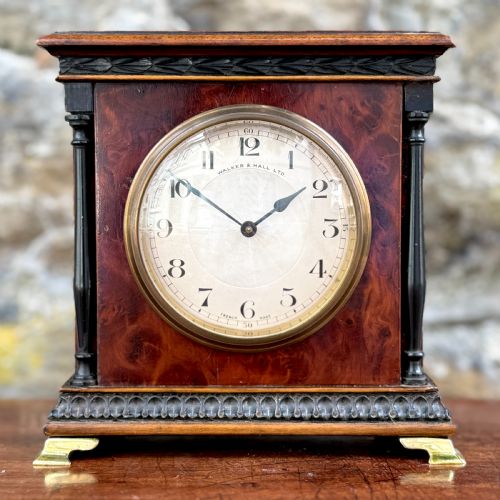
Vincenti·Japy Freres·Samuel Marti·Etienne Lenoir·Walker and Hall
The Classical French Table Clock Glossary
- Ormolu
- Gilt bronze produced by applying a mixture of gold and mercury to a brass object and heating it. This historic technique creates a durable, warm golden surface found on nineteenth-century French cases.
- Garniture
- A set consisting of a central clock flanked by matching decorative objects such as urns or candelabra. These sets were designed to sit symmetrically on a mantelpiece.
- Portico clock
- A clock design featuring a temple-like architectural frame supported by four columns. This style gained popularity during the French Empire and Charles X periods.
- Drum head clock
- A timepiece featuring a circular clock case shaped like a drum mounted upon a pedestal base. The form exposes the metal housing of the movement clearly.
- Patinated bronze
- Metal treated chemically to alter its surface colour, typically producing dark brown or greenish tones. This finish provides contrast against bright ormolu mounts.
Classical French Table Clock: Frequently Asked Questions
How do I wind my classical french table clock?
Most mechanical pieces on this page require a specific winding key inserted into the dial holes to tension the spring barrels. Care must be taken not to overwind the mainspring.
Pendulum clocks also need to be kept level on the mantelpiece to ensure the tick remains even and the movement does not stop.
What is a clock garniture set?
A garniture comprises the main table clock accompanied by two matching side pieces, such as decorative urns or candelabra. These matched groupings were placed together on a mantelpiece for balanced interior decoration.
Finding a complete set matching in marble and ormolu mount style is typical of Victorian high-status interiors.
Are these clocks suitable for daily timekeeping?
These eight-day mechanical movements can keep accurate time when properly serviced and adjusted by a horologist. They function well in domestic settings where small daily variations are acceptable.
Because they rely on traditional springs and pendulums, they require occasional professional oiling and maintenance to run reliably.