



Victorian Marble Mantel Clock
These robust victorian marble mantel clock pieces bring architectural presence and mechanical weight to a room, offering both reliable timekeeping and period design.
Identifying your victorian marble mantel clock
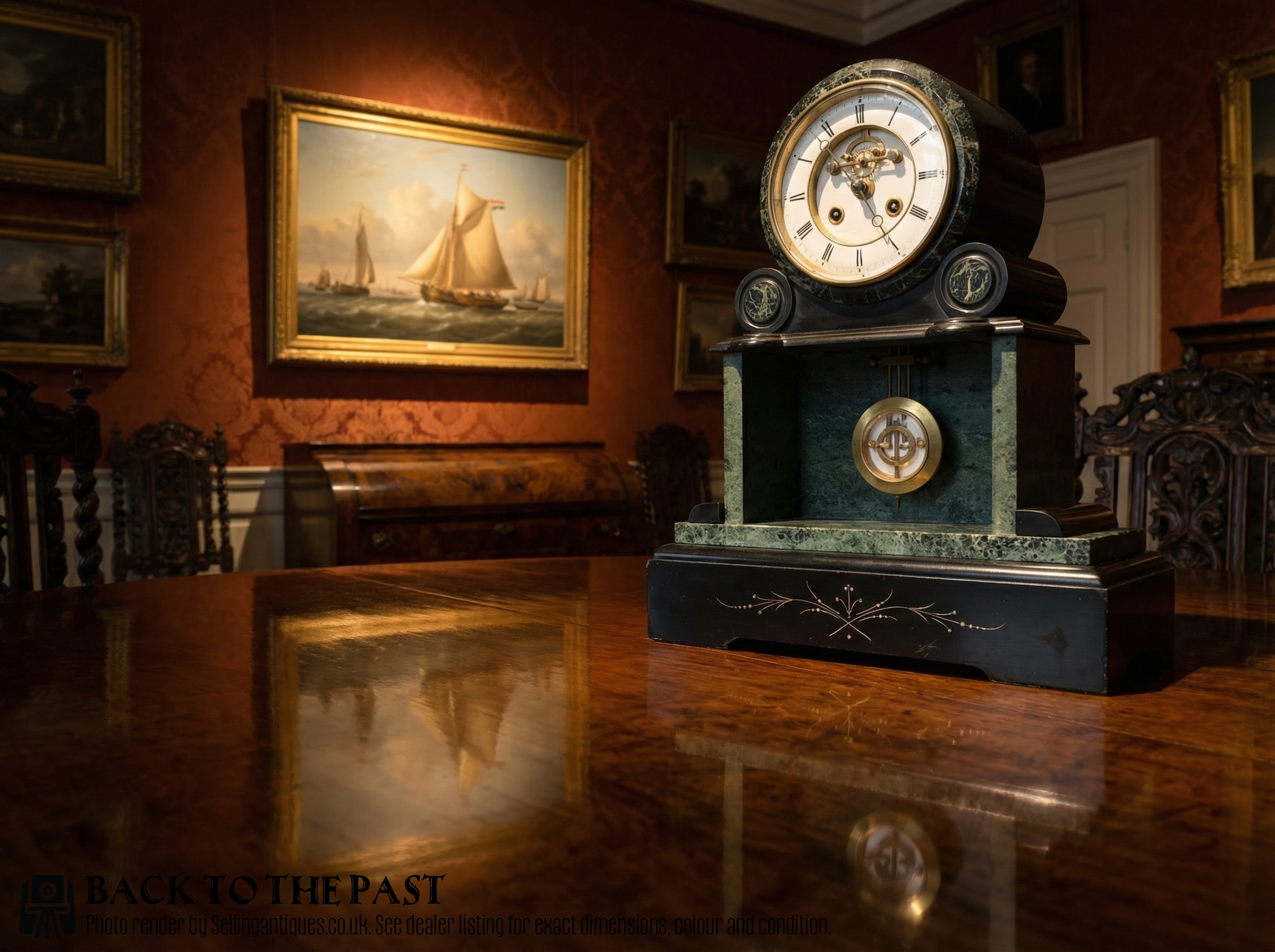
A victorian marble mantel clock represents a solid architectural statement, merging the mechanical utility of a timepiece with the weighty presence of natural stone. These heavy ornamental objects sat proudly on fireplaces and sideboards, anchoring the domestic interior of the nineteenth century.
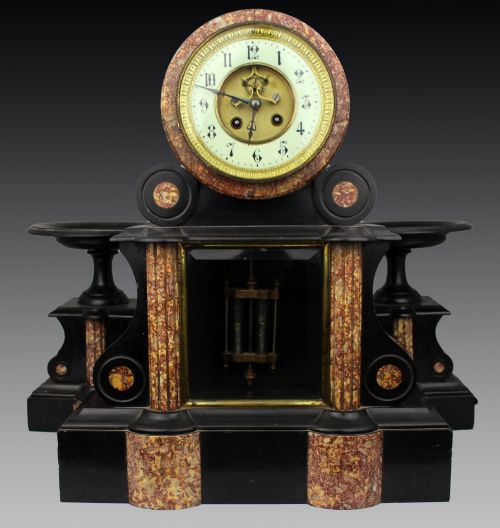
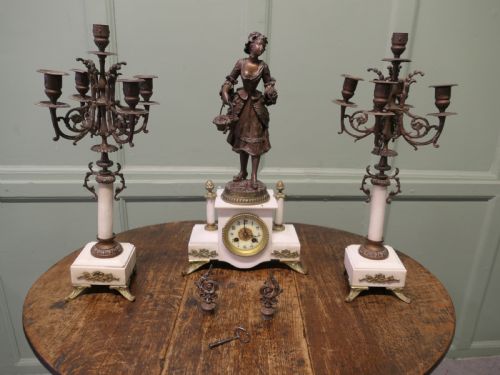
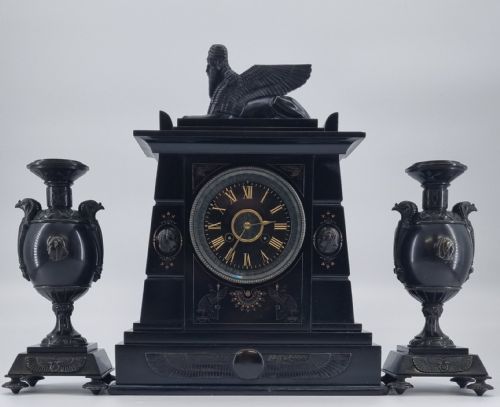
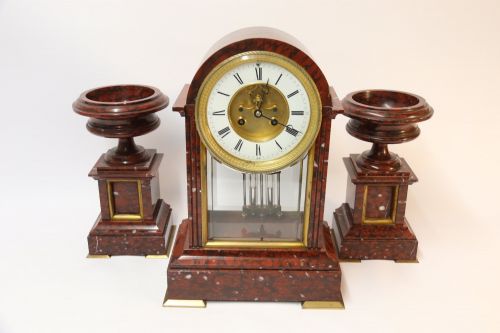
You will most frequently encounter dark black slate combined with contrasting coloured marble veins, or rich red and rouge varieties imported from continental workshops. Many examples arrive paired with matching side garniture urns, creating a balanced decorative set for the mantelpiece.
The origins span both British Victorian production and French Second Empire workshops, capturing the neoclassical taste for classical symmetry and imposing stone cases. Every victorian marble mantel clock reflects the industrial confidence and stylistic eclecticism of the era between eighteen-sixty and eighteen-nineties.
Materials and construction
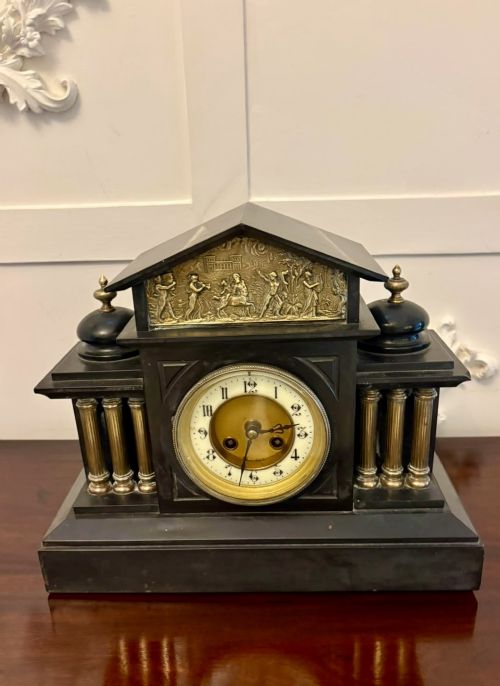
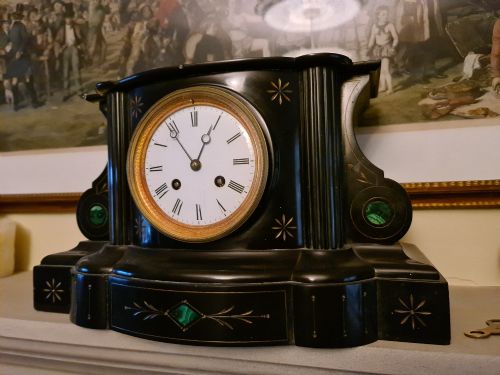
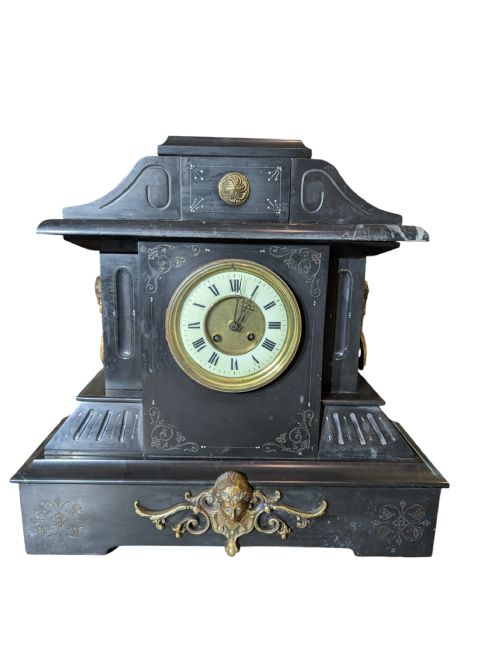
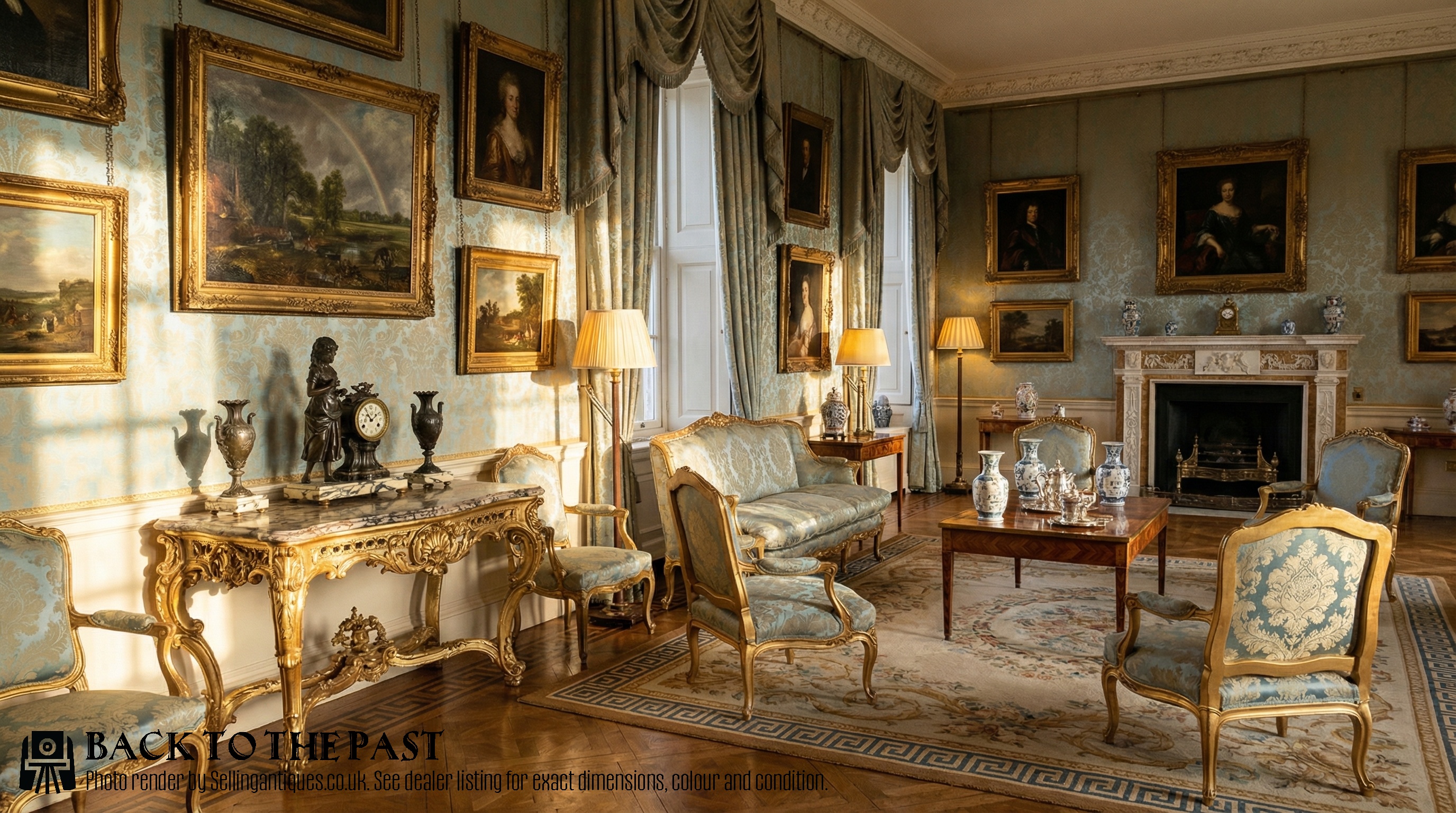
Masons shaped dense black slate and varigated marble blocks into architectural temple facades, urn shapes, and heavy rectangular plinths using specialised cutting and polishing machinery. They frequently inlaid contrasting stones or applied bronze mounts, brass bezels, and gilt details to the polished stone surfaces.
Enamel dials with delicate painted numerals sat safely behind thick glass doors and brass bezels, protecting the mechanical movements housed within the stone cavity. Eight-day brass clockworks powered by spring or pendulum drove the strikes, requiring skilled metalworkers to assemble the gears alongside the heavy stonemasonry.
Retail Price Guide 2026
Typical UK retail prices for victorian marble mantel clock, calculated from the Sellingantiques database of over a million retail prices indexed since 2003. This retail price guide relies exclusively on Sellingantiques data; no external sources or auction records are used, so the figures do not describe the wider market.
The record shows materials ranging from simple black slate to rouge and Sienna marble, paired with brass and glass.
Judging the range
The distinction between standard examples and superior pieces rests in the ambition of the stonework and the sophistication of the metal mounts. Finer clocks incorporate complex multi-coloured marble combinations, hand-chased bronze or ormolu mounts, and movements signed by recognised makers rather than anonymous mass production.
The integrity of the stone case and the crispness of the dial markings define the physical preservation of the object. Heavy veined marbles and integrated garniture sets demand precise alignment and careful proportioning to achieve a harmonious architectural composition.

Baby and Jannings·Japy Freres·Samual Marti and Sons·J Ritchie and Sons Edinburgh
The Victorian Marble Mantel Clock Glossary
- Clock garniture
- A matching set consisting of a central mantel clock accompanied by side ornaments such as urns or vases. These symmetrical groupings were designed to fill a Victorian fireplace mantel entirely.
- Rouge marble
- A deep red, highly decorative limestone variety with white or grey veining imported for French and British clock cases. It provides a striking contrast against black slate.
- Black slate
- A dense, dark grey-black metamorphic rock favoured by nineteenth-century masons for its ability to take a high, reflective polish. It mimics heavier marbles while offering structural stability.
- Four glass clock
- A style featuring glass panels on the front, back, and sides of the case, allowing an unobstructed view of the pendulum and mechanical movement. This design highlights the brass works within a polished stone or gilt frame.
- Ormolu
- A gilded bronze technique used to cast decorative mounts and feet applied to the stone cases. It adds bright metallic contrast to the dark marble surfaces.
Frequently Asked Questions
Did all these clocks come from France?
While many high-status pieces originated in French workshops during the Second Empire, British makers and retailers also produced and imported similar designs.
Scottish and English firms often housed imported French movements within locally cut stone cases.
What is a clock garniture?
A clock garniture includes the main timepiece alongside matching decorative side pieces, typically designed as urns or vases.
Placed together on a mantel, they create a balanced neoclassical display characteristic of nineteenth-century interiors.
How do I wind an eight day movement?
An eight day movement requires winding via the winding holes on the enamel dial using a matching key approximately once a week.
Careful handling ensures the internal springs maintain steady tension without overwinding the mechanism.