






Red Marble Mantel Clock
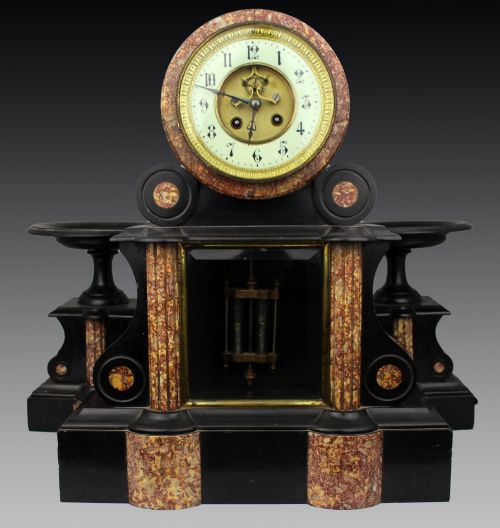
These red marble mantel clocks bring heavy French weight and rich veined stone straight to the nineteenth-century chimney piece.
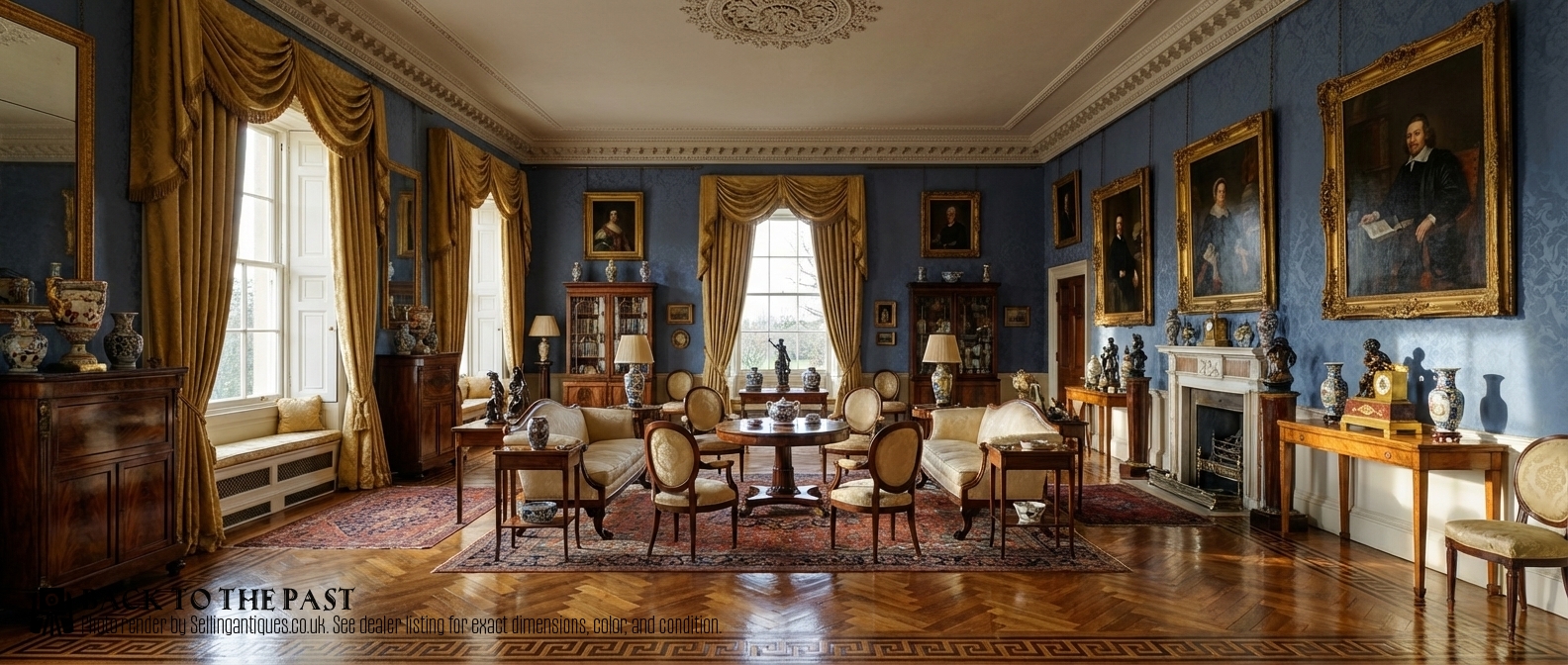
What They Are
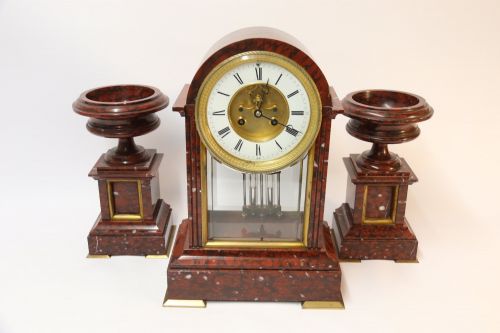
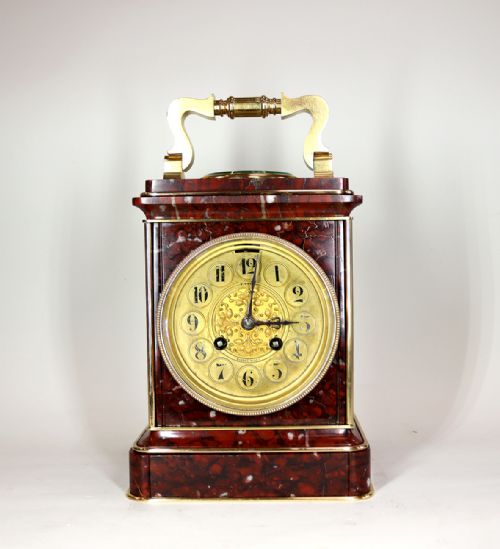
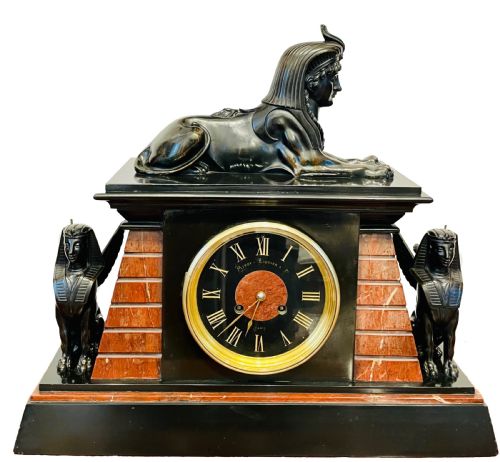
A red marble mantel clock combines striking ornamental stone with intricate metalwork, emerging primarily from French workshops during the nineteenth century. These heavy timepieces range from simple architectural blocks to elaborate garnitures flanked by matching side ornaments.
Most examples date between eighteen fifty and nineteen hundred, reflecting popular nineteenth-century French styles including Second Empire, Empire, and Louis XVI revivals. Buyers encounter varied forms featuring rouge or specimen marble paired with contrasting bronze, brass, or ormolu mounts.
The selection includes complete clock sets where the central timepiece is accompanied by matching side pieces. These robust stone bodies served as grand focal points for Victorian and period drawing rooms alike.
How They Were Made
Masons cut and polished dense blocks of red and rouge marble to form the structural housing of each clock. Skilled metalworkers then cast decorative elements in bronze, brass, or ormolu to mount upon the stone.
Clockmakers fitted mechanical movements inside these heavy stone enclosures, frequently utilising enamel dials and delicate hands. Early nineteenth-century examples often incorporated silk suspension movements to regulate timekeeping.
Retail Price Guide 2026
Typical UK retail prices for red marble mantel clock, calculated from the Sellingantiques database of over a million retail prices indexed since 2003. This retail price guide relies exclusively on Sellingantiques data; no external sources or auction records are used, so the figures do not describe the wider market.
Materials recorded across the inventory include red marble, rouge marble, black slate, bronze, brass, ormolu, enamel, and glass.
What Varies in Quality
The distinction between standard production and superior craftsmanship rests heavily on the depth of the metal casting and the richness of the stone. Finer clocks display crisply chased bronze mounts and highly figured specimen marble with seamless joints.
Movement sophistication also dictates value, with signed mechanisms by established makers and refined silk suspension systems sitting at the upper end of the scale. Heavy clock garniture sets with matching decorative side pieces represent the more ambitious tier of production.
Samuel Marti·Samuel Marti and Sons
The Red Marble Mantel Clock Glossary
- Rouge Marble
- A rich red variety of limestone marble quarried primarily in France, prized for its deep colour and distinct white or dark veining. It forms the heavy body of many nineteenth-century mantel clocks.
- Ormolu
- A gilded bronze technique involving the application of a finely ground mercury and gold amalgam to cast bronze. This method imparts a brilliant golden finish to decorative mounts.
- Clock Garniture
- A matching set consisting of a central mantel clock accompanied by two side ornaments such as urns or candelabra. These sets created a balanced decorative scheme on nineteenth-century mantelpieces.
- Silk Suspension
- A delicate mechanism whereby the pendulum hangs from a small strip of woven silk rather than a steel spring. This traditional method appears in earlier nineteenth-century French clocks.
- Enamel Dial
- A clock face made by fusing powdered glass onto a metal base at high temperatures, producing a smooth, glossy white surface. Black painted numerals and minute markers are then fired onto the finish.
Frequently Asked Questions
How do I wind the clock?
Most mechanical mantel clocks use a specific winding key inserted into small holes on the enamel dial. Turning the key gently tightens the mainspring inside the movement.
Care must be taken not to overwind the mechanism, as this can strain the internal spring. Regular winding keeps the pendulum beating at a consistent rate.
What is a clock garniture?
A clock garniture is a matched decorative set featuring a central mantel clock flanked by two matching side pieces, such as urns or vases. These pieces were designed to sit together harmoniously across a fireplace.
Such sets became immensely popular in nineteenth-century French salons and Victorian drawing rooms. They provide a symmetrical display of stone and metalwork.
How do I date a marble clock?
Dating relies on examining the combination of materials, movement types, and stylistic cues present in the piece. Earlier examples from around eighteen fifty often feature silk suspension movements and delicate ormolu mounts.
Later Victorian pieces from the late nineteenth century frequently incorporate robust cast movements and marked maker plates. Comparing the style to known periods like Second Empire helps narrow the decade.
Where should I place the clock?
These clocks are traditionally positioned on a fireplace mantelpiece where their rich red marble and metal mounts can be fully appreciated. A sturdy, level surface is essential to ensure the pendulum swings evenly.
Keeping the clock away from direct sunlight and damp walls helps preserve the enamel dial and polished stone finish. Placing them securely away from heavy foot traffic protects the protruding bronze mounts.