






French Empire Style Garniture
These French Empire style garniture sets combine grand bronze and marble forms to anchor a mantelpiece with classical authority.
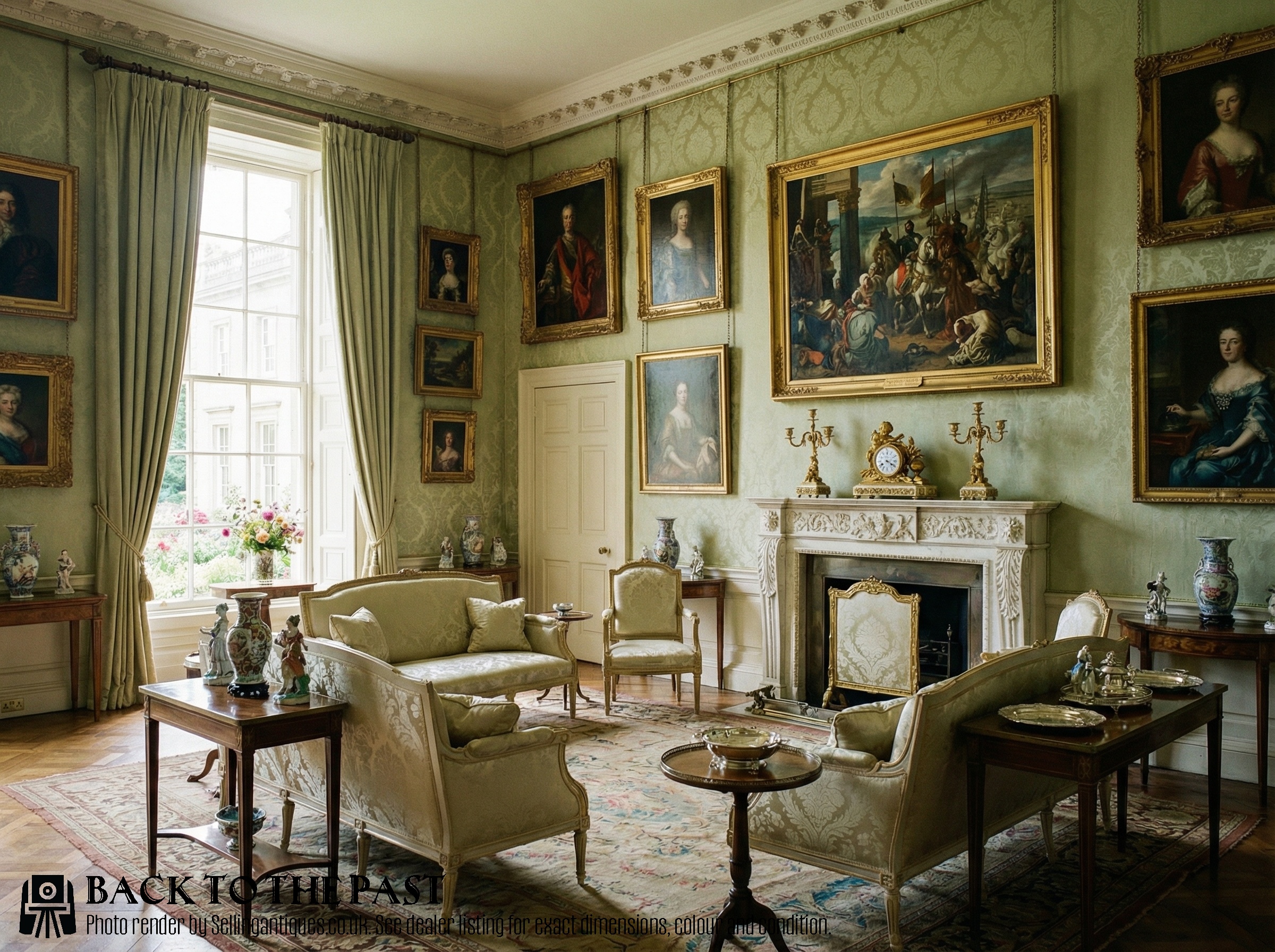
French Empire Style Garniture
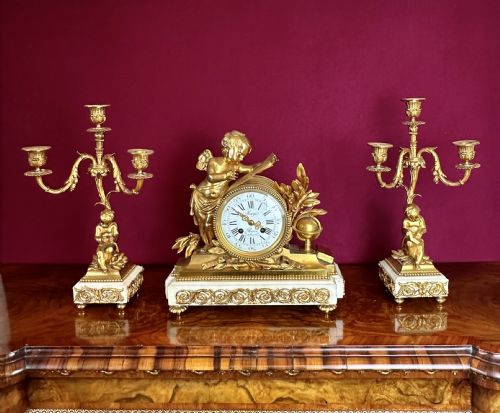
A french empire style garniture typically comprises a central mantel clock flanked by matching decorative vases, urns or candlesticks. These ensembles emerge primarily across the nineteenth century, including Victorian, Regency and Napoleon III periods, bringing classical architectural proportion into domestic interiors.
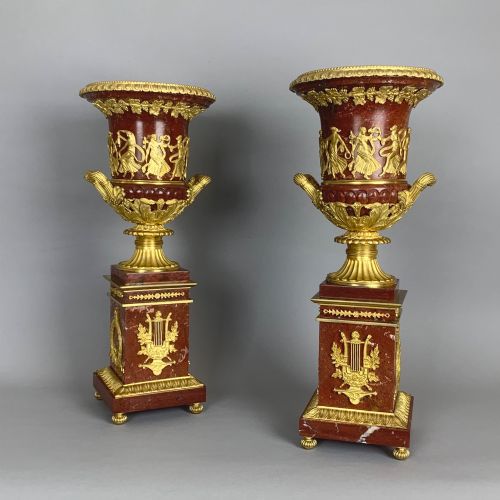
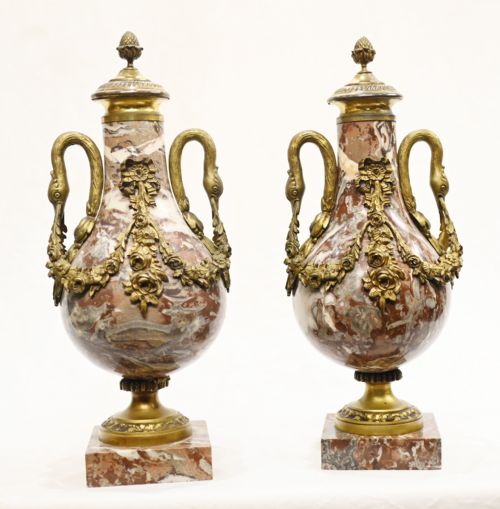
The configurations on this page frequently pair heavy natural stone bases with metallic ornamental elements. Mantel clocks and clock sets form the nucleus of these groupings, accompanied by cassolettes and lidded vases designed to balance a formal hearth.
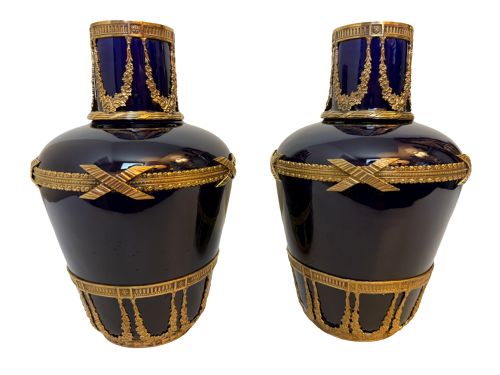
Most examples lean heavily upon French Empire, Louis XVI and Empire Revival vocabularies. Buyers encounter everything from blue glass vases with ormolu mounts to sienna marble amphorae and figural clock sets.
Materials and construction
Foundational construction relies heavily on contrasting heavy media, pairing carved white, black or sienna marble with cast metals. Workshops utilised gilt bronze and ormolu to provide bright metallic highlights against cold stone and dark patinated bronze.
Glazed components and fired bodies add colour and texture to the metallic framework. Blue glass and painted porcelain bodies, such as Sèvres style vessels, receive pierced ormolu trim, collars and handles secured by threaded pins and internal fixings.
The available selection spans Victorian, Regency and Napoleon III periods, with styles referencing French Empire, Rococo Revival and Louis XVI aesthetics.
Assessing quality and execution
The refinement of the cast bronze ornament dictates the upper tier of these pieces. Crisp chiselling of the ormolu surface after casting separates superior decorative mounts from softer, shallower production.
The choice and turning of the underlying stone bodies define the overall mass and balance. Dense, evenly figured marble and substantial onyx provide a stable, weighty foundation that lighter composite substitutes lack.
VINCENTI of PARIS
The French Empire Style Garniture Glossary
- Ormolu
- Gilded bronze produced by applying a mercury and gold amalgam to a cast bronze object and heating it to drive off the mercury. This technique creates a durable, golden surface finish characteristic of high-end nineteenth-century decorative arts.
- Garniture
- A set of three or more matching ornamental objects designed to be displayed together on a mantelpiece or sideboard. Typically, a central clock or large urn stands flanked by two smaller matching vessels or candlesticks.
- Cassolette
- A decorative vase or urn with a reversible lid that functions either as an open vessel or a closed container. In nineteenth-century garnitures, these often incorporate ormolu mounts and marble bodies.
- Amphora
- A two-handled ancient vessel shape revived during the nineteenth century for decorative urns and vases. These forms frequently appear in marble and bronze garniture sets.
- Sèvres
- A famous French porcelain manufactory whose style and decorative motifs were widely emulated across nineteenth-century Europe. Pieces associated with this tradition feature painted panels and rich colour grounds.
French Empire Style Garniture: Frequently Asked Questions
How do you style a garniture set?
Garniture sets are traditionally arranged across a mantelpiece or a large sideboard, placing the central clock in the middle with the matching urns or vases flanking it at equal distances.
This symmetrical placement reflects nineteenth-century interior design practices, where balanced groupings created a sense of order and classical proportion in the reception room.
What periods do these pieces come from?
The pieces listed span the nineteenth century, including Regency, Victorian and Napoleon III periods. Many reflect the revivals of French Empire and Louis XVI styles popular during this era.
Makers frequently reinterpreted classical motifs decades after the initial French Empire period, producing ornate clock sets and decorative urns throughout the eighteen-fifties, sixties, and eighties.
How do you care for ormolu and marble?
Maintaining ormolu and marble requires gentle dusting with a soft, dry cloth to prevent the accumulation of grit in recessed chasing. Avoid liquid cleaners and harsh abrasives, which can strip the fire-gilded surface.
Marble bases benefit from occasional wiping with a damp cloth followed immediately by a dry one, taking care to keep moisture away from any exposed bronze joints or clock movements.