


Marble and Brass Clock
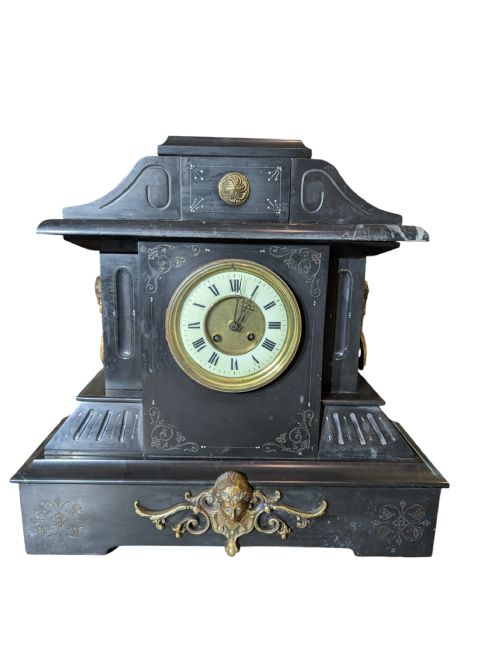
A marble and brass clock brings heavy stone and bright metal together on the mantelpiece, offering a solid focal point for the room.
Marble and Brass Clock
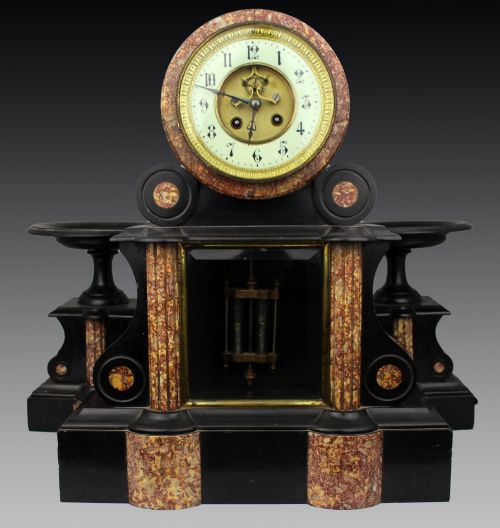
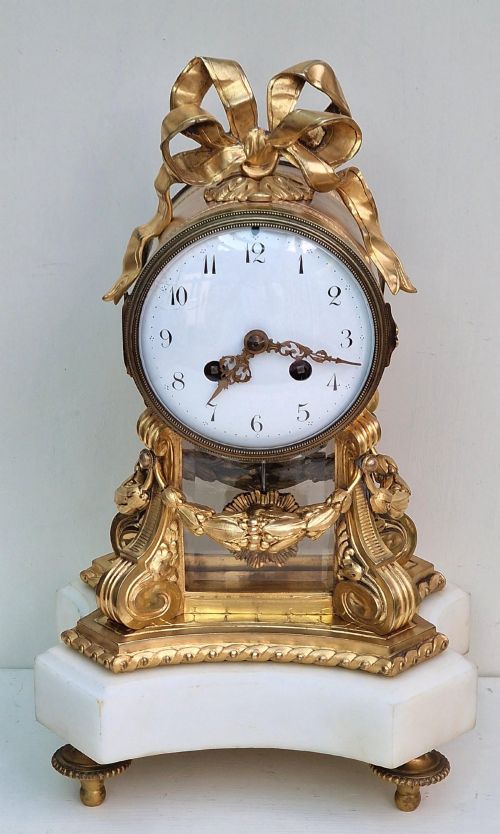
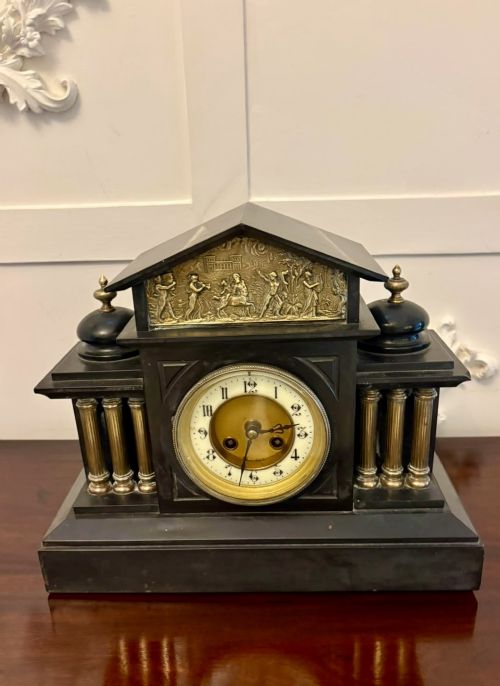
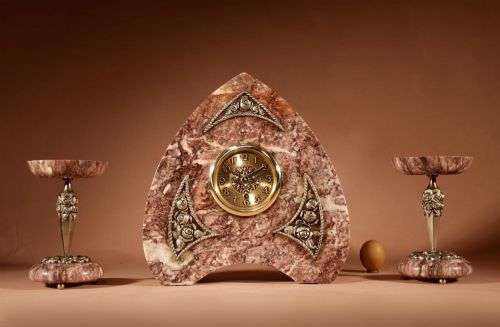
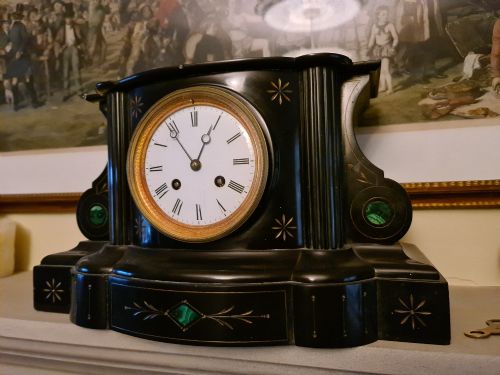
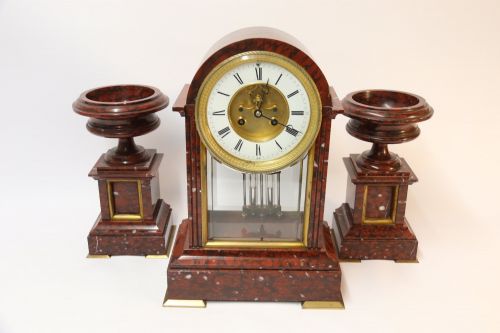
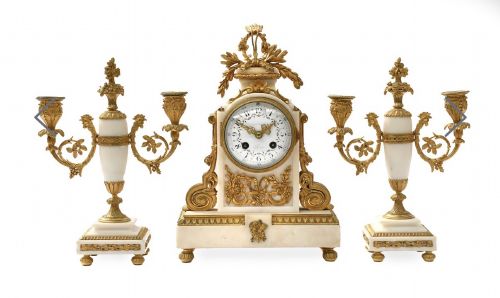
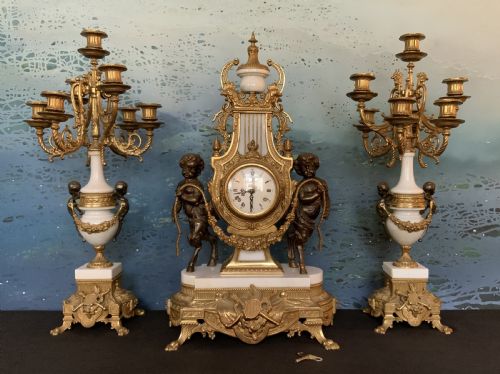
When you search for a marble and brass clock, you encounter substantial timepieces built primarily during the nineteenth century. These objects range from simple mantel clocks to large three-piece garniture sets complete with matching candelabras.
The prevailing styles lean heavily toward French design, including Louis XVI revival, Neoclassical, and Second Empire aesthetics. Architectural forms and urn-shaped bodies appear frequently alongside simpler drumhead and desk versions.
Black slate, white marble, Siena marble, and rouge marble provide the heavy stone foundations, while brass, gilt bronze, and ormolu supply the metallic mounts and bezels. Many examples pair these materials with white enamel dials and protective glass covers.
Materials and Construction
Maker workshops cut and polished dense natural stones like marble and slate to form the architectural cases of these timepieces. Mounts, bezels, and feet cast in brass or bronze were then applied to the stone body, often receiving a gilt finish.
Clock movements relied on eight-day mechanisms, frequently supplied by prominent French makers who stamped their plates with workshop medals and serial numbers. White enamel dials featuring Roman or Arabic numerals were fitted behind bevelled glass doors to complete the face.
Listings feature movements dating from the mid-nineteenth century up through the Art Deco period, housed in marble, slate, and onyx.
Distinctions in Quality
The standard of craftsmanship shows clearly in the precision of the stonecutting and the weight of the bronze or brass mounts. Finer pieces display crisp hand-chasing on the metalwork rather than soft, mass-produced casting edges.
Movement quality separates basic timepieces from superior examples. Signed French mechanisms with clean plates and well-cut gear trains indicate a higher grade of production than unsigned or heavily worn equivalents.
Japy Freres·Samuel Marti·Thwaites of London·Philippes Paris
The Marble and Brass Clock Glossary
- Garniture set
- A clock accompanied by matching decorative objects such as urns or candelabras designed to sit together on a mantelpiece.
- Ormolu
- Gilt bronze produced by applying a mercury and gold amalgam to a bronze object and heating it to drive off the mercury.
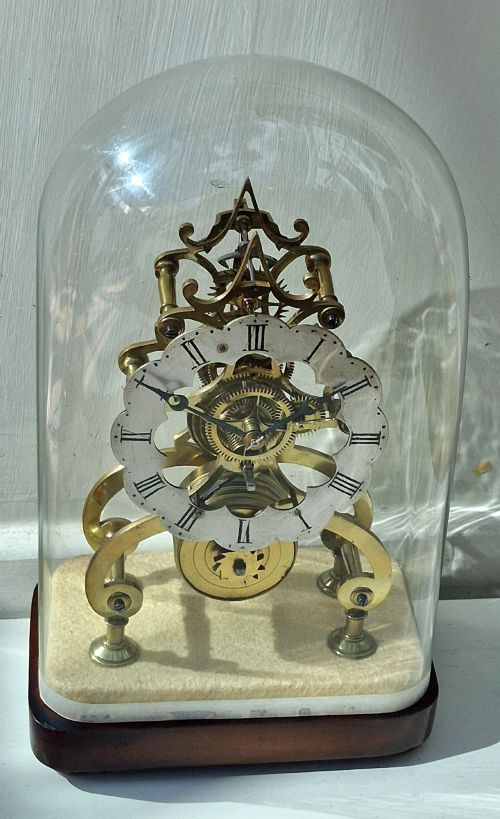
- Skeleton clock
- A timepiece with an exposed gear train and plates, allowing the internal mechanics to be viewed from the sides.
- Drumhead clock
- A mantel clock featuring a circular dial case mounted centrally upon a rectangular stone or wooden base.
- Bezel
- The metal ring that holds the glass cover in place over the dial face of the clock.
Marble and Brass Clock: Frequently Asked Questions
How do I wind the clock?
Most of these mechanical timepieces require a key inserted into the winding holes on the enamel dial to tension the springs.
Turning the key clockwise typically winds the go train and the strike train for an eight-day duration.
Why does the clock run fast or slow?
Clock movements are sensitive to temperature changes and slight shifts in the level of the mantelpiece surface.
Adjustment is usually possible by turning the small regulating nut on the pendulum to alter its effective length.
How do I identify the period?
Stylistic clues such as Neoclassical columns, Louis XVI revival urns, or heavy Victorian proportions help narrow down the decade of manufacture.
Stamps on the back of the brass movement plates often provide maker marks that date the piece more precisely.
Where should I place a heavy marble clock?
The substantial weight of stone and metal requires a sturdy surface such as a heavy mantelpiece, a solid sideboard, or a reinforced wall bracket.
Ensuring the surface is completely flat helps the pendulum swing evenly and keeps the clock ticking reliably.