

Gold Gilt Bronze Clock
A gold gilt bronze clock brings warmth and architectural presence to a mantelpiece through heavy cast metal and intricate chasing.
Gold Gilt Bronze Clock
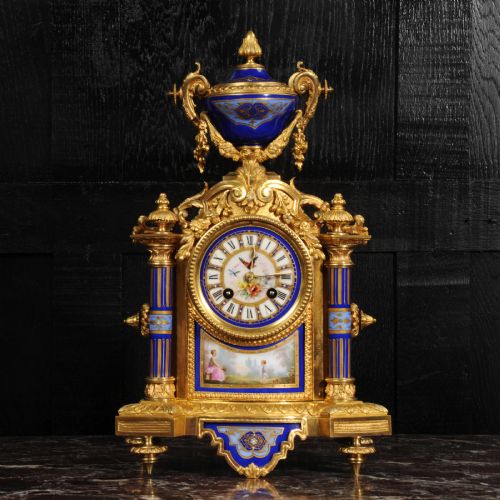
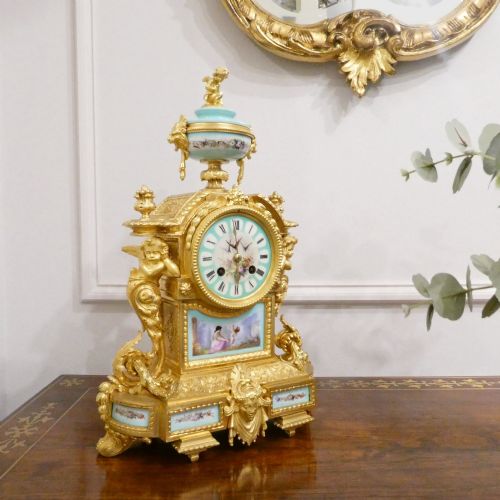
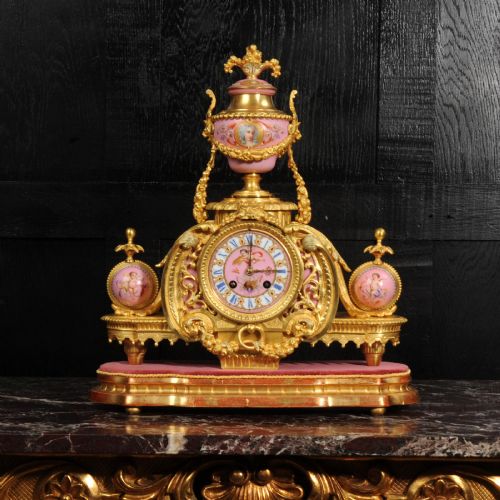
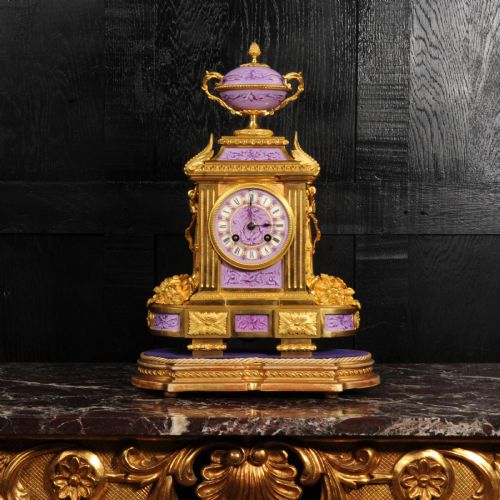
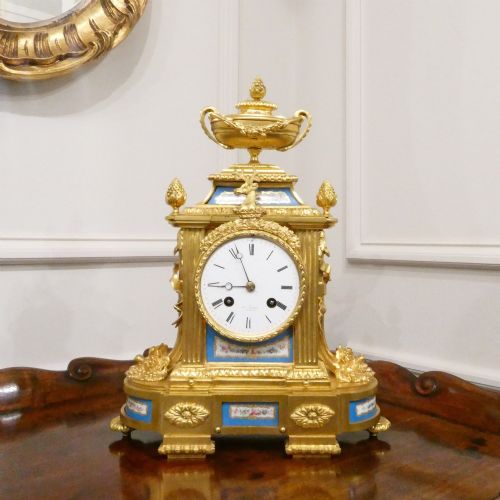
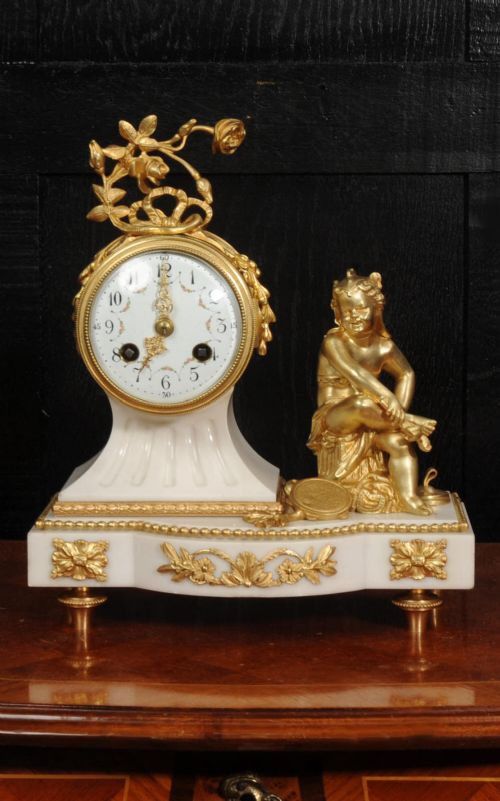
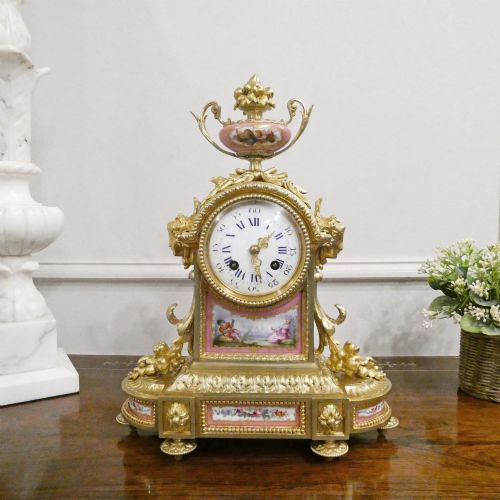
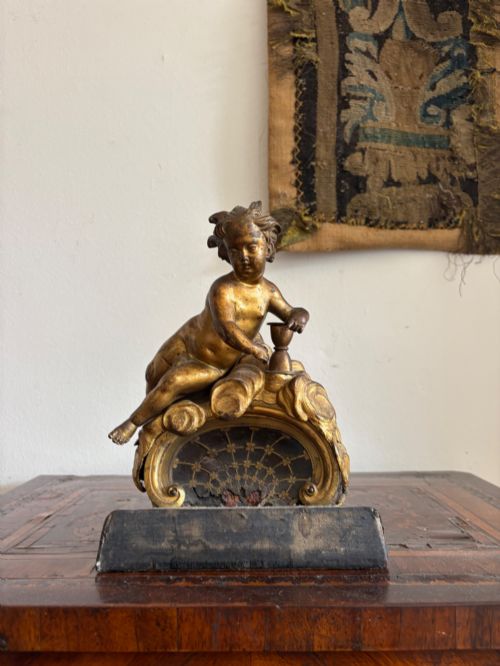
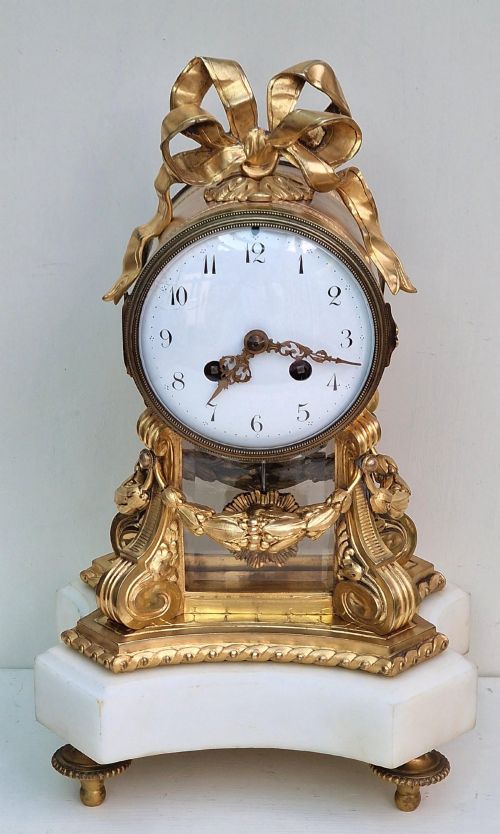
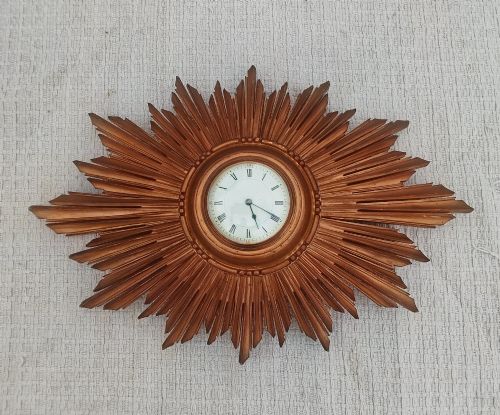
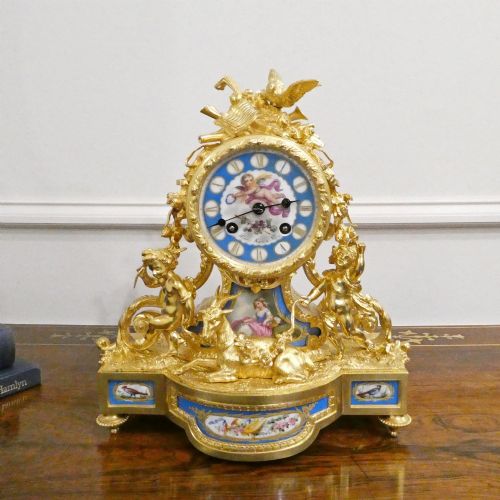
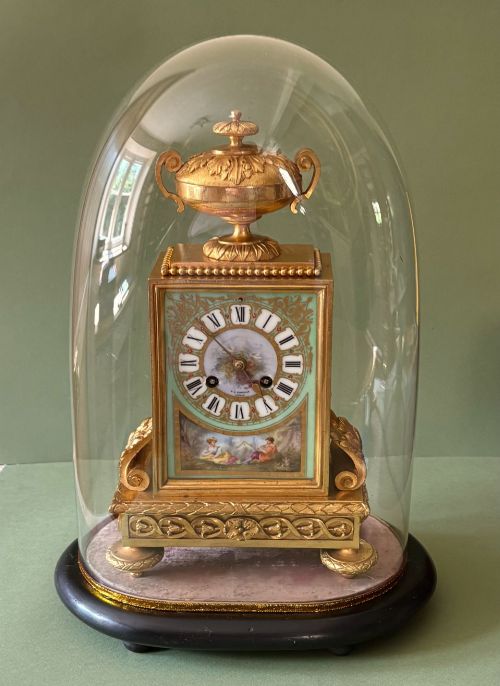
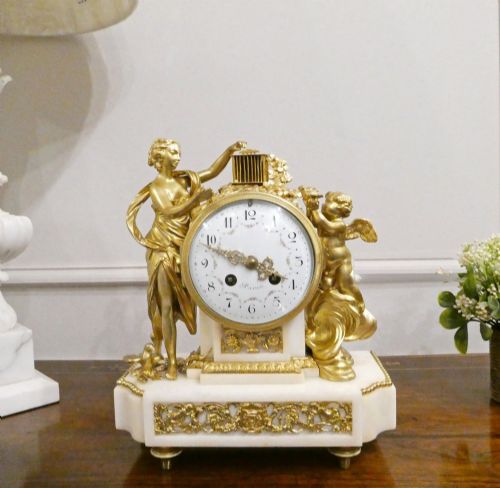
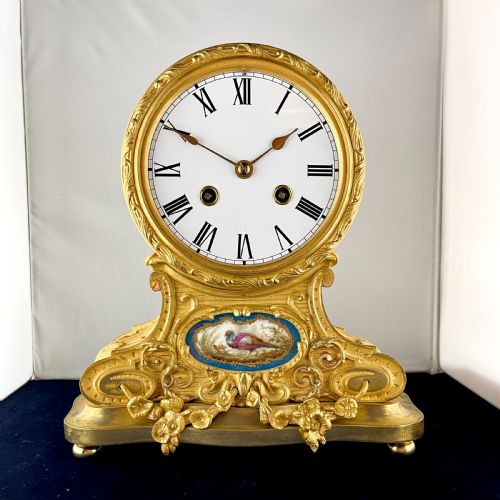
A gold gilt bronze clock is primarily found in nineteenth-century French mantel forms, ranging from modest boudoir pieces to grand architectural garnitures. Buyers seek these items for their rich patination and classical figural compositions, which span Louis XVI revival, Rococo, and Empire styles. The examples on this page are predominantly mantel clocks, though wall clocks, carriage clocks, and decorative mounts also appear.
Makers such as Achille Brocot, Henry Marc, and Japy Freres dominate the production, often combining the metalwork with porcelain panels or marble bases. The typical piece relies on cast ornamentation, such as putto finials or floral garlands, supported by feet cast in the same metallic medium. These items function as both timekeepers and sculptural centerpieces for a room.
How they were made
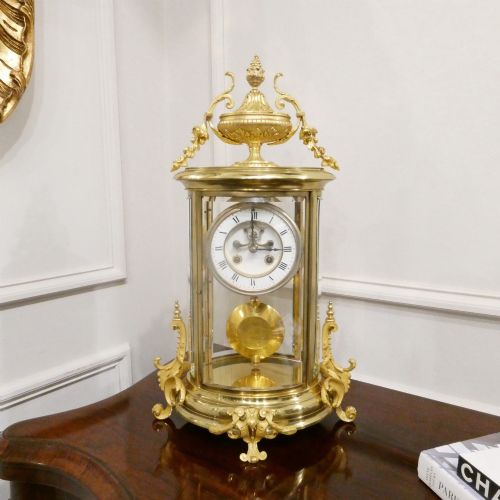
Movements were engineered by specialised horologists and fitted with bell or gong strikes, often housing silk-thread suspensions or pendulum regulators. Glass panels were cut to enclose four-glass mantel clocks and crystal regulators, revealing the mechanical brass gears inside. Each component was assembled with threaded screws and pinned arbors designed for dismantling during maintenance.
Listings feature nineteenth-century French mantel clocks incorporating gilt bronze, white marble, Sevres porcelain panels, and enamel dials across Empire and Rococo styles.
What varies in quality
The distinction between tiers rests upon the crispness of the bronze chasing and the depth of the gilding. Superior examples display sharp undercut foliage and distinct facial expressions on figural mounts, whereas lesser pieces feature soft, muddy casting details resulting from worn moulds. Hand-painted porcelain panels with intact enamel numerals also elevate the standard of a piece above mass-produced alternatives.
Mechanical integrity and signed movements separate ordinary production from distinguished studio work. Clocks bearing the names of prominent makers or retailers on the dial and movement plates command greater appreciation. The integration of high-grade materials like matching white marble bases and heavy bevelled glass panes further defines the upper range.
Achille Brocot·Henry Marc·Japy Freres·Samuel Marti·Etienne Lenoir·Henry Dasson·Delettrez
The Gold Gilt Bronze Clock Glossary
- Ormolu
- Finely ground high-carat gold applied to a bronze base using a mercury amalgamation technique, yielding a warm, durable metallic sheen.
- Garniture
- A set consisting of a central clock flanked by matching decorative objects such as candelabra or vases designed to sit together.
- Chasing
- The manual post-casting process of refining and texturing metal surfaces with small steel punches and hammers.
- Carriage clock
- A small, portable timekeeper fitted with a handle, originally designed for travel during the nineteenth century.
- Champlevé
- An enamelwork technique where troughs are dug into the metal surface and filled with coloured glass paste before firing.
Gold Gilt Bronze Clock: Frequently Asked Questions
How do I wind an antique French clock?
Insert the matching key into the winding square on the enamel dial and turn it gently until you feel resistance. Do not overwind the mainspring, as this can snap the internal steel.
Move the minute hand slowly to the correct time, pausing briefly at each hour to let the strike train sound. If the clock has a pendulum, ensure it hangs freely on its suspension spring before setting the mechanism in motion.
What is the difference between ormolu and gilt bronze?
Ormolu specifically refers to historic mercury gilt bronze produced before modern electroplating regulations were enforced. The term describes the golden surface finish achieved by bonding gold amalgam to a cast bronze body through heat.
Gilt bronze is a broader term that encompasses any bronze object coated in a layer of gold, whether through fire gilding, chemical wash, or modern electro-deposition. Both materials share a heavy metallic core and require similar gentle cleaning methods to preserve the finish.
How do I care for marble and gilt surfaces?
Dust the gilt bronze and marble components regularly with a soft, dry brush to prevent dirt accumulation in the recessed chasing. Avoid liquid cleaners, polishes, or abrasive cloths, which can strip the thin gold layer from the bronze.
If the white marble base requires cleaning, wipe it gently with a damp cloth and dry it immediately. Keep the clock away from direct sunlight and damp environments to protect both the metal patination and the internal clockwork.
Why does my clock run fast or slow?
The timekeeping speed is regulated by the pendulum, which can be adjusted using a small nut located beneath the bob. Turning the nut up shortens the pendulum and makes the clock run faster, while lowering it slows the beat down.
Temperature changes, dust in the gear train, and the levelness of the surface the clock rests on can also affect performance. If minor adjustments to the pendulum fail to correct the time, the movement likely requires professional servicing and cleaning.