


Gilt Bronze Column Clock
These gilt bronze column clock examples bring architectural grandeur to a mantelpiece, combining classical columns with precision timekeeping.
Gilt Bronze Column Clock
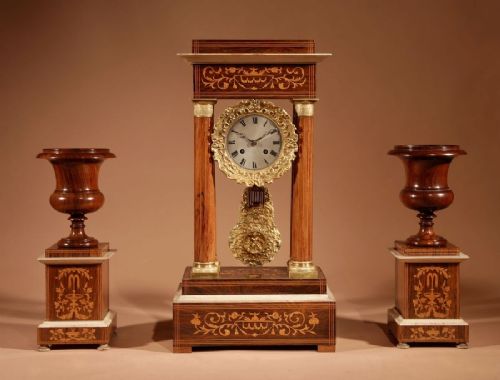
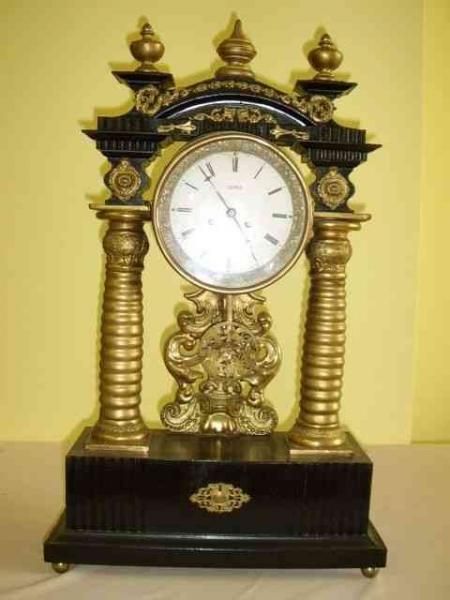
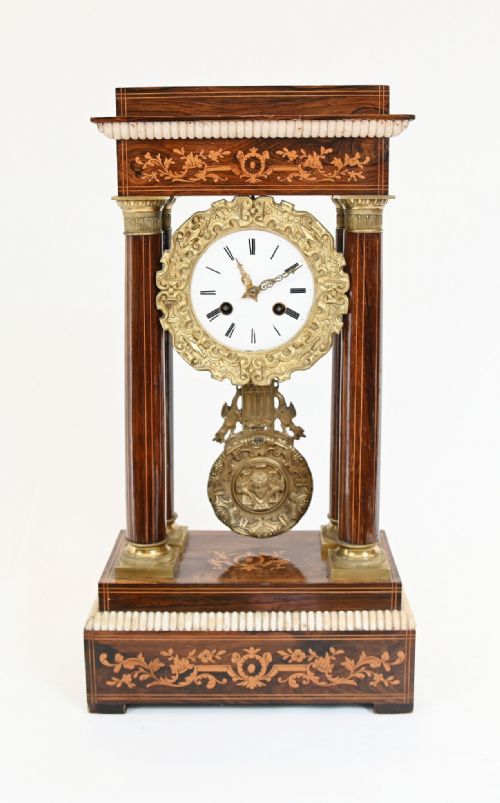
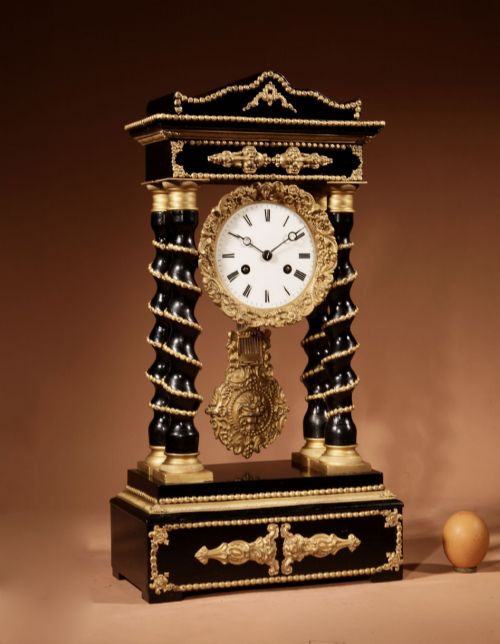
A gilt bronze column clock typically takes the form of a portico or architectural mantel clock, defined by upright pillars supporting a central dial housing. These pieces emerge primarily from the nineteenth century, including periods like the Victorian era, Charles X, and the French Empire style.
The architectural format draws heavily from neoclassical design, often presenting marble or ebonised wood alongside gilt bronze and ormolu mounts. Makers housed the movements within striking cases that ranged from simple colonnades to elaborate garnitures.
Surviving examples span French and English workshops, utilising materials such as cut crystal, brass, rosewood, and alabaster. Buyers frequently encounter French portico clocks alongside marble mantel clocks featuring eight-day movements.
Distinctions in quality
The refinement of the cast bronze or ormolu mounts dictates the visual hierarchy of these timepieces, separating sharp, hand-chased ornamentation from softer, mass-produced castings. Superior examples display crisp architectural lines and deeply detailed foliage or classical motifs.
Material selection similarly defines the tier of the piece, with dense marbles, flawless cut crystal, and exotic woods like rosewood indicating higher production costs. The integration of complex movements, such as musical cylinders or signed escapements by known makers, elevates the status of the clock.
Available pieces incorporate eight-day movements, cut crystal elements, and enamel dials across Victorian and Charles X styles.
Philippes Paris·Breguet·Benson 67 Ludgate Hill London
The Gilt Bronze Column Clock Glossary
- Portico clock
- An architectural mantel clock supported by four or more vertical columns resembling a classical porch. This form gained immense popularity in France during the nineteenth century.
- Ormolu
- Finely ground high-carat gold mercury-gilded onto a bronze base. It provides a rich, durable yellow-gold lustre on nineteenth-century metalwork.
- Garniture
- A set consisting of a central clock flanked by matching ornamental pieces such as urns or candelabra. These sets were designed to sit symmetrically on a mantelpiece.
- Fusee
- A conical pulley used in clock mechanisms to maintain even tension on the chain as the mainspring unwinds. This device improves the timekeeping accuracy of the movement.
- Mystery clock
- A timepiece where the connection between the movement and the hands is disguised, creating a visually puzzling display. These sophisticated mechanisms showcase advanced horological skill.
Gilt Bronze Column Clock: Frequently Asked Questions
What is a portico clock?
A portico clock is an architectural timepiece supported by columns that frame a central pendulum suspended within the open space. The design reflects classical building styles popular across nineteenth-century Europe.
These clocks served as grand decorative centerpieces in formal rooms, combining heavy marble or wooden bases with polished metal ornamentation.
How do I maintain an antique clock movement?
Antique movements require careful handling, stable room temperatures, and professional cleaning every few years to keep the brass gears functioning smoothly. Winding should follow the specific instructions for the fusee or spring mechanism.
Placing the clock on a level surface ensures the pendulum swings evenly and the escapement maintains accurate time.
What materials are common in these clocks?
Common materials include gilt bronze, ormolu, white and black marble, alabaster, and ebonised wood. Enamel dials and cut crystal glass also frequently appear.
Cabinetmakers and metalworkers combined these substances to build heavy, structured frames that supported complex mechanical movements.
How can I tell the French period?
French periods like Charles X, Empire, and Napoleon III are identified through distinct decorative motifs, such as military trophies, classical foliage, or geometric inlays. Ormolu quality and marble colours also shift across these decades.
Signatures on dials or movements often point directly to Parisian workshops active during specific nineteenth-century reigns.