


Charles X Pendulum Clock
A charles x pendulum clock brings architectural symmetry and gilt brilliance into a room, caught between the formal grace of earlier reigns and nineteenth-century precision.
Charles X Pendulum Clock
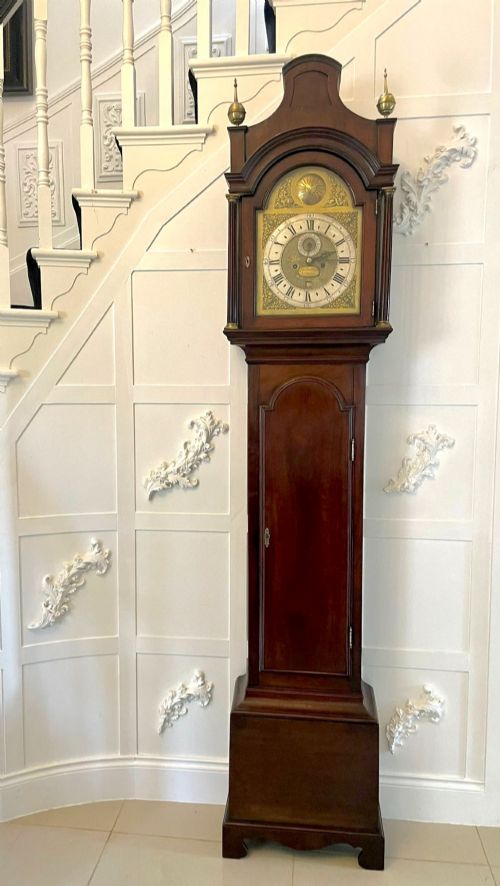
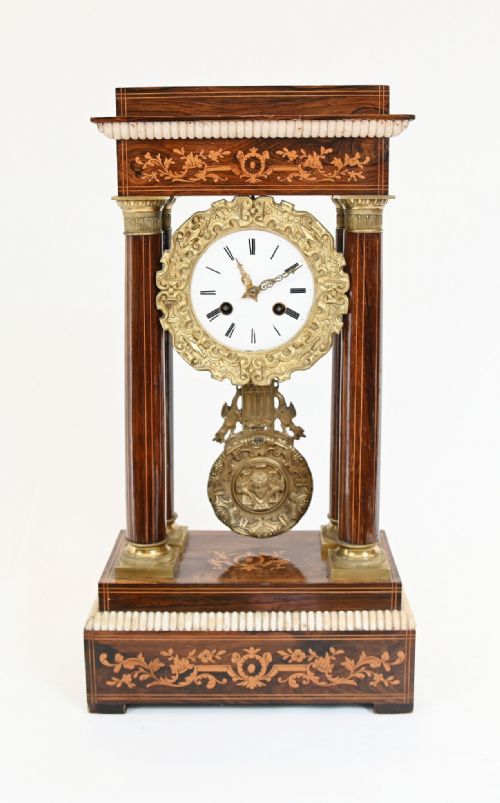
When you search for a charles x pendulum clock, you encounter striking architectural forms like portico designs alongside classical mantel clocks from the nineteenth century and earlier Georgian periods. These pieces serve as functional sculptures, combining timekeeping with the heavy decorative presence characteristic of French and English workshops.
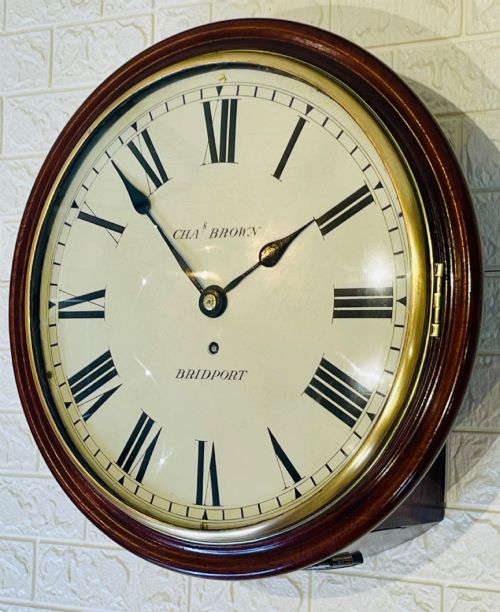
The versions most commonly met on this page include French portico clocks featuring prominent columns and pendulums, as well as traditional longcase and wall clocks originating from the eighteenth and nineteenth centuries. Materials range from warm rosewood and mahogany to gleaming ormolu and white marble.
Makers represented in the titles include Charles Shuckburgh, Charles Dowsett, Breguet, Baltazart, Savory & Fils a Paris, and Charles Denham, offering a mix of English longcases and continental mantelpieces. Each piece reflects the specific stylistic preferences of its period, whether Georgian restraint or French Restoration opulence.
Materials and construction
The construction relies heavily on cabinet woods such as rosewood and mahogany, often enhanced with marquetry, inlay, or satinwood details to create rich surface patterns. These timbers form the structural carcasses of longcase bodies and the elegant uprights of portico frames.
Metalwork plays a central role through cast ormolu mounts and brass components, while glass and cut crystal enclose delicate enamel dials and swinging pendulums. White marble also appears in select French mantel models, providing a solid contrasting base for gilded bronze ornaments.
Listings feature woods such as rosewood, mahogany, and satinwood alongside ormolu, marble, and cut crystal.
Distinctions in craftsmanship
The upper tier of these timepieces demonstrates sharper casting in the ormolu elements and tighter precision in the marquetry and timber veneers. Lesser examples feature softer detail in the metalwork and simpler casework lacking secondary woods or refined inlay.
Charles Shuckburgh·Charles Dowsett·Breguet·Baltazart·Savory & Fils a Paris·Charles Denham
The Charles X Pendulum Clock Glossary
- Portico clock
- A mantel clock design supported by four architectural columns, frequently housing a visible suspended pendulum swinging between them. This style achieved immense popularity during the French Restoration period.
- Ormolu
- Gilded bronze used extensively for decorative mounts, bezels, and feet on nineteenth-century French clocks. The technique involves applying a mercury and gold amalgam to cast bronze.
- Fusee
- A conical pulley used in clock movements to maintain even tension on the gear train as the mainspring unwinds. This mechanism improves timekeeping accuracy across the power reserve.
- Marquetry
- The art of applying pieces of veneer to a structure to form decorative patterns or pictures. It appears frequently on the rosewood and mahogany cases found in this category.
Charles X Pendulum Clock: Frequently Asked Questions
What is a portico clock?
A portico clock is a distinct architectural mantel timepiece built with a temple-like frame of columns surrounding a central pendulum. They often utilise ormolu and exotic woods like rosewood.
These clocks were designed to stand prominently on a mantelpiece or console table as a focal point of interior decoration during the nineteenth century.
How do I wind an antique clock?
Winding requires a key matched specifically to the winding squares on the dial face, turning gently until resistance increases. Care must be taken not to overwind the mainspring.
Different movements require weekly or daily winding depending on whether they feature spring-driven mechanisms or weight-driven longcase systems.
Where should I place a longcase clock?
Longcase clocks need a stable, level floor and must be secured to a wall to ensure the pendulum swings evenly. Placement away from direct sunlight and draughts protects the timber case.
Because of their height, hallways and principal reception rooms historically accommodated these grand timepieces.
How do I identify French Restoration style?
French Restoration pieces bridge the gap between empire severity and later Victorian ornamentation, favouring clean architectural lines and rich rosewood veneers. Ormolu mounts on these items tend to be refined rather than excessive.
Clocks from this era often bear signatures of prominent Parisian makers and showcase balanced, symmetrical proportions.