


French Charles X Clock
A french charles x clock is a striking architectural timepiece that brings period elegance and intricate marquetry to a mantelpiece.
French Charles X Clock
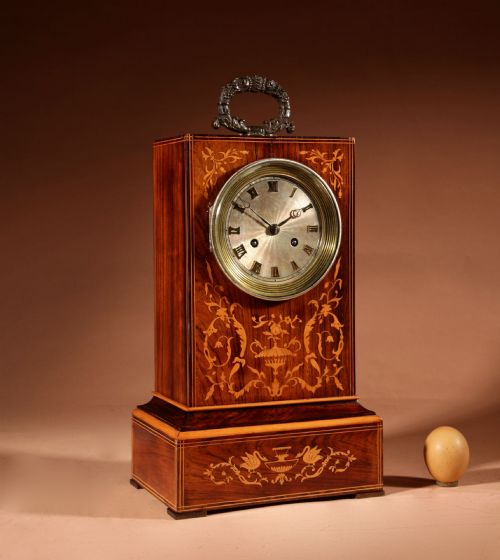
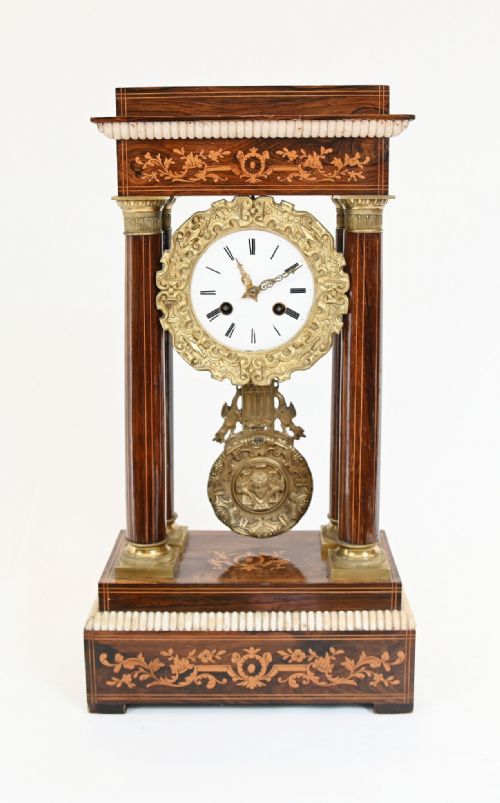
A french charles x clock is a sophisticated timepiece defined by its distinct architectural form and cabinetwork. These objects capture the aesthetic of the French Restoration period and the wider nineteenth century. You will frequently encounter portico clocks and mantel clocks featuring symmetrical designs and classical proportions.
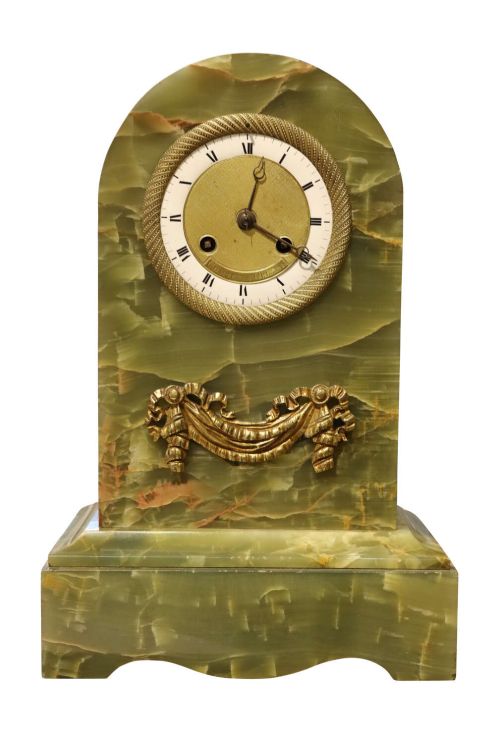
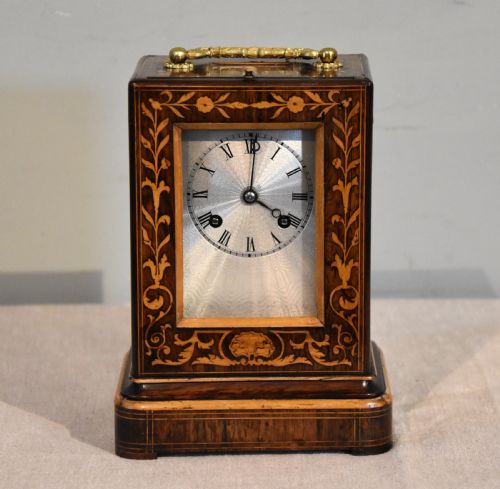
The materials and construction reflect the refined tastes of the period, ranging from inlaid rosewood and lemon wood to gilded ormolu. Many examples incorporate delicate marquetry, enamel dials, and glass elements. These pieces serve as both functional timekeepers and decorative centrepieces for interior spaces.
Materials and Construction
Cabinetmakers utilised rich timber veneers such as rosewood, satinwood, and lemon wood to create intricate marquetry and inlaid patterns across the wooden cases. Ormolu and gilt bronze provided decorative mounts and architectural details, whilst cut crystal and glass added transparency to portico structures.
Foundry workers and horologists combined cast metal elements with stone bases like green onyx, white marble, and siena marble. Enamel dials were hand-painted with numerals, and mechanical movements were housed within these ornate bronze and wooden housings.
Assessing Quality and Craftsmanship
The refinement of a french charles x clock depends on the precision of the marquetry and the crispness of the gilt bronze or ormolu mounts. Superior pieces display complex wood veneers like rosewood and lemon wood matched with balanced architectural proportions.
The presence of a signed movement by a known maker elevates the standing of an individual clock. Quality is further demonstrated by the depth of the gilding, the condition of the enamel dial, and the integration of stone elements such as marble or onyx.
Charles à Orléans·Breguet·Henry Marc·Charles Frodsham·Holingue Frères·Savory Et Fils·Charles Hour
The French Charles X Clock Glossary
- Portico clock
- A clock style characterised by four or more columns supporting an architectural entablature above the dial. This neoclassical form became particularly popular during the nineteenth century.
- Ormolu
- Gilt bronze created by applying a mercury-gilding process to a bronze base. This technique produces a bright, durable gold-coloured finish found on mounts and decorative details.
- Marquetry
- Decorative veneer work arranged in geometric or pictorial patterns across wooden surfaces. Cabinetmakers used contrasting timbers such as lemon wood and rosewood to achieve this effect.
- Garniture
- A set consisting of a central clock accompanied by matching side ornaments such as candelabra or vases. These decorative groups were designed to sit together on a mantelpiece.
- Enamel dial
- A metal dial face coated with fused glass powder to create a smooth, white surface for painted numerals. These dials provide a durable and legible background for the hands.
French Charles X Clock: Frequently Asked Questions
What is a french charles x clock?
A french charles x clock is a nineteenth-century timepiece originating from France during the Restoration period. These items typically feature architectural portico designs or decorative mantel clock configurations.
They combine cabinetmaking skills with metalwork, incorporating timber veneers like rosewood alongside gilded bronze and marble elements.
How do portico clocks differ from standard mantel clocks?
Portico clocks are distinguished by their structural columns that frame the central pendulum housing. This architectural layout creates an open, temple-like silhouette.
Standard mantel clocks usually employ a more solid box or architectural case without the distinct column and lintel arrangement of the portico style.
What woods were used in these clocks?
Cabinetmakers primarily used rosewood as a dark, figured base timber for the wooden cases. Contrasting woods such as lemon wood and satinwood were utilised for delicate marquetry and inlay work.
These timbers allowed craftsmen to create geometric patterns and decorative motifs across the flat surfaces of the clock bodies.
How should I care for an antique clock?
Keep the clock away from direct sunlight, heating vents, and damp environments to protect the wood veneers and metal finishes. Placing the piece on a stable, level surface helps maintain the correct movement of the pendulum.
Professional servicing by a qualified horologist ensures the mechanical movement remains clean and properly lubricated over time.